The Unified Carrier Registration (UCR) program is a federally mandated system requiring motor carriers, private carriers, brokers, freight forwarders, and leasing companies that operate in interstate or international commerce to register and pay an annual fee based on the size of their fleet. Compliance for the 2025 registration year remains a mandatory operational requirement for all entities conducting business across state lines, ensuring that carriers contribute to the administrative and safety oversight costs associated with the UCR agreement.
Understanding the Unified Carrier Registration Program
The UCR agreement serves as a streamlined method for motor carriers to fulfill their registration obligations across multiple jurisdictions. Prior to the implementation of the federal UCR system, carriers were often required to register and pay fees in every individual state through which they operated. This fragmented approach created significant administrative burdens and financial inefficiencies for businesses.
Under the current federal framework, the UCR program consolidates these requirements. By registering once through the UCR system, a carrier effectively satisfies the registration demands for all participating states. This system is governed by the Federal Motor Carrier Safety Administration (FMCSA), though the day-to-day administration and the collection of fees are delegated to individual states and the UCR Board of Directors. The program is designed to cover the costs of state-level motor carrier safety programs, enforcement activities, and the overall management of the UCR database.
It is important to note that the UCR is not a permit for operation but rather a regulatory compliance filing. It is entirely separate from other requirements such as the Department of Transportation (DOT) number, the Motor Carrier (MC) number, or the International Registration Plan (IRP). Failure to maintain a current UCR registration is treated as a violation of federal and state transport laws, which can lead to civil penalties, fines, and potential disruption of interstate operations.
Determining Eligibility and Registration Requirements
Compliance with the 2025 UCR cycle is mandatory for any "motor carrier" or "motor private carrier" that operates commercial motor vehicles (CMVs) in interstate commerce. The definition of a CMV in this context typically includes vehicles with a gross vehicle weight rating (GVWR) or gross vehicle weight (GVW) of 10,001 pounds or more, or vehicles designed or used to transport more than 8 passengers including the driver, or vehicles used in the transport of hazardous materials in a quantity requiring placarding.
Beyond traditional motor carriers, the following entities are also subject to UCR registration:
- Brokers: Entities that facilitate the arrangement of transportation for property by motor carrier for compensation.
- Freight Forwarders: Entities that hold themselves out to the public to provide transportation of property for compensation, utilizing the services of a motor carrier.
- Leasing Companies: Certain entities that lease vehicles to motor carriers are required to register, depending on the terms of the lease and the specific operational arrangements.
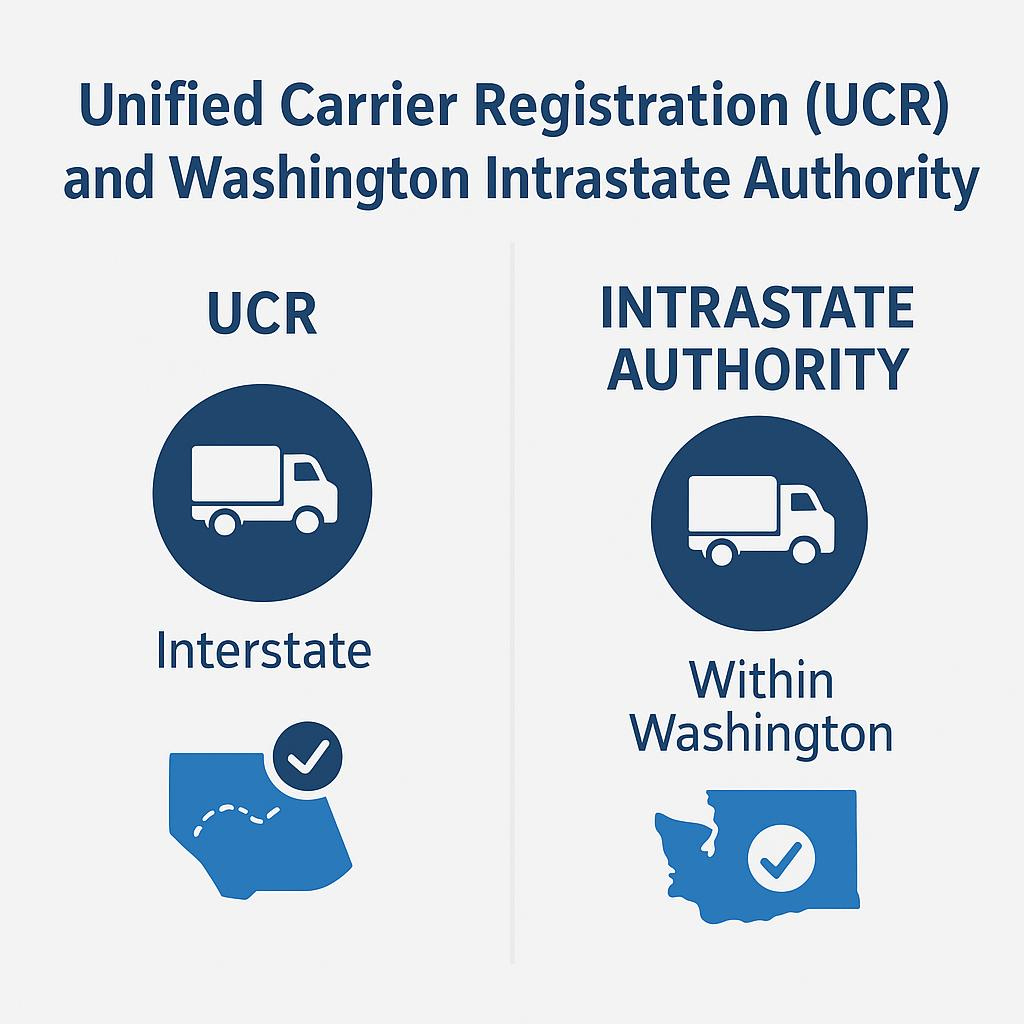
Entities that operate strictly within a single state—referred to as "intrastate" commerce—are generally exempt from the UCR program. However, if a carrier crosses state lines for any business purpose, the interstate registration requirement is triggered. Carriers should verify their operational scope before assuming an exemption, as the definition of "interstate commerce" can include the transport of goods that originated outside the state, even if the carrier's specific segment of the transport occurs entirely within one state’s borders.
The 2025 Registration Fee Structure
The UCR fee structure is determined by the size of the registrant's fleet. The program utilizes a tier-based system that groups carriers by the total number of vehicles they operate, regardless of whether those vehicles are owned, leased, or otherwise controlled by the registrant.
The fleet size is typically calculated by summing all commercial motor vehicles reported on the carrier’s most recent Form MCS-150 filing with the FMCSA. It is crucial for carriers to ensure that their MCS-150 data is accurate and updated, as this is the primary data source used to determine the appropriate registration bracket.
Fee Tiers for UCR Registration
| Fleet Size Bracket | Number of Vehicles |
|---|---|
| Tier 1 | 0 to 2 vehicles |
| Tier 2 | 3 to 5 vehicles |
| Tier 3 | 6 to 20 vehicles |
| Tier 4 | 21 to 100 vehicles |
| Tier 5 | 101 to 1,000 vehicles |
| Tier 6 | 1,001 or more vehicles |
The specific dollar amount for each tier is subject to periodic adjustment by the FMCSA based on program funding requirements. While the tiers remain stable, carriers should consult the official UCR portal during the registration process to confirm the current fee schedule for the active registration period.
Step-by-Step Registration Process
The most efficient way to complete the 2025 UCR registration is through the official online portal hosted by the UCR Board. This digital interface is designed to walk users through the verification and payment process systematically.
1. Preparation of Documentation
Before initiating the registration, ensure you have your legal business name, your USDOT number, your MC/MX/FF number (if applicable), and an accurate count of your total fleet as of the most recent year-end. Having your current MCS-150 information handy will help prevent discrepancies between your registration and federal records.
2. Accessing the Official Portal
Navigate to the official UCR registration website. Be wary of third-party websites that masquerade as official government portals. While some private filing services exist, they often charge significant markups or processing fees. Always verify that the URL is a legitimate government-associated domain, typically ending in .gov or designated by the official UCR board.
3. Verification of Information
The system will prompt you to enter your USDOT number. The platform will then pull your existing data from the FMCSA database. Review this data carefully. If your fleet size has changed significantly since your last MCS-150 update, the system may allow for an adjustment, though you should simultaneously update your MCS-150 through the FMCSA portal to ensure consistency across all federal records.
4. Fee Calculation and Payment
Once the bracket is confirmed, the system will calculate the required fee. Payment is typically accepted via major credit cards or electronic funds transfer. After the payment is processed, you will receive a confirmation. It is recommended to download and print the registration receipt, as this serves as proof of compliance during roadside inspections.
Ongoing Requirements and Compliance Audits
Registration is not a one-time event but an annual obligation. The UCR registration year runs from January 1 through December 31. Because the program is tied to your status as an interstate carrier, a lapse in registration can result in immediate flagging by enforcement agencies.
Roadside enforcement officers, including state troopers and Department of Transportation personnel, have access to real-time UCR status databases. If a vehicle is stopped and the carrier is found to be non-compliant, the driver may be placed out of service, or the vehicle may be impounded until the registration is brought up to date and all applicable fines are paid. Furthermore, non-compliance can negatively impact a carrier’s Safety Measurement System (SMS) score, which influences insurance premiums and the frequency of audits.
Maintenance of your data is just as important as the fee payment. If your company undergoes a change in structure, such as a name change, a merger, or an acquisition, you must ensure that your UCR profile is updated accordingly. Failure to report these changes can lead to confusion during audits, making it difficult to demonstrate proof of payment during a verification event.
Common Pitfalls and Troubleshooting
Many carriers encounter issues during the registration process, often due to discrepancies between internal records and FMCSA data. Below are the most frequent challenges:
- Data Mismatches: If the number of vehicles on your UCR application differs drastically from the number of vehicles reported on your MCS-150, the system may flag your application for review or rejection. Always ensure your federal filings are accurate before attempting to register for UCR.
- Late Registration: Missing the annual deadline can lead to immediate penalties. If you fail to register in time, do not assume you have a grace period. Use the online portal to pay as soon as possible to mitigate the risk of enforcement action.
- Third-Party Scams: Numerous "registration services" exist online that attempt to trick carriers into paying exorbitant fees for UCR filing. Always stick to the official UCR portal to avoid falling victim to these predatory practices.
- Expired Credentials: If your MC number has been revoked or is in "inactive" status, you will not be able to complete the UCR registration. You must resolve any pending status issues with the FMCSA before the UCR system will accept your filing.
Frequently Asked Questions
Does my private vehicle used for business need to be included in the UCR fleet count?
The fleet count should include all commercial motor vehicles operated by your company. If a vehicle is used in interstate commerce and meets the weight or passenger criteria, it must be counted, regardless of whether it is registered in your personal name or your business name.
What happens if I miscalculate my fleet size?
If you underestimate your fleet size and are caught during an audit, you may be required to pay the difference plus penalties. It is always better to err on the side of accuracy. If you acquire new vehicles mid-year, you are not generally required to upgrade your UCR tier until the following annual registration cycle, provided your initial declaration was accurate at the time of filing.
Can I get a refund if I stop operating interstate mid-year?
UCR fees are considered non-refundable administrative fees. Once the registration is processed and the fee is paid for the current year, the funds are distributed to the participating states for safety and enforcement programs and cannot be reclaimed.
Is UCR registration the same as an IRP (Apportioned) plate?
No. The International Registration Plan (IRP) is an agreement that allows for the proportional payment of registration fees based on the distance traveled in each jurisdiction. The UCR is a separate, flat-fee registration system. You are required to maintain both IRP compliance (if operating heavy vehicles) and UCR compliance (if operating in interstate commerce).
Who should I contact if the online portal is not accepting my DOT number?
If the portal indicates that your USDOT number is invalid or cannot be found, verify your number on the official FMCSA SAFER website. If the number is correct but still rejected, contact your state’s UCR coordinator or the national UCR support line for manual verification of your status.
Recommendation for Next Steps
To ensure your 2025 compliance, verify your current fleet count against your active MCS-150 data today. If you identify any discrepancies, update your MCS-150 record through the FMCSA portal first. Once your federal data is aligned, proceed to the official Unified Carrier Registration portal to complete your payment. Maintaining a digital copy of your receipt within your vehicle cabs is the most effective way to prevent delays during state-level compliance checks. If you are a new carrier, ensure that your UCR registration is completed immediately upon receiving your USDOT number to avoid start-up fines.