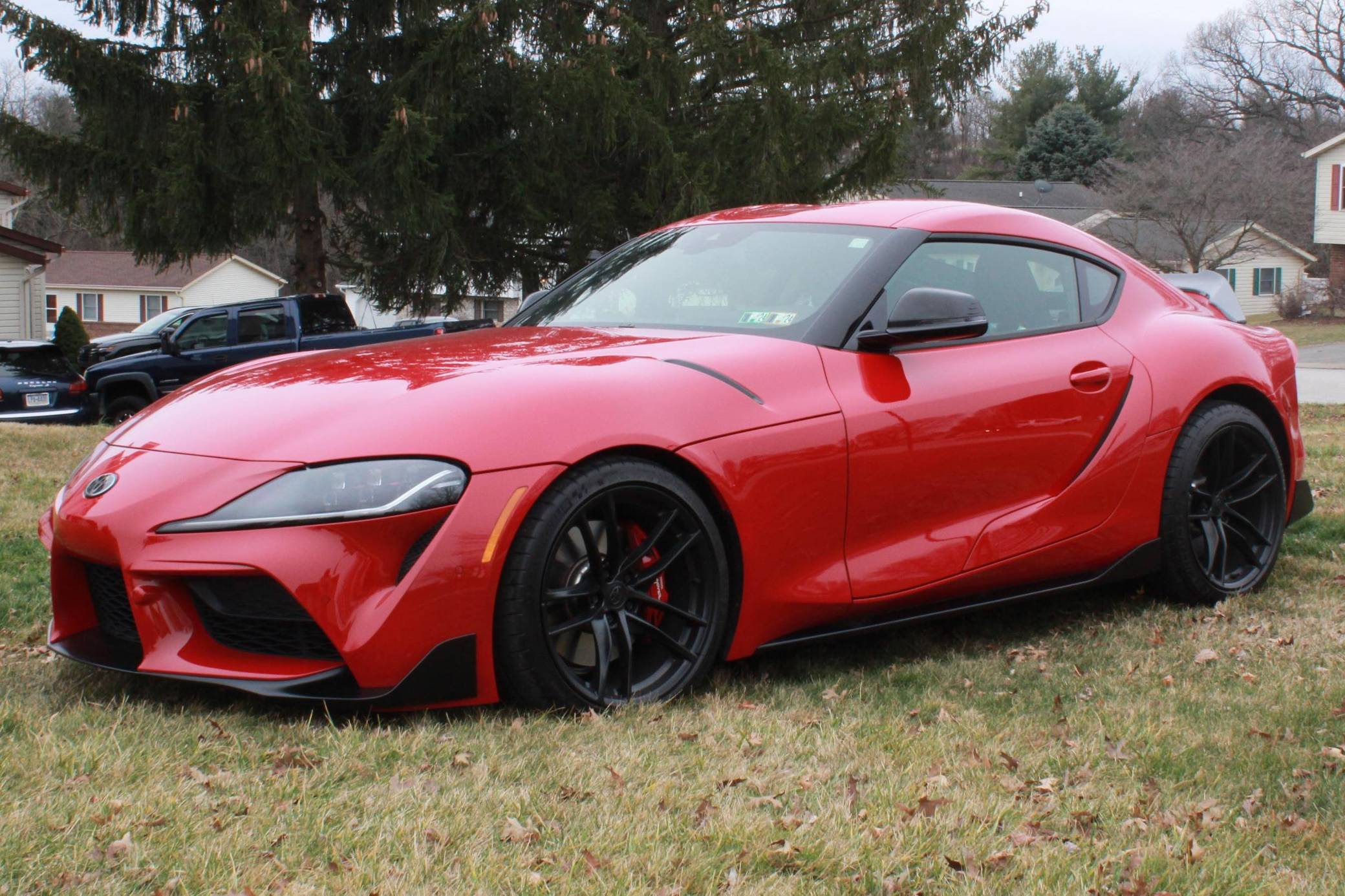
The 2021 Toyota Supra 3.0 produces a factory-rated 382 horsepower and 368 lb-ft of torque. This significant mid-cycle update increased the output from the 335 horsepower found in the 2020 model, utilizing the BMW-sourced B58 turbocharged 3.0-liter inline-six engine to deliver improved acceleration and a more refined power delivery across the rev range.
The Evolution of the B58 Engine in the Supra
When Toyota reintroduced the Supra (A90 generation) in 2020, the 3.0-liter turbocharged inline-six engine was already highly regarded for its smoothness and tunability. However, for the 2021 model year, Toyota engineers, in collaboration with BMW, implemented key mechanical refinements to the engine management and exhaust manifold systems.
The jump from 335 horsepower to 382 horsepower was not merely a software calibration change; it involved optimizing the thermal management of the cylinder head and streamlining the exhaust port design. By improving the flow of exhaust gases into the turbocharger, the engine could operate more efficiently under higher boost pressures. This mechanical update allowed the 2021 Supra 3.0 to achieve a 0–60 mph time of approximately 3.9 seconds, a noticeable improvement over the preceding year’s model.
Understanding Horsepower vs. Torque
While the 382 horsepower figure is the primary metric cited in marketing materials, the 368 lb-ft of torque is equally critical to the vehicle's driving character. Torque represents the rotational force produced by the engine, which dictates how quickly the vehicle gains speed from a standstill or mid-range gear.
In the 2021 Supra 3.0, the torque curve is notably flat. This means that peak torque is available across a broad RPM range—specifically between 1,800 and 5,000 RPM. This "flat" curve ensures that the driver experiences a consistent surge of power, reducing the need to downshift frequently during highway passing or spirited canyon driving. The marriage of this high-torque output with the ZF 8-speed automatic transmission creates a powertrain that feels punchy at low speeds and relentless at high speeds.
Comparison of Performance Metrics
To understand the position of the 2021 model in the A90 Supra lifecycle, it is helpful to compare the 3.0-liter variant against its peers and its own internal lineage.
| Feature | 2020 Supra 3.0 | 2021 Supra 3.0 | 2021 Supra 2.0 |
|---|---|---|---|
| Engine | 3.0L Inline-6 | 3.0L Inline-6 | 2.0L Inline-4 |
| Horsepower | 335 hp | 382 hp | 255 hp |
| Torque | 365 lb-ft | 368 lb-ft | 295 lb-ft |
| 0-60 MPH | 4.1 Seconds | 3.9 Seconds | 5.0 Seconds |
| Induction | Turbocharged | Turbocharged | Turbocharged |
The data table above illustrates the significant performance delta created in 2021. While the 2.0-liter model was introduced that year to provide a lower point of entry, the 3.0-liter variant solidified its status as the performance flagship. The 3 lb-ft increase in torque may seem marginal on paper, but the revised engine tuning resulted in a much more responsive throttle and a more aggressive power band.
The Role of Transmission and Chassis Balance
A car’s ability to utilize its horsepower effectively is entirely dependent on its transmission and chassis. The 2021 Supra 3.0 utilizes an 8-speed automatic transmission by ZF, which is widely considered one of the best torque-converter automatics in the industry.
In 2021, Toyota also tuned the chassis to match the increased power output. This included the addition of front-end braces to increase structural rigidity, which helps the vehicle maintain its composure when cornering under heavy throttle. The balance of the A90 chassis is characterized by a near 50:50 weight distribution, which allows the 382 horsepower to be put to the ground with minimal wheel spin, provided the traction control systems are utilized appropriately.
Factors Influencing Real-World Horsepower
While the official rating is 382 horsepower at the crankshaft, many enthusiasts often ask about "wheel horsepower" (WHP)—the actual power delivered to the pavement after losses through the drivetrain.
- Drivetrain Loss: In rear-wheel-drive vehicles like the Supra, there is typically a 10% to 15% loss of power from the engine to the wheels. This is caused by the friction within the transmission, driveshaft, and differential.
- Environmental Conditions: Ambient temperature, humidity, and altitude directly affect forced-induction engines. On a hot day, the air is less dense, which may lead to the ECU (Engine Control Unit) pulling back timing to prevent engine knock, potentially resulting in lower actual output.
- Fuel Quality: The B58 engine is designed to run optimally on high-octane premium gasoline (91 or 93 octane). Using lower-grade fuel will cause the engine computer to retard ignition timing to protect the engine, resulting in a measurable drop in power.
Tuning Potential and Aftermarket Considerations
The 2021 Supra 3.0 engine is part of a platform that has become a favorite in the aftermarket community. Because the B58 engine is shared with various high-performance BMW models, there is an extensive catalog of upgrades available.
- ECU Flashing: Simple software remaps can often push the 382 horsepower figure well beyond 450 hp without needing mechanical changes.
- Intake and Exhaust: Improving airflow allows the turbocharger to work with less backpressure, which often results in improved throttle response and a more visceral exhaust note.
- Cautionary Note: It is important to note that modifications to the ECU or internal components can affect factory warranty coverage. In 2026, many of these vehicles have aged out of their original bumper-to-bumper warranties, but powertrain warranties may still apply depending on service history and local dealer policies. Always verify the status of your specific vehicle before proceeding with performance modifications.
Frequently Asked Questions
Is the 2021 Supra 3.0 harder to drive than the 2020 model? No. While the 2021 model has 47 more horsepower, the power delivery is just as linear and predictable as the 2020 model. The chassis updates made in 2021 actually make the car feel more stable and composed when accessing the higher power output.
Can I upgrade my 2020 Supra to match the 2021 horsepower? Achieving 2021 power levels in a 2020 Supra is possible through aftermarket tuning. However, because the 2021 model included physical changes to the exhaust manifold and cylinder head, simply uploading 2021 software to a 2020 ECU will not replicate the exact power delivery or thermal efficiency of the factory 2021 engine.
Does the 382 horsepower rating include the electric motor? No. The 2021 Supra 3.0 does not utilize a hybrid system. The 382 horsepower is generated entirely by the combustion of gasoline through the turbocharged 3.0-liter inline-six engine.
How often should I change my oil to maintain this horsepower level? Given that this engine is turbocharged and runs at high boost pressures, following the manufacturer’s recommended oil change intervals is critical. Most experts suggest changing full-synthetic oil every 5,000 to 7,500 miles, or sooner if the vehicle is subjected to track use or aggressive driving.
Are there any known issues with the 2021 Supra 3.0 engine? The B58 engine is generally considered highly reliable. However, as with any direct-injection turbocharged engine, carbon buildup on the intake valves can occur over long periods. Keeping up with high-quality fuel and regular maintenance mitigates these risks.
Final Recommendation
The 2021 Supra 3.0 represents a sweet spot in the A90 generation, offering a substantial power upgrade over its launch model while retaining the mechanical engagement that defines the nameplate. For those currently looking to purchase or maintain this vehicle in 2026, the key to preserving that 382 horsepower is consistent maintenance, the use of high-quality premium fuel, and ensuring the intake system remains free of debris. If you are considering performance modifications, prioritize those that improve cooling and airflow before attempting to push beyond factory boost levels to ensure the longevity of the engine.