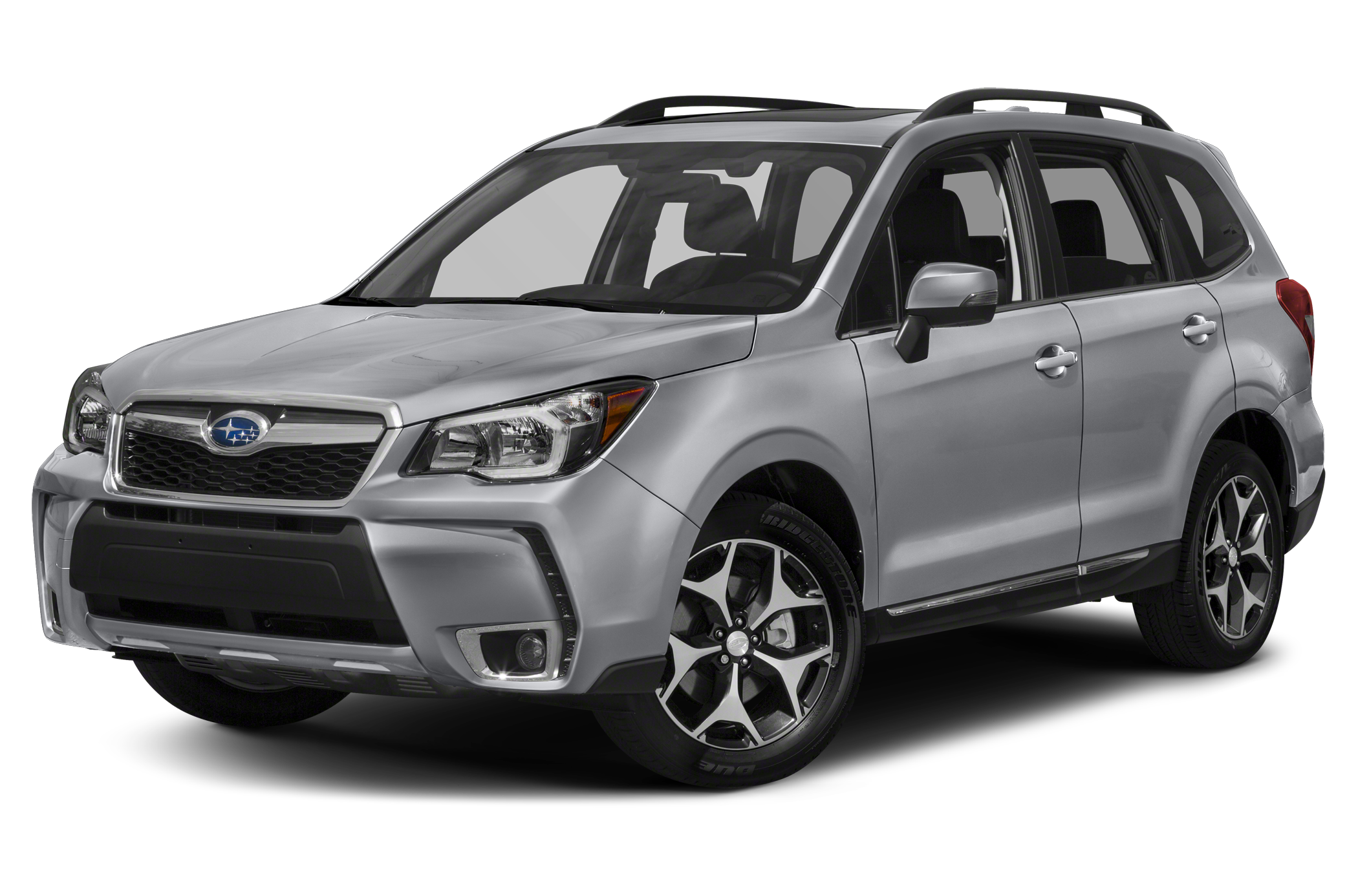
In 2026, purchasing a used 2018 Subaru Forester 2.0XT Premium costs between $13,500 and $17,500 depending on mileage and condition, down from its original $30,410 base MSRP. Ongoing annual ownership expenses average $3,800 to $4,600, driven primarily by premium fuel requirements, specialized turbocharged Boxer engine maintenance, and mid-life drivetrain servicing.
The 2018 model year marks a significant milestone in Subaru history: it was the final year of the fourth-generation ("SJ") platform and the last Forester equipped with a factory turbocharged engine. Combining the 250-horsepower FA20F direct-injection turbocharged engine with standard Symmetrical All-Wheel Drive, the 2.0XT Premium delivered sport-compact acceleration in a practical compact crossover shell. For prospective buyers evaluating this vehicle on the pre-owned market, understanding the true cost of ownership requires looking past the purchase price to assess fuel demands, high-mileage wear items, and model-specific mechanical vulnerabilities.
Initial Purchase Price: Original MSRP vs. Current Market Value
When Subaru introduced the 2018 Forester lineup, the 2.0XT was split into two trim levels: the entry-turbo 2.0XT Premium and the luxury-focused 2.0XT Touring. The 2.0XT Premium served as the mechanical sweet spot for enthusiasts, offering the full performance powertrain without the added electronic complexity or price premium of factory leather, navigation, and upgraded audio.
- Original 2018 Base MSRP: $29,495 (plus an $915 destination fee, totaling $30,410).
- Original 2018 Options: EyeSight Driver Assist Technology package with blind-spot detection added approximately $1,695.
- Current Fair Market Value: $13,500 to $17,500 for clean-title examples with 75,000 to 110,000 miles. Well-preserved, lower-mileage examples (under 60,000 miles) routinely trade between $18,000 and $20,500 due to high enthusiast demand for the final turbo generation.
- Private Party vs. Dealer Retail: Dealer inventory carries an average $1,500 to $2,200 premium over private sales, often justified by reconditioning, fresh tires, or limited short-term dealer warranties.
Because the subsequent fifth-generation (SK) Forester and sixth-generation (SL) Forester abandoned turbocharging in favor of a naturally aspirated 2.5-liter Boxer engine, the 2018 2.0XT exhibits stronger residual value retention than equivalent naturally aspirated 2018 Forester 2.5i trims. While a 2018 Forester 2.5i Premium typically trades between $11,000 and $14,000, the XT holds a steady price delta of 15% to 25% on the used market.
Fuel and Operating Costs
Operating a 2.0XT Premium is noticeably more expensive than running a standard naturally aspirated Forester. The twin-scroll turbocharged 2.0-liter engine operates with a 10.6:1 compression ratio and generates 250 horsepower and 258 lb-ft of torque. To prevent detonation and protect the engine under boost, Subaru explicitly mandates premium fuel.
Premium Fuel Mandate
The owner's manual states that 93 AKI (Anti-Knock Index) octane fuel is recommended, while 91 AKI is the absolute minimum requirement. Using regular 87 octane fuel triggers ignition timing retardation by the engine control module (ECM), significantly reducing power, blunting throttle response, degrading fuel economy, and risking long-term carbon fouling or pre-ignition knock under heavy loads.
With premium fuel carrying a nationwide retail surcharge of $0.60 to $0.90 per gallon over regular unleaded, fuel represents the largest ongoing divergence in operating costs between the XT and a standard crossover:
- EPA Ratings: 23 mpg city / 27 mpg highway / 25 mpg combined.
- Real-World Observed Efficiency: 21 mpg city / 26 mpg highway / 23 mpg combined.
- Annual Fuel Cost (12,000 miles at 23 mpg combined): Approximately 522 gallons. At an average premium fuel price of $4.10 per gallon, expected annual fuel expenditure totals roughly $2,140.
- Comparative 2.5i Running Cost: A standard 2.5i running on 87 octane at 28 mpg combined consumes approximately 428 gallons, totaling roughly $1,455 annually (at $3.40/gal)—a difference of nearly $700 per year.
Scheduled Maintenance Costs
Subaru's horizontally opposed engine layout and symmetrical all-wheel-drive platform require strict adherence to fluid and ignition service intervals. Neglecting routine services on the FA20F engine can lead to premature failure of the turbocharger bearings, intake carbon accumulation, or CVT belt slippage.
2018 Forester 2.0XT Scheduled Service Intervals --------------------------------------------------------------- Interval Key Tasks Typical Cost --------------------------------------------------------------- 6,000 mi Synthetic Oil, Filter, Tire Rotate $95 - $130 30,000 mi Brake Fluid, Filters, Drivetrain Insp $350 - $500 60,000 mi Spark Plugs, Differential/CVT Fluids $750 - $1,100 105,000 mi Drive Belt, Full Fluid Flush, Coolant $600 - $900
1. Engine Oil and Filter Services (Every 6,000 Miles)
The FA20F direct-injection turbo runs hotter and shears oil faster than naturally aspirated engines. It requires 5.4 quarts of full-synthetic 5W-30 motor oil meeting API SN or SP specifications.
- DIY Cost: $35 to $45 per change using an OEM Tokyo Roki or high-filtration filter and synthetic oil.
- Independent Specialist: $85 to $110.
- Subaru Dealership: $100 to $135.
2. Spark Plug Replacement (Every 60,000 Miles)
Due to the low clearance between the Boxer cylinder heads and the frame rails, replacing the four iridium spark plugs is labor-intensive.
- DIY Difficulty: High; requires specialized wobble extensions, specific socket lengths, and patience working in tight clearances.
- Shop Cost: $320 to $480 (primarily labor).
3. Drivetrain Fluid Services (Every 30,000 to 60,000 Miles)
- Front and Rear Differentials: The hypoid gear oil (75W-90) should be changed every 30,000 miles, running $140 to $200 at an independent shop.
- High-Torque Lineartronic CVT Fluid: Subaru officially refers to the CVT fluid as "lifetime" under standard conditions, but defines fluid inspection and severe-duty replacement at 24,855 miles (40,000 km) or roughly every 30,000 to 60,000 miles. Given the high torque generated by the 2.0XT, failure to drain and fill the transmission fluid with genuine Subaru High-Torque CVTF (orange fluid) dramatically increases the likelihood of valve body and chain failure. A specialized drain-and-fill service costs $300 to $450.
Known Failure Points and Repair Budgets
By the time a 2018 vehicle passes 75,000 to 100,000 miles, mechanical components encounter age-related wear. The 2018 2.0XT has a well-documented mechanical profile, allowing prospective buyers to forecast specific component repairs.
1. High-Torque CVT Valve Body Failure
The most notorious issue across fourth-generation Foresters involves the Lineartronic CVT valve body. Specifically, the torque converter lock-up solenoid or primary pressure control solenoid internal coils short out or fail. Subaru does not sell individual solenoids through OEM channels, requiring either an aftermarket solenoid splice or a full valve body replacement.
- Symptoms: Flashing "AT OIL TEMP" light, Hill Start Assist warning, traction control light, and check engine light (frequently diagnostic trouble code P0971 or P2764).
- Repair Cost: $1,200 to $1,800 for full valve body replacement and fluid refilling at an independent Subaru specialist; $1,900 to $2,400 at a dealership.
2. Direct-Injection Intake Valve Carbon Buildup
Unlike port-injected engines, the FA20F sprays fuel directly into the combustion chamber. Fuel never washes across the back of the intake valves, leading to oil vapor and carbon bake-on from the positive crankcase ventilation (PCV) system.
- Symptoms: Rough cold idle, low-rpm hesitation, misfire codes under load, reduced fuel economy.
- Remedy: Walnut-shell blasting of the intake ports and valves every 75,000 to 100,000 miles.
- Repair Cost: $450 to $700.
3. Front Lower Control Arm Bushings
The large rear compliance bushings on the front lower control arms are filled with fluid and frequently tear or leak between 60,000 and 90,000 miles.
- Symptoms: Clunking noises over sharp bumps, wandering steering on the highway, uneven front tire wear.
- Repair Cost: $550 to $800 to press new bushings or install complete replacement aftermarket/OEM control arm assemblies, including a mandatory four-wheel alignment.
4. Rear Wheel Bearings
Subaru hub-and-bearing assemblies on the SJ generation are notorious for premature wear, typically presenting between 70,000 and 110,000 miles.
- Symptoms: Low-pitch droning or humming noise that intensifies with vehicle speed and shifts pitch when loading one side during lane changes.
- Repair Cost: $350 to $550 per wheel hub.
5. Air Conditioning Condenser and Compressor Leaks
Subaru issued extended technical service bulletins and warranty updates for porous A/C condensers on 2014–2018 Foresters. If the system has not been updated, leaks frequently occur at the lower condenser corners or the compressor shaft seal.
- Repair Cost: $600 to $1,100 for condenser replacement, evacuation, and system recharge.
Comprehensive 5-Year Ownership Cost Estimate
The following table projects the financial commitment required to purchase and operate a used 2018 Subaru Forester 2.0XT Premium over a 5-year ownership window (driving 12,000 miles annually, for a total of 60,000 accumulated miles).
| Cost Category | Year 1 | Year 2 | Year 3 | Year 4 | Year 5 | 5-Year Total |
|---|---|---|---|---|---|---|
| Depreciation | $1,800 | $1,500 | $1,200 | $1,000 | $800 | $6,300 |
| Fuel (Premium 91/93) | $2,140 | $2,180 | $2,220 | $2,270 | $2,310 | $11,120 |
| Insurance Coverage | $1,450 | $1,480 | $1,510 | $1,540 | $1,570 | $7,550 |
| Routine Maintenance | $450 | $850 | $400 | $950 | $500 | $3,150 |
| Unscheduled Repairs / Wear Items | $600 | $800 | $1,400 | $600 | $1,200 | $4,600 |
| Taxes, Registration, & Fees | $1,100 | $180 | $160 | $140 | $120 | $1,700 |
| Annual Out-of-Pocket Expense | $7,540 | $6,990 | $6,890 | $6,500 | $6,500 | $34,420 |
Note: Year 1 assumes upfront state sales tax and registration based on an initial acquisition price of $15,500. Unscheduled repairs account for realistic milestone items such as front control arm bushings in Year 2, a CVT valve body or walnut blasting in Year 3, and brake rotors/bearings in Year 5.
2.0XT Premium vs. 2.0XT Touring: Cost and Value Comparison
When shopping for an XT, buyers must weigh the simplified features of the Premium against the tech-dense Touring trim. The mechanical underpinnings—engine, turbocharger, brakes, and all-wheel-drive system—are identical on both trims, but ownership costs diverge in equipment complexity.
2018 Forester 2.0XT Trim Comparison --------------------------------------------------------------- Feature 2.0XT Premium 2.0XT Touring --------------------------------------------------------------- Upholstery Sport Cloth Perforated Leather Driver Assist (EyeSight) Optional Standard Audio System 6-Speaker Base Harman Kardon Amp Wheels 18-Inch Alloy 18-Inch Machined Climate Control Single-Zone Auto Dual-Zone Auto Liftgate Operation Manual Power with Memory Typical Used Price Range $13,500 - $17,500 $15,500 - $19,500 Long-Term Repair Risk Low Moderate
Why the 2.0XT Premium Often Represents Lower Lifetime Cost
- Manual Liftgate Reliability: The power rear liftgate standard on the Touring trim frequently suffers from slow operation, failed electric lift struts, and faulty latch microswitches ($600 to $900 repair). The manual liftgate on the Premium relies on basic gas struts costing under $50 to replace.
- Simple Climate Controls: The Premium uses standard mechanical actuators and single-zone controls, avoiding the blend-door motor failures and dual-sensor glitches occasionally reported on aging Touring models.
- EyeSight Windshield Replacements: While EyeSight was optional on the 2.0XT Premium, many were ordered without it. If a vehicle lacks EyeSight, windshield replacements cost around $300 to $450. Vehicles equipped with EyeSight require optical-grade glass replacement and camera recalibration, which pushes windshield replacements to $900–$1,400.
- Audio Simplicity: The 6-speaker non-amplified head unit in the Premium allows for inexpensive aftermarket stereo and backup camera retrofits. The Touring features an integrated Harman Kardon amplifier under the passenger seat that utilizes proprietary resistance and wiring, making head unit upgrades significantly more complex and costly.
Pre-Purchase Inspection (PPI) Checklist for the 2.0XT
Before committing to a 2018 Forester 2.0XT Premium, hire a qualified independent Subaru technician to conduct a pre-purchase inspection. Have the inspector prioritize the following items:
- CVT Pan and Valve Body Codes: Check the transmission control module (TCM) for historical codes (even if cleared), specifically P0971, P2764, or P0700. Inspect the lower CVT pan for fluid weeping around the liquid gasket.
- Turbocharger and Intercooler Condition: Inspect the intercooler inlet hose for cracking or oil pooling. Examine the turbocharger oil feed and drain lines for oil seep around the turbo housing.
- Upper Oil Pan and Timing Cover Seepage: Look upward from underneath the engine. The timing chain cover and upper bedplate (oil pan spacer) on FA20 engines can develop slow engine oil leaks that require engine removal to fully reseal ($1,800 to $2,500 labor). Minor sweating can be monitored; heavy dripping warrants negotiating a price reduction or walking away.
- Front Control Arm Rear Bushings: Check the rubber compliance bushings for fluid evacuation or full-depth tearing.
- Exhaust Manifold to Turbo Flange: Check for signs of soot or carbon leakage near the turbo flange, which points to deteriorating exhaust gaskets or cracked studs.
Frequently Asked Questions
Can you run regular 87 octane fuel in a 2018 Forester 2.0XT?
No, regular 87 octane should not be used routinely. Subaru specifically mandates 91 AKI octane or higher. While the engine computer can briefly adjust timing if you are stranded without premium fuel, running regular causes noticeable engine knock, reduced torque, poor fuel economy, and eventual piston ring-land or spark plug degradation under turbo boost.
Is the CVT transmission in the 2.0XT different from standard Foresters?
Yes. The 2018 2.0XT uses the High-Torque Lineartronic CVT (TR690 series), which uses a heavier-duty chain and reinforced torque converter compared to the TR580 CVT used in the naturally aspirated 2.5i model. While it handles more torque, it uses unique, costly high-torque orange fluid and can still suffer from solenoid valve body failures as it approaches higher mileage.
Does the 2018 Forester 2.0XT have a timing belt or timing chain?
The 2.0XT features a timing chain system, not a rubber timing belt. Unlike older EJ-series Subaru engines, this chain is engineered to last the service life of the engine and does not require periodic 105,000-mile replacement. However, it requires clean oil to maintain proper hydraulic tensioner pressure, making regular oil changes critical.
How much does it cost to replace the turbo on a 2018 Forester?
Replacing the factory twin-scroll turbocharger typically costs between $1,600 and $2,400. OEM replacement turbos cost approximately $1,100 to $1,400 for the part, plus 4 to 6 hours of labor. Turbo failure is rare on stock engines that receive clean 5W-30 synthetic oil at strict 6,000-mile intervals, but poor maintenance can starve the journal bearings of oil.
Why is the 2018 model year specifically sought after by buyers?
The 2018 model year was the final production run of both the SJ chassis and the turbocharged Forester platform worldwide. In 2019, Subaru launched the fifth-generation Forester exclusively with a 182-horsepower naturally aspirated 2.5-liter engine. Buyers seeking factory turbocharged power paired with practical ground clearance prioritize the 2018 model because it contains all the mid-cycle chassis and soundproofing refinements introduced in 2017 while retaining the high-output FA20F motor.
Final Recommendation: Is the 2018 2.0XT Premium Worth It?
The 2018 Subaru Forester 2.0XT Premium offers a unique combination of everyday crossover utility and sporty acceleration that Subaru no longer sells brand-new. However, buyers must approach the vehicle with clear expectations regarding its financial upkeep.
If you are transitioning from an economy sedan or a standard naturally aspirated crossover, anticipate an extra $1,200 to $1,600 per year in total running costs due to premium fuel pricing, shorter fluid service intervals, and mid-life repairs like valve body and bushing replacements.
Before purchasing, ensure the car passes a dedicated pre-purchase inspection focusing on the CVT pan, timing cover seals, and valve body codes. Request detailed service records confirming 6,000-mile synthetic oil changes. If the maintenance paper trail is complete and the purchase price sits between $14,000 and $17,000, setting aside a dedicated $2,000 rolling maintenance reserve makes the 2.0XT Premium an enjoyable, practical, and depreciation-resistant vehicle to own.