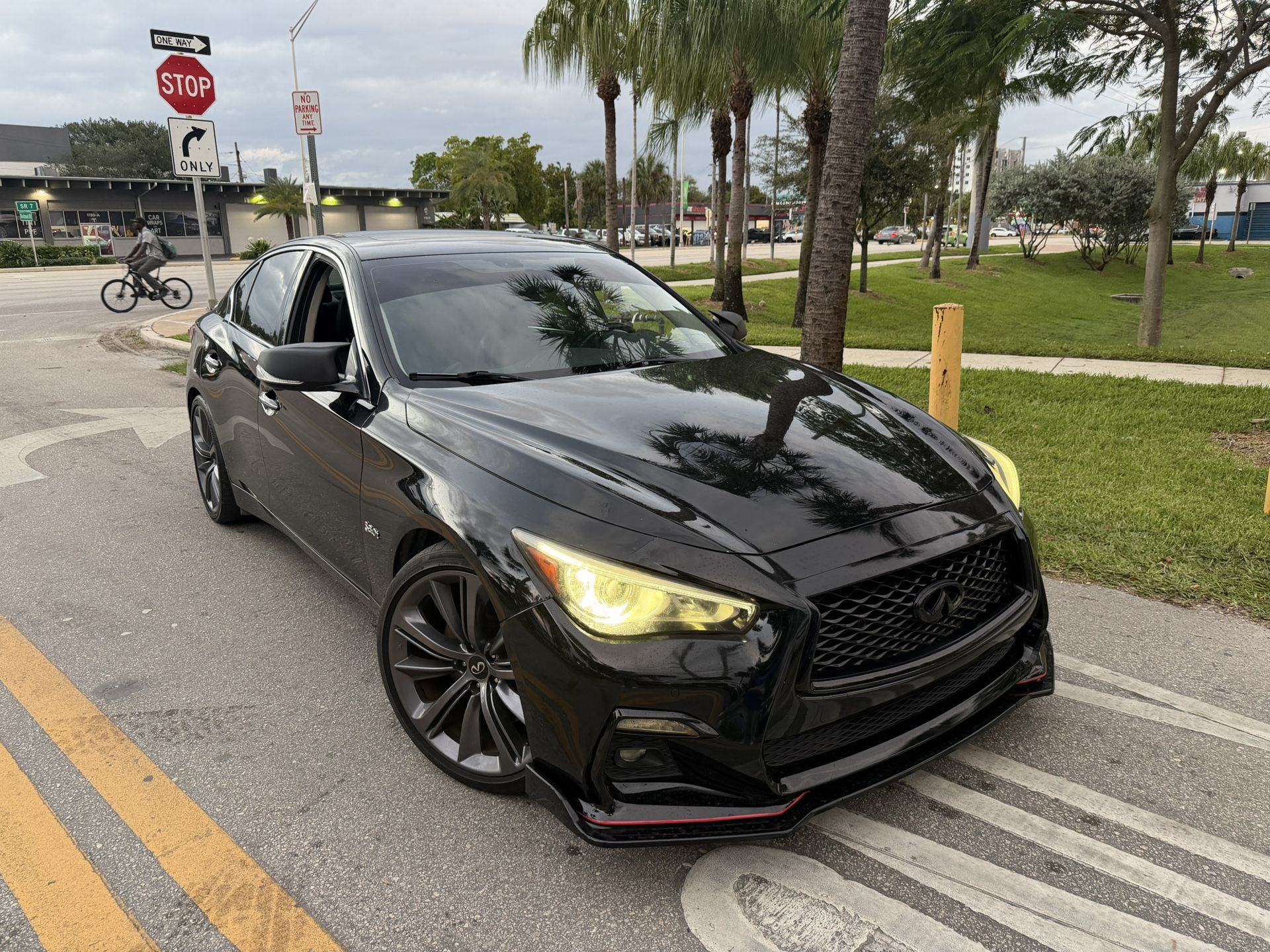
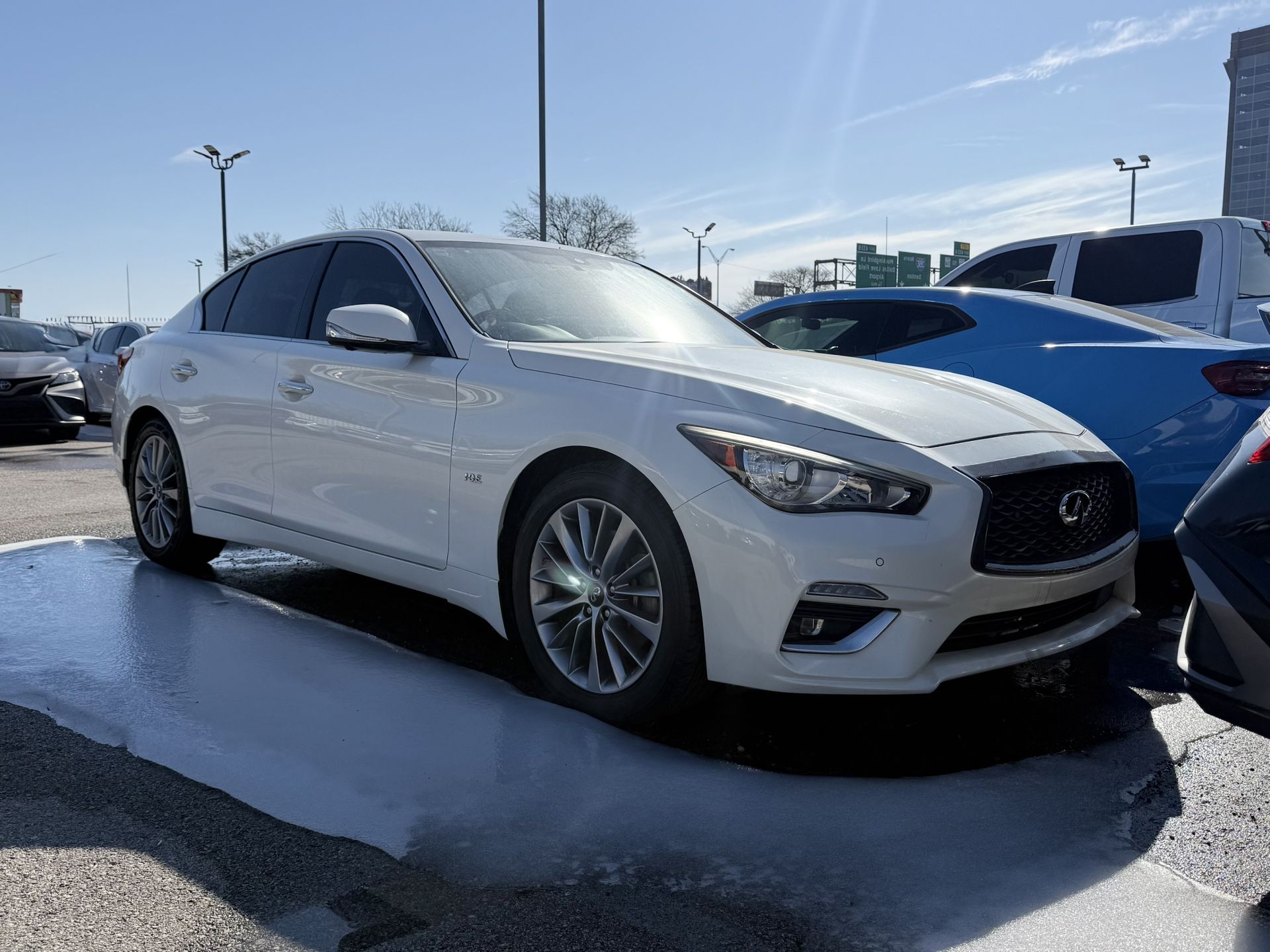
The 2018 Infiniti Q50 accelerates from 0 to 60 mph in times ranging from approximately 4.5 seconds for the high-performance Red Sport 400 trim to around 5.4 to 5.7 seconds for the standard 3.0t models and the entry-level 2.0-liter turbocharged four-cylinder variants. These figures place the luxury sport sedan firmly in competitive territory against contemporary German and domestic rivals.
Evaluating the performance capabilities of a modern luxury sport sedan requires looking beyond a single metric. While the headline-grabbing 0 to 60 mph sprint time offers a quick snapshot of straight-line capability, real-world execution depends heavily on powertrain configuration, drivetrain choice (rear-wheel drive versus Intelligent All-Wheel Drive), transmission behavior, and tire compounds. For the 2018 model year, Infiniti restructured its trim lineup and refined its engine options, making performance figures vary significantly depending on whether a buyer selected the entry-level turbo-four, the mainstream twin-turbo V6, or the flagship performance-tuned variant.
This comprehensive guide analyzes the 0 to 60 acceleration metrics of the 2018 Infiniti Q50 across its various trims, examining the mechanical underpinnings, real-world driving dynamics, environmental factors, and historical context that define this vehicle's performance footprint.
Powertrain Lineup and Configuration Overview
The 2018 Infiniti Q50 featured three distinct engine options, each delivering a unique power output and characteristic power delivery curve. Understanding these powertrains is essential for interpreting why the 0 to 60 mph times vary so drastically across the showroom floor.
| Engine Option | Horsepower | Torque | Est. 0-60 Time |
|---|---|---|---|
| 2.0L Turbo Inline-4 | 208 hp @ 5,500 rpm | 258 lb-ft | ~7.2 - 7.3 seconds |
| 3.0L Twin-Turbo V6 (300) | 300 hp @ 6,400 rpm | 295 lb-ft | ~5.4 - 5.7 seconds |
| 3.0L Twin-Turbo V6 (400) | 400 hp @ 6,400 rpm | 350 lb-ft | ~4.5 - 4.8 seconds |
The 2.0-Liter Turbocharged Inline-4
The base engine for the 2018 Q50 was a 2.0-liter turbocharged four-cylinder engine sourced through a partnership with Mercedes-Benz. Producing 208 horsepower at 5,500 rpm and 258 lb-ft of torque starting at a low 1,500 rpm, this engine was designed primarily for fuel efficiency and relaxed daily commuting rather than aggressive track performance. When paired with the standard seven-speed automatic transmission, rear-wheel-drive models typically achieve a 0 to 60 mph acceleration time in the low 7-second range (approximately 7.2 to 7.3 seconds). Opting for the heavier all-wheel-drive system adds weight, slightly blunting initial launch responsiveness.
The 3.0-Liter Twin-Turbo V6 (300 HP)
The spiritual heart of the Q50 lineup is the VR30DDTT 3.0-liter twin-turbocharged V6 engine. In its standard tune, it generates 300 horsepower at 6,400 rpm and 295 lb-ft of torque between 1,600 and 5,200 rpm. This broad torque band transforms the Q50's acceleration profile. Rear-wheel-drive variants equipped with the 300-hp V6 generally complete the 0 to 60 mph run in roughly 5.4 seconds, while all-wheel-drive versions achieve the same benchmark in about 5.6 to 5.7 seconds, benefiting from immediate off-the-line traction despite the minor weight penalty.
The 3.0-Liter Twin-Turbo V6 (400 HP - Red Sport 400)
At the apex of the lineup sits the Q50 Red Sport 400. Utilizing a more aggressive turbo-boost calibration, dual water-to-air charge coolers, and a dedicated turbine speed sensor, this engine produces a robust 400 horsepower at 6,400 rpm and 350 lb-ft of torque from 1,600 to 5,200 rpm. Independent automotive testing publications, including Car and Driver and Motor Trend, recorded 0 to 60 mph times ranging from 4.5 seconds to 4.8 seconds for rear-wheel-drive and all-wheel-drive Red Sport 400 models, respectively.
Rear-Wheel Drive Versus All-Wheel Drive Dynamics
Drivetrain choice plays a pivotal role in how the 2018 Infiniti Q50 puts its power to the pavement. Infiniti offered its Intelligent All-Wheel Drive (AWD) system as an option across almost all trim levels, introducing specific performance trade-offs during acceleration testing.
Traction Advantages Off the Line
During a standing start, all-wheel-drive Q50 models benefit from maximized mechanical grip. When launching a 300-hp or 400-hp vehicle from a standstill, rear-wheel-drive models can experience momentary wheel spin or traction control intervention, especially on standard street surfaces or under less-than-ideal temperature conditions. The AWD system instantly transfers up to 50 percent of available torque to the front wheels when slip is detected, ensuring a cleaner, more immediate bite off the line. This can give AWD models a slight advantage in the initial 0 to 30 mph increment.
Weight Penalties and Rolling Acceleration
Conversely, the hardware associated with the AWD system—including the transfer case, front driveshaft, and differential—adds approximately 150 to 200 pounds of dead weight to the vehicle. Once the vehicle is moving and traction limits are no longer the primary bottleneck, this extra weight works against the engine. Consequently, rear-wheel-drive models often claw back time during the latter half of the 0 to 60 mph sprint and in rolling acceleration tests (such as 5 to 60 mph or 50 to 70 mph), where sheer power-to-weight ratio dictates performance.
Transmission and Throttle Response Factors
Every 2018 Infiniti Q50 utilizes a seven-speed automatic transmission featuring Adaptive Shift Control and manual shift modes via paddle shifters on select trims. The behavior of this transmission significantly influences how accessible the advertised 0 to 60 acceleration times are in everyday driving.
Shift Logic and Sport Modes
In standard "Standard" or "Eco" drive modes, the transmission prioritizes fuel economy, often short-shifting or hesitating slightly upon deep throttle application to balance efficiency and smoothness. Engaging "Sport" or "Sport+" mode (available on higher trims equipped with the Drive Mode Selector) alters shift maps, holding gears longer into the power band and quickening shift execution times. For maximum acceleration performance, using manual shift mode or allowing the transmission to manage redline shifts in Sport+ yields the most consistent 0 to 60 mph results.
Electronic Steer-by-Wire: Direct Adaptive Steering
Many 2018 Q50 models feature Infiniti's optional Direct Adaptive Steering (DAS), a digital steer-by-wire system that eliminates the mechanical linkage between the steering wheel and the front wheels under normal conditions. While DAS does not directly alter engine power or transmission gear ratios, it changes the tactile feedback delivered to the driver during hard acceleration. Enthusiasts often note that DAS feels artificial compared to traditional hydraulic or electric power steering systems, which can affect driver confidence when pushing the car to its limits on winding roads or drag strips.
Real-World Testing Conditions and Methodology
Published 0 to 60 mph acceleration figures from automotive media outlets are typically achieved under controlled test conditions that differ significantly from daily commuting environments. Understanding these variables explains why individual drivers might observe variations in their own vehicles.
Weather, Altitude, and Fuel Quality
- Ambient Temperature and Density Altitude: Hot weather reduces air density, lowering forced-induction efficiency and diminishing engine output. Cold, dense air generally improves turbocharger performance and yields faster acceleration times.
- Elevation: High-altitude tracks (such as those in Denver) introduce thin air that starves naturally aspirated and turbocharged engines of oxygen, increasing 0 to 60 times unless the turbochargers compensate by spinning faster.
- Fuel Octane Requirements: The 3.0-liter twin-turbo V6 engines are engineered to produce their rated horsepower and torque figures on premium 91-octane (or higher) fuel. Using lower-octane regular unleaded fuel triggers the engine control unit (ECU) to retard ignition timing to prevent engine knock, resulting in a noticeable reduction in peak acceleration performance.
Tire Compound and Wear
Factory-equipped tires on the 2018 Q50 varied by trim, ranging from all-season grand touring tires on base models to performance summer tires on the Red Sport 400. Worn tread blocks, incorrect tire pressures, or switching from summer performance rubber to standard all-season tires can introduce slip during hard launches, directly degrading verified 0 to 60 mph test results.
Competitive Comparison within the Luxury Sport Sedan Segment
To contextualize the performance of the 2018 Infiniti Q50, it helps to examine how its acceleration metrics stack up against primary competitors from the same model year, such as the BMW 3 Series, Audi A4, and Mercedes-Benz C-Class.
| Vehicle Model | Engine / Trim | Horsepower | Est. 0-60 Time |
|---|---|---|---|
| 2018 Infiniti Q50 | Red Sport 400 (3.0T) | 400 hp | 4.5 - 4.8 seconds |
| 2018 BMW 340i | 3.0L Turbo I6 | 320 hp | 4.6 - 4.8 seconds |
| 2018 Audi S4 | 3.0L Turbo V6 | 354 hp | 4.4 seconds |
| 2018 Mercedes-Benz C43 | 3.0L Biturbo V6 | 362 hp | 4.6 seconds |
As demonstrated in the comparison table, the Infiniti Q50 Red Sport 400 punches above its weight class in raw horsepower output (400 hp), allowing it to match or exceed the straight-line acceleration of higher-priced German performance sedans like the BMW 340i and Mercedes-Benz C43 AMG. However, automotive reviewers frequently noted that while the Q50 excelled in straight-line muscle, its chassis tuning, body roll control, and steering feedback lagged behind the handling precision offered by BMW and Audi counterparts during aggressive cornering maneuvers.
Frequently Asked Questions
What is the fastest 2018 Infiniti Q50 model from 0 to 60 mph?
The fastest model is the Q50 Red Sport 400, which achieves 0 to 60 mph in approximately 4.5 to 4.8 seconds. This performance is driven by its high-output 3.0-liter twin-turbocharged V6 engine producing 400 horsepower and 350 lb-ft of torque.
Does the 2018 Infiniti Q50 require premium fuel for maximum performance?
Yes. To achieve advertised horsepower ratings and optimal 0 to 60 acceleration times, the twin-turbo V6 engines require 91-octane or higher premium gasoline. Using lower-octane fuel causes the engine computer to adjust timing defensively, reducing peak power output.
How does all-wheel drive affect the Q50's acceleration time?
All-wheel drive provides superior traction from a complete standstill, often resulting in an aggressive initial launch with minimal wheel slip. However, the added mechanical weight of the AWD system slightly diminishes rolling acceleration compared to lighter rear-wheel-drive variants.
Can the 2018 Infiniti Q50 3.0t be modified to accelerate faster?
Yes. Because the 3.0-liter twin-turbo engine is heavily responsive to electronic tuning, aftermarket bolt-on modifications such as ECU remaps (tunes), upgraded heat exchangers, and cat-back exhaust systems are popular among enthusiasts seeking to surpass factory performance thresholds.
Is the base 2.0-liter engine fast enough for everyday driving?
The 2.0-liter turbocharged four-cylinder engine delivers 208 horsepower and offers adequate acceleration for daily commuting and highway merging, with a 0 to 60 time in the low 7-second range. However, drivers seeking spirited performance or rapid passing power typically prefer the twin-turbo V6 variants.
Conclusion and Buying Guidance
The 2018 Infiniti Q50 offers a compelling value proposition for buyers prioritizing straight-line acceleration and horsepower per dollar within the luxury sport sedan market. While base four-cylinder models serve as commuter-friendly cruisers, the twin-turbo V6 trims—culminating in the 400-horsepower Red Sport 400—deliver genuinely brisk performance capable of keeping pace with established German rivals. When evaluating a used 2018 Q50, prospective owners should verify maintenance records, confirm the health of the turbocharger cooling systems, and test drive both rear-wheel-drive and all-wheel-drive configurations to determine which drivetrain best suits their local climate and driving preferences.