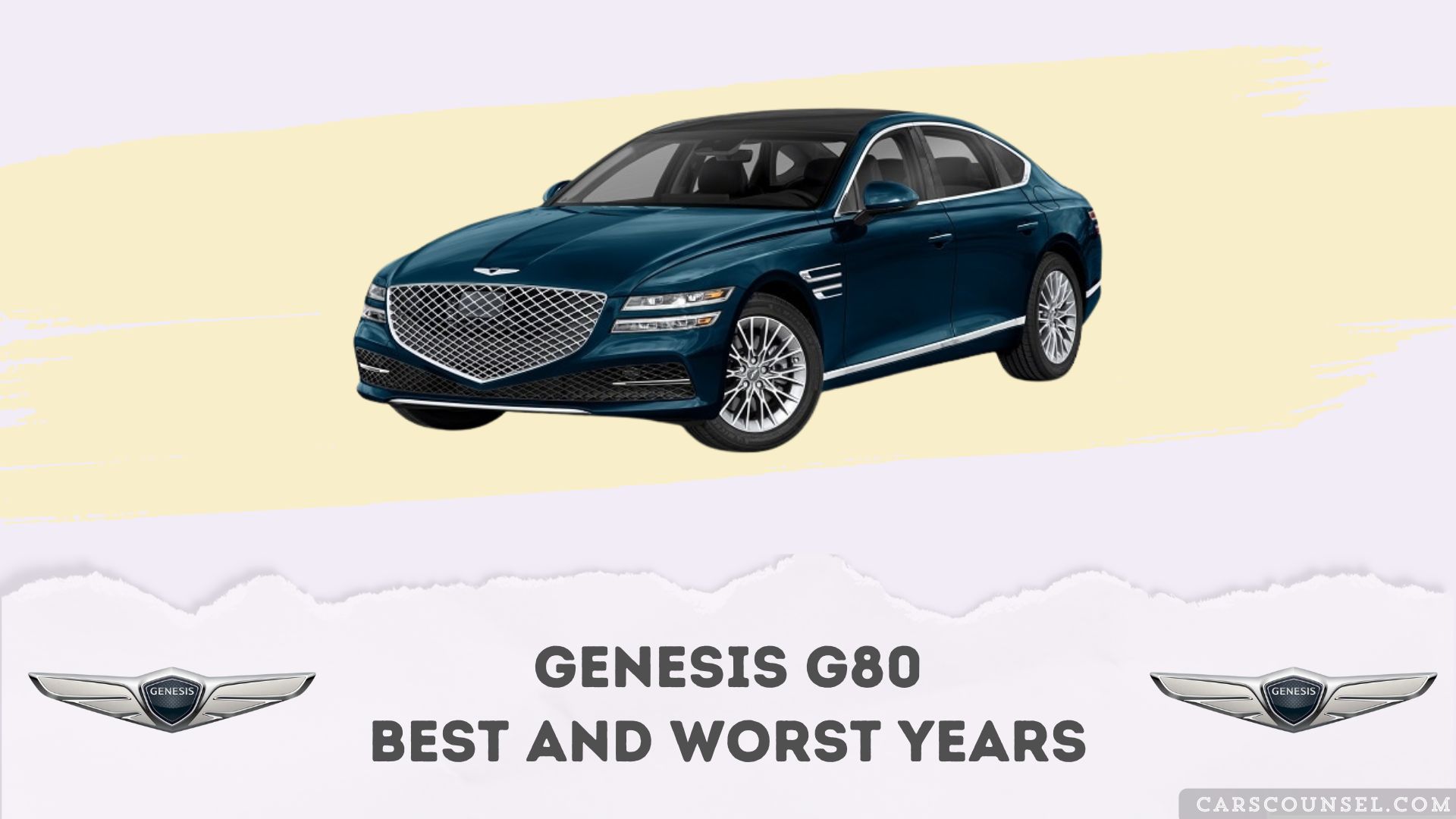
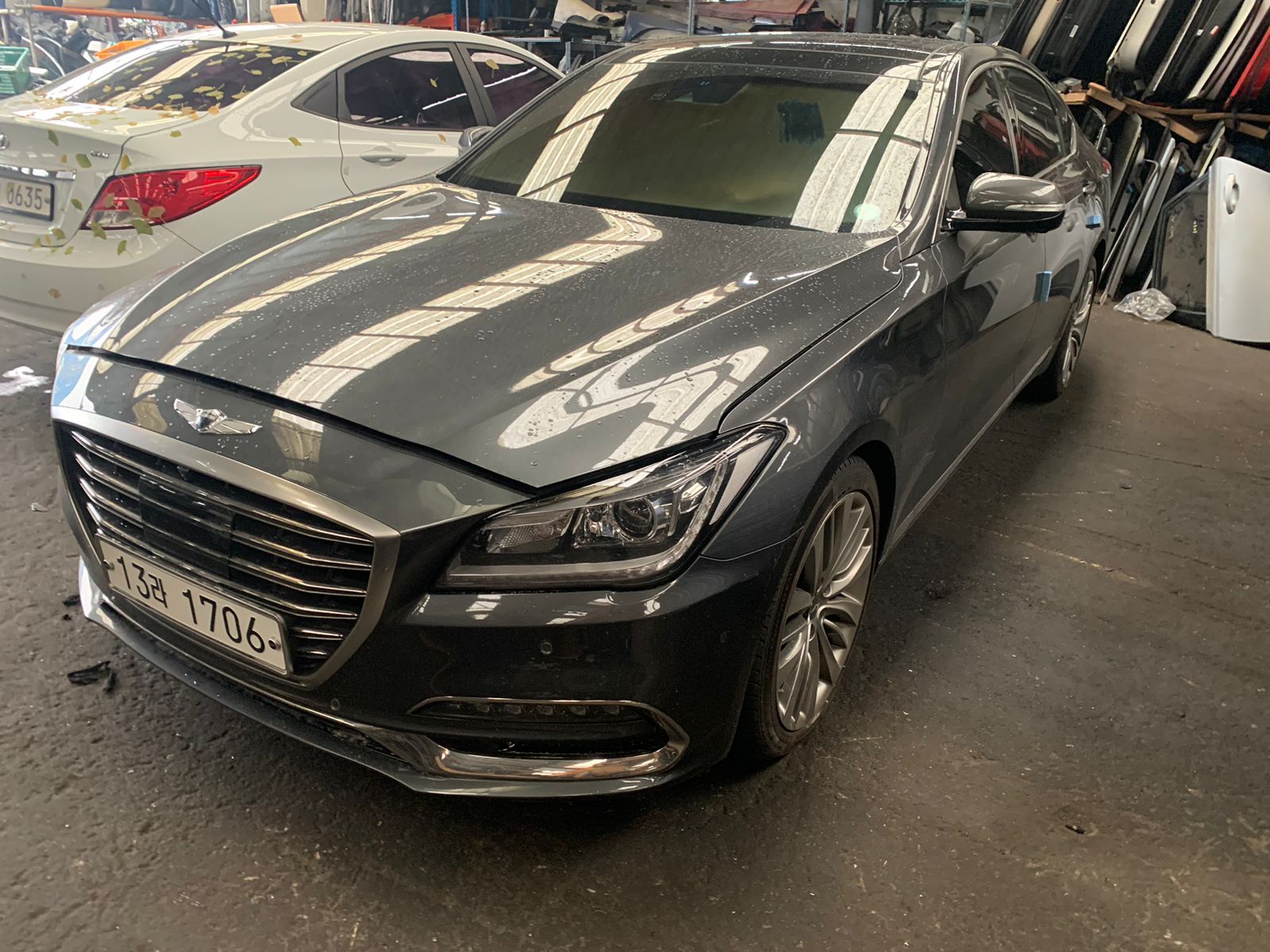
The year 2016 marked a pivotal transformation for the Genesis G80, serving as the bridge between its origins as the Hyundai Genesis sedan and its rebirth as the flagship of the independent Genesis luxury brand. This timeline covers the strategic rebranding, the technical specifications of the inaugural 2017 model year launched in 2016, and the vehicle's enduring legacy from a 2026 perspective.
The Strategic Pivot: From Model to Brand (Late 2015 – Early 2016)
To understand the 2016 timeline of the Genesis G80, one must look at the executive decisions made in late 2015. On November 4, 2015, Hyundai Motor Group officially announced the launch of "Genesis" as a standalone luxury brand. This was not merely a marketing gimmick; it was a response to the success of the second-generation Hyundai Genesis (internal code DH), which had proven that the Korean automaker could compete with established European and Japanese luxury marques.
Throughout the first quarter of 2016, the automotive world watched as Hyundai began the complex process of bifurcating its lineup. The 2016 Hyundai Genesis sedan continued to be sold in showrooms, but it was effectively a "lame duck" model—the final vehicle to bear both the Hyundai "H" on its trunk and the Genesis wings on its hood. Internally, the engineering teams were already finalizing the adjustments that would turn the 2016 Hyundai Genesis into the 2017 Genesis G80.
The primary goal of this period was to establish a "New Luxury" identity. This involved moving away from traditional discount-based selling and toward a service-oriented model. The G80 was designated as the volume leader for this new brand, positioned to take on the BMW 5 Series, Mercedes-Benz E-Class, and Lexus GS.
June 2016: The Official World Debut at the Busan Motor Show
The most significant milestone in the 2016 Genesis G80 timeline occurred in June 2016 at the Busan International Motor Show in South Korea. This event served as the global premiere of the G80 nameplate. While the vehicle’s exterior design remained largely consistent with the 2016 Hyundai Genesis, the debut introduced several critical updates:
- Refined Aesthetics: The G80 featured a revised "Crest" grille, slightly altered headlight internals, and new wheel designs that emphasized a more sophisticated, "athletic elegance" design language.
- The G80 Sport Reveal: Alongside the standard G80, Genesis teased the G80 Sport, featuring a 3.3-liter twin-turbocharged V6 engine. This variant was designed to appeal to younger, performance-oriented buyers who found the standard 3.8L V6 too conservative.
- Advanced Safety Suites: Genesis announced that the G80 would come standard with an array of safety technologies that were previously optional or unavailable on the Hyundai-badged predecessor.
This debut signaled to the global market that Genesis was ready to transition from a single high-end Hyundai model to a comprehensive luxury ecosystem.
August 2016: North American Launch and Pricing Structure
By August 2016, the 2017 Genesis G80 began arriving at North American dealerships. This was a challenging period for the brand, as Genesis did not yet have a dedicated dealer network. Instead, the G80 was sold through select Hyundai dealers who had met specific "luxury standards" for service and showroom environment.
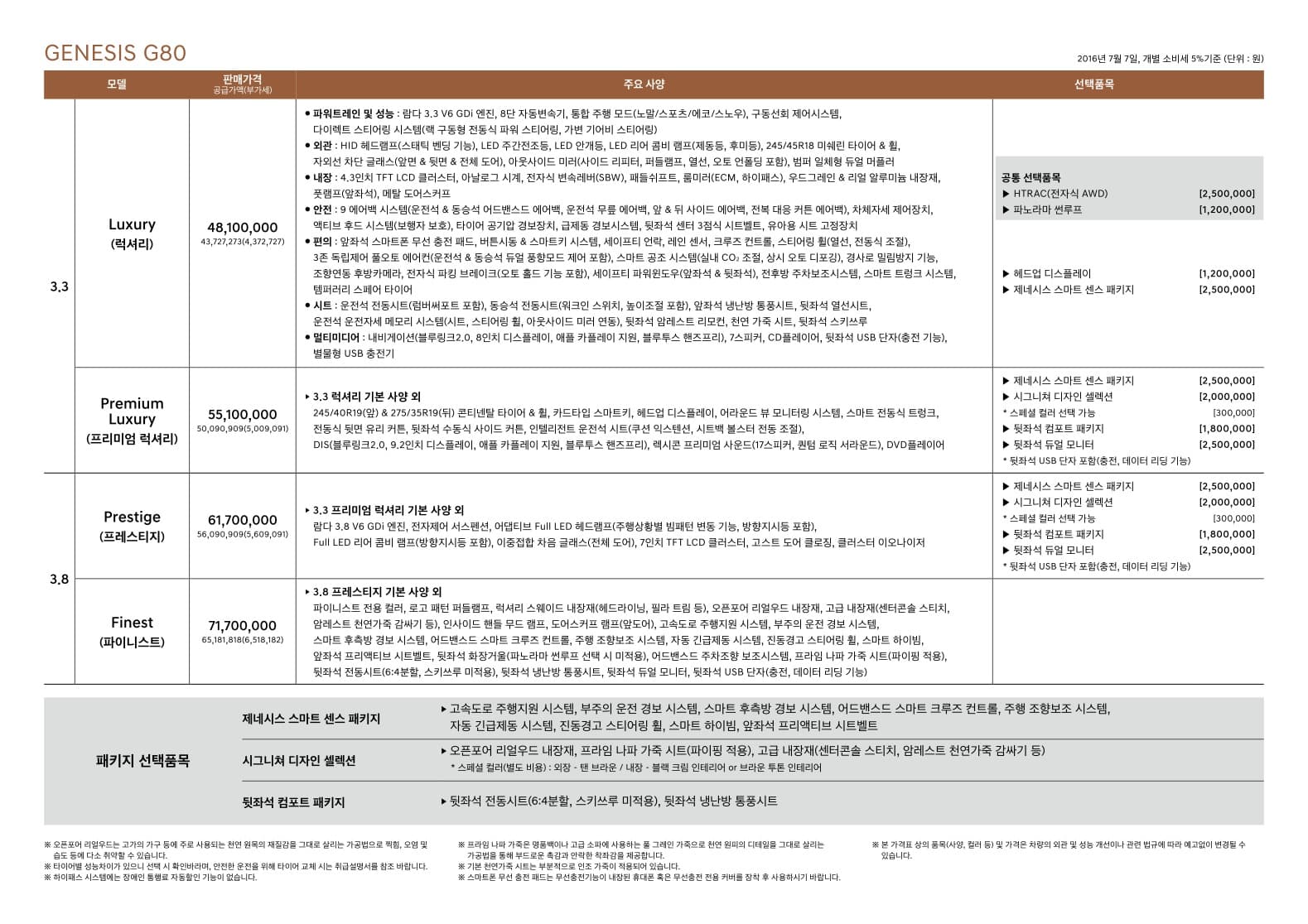
The pricing strategy in late 2016 was aggressive. The 2017 Genesis G80 launched with a starting MSRP of approximately $41,400 for the 3.8L RWD model. This positioning was intentional, offering a significantly lower entry price than the Mercedes-Benz E-Class while providing more standard equipment.
The Genesis Experience
A major part of the 2016 launch timeline was the introduction of the Genesis Experience. This was a suite of ownership benefits that set the G80 apart:
- 3 years/36,000 miles of Complimentary Scheduled Maintenance: Owners did not pay for oil changes or routine inspections.
- Genesis Service Valet: A service where the dealer would pick up the car for maintenance and leave a loaner vehicle, ensuring the owner never had to visit a dealership.
- 3 years of Genesis Connected Services: Including SiriusXM Traffic and Travel Link.
Technical Specifications: The DH Platform Architecture
The 2016/2017 Genesis G80 was built on the DH platform, which utilized over 50% advanced high-strength steel. This resulted in a chassis with world-class torsional rigidity, surpassing even the BMW 5 Series of that era. The engineering was famously tuned in collaboration with Lotus Engineering, specifically to improve the steering feel and suspension damping for a more "European" driving dynamic.
Powertrain Options
During the 2016 rollout, two primary engines were offered in the G80:
- 3.8-liter Lambda V6: Producing 311 horsepower and 293 lb-ft of torque. This was the workhorse engine, paired with an 8-speed automatic transmission. It featured Gasoline Direct Injection (GDI) and Dual CVVT.
- 5.0-liter Tau V8: Producing 420 horsepower and 383 lb-ft of torque. The Tau V8 was a multi-award-winning engine, known for its smooth power delivery and "old-school" luxury feel. It allowed the G80 to compete with the V8 offerings from German manufacturers, which were becoming increasingly rare at the time.
HTRAC All-Wheel Drive
The 2016 timeline also saw the expansion of the HTRAC (Hyundai Traction) all-wheel-drive system. Unlike basic AWD systems, HTRAC was designed with a rear-wheel bias to maintain sporty handling characteristics while providing the ability to send up to 90% of torque to the front wheels in slippery conditions. This made the G80 a viable competitor in "Snow Belt" states in the U.S. and throughout Canada.
Comparison: 2016 Hyundai Genesis vs. 2017 Genesis G80
Because the transition happened mid-year in 2016, buyers often confuse the two models. The following table highlights the material changes that occurred during the 2016 rebranding timeline.
| Feature | 2016 Hyundai Genesis (DH) | 2017 Genesis G80 (Launch Model) |
|---|---|---|
| Badging | Hyundai "H" on rear; Genesis wings on front | Genesis wings on front and rear; G80 badge |
| Standard Safety | Optional "Technology Package" required | Standard Smart Cruise Control, AEB, and LKA |
| Warranty | 5-yr/60k basic; 10-yr/100k powertrain | 5-yr/60k basic; 10-yr/100k powertrain + Valet Service |
| Infotainment | Standard 8-inch or 9.2-inch | Added Android Auto & Apple CarPlay (mid-2016) |
| Transmission | 8-speed Automatic | 8-speed Automatic (re-mapped for smoothness) |
| Standard Audio | 7-speaker system | 14-speaker Lexicon Premium Audio (most trims) |
Safety and Technology Evolution in 2016
Safety was the cornerstone of the G80’s 2016 marketing campaign. Upon its transition to the G80 nameplate, Genesis made Automatic Emergency Braking (AEB), Lane Keep Assist (LKA), and Blind Spot Detection (BSD) with Rear Cross-Traffic Alert standard across all trims.
In late 2016, the Insurance Institute for Highway Safety (IIHS) awarded the G80 the Top Safety Pick+ rating. The vehicle achieved "Good" ratings in all crashworthiness tests, including the difficult small overlap front test. The standard front crash prevention system was rated as "Superior," a significant achievement for a vehicle at that price point. Detailed safety data from this era can be verified through the IIHS official website.
From a technological standpoint, the 2016 timeline was also the era of smartphone integration. While early 2016 Hyundai Genesis models lacked Apple CarPlay and Android Auto, the late-2016 production of the G80 included these features as standard, significantly increasing the vehicle's "future-proof" appeal.
Maintenance and Reliability: A 2026 Perspective
Looking back from 2026, the 2016/2017 G80 era is regarded as a high point for Genesis reliability. By 2026, many of these vehicles have exceeded 150,000 miles.
Common Long-Term Observations
- The Tau V8: This engine has proven to be remarkably robust. Aside from occasional gasket leaks and the need for high-quality synthetic oil to maintain the GDI system, the V8 is a "million-mile" engine candidate.
- 3.8L V6 Carbon Buildup: As with many early GDI engines, some owners reported carbon buildup on intake valves by the 100,000-mile mark. Periodic walnut blasting or specialized cleaning is a known maintenance requirement for these units.
- Interior Durability: The Nappa leather and genuine wood trim used in the G80 have held up well against UV damage and wear, provided they were treated with basic leather conditioners over the last decade.
- Electronics: The 9.2-inch DIS (Driver Information System) has remained functional, though by 2026 standards, the navigation maps and interface speed feel dated compared to modern OLED-based systems.
For current owners in 2026, the expiration of the legendary 10-year/100,000-mile powertrain warranty (for original owners) is a significant milestone. This makes third-party inspections and preventative maintenance more critical than ever for those still driving these first-generation G80s.
Market Value and Collectibility in 2026
In 2026, the 2016 Hyundai Genesis and the 2017 Genesis G80 occupy a unique niche in the used car market. They are often viewed as "luxury bargains." Because the brand was still gaining recognition in 2016, depreciation was steeper than that of Mercedes or Lexus. However, this has resulted in a robust secondary market where high-mileage examples are accessible to budget-conscious buyers seeking a premium experience.
The 5.0L V8 models, in particular, are beginning to see a stabilization in value. As the automotive industry has shifted toward smaller displacement turbocharged engines and electrification, the naturally aspirated Tau V8 is increasingly viewed as a "modern classic." Collectors and enthusiasts look for 2016/2017 V8 models with the "Ultimate" package for their combination of performance and traditional luxury.
FAQ: Understanding the 2016 Genesis G80 Transition
Is there a difference between a 2016 Hyundai Genesis and a 2016 Genesis G80?
Technically, there is no "2016 Genesis G80." In North America, the vehicle was sold as the 2016 Hyundai Genesis for the first half of the year. Starting in late summer 2016, the model was updated and rebranded as the 2017 Genesis G80. If you see a listing for a "2016 G80," it is likely a mislabeled 2017 model or a late-production 2016 Hyundai Genesis.
What were the major mechanical changes in the 2016 transition?
Mechanically, the 2016 Hyundai Genesis and 2017 G80 are very similar. The primary differences involve software tuning for the 8-speed transmission to improve shift smoothness and the standardization of high-tech safety features like Smart Cruise Control and Automatic Emergency Braking, which were previously part of expensive optional packages.
Which engine is better: the 3.8L V6 or the 5.0L V8?
The "better" engine depends on your priorities. The 3.8L V6 is more fuel-efficient and easier to maintain, making it the practical choice for a daily commuter. The 5.0L V8 offers a much more effortless, powerful driving experience and a more prestigious sound profile. In 2026, the V8 is the more sought-after model for enthusiasts due to its rarity and smoothness.
Did the 2016/2017 G80 have any recalls?
Yes, like all mass-produced vehicles, there were recalls. Notable ones included an issue with the Anti-lock Brake System (ABS) module that could potentially cause an engine compartment fire, and issues with the high-pressure fuel pump in certain GDI models. Owners in 2026 should verify that all recall work has been completed by checking the VIN on the NHTSA website.
Is the 2016/2017 G80 expensive to maintain in 2026?
Compared to German luxury cars of the same era, the G80 is generally more affordable to maintain because it shares many mechanical components with other Hyundai and Kia models. Parts are more readily available, and the engine designs are less complex than the turbocharged, twin-cooled setups found in competitors. However, specialized items like the Lexicon audio components or the adaptive suspension (on V8 models) can be expensive to replace.
Next Actions for Prospective Owners and Enthusiasts
If you are researching the 2016 Genesis G80 timeline with the intent to purchase one in 2026, your next step should be a thorough VIN check. This will confirm whether the vehicle is a 2016 Hyundai Genesis or a 2017 Genesis G80, which determines the level of standard safety equipment and the remaining (if any) warranty coverage.
For those interested in the historical significance of the brand, the 2016 timeline represents the moment a regional manufacturer decided to challenge the global elite. Whether you choose the final Hyundai-badged Genesis or the first G80-badged luxury sedan, you are acquiring a vehicle that redefined expectations for Korean automotive engineering.