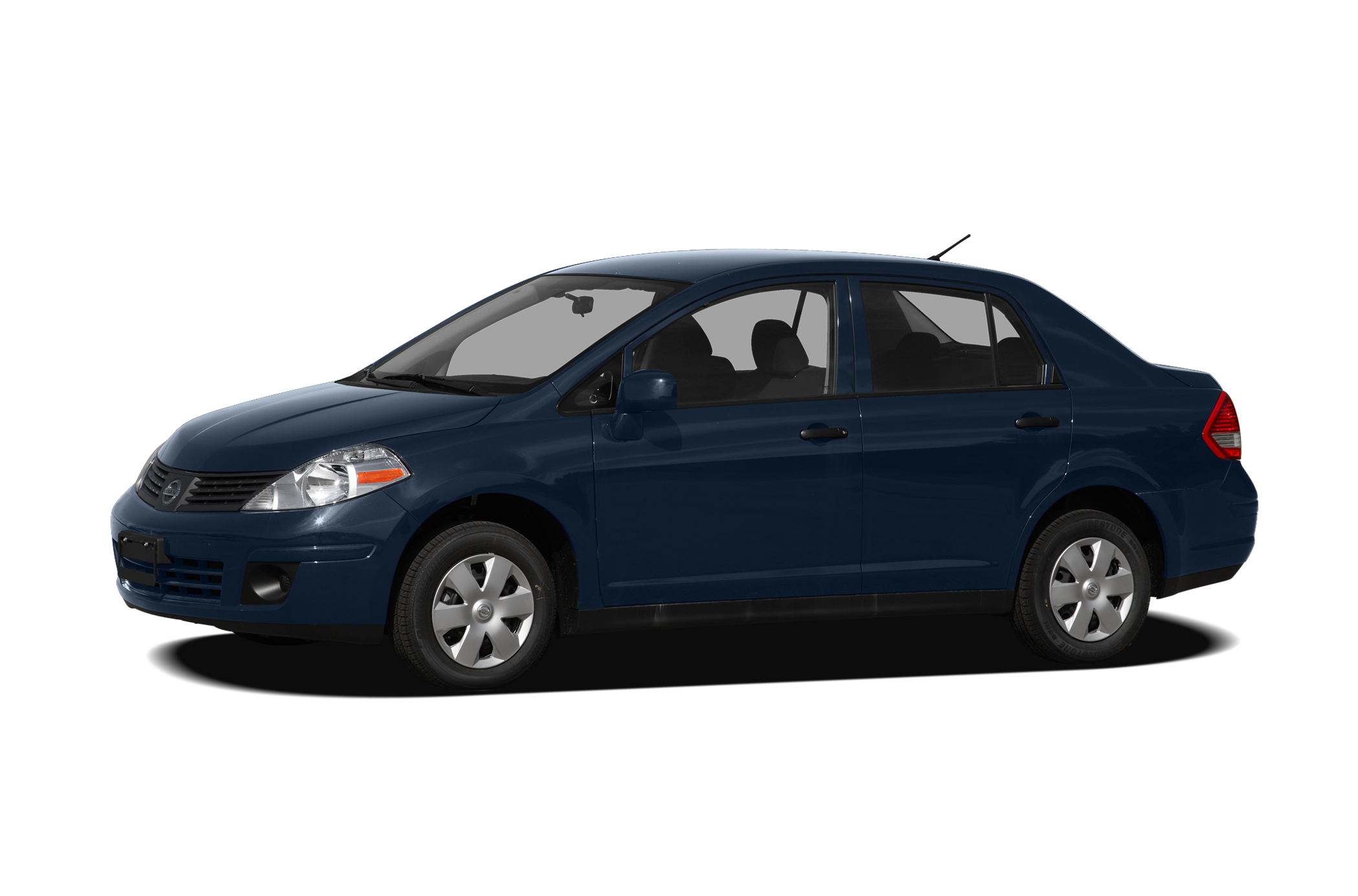
The 2011 Nissan Versa remains a prominent choice in the used subcompact market due to its exceptional interior volume and straightforward mechanical design. Available in both sedan and hatchback configurations, it features two engine options: a 107-hp 1.6-liter or a 122-hp 1.8-liter four-cylinder, paired with manual, automatic, or CVT transmissions.
As of 2026, the 2011 Nissan Versa has transitioned into a classic "budget commuter" role. While it lacks the high-tech infotainment systems of modern vehicles, its mechanical simplicity and historical reputation for rear-seat legroom keep it relevant for drivers seeking low-cost transportation. Understanding the specific 2011 Nissan Versa specs is crucial for identifying which trim level and body style suits your needs, especially considering the variations in powertrain and standard equipment that existed during this production year.
Engine and Performance Specifications
The 2011 model year offered two distinct engines, largely determined by the body style and trim level chosen. These powerplants were designed with a focus on urban efficiency rather than high-performance driving.
The 1.6-Liter Inline-4 (HR16DE)
Found primarily in the Base and S trims of the sedan, the 1.6-liter engine was Nissan’s solution for the entry-level price point. It produces 107 horsepower at 6,000 rpm and 107 lb-ft of torque at 4,400 rpm. This engine utilizes a dual injector system and twin CVTC (Continuously Variable Valve Timing Control) on the intake and exhaust ports, which helped it achieve competitive fuel economy for the era. In 2026, this engine is noted for its relative ease of maintenance, though it can feel underpowered when the vehicle is fully loaded with passengers.
The 1.8-Liter Inline-4 (MR18DE)
Standard on all 1.8 S and 1.8 SL hatchback models, as well as the 1.8 SL sedan, this larger engine provides a more robust driving experience. It generates 122 horsepower and 127 lb-ft of torque. The MR18DE engine features a long stroke design to improve low-end torque, making it better suited for highway merging and carrying cargo. It also incorporates a beehive valve spring design to reduce friction and improve overall engine durability.
Transmission Options and Driving Dynamics
Nissan provided four different transmission types for the 2011 Versa, which significantly impacted the vehicle's "personality" and fuel efficiency.
- 5-Speed Manual: Available only on the 1.6-liter sedan models. It provides the most direct control but features relatively short gearing, which can lead to higher engine noise at highway speeds.
- 6-Speed Manual: Standard on the 1.8 S hatchback. This transmission is rare for the subcompact segment of that era and allows for better fuel economy and quieter cruising than the 5-speed counterpart.
- 4-Speed Automatic: An older but reliable planetary gear transmission found on the 1.6 S sedan and 1.8 S models. While less efficient than newer designs, it is often preferred by used car buyers in 2026 due to its predictable long-term durability compared to early CVTs.
- Xtronic CVT (Continuously Variable Transmission): Exclusive to the 1.8 SL trim levels. This transmission was designed to keep the engine in its most efficient power band. While it provides the smoothest acceleration, buyers of high-mileage units should verify maintenance records, as early CVTs required strict fluid change intervals to maintain longevity.
Exterior and Interior Dimensions
One of the defining 2011 Nissan Versa specs is its "big car" interior in a "small car" footprint. Nissan achieved this by utilizing a high roofline and a long wheelbase relative to the car's total length.
Exterior Footprint
The sedan measures approximately 176 inches in length, while the hatchback is slightly shorter at 169.1 inches. Both share a 102.4-inch wheelbase. This long wheelbase is the secret behind the car's stability and its ability to offer significant legroom. The width stands at 66.7 inches, allowing it to navigate tight city streets and narrow parking spots with ease.
Interior Volume and Comfort
The 2011 Versa was marketed with the claim of having more rear-seat legroom than many luxury sedans of the same period.
- Front Legroom: 41.4 inches
- Rear Legroom: 38.0 inches
- Headroom (Front/Rear): 40.6 / 38.3 inches (without sunroof)
The hatchback model is particularly praised for its utility. With the rear seats up, it offers 17.8 cubic feet of storage. When the 60/40 split-rear seats are folded down, that capacity expands to 50.4 cubic feet, rivaling some small crossovers.
Comprehensive 2011 Nissan Versa Specs Table
The following table compares the primary specifications across the most common configurations for the 2011 model year.
| Specification | 1.6 Sedan (Base/S) | 1.8 S (Hatch/Sedan) | 1.8 SL (Hatch/Sedan) |
|---|---|---|---|
| Engine | 1.6L 4-Cylinder | 1.8L 4-Cylinder | 1.8L 4-Cylinder |
| Horsepower | 107 hp @ 6,000 rpm | 122 hp @ 5,200 rpm | 122 hp @ 5,200 rpm |
| Torque | 107 lb-ft @ 4,400 rpm | 127 lb-ft @ 4,800 rpm | 127 lb-ft @ 4,800 rpm |
| Transmission | 5-MT / 4-AT | 6-MT / 4-AT | Xtronic CVT |
| Fuel Tank Capacity | 13.2 Gallons | 13.2 Gallons | 13.2 Gallons |
| Curb Weight | ~2,350 lbs | ~2,700 lbs | ~2,800 lbs |
| Wheels | 14-inch Steel | 15-inch Steel | 15-inch Alloy |
| Brakes | Front Disc / Rear Drum | Front Disc / Rear Drum | Front Disc / Rear Drum |
Fuel Economy and Efficiency
Fuel efficiency for the 2011 Versa varies significantly based on the engine and transmission pairing. According to FuelEconomy.gov, the official EPA ratings at the time of release were as follows:
- 1.6L with 5-Speed Manual: 26 mpg city / 34 mpg highway.
- 1.8L with CVT: 28 mpg city / 34 mpg highway.
- 1.8L with 4-Speed Automatic: 24 mpg city / 32 mpg highway.
- 1.8L with 6-Speed Manual: 24 mpg city / 31 mpg highway.
In the current context of 2026, these figures are respectable for a non-hybrid used vehicle. However, real-world mileage may vary depending on the condition of the fuel system and oxygen sensors. Drivers should note that the 1.8L with the CVT actually outperformed the manual versions in fuel efficiency, a rarity at the time of the car's original production.
Safety Ratings and Equipment
For the 2011 model year, Nissan included several standard safety features that were becoming industry standards. All 2011 Versa models came equipped with the Nissan Advanced Air Bag System (AABS), which includes dual-stage supplemental front air bags with seat belt and occupant classification sensors.
Standard safety equipment includes:
- Side-impact air bags: Front seat-mounted side-impact supplemental air bags.
- Curtain air bags: Roof-mounted curtain side-impact supplemental air bags for front and rear outboard occupant head protection.
- Tire Pressure Monitoring System (TPMS): Standard on all trims.
- Braking: Power-assisted front disc/rear drum brakes. Anti-lock Braking System (ABS) with Electronic Brake force Distribution (EBD) and Brake Assist was standard on 1.8 S and 1.8 SL but was an option on the 1.6 models.
The Insurance Institute for Highway Safety (IIHS) gave the 2011 Versa "Good" ratings (the highest possible) in frontal-offset and side-impact crash tests. You can review detailed crash data on the NHTSA website.
Maintenance Considerations for 2026
When evaluating 2011 Nissan Versa specs for a purchase today, maintenance history is as important as the raw numbers. The vehicle is now 15 years old, and certain age-related issues are common.
Suspension and Chassis
The Versa uses an independent strut front suspension with a stabilizer bar and a torsion beam rear axle. Over time, the bushings in the control arms and the rear shocks are prone to wear, leading to a "loose" feel or clunking noises over bumps. Replacing these components is relatively inexpensive due to the high volume of aftermarket parts available.
CVT Service
If looking at an SL trim with the CVT, ensure the fluid has been changed at least every 30,000 to 50,000 miles. Neglected CVTs from this era are known for "droning" or slipping. If the vehicle displays a "Check Engine" light with codes related to the step motor or pressure sensors, the transmission may require specialized repair or replacement.
Engine Cooling and Seals
The MR18DE engine is generally robust, but owners should check for leaks around the valve cover gasket and monitor the cooling system. Radiator plastic end tanks can become brittle after 15 years of heat cycles. Proactive replacement of the thermostat and coolant hoses is recommended for any high-mileage 2011 Versa.
Trim Level Details and Features
The 2011 Versa was available in three primary trim levels, each catering to a different budget and set of requirements.
1.6 Base and 1.6 S (Sedan Only)
These were the "value" leaders. The Base trim was famously Spartan, often lacking a radio or air conditioning in its most basic form to keep the MSRP under $10,000. The 1.6 S added essential features like A/C and a basic CD player. These models are identifiable by their 14-inch wheels and black plastic door handles.
1.8 S (Sedan and Hatchback)
The 1.8 S was the most popular trim. It included the larger engine, 15-inch wheels with full covers, power windows, power door locks, and remote keyless entry. The interior materials were upgraded from the 1.6 models, featuring higher-quality cloth upholstery.
1.8 SL (Sedan and Hatchback)
The 1.8 SL was the premium offering. Notable features included:
- Technology: Available Navigation package with a 5-inch touch screen.
- Convenience: Intelligent Key keyless ignition and entry, Bluetooth hands-free phone system, and steering wheel-mounted audio controls.
- Aesthetics: 15-inch aluminum-alloy wheels and upgraded "sport" seat cloth on the hatchback.
- Audio: An optional Rockford Fosgate-powered subwoofer was available for the hatchback, a rare premium audio option for this class.
Frequently Asked Questions
Does the 2011 Nissan Versa have a timing belt or timing chain?
Both the 1.6L (HR16DE) and the 1.8L (MR18DE) engines in the 2011 Nissan Versa use a timing chain. Unlike timing belts, timing chains are designed to last the lifetime of the engine and do not require periodic replacement, provided that oil changes are performed regularly to keep the chain tensioners lubricated.
What is the towing capacity of the 2011 Nissan Versa?
The 2011 Nissan Versa is not recommended for towing by the manufacturer. Using this vehicle to tow a trailer can put excessive strain on the transmission (especially the CVT) and the braking system, potentially leading to mechanical failure and voiding any remaining third-party warranties.
Can the 2011 Nissan Versa run on E85 ethanol?
No, the 2011 Nissan Versa is designed to run on unleaded gasoline with an octane rating of 87 or higher. It is not a Flex-Fuel vehicle. Using E85 can damage the fuel system components and cause poor engine performance.
How many miles can a 2011 Nissan Versa last?
With proper maintenance, many 2011 Nissan Versa owners report reaching 150,000 to 200,000 miles. The longevity of the vehicle largely depends on the transmission type; models with manual transmissions or the 4-speed automatic typically reach higher mileages more reliably than those equipped with the early-generation Xtronic CVT.
What is the wheel bolt pattern for the 2011 Versa?
The bolt pattern for the 2011 Nissan Versa is 4x114.3mm (also known as 4x4.5 inches). This is a common pattern for many Nissan and older Japanese vehicles, making it relatively easy to find replacement or aftermarket wheels.
Final Recommendation for Buyers in 2026
If you are considering a 2011 Nissan Versa in 2026, prioritize the 1.8 S or 1.8 SL models with the 6-speed manual or 4-speed automatic transmission for the best balance of reliability and daily drivability. While the CVT offers better fuel economy on paper, the potential for high-cost repairs on a 15-year-old transmission makes the traditional gearboxes a safer bet for budget-conscious buyers. Always perform a pre-purchase inspection focusing on the suspension bushings and cooling system integrity to ensure the vehicle remains a dependable commuter for years to come.