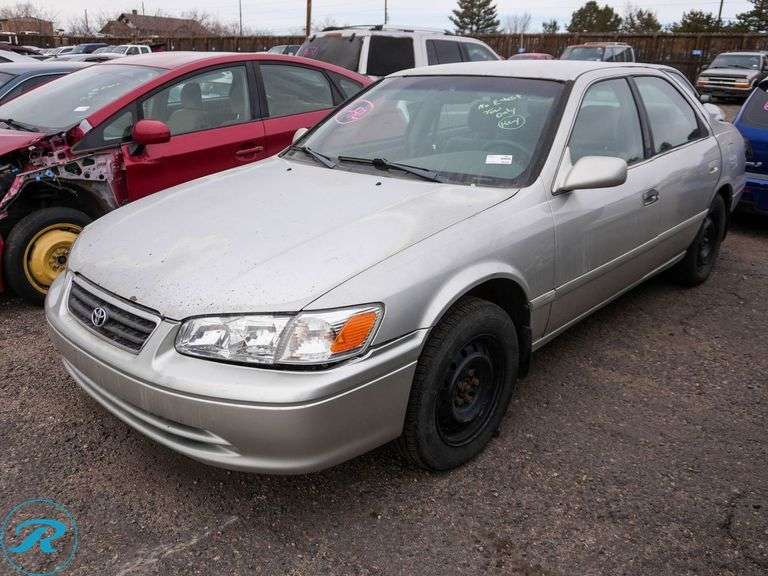
The 2001 Toyota Camry CE represents the final model year of the XV20 generation, widely celebrated for its bulletproof reliability, comfortable ride, and exceptional build quality. As the base trim level, the CE (Classic Edition) offers straightforward motoring without unnecessary complexities, making it a favorite among commuters, budget-conscious drivers, and automotive enthusiasts seeking a dependable daily driver.
Introduction to the 2001 Toyota Camry CE
The 2001 Toyota Camry CE is a cornerstone of automotive history, representing an era when Japanese sedans set global benchmarks for durability and mechanical longevity. Standing for "Classic Edition," the CE trim served as the entry point into the Camry lineup for the 2001 model year, sitting below the mid-grade LE and the luxury-oriented XLE. Despite being the base configuration, the CE did not feel austere; instead, it focused on core automotive fundamentals—reliable transportation, straightforward ergonomics, and effortless maintenance.
For buyers evaluating this vehicle today, understanding its mechanical layout, common maintenance needs, and inherent strengths provides crucial insight into why so many of these sedans remain operational well past the 200,000-mile mark. Whether you are looking to purchase a well-preserved survivor as an economical commuter or maintaining a long-term family vehicle, the 2001 Camry CE demands an appreciation for its engineering simplicity. This comprehensive guide explores its specifications, powertrain options, common wear points, ownership costs, and practical strategies to keep this legendary sedan on the road.
Powertrain and Mechanical Specifications
Under the hood, the 2001 Toyota Camry CE typically came equipped with a 2.2-liter inline-four engine, designated as the 5S-FE. For buyers desiring more power, a 3.0-liter V6 (the 1MZ-FE) was available as an option, though the four-cylinder engine remains the defining powerplant of the CE designation. The 2.2L engine produces approximately 133 horsepower at 5,800 rpm and 149 lb-ft of torque at 4,400 rpm. While these numbers are modest by modern standards, they deliver adequate acceleration for city driving and effortless cruising at highway speeds.
Engine management relies on a timing belt setup rather than a timing chain, which requires scheduled replacement every 60,000 to 90,000 miles. Neglecting this maintenance item can lead to catastrophic engine interference if the belt snaps, making service history a critical factor when inspecting a used model. Power is routed to the front wheels via either a 5-speed manual transmission or a 4-speed electronically controlled automatic transmission (ECT). The manual gearbox is particularly praised for its positive shift feel and ability to maximize the modest power output, while the automatic transmission is noted for smooth, seamless gear changes.
| Specification | 2.2L Inline-4 (5S-FE) | 3.0L V6 (1MZ-FE) |
|---|---|---|
| Horsepower | 133 hp @ 5,800 rpm | 194 hp @ 5,400 rpm |
| Torque | 149 lb-ft @ 4,400 rpm | 209 lb-ft @ 4,400 rpm |
| Fuel Economy (EPA Est.) | ~23 City / 30 Hwy (Manual) | ~20 City / 28 Hwy (Automatic) |
| Valvetrain | DOHC, 4 valves per cylinder | DOHC, 4 valves per cylinder |
| Fuel Delivery | Sequential Multi-port EFI | Sequential Multi-port EFI |
Interior Comfort and Practical Features
The interior of the 2001 Toyota Camry CE prioritizes ergonomic clarity and functional space over high-tech displays and ambient lighting. The cabin utilizes durable materials designed to withstand decades of sun exposure, temperature swings, and daily ingress and egress. Cloth upholstery is standard, featuring a tightly woven fabric that resists staining and wear remarkably well. The front bucket seats offer long-distance comfort with supportive bolstering, while the rear bench easily accommodates up to three adult passengers, offering generous legroom and headroom.
As the base trim, the CE came standard with essential amenities, leaving advanced features to the LE and XLE packages. Standard equipment typically included manual windows and door locks on early-run base models, though many were upgraded with the optional Extra Value Package, which added air conditioning, power windows, power door locks, cruise control, and an AM/FM/cassette audio system. The dashboard layout is intuitive, featuring large, legible analog gauges and rotary climate control dials that can be operated easily by touch without distracting the driver. Cargo capacity is another major selling point, with the trunk providing 14.1 cubic feet of usable space, complemented by 60/40 split-folding rear seats that allow for the transport of longer items.
Driving Dynamics and Ride Quality
The driving experience of the 2001 Camry CE is defined by compliance, comfort, and composure. Toyota engineered this generation with a fully independent MacPherson strut suspension system in both the front and rear, tuned specifically to absorb road imperfections, potholes, and expansion joints with minimal disturbance to the cabin. The ride is notably plush, floating over rough asphalt in a manner reminiscent of larger full-size American sedans of previous decades, yet retaining enough body control to remain stable during emergency maneuvers.
Steering is handled by a speed-sensitive power rack-and-pinion system. While it offers minimal road feedback compared to modern sports sedans, the steering is light, making low-speed parking maneuvers and tight urban navigation effortless. Braking is managed by power-assisted front ventilated disc brakes and rear drums (or optional four-wheel discs on certain packages), providing predictable stopping power. Overall, the vehicle excels as a comfortable highway cruiser and an unassuming daily commuter that minimizes driver fatigue over long distances.
Common Mechanical Issues and Maintenance Realities
Even the most durable vehicles develop specific wear patterns as they age. Understanding these tendencies helps owners proactively service their vehicles and avoid unexpected breakdowns.
Oil Leaks and Consumption
The 5S-FE four-cylinder engine is prone to minor oil leaks as it ages, most commonly originating from the oil pump o-ring, camshaft seals, and valve cover gaskets. Additionally, higher-mileage examples may experience oil consumption due to stuck piston rings. Regular oil level checks are mandatory to prevent running the engine low on lubrication.
Exhaust Manifold Cracks
A well-known quirk of the 2.2L engine is the tendency for the factory exhaust manifold to develop thermal stress cracks. This typically manifests as a ticking noise upon cold startup that may subside as the metal expands. Replacing it with a quality aftermarket or OEM manifold resolves the issue permanently.
Suspension Component Wear
Rubber bushings, struts, and control arms wear out over two decades of operation. Clunking noises when going over bumps or loose steering feel usually indicate that the suspension components require renewal. Refreshing these parts restores the factory-smooth ride quality immediately.
Ownership Costs and Long-Term Reliability
One of the primary reasons the 2001 Toyota Camry CE retains a dedicated following is its low cost of ownership. Replacement parts—both OEM and aftermarket—are widely available, reasonably priced, and mechanically straightforward to install, making the vehicle an ideal candidate for DIY maintenance. Fuel economy remains competitive for a non-hybrid sedan of its size, routinely achieving over 25 miles per gallon in mixed driving conditions.
Insurance rates for this model are generally very affordable due to its low market value, strong safety ratings for its era, and low theft appeal relative to modern performance vehicles. However, prospective buyers should budget for deferred maintenance. Purchasing a car from this era often requires immediate attention to fluids, spark plugs, ignition wires, drive belts, and worn suspension bushings to bring the vehicle back to optimal operational standards.
Frequently Asked Questions
Is the 2001 Toyota Camry CE a reliable first car?
Yes, the 2001 Camry CE is widely considered one of the best first cars available. Its forgiving driving dynamics, excellent outward visibility, low maintenance costs, and legendary durability make it an ideal vehicle for inexperienced drivers learning vehicular responsibility.
What is the difference between the Camry CE, LE, and XLE?
The CE is the base trim level, offering essential features and often manual windows and locks unless upgraded with option packages. The LE adds power adjustments, keyless entry, and upgraded interior trim. The XLE represents the luxury tier, featuring wood-grain accents, automatic climate control, alloy wheels, and optional leather seating or a V6 engine.
How many miles can a 2001 Toyota Camry CE last?
With proper routine maintenance, including regular oil changes and timely timing belt replacements, the 2001 Camry CE regularly surpasses 250,000 to 300,000 miles before requiring major engine or transmission overhauls.
Does the 2001 Camry CE have a timing belt or timing chain?
The standard 2.2L four-cylinder engine utilizes a rubber timing belt that must be replaced every 60,000 to 90,000 miles to prevent engine damage.
How do I check the transmission fluid on a 2001 Camry CE automatic?
Ensure the engine is warmed up and running on a level surface with the parking brake engaged. Cycle through the gear selector, return it to Park, pull the transmission dipstick (located near the back of the engine bay), wipe it clean, reinsert it fully, and check that the fluid level falls within the hot crosshatch markings.
Final Recommendations for Buyers and Owners
If you currently own a 2001 Toyota Camry CE, prioritizing preventative maintenance—such as monitoring fluid levels, replacing rubber hoses before they crack, and changing the timing belt on schedule—will ensure the vehicle continues to serve reliably for years to come. For those considering purchasing a used model, prioritize finding a vehicle with a documented service history, minimal rust on the frame rails and rocker panels, and a smooth-shifting transmission. A well-maintained Camry CE represents exceptional mechanical value and stands as a testament to an era of peerless automotive engineering.