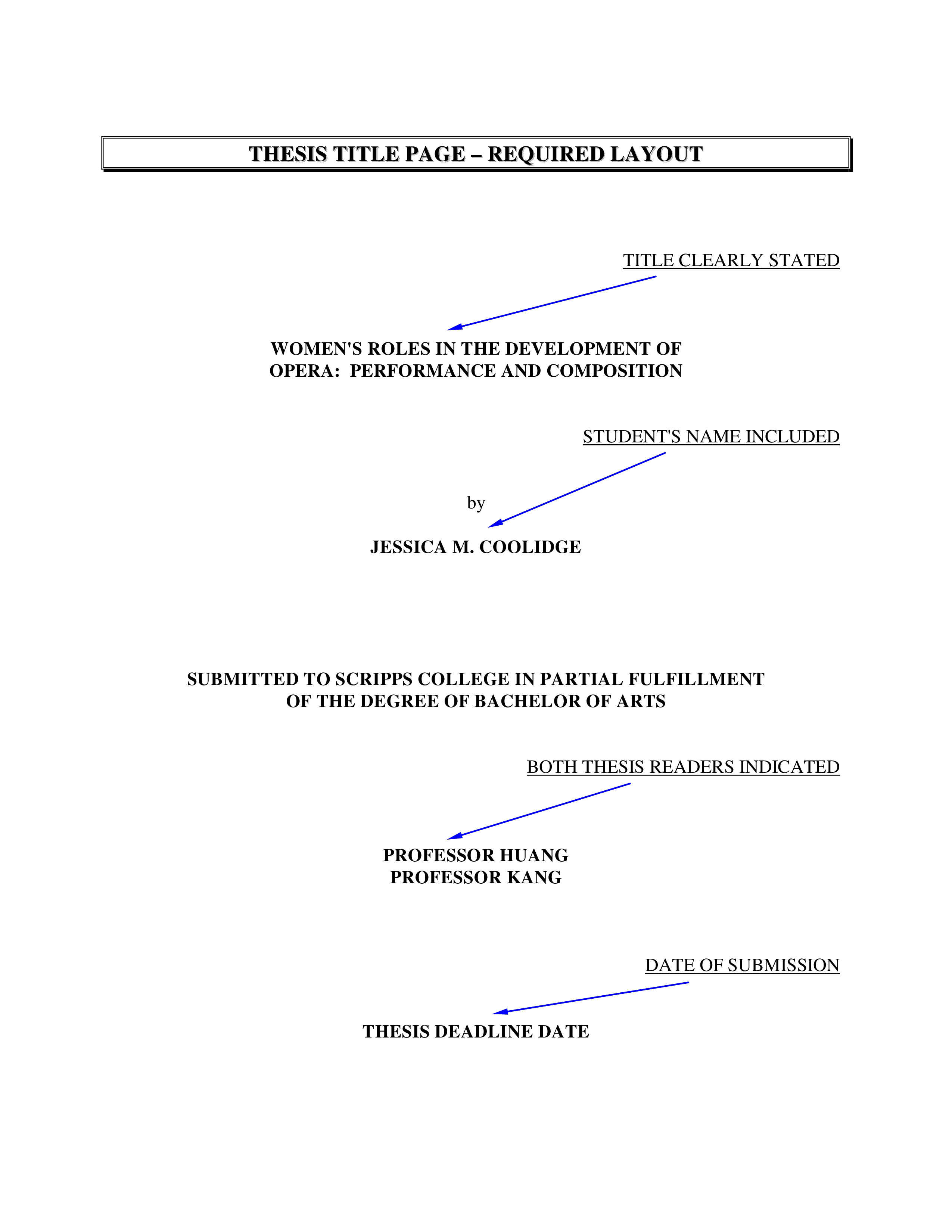
Crafting an effective title for an academic paper requires balancing conciseness, clarity, and keyword optimization to accurately reflect your research methodology, scope, and findings while attracting peer readership.
An academic paper's title serves as its primary calling card in digital repositories, indexing databases, and search engines. It must convey the core scope, methodology, and focus of the research without resorting to clickbait or overly broad terminology. Whether you are preparing a manuscript for a peer-reviewed journal, a conference proceeding, or a thesis defense, choosing the right title helps researchers quickly identify the relevance of your work. This guide explores the anatomy of a successful academic title, provides 10 distinct title ideas categorized by research style, and offers a step-by-step framework to help you refine your own manuscript heading.
The Anatomy of an Effective Academic Title
Before diving into specific title structures, it is vital to understand the foundational elements that make up a strong scholarly heading. A well-constructed title informs readers immediately about what the study investigates, how it was conducted, and under what conditions or parameters.
Editors and reviewers often evaluate a manuscript's clarity starting with the title. If a title is too vague, it signals a lack of precision in the research design. Conversely, if it is overly dense, it alienates potential readers who might otherwise benefit from the findings. Striking the right balance involves isolating your independent and dependent variables, identifying your target population or subject matter, and specifying the analytical framework.
Core Components of Scholarly Headings
- The Hook or Descriptive Phrase: Grabs attention and names the broad subject area.
- The Core Focus: Pinpoints the exact phenomenon, intervention, or question under investigation.
- The Context or Methodology: Clarifies the geographical location, data source, theoretical framework, or analytical approach.
Many disciplines favor a two-part format separated by a colon. The first part introduces the broad topic or an engaging catchphrase, while the second part provides the precise methodological context. For instance, a title structured as [Catchy Phrase]: [Descriptive Methodology and Scope] allows researchers to harness both search engine optimization (SEO) visibility and strict academic rigor.
10 Title Ideas for Academic Papers by Research Type
Different research methodologies demand different title structures. Below are 10 distinct title ideas, grouped by the type of study they best represent, complete with structural templates you can adapt to your own manuscript.
Empirical and Quantitative Studies
Empirical research relies on numerical data, statistical analysis, and measurable variables. Titles in this category should highlight the relationship between variables, the sample size, or the statistical model used.
1. The Variable-Relationship Title
- Idea: The Impact of Remote Work Policies on Employee Retention: A Multi-Sector Analysis
- Best For: Quantitative studies examining cause-and-effect relationships or correlations between two or more specific factors.
- Why It Works: It immediately states the independent variable (remote work policies), the dependent variable (employee retention), and the scope of the data (multi-sector analysis).
2. The Empirical Outcome Title
- Idea: Quantifying Carbon Emission Reductions: Evaluating Urban Transit Expansions Through Longitudinal Data
- Best For: Environmental, economic, or public health studies that measure a specific intervention's outcome over time.
- Why It Works: Starting with an active participle (Quantifying, Evaluating) signals empirical rigor, while longitudinal data informs readers of the study design.
3. The Comparative Quantitative Title
- Idea: Algorithmic Bias in Healthcare Diagnostics: A Comparative Study of Machine Learning Models Across Demographics
- Best For: Research contrasting two or more systems, algorithms, populations, or testing methods.
- Why It Works: It sets up a clear contrast and defines the exact technical domain (machine learning models) and demographic scope.
Qualitative and Theoretical Frameworks
Qualitative research explores underlying meanings, lived experiences, social structures, and theoretical constructs. These titles often lean toward descriptive language, interpretive lenses, and thematic analysis.
4. The Thematic Exploration Title
- Idea: Navigating Academic Precarity: A Thematic Analysis of Early-Career Researcher Narratives
- Best For: Interview-based studies, ethnographies, and phenomenological research.
- Why It Works: The subtitle (A Thematic Analysis of...) explicitly signals the qualitative methodology, while the main title captures the human element of the investigation.
5. The Theoretical Re-Examination Title
- Idea: Revisiting Postcolonial Theory in the Digital Age: Globalization, Identity, and Virtual Communities
- Best For: Humanities and social science papers that critique, expand, or apply existing theoretical frameworks to modern phenomena.
- Why It Works: It grounds the paper in an established academic discourse (Postcolonial Theory) while introducing a contemporary pivot (Digital Age).
6. The Case Study Approach
- Idea: Resilience in Post-Conflict Infrastructure: A Case Study of Urban Reconstruction in Belfast
- Best For: In-depth examinations of specific events, locations, organizations, or historical moments.
- Why It Works: By naming the exact geographical or institutional site (Belfast), it manages reader expectations and anchors abstract concepts in reality.
Review and Synthesis Articles
Literature reviews, meta-analyses, and systematic syntheses require titles that inform readers that the paper consolidates existing literature rather than presenting primary data.
7. The Systematic Review Title
- Idea: Efficacy of Cognitive Behavioral Therapy in Treating Adolescent Anxiety: A Systematic Review and Meta-Analysis
- Best For: Comprehensive reviews that pool data from multiple independent studies.
- Why It Works: Including Systematic Review and Meta-Analysis is mandatory for indexing in medical and scientific databases, ensuring the paper appears in targeted literature searches.
8. The State-of-the-Field Title
- Idea: Renewable Energy Storage Technologies: Current Progress, Challenges, and Future Directions
- Best For: Broad overview papers that map out the current landscape of a rapidly evolving scientific or technological discipline.
- Why It Works: The tripartite subtitle (Current Progress, Challenges, and Future Directions) provides a clear roadmap for what the literature review will cover.
Interdisciplinary and Applied Innovations
Interdisciplinary research bridges distinct fields, such as computer science and ethics, or law and biotechnology. Titles here must bridge disparate vocabularies.
9. The Interdisciplinary Bridge Title
- Idea: Ethical Implications of Autonomous Weapon Systems: Bridging International Humanitarian Law and Artificial Intelligence
- Best For: Papers that sit at the intersection of two or more distinct academic domains.
- Why It Works: It pairs a broad moral question with the two specific fields required to answer it, signaling to scholars in both law and computer science that the paper is relevant to their work.
10. The Solution-Oriented Design Title
- Idea: Mitigating Supply Chain Vulnerabilities: A Blockchain-Enabled Framework for Traceability
- Best For: Applied science, engineering, and business innovation papers that propose a novel technical or operational solution.
- Why It Works: It pairs a prominent industry problem (Supply Chain Vulnerabilities) with a specific technological solution (Blockchain-Enabled Framework).
Comparison of Academic Title Structures
| Title Type | Primary Structure | Ideal Discipline | Key Advantage |
|---|---|---|---|
| Variable-Relationship | [Independent] on [Dependent]: [Method] | Social Sciences / Economics | Clearly states variables and analytical scope |
| Thematic Exploration | [Phenomenon]: A [Method] of [Subject] | Humanities / Sociology | Highlights human experience and qualitative depth |
| Systematic Review | [Topic]: A Systematic Review and Meta-Analysis | Medicine / Sciences | Essential for database indexing and discoverability |
| Interdisciplinary | [Issue]: Bridging [Field A] and [Field B] | Law, Tech, Ethics | Attracts readership across multiple departments |
Step-by-Step Guide to Drafting Your Paper's Title
Writing a title should rarely be the first step in your writing process. Because a title must accurately reflect your final conclusions, methodology, and scope, it is best formulated after your abstract and conclusion are finalized. Follow this structured workflow to craft and refine your title.
Step 1: Draft a Working Title Early
Before you begin writing your manuscript, create a working title. This does not need to be polished; it simply needs to keep your research focused. For example, if you are studying how sleep deprivation affects memory retention in university students, your working title might be: Sleep and Memory in College Students.
Step 2: Identify Your Key Variables and Scope
As your research develops, audit your manuscript to extract the most precise terms. Ask yourself:
- What is the primary intervention, concept, or phenomenon? (e.g., Sleep deprivation)
- Who or what is being studied? (e.g., University students)
- What is the method or measurement tool? (e.g., Cognitive recall testing)
- What is the context or boundary? (e.g., A controlled laboratory setting)
Step 3: Apply the Colon Formula for Discoverability
Combine your engaging hook with your technical parameters using a colon. This structure satisfies both human curiosity and search engine algorithms.
- Example: The Cost of Exhaustion: How Sleep Deprivation Impairs Cognitive Recall in University Students
Step 4: Eliminate Redundancy and Jargon
Check your draft for filler words that add length without meaning. Remove phrases like "A Study of," "An Investigation into," or "Research on" unless they serve a specific stylistic purpose. Ensure that technical acronyms are either universally understood in your field or replaced with full terms.
Step 5: Test for Searchability and Indexing
Modern academic discovery relies heavily on digital databases like Google Scholar, Scopus, and Web of Science. Incorporate high-frequency keywords that researchers in your niche use when searching for related literature. If a scholar searches for "Cognitive Recall" or "Sleep Deprivation," having those exact terms in your title ensures higher visibility in search rankings.
Common Mistakes to Avoid When Naming Your Paper
Even experienced researchers sometimes fall into traps that undermine the effectiveness of their titles. Avoiding these common pitfalls will protect your manuscript from editorial rejection or low citation rates.
- Overly Clever or Punny Titles: While a witty title (e.g., To Sleep, Perchance to Score) might amuse conference attendees, it often confuses international readers, fails keyword indexing algorithms, and appears unprofessional in rigorous peer-reviewed venues.
- Excessive Length: Titles exceeding 20 to 25 words become unwieldy in bibliographies, citations, and journal tables of contents. Keep your title punchy and reserve the detailed background for your abstract.
- Vague Generalizations: Titles like Recent Developments in Psychology offer no descriptive value. Readers and reviewers cannot determine whether the paper is a historical overview, a clinical trial, or a theoretical critique.
- Misrepresenting the Methodology: If your paper is a qualitative case study, do not title it in a way that implies a broad quantitative meta-analysis. Misleading titles frustrate readers and lead to low citation relevance.
Frequently Asked Questions
Should I use a question as an academic paper title?
Using a direct question as a title (e.g., Does Sleep Deprivation Affect Memory?) is occasionally acceptable in the humanities or opinion-driven essays, but it is strongly discouraged in empirical sciences and social sciences. Academic titles should make declarative statements about what the research investigates or demonstrates, rather than posing open-ended queries.
How long should an academic paper title be?
Most style guides and journal editors recommend keeping titles between 10 and 15 words, or roughly 100 to 150 characters including spaces. This length provides enough room to include core variables and methodology without becoming overly convoluted or difficult to cite.
Can I change my title after the paper has been accepted?
Minor adjustments to improve clarity or fix typos are usually permitted during the copyediting phase after acceptance. However, changing the fundamental scope or focus of the title after peer review is generally discouraged, as reviewers evaluated the manuscript based on its original stated scope.
How do I choose keywords for my title for better SEO?
Review the reference list of your own manuscript to identify the recurring terms used by foundational papers in your field. Incorporating these established nomenclature terms into your title ensures that researchers utilizing those exact search queries in academic databases will discover your work more efficiently.
Is the two-part colon format mandatory?
The two-part colon format is not mandatory, but it is popular because it allows authors to combine an accessible, engaging opening phrase with a rigorous, data-driven subtitle. Single-part titles that seamlessly integrate both elements are equally valid if they remain concise and informative.
Final Recommendations for Manuscript Submission
When finalizing your academic paper for submission, review your title against the author guidelines of your target journal. Pay strict attention to word count limits, capitalization rules (such as sentence case versus title case), and formatting preferences. A polished, precise title communicates professionalism, establishes methodological transparency, and maximizes the long-term impact and citation potential of your scholarly work.