A 10-quart slow cooker offers massive cooking capacity designed for large families, catering, meal prepping, and entertaining, with standard pricing typically ranging from $70 to $150 depending on digital controls, programmable timers, and brand features. Selecting the right large-capacity appliance requires an understanding of how its physical dimensions, thermal settings, and cost tiers align with high-volume cooking needs.
Understanding the Scale of a 10-Quart Slow Cooker
When looking at kitchen appliances, capacity is often measured in vague terms like "family size." However, a 10-quart slow cooker represents a very specific, industrial-scale tier for residential and light commercial kitchens. Traditional slow cookers max out between 6 and 8 quarts, which can comfortably feed a family of six with minor leftovers. Stepping up to 10 quarts means jumping into a category that can handle whole turkeys, massive batches of chili, dozens of pulled pork sliders, or multiple racks of ribs stacked vertically.
This massive volume changes how you look at kitchen real estate and food preparation. A vessel of this size is heavy—often weighing over 20 pounds when empty and significantly more when filled with liquid and meat. The interior ceramic or metal insert requires substantial storage space, and you must verify that your countertops have enough clearance beneath upper cabinets to lift the lid safely without hitting shelving.
Despite the large footprint, the core mechanism remains simple: a heating element built into the outer metal housing transfers gentle, sustained heat to the removable inner cooking vessel. Because the surface area is much larger, thermal distribution must be carefully engineered to prevent hot spots that could burn food at the bottom while leaving ingredients at the top undercooked. Understanding these physical realities helps set realistic expectations before evaluating specific control panels and price points.
Capacity Breakdown: What Can You Actually Cook in 10 Quarts?
The primary reason to purchase a 10-quart slow cooker is volume. However, maximizing that volume requires understanding the functional limits of slow cooking physics. Slow cookers rely on liquid accumulation and steam retention to cook evenly; filling them improperly can result in dry edges or undercooked centers.
| Food Item | Estimated 10-Quart Capacity Limit |
|---|---|
| Whole Turkey | Up to a 12-to-14 pound turkey (depends on shape) |
| Pulled Pork / Beef | 8 to 10 pounds of pork shoulder or chuck roast |
| Chili or Soup | 25 to 30 cups (leaving 1-2 inches headspace) |
| Whole Chicken | Two 5-pound chickens side-by-side |
| Ribs | 3 to 4 racks standing upright along the perimeter |
When utilizing a 10-quart capacity, you must adhere to the golden rule of slow cooking: fill the insert between half and two-thirds full. If you underfill a 10-quart slow cooker by cooking a standard 3-pound roast, the excess heat can scorch the sides of the vessel and overcook the small cut of meat rapidly. Conversely, overfilling past the maximum fill line prevents the lid from sealing properly, leading to a loss of essential moisture and steam pressure.
For batch cooking, this scale is unmatched. Meal preppers can cook a week's worth of grains, proteins, and stews in a single cycle. For hosting events, a 10-quart model keeps large quantities of queso, meatballs, or pulled pork at serving temperature for hours without requiring constant stovetop monitoring.
Slow Cooker Settings and Control Interfaces
Slow cooker technology spans from basic manual rotary dials to sophisticated digital microprocessors. In the 10-quart category, the scale of the appliance makes precise temperature and time management even more critical, as overcooking large quantities of expensive protein represents a significant financial loss.
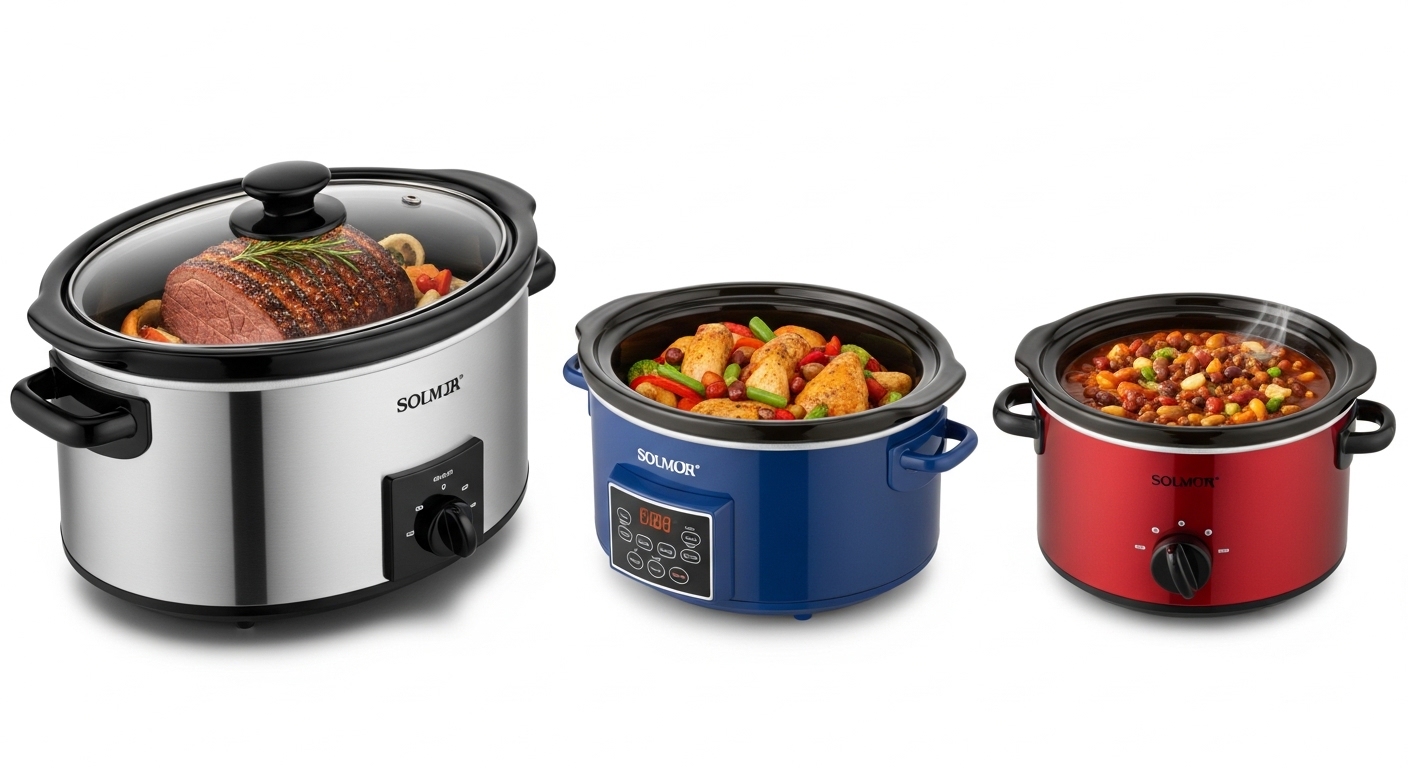
Manual Settings: High, Low, and Warm
Traditional manual slow cookers feature a simple mechanical switch with three primary positions:
- Low: Applies steady, gentle heat, bringing the contents to a simmer at a slower rate. This setting is ideal for tough cuts of meat that benefit from hours of breakdown.
- High: Reaches the simmering point much faster, cutting total cooking time roughly in half compared to the Low setting.
- Warm: Maintains a safe serving temperature (typically above 140°F) without continuing the active cooking process, preventing food from drying out during long parties or buffet services.
Digital and Programmable Settings
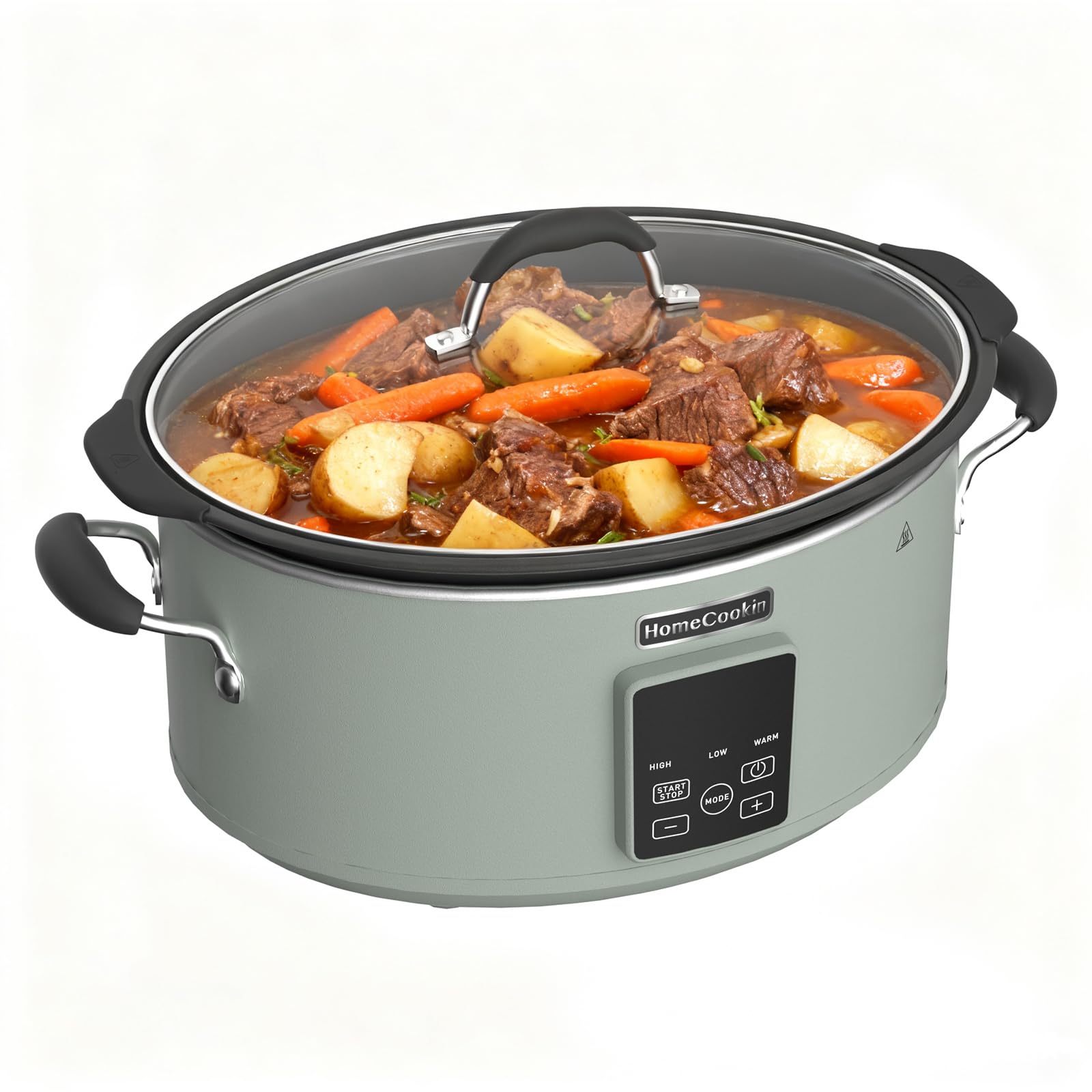
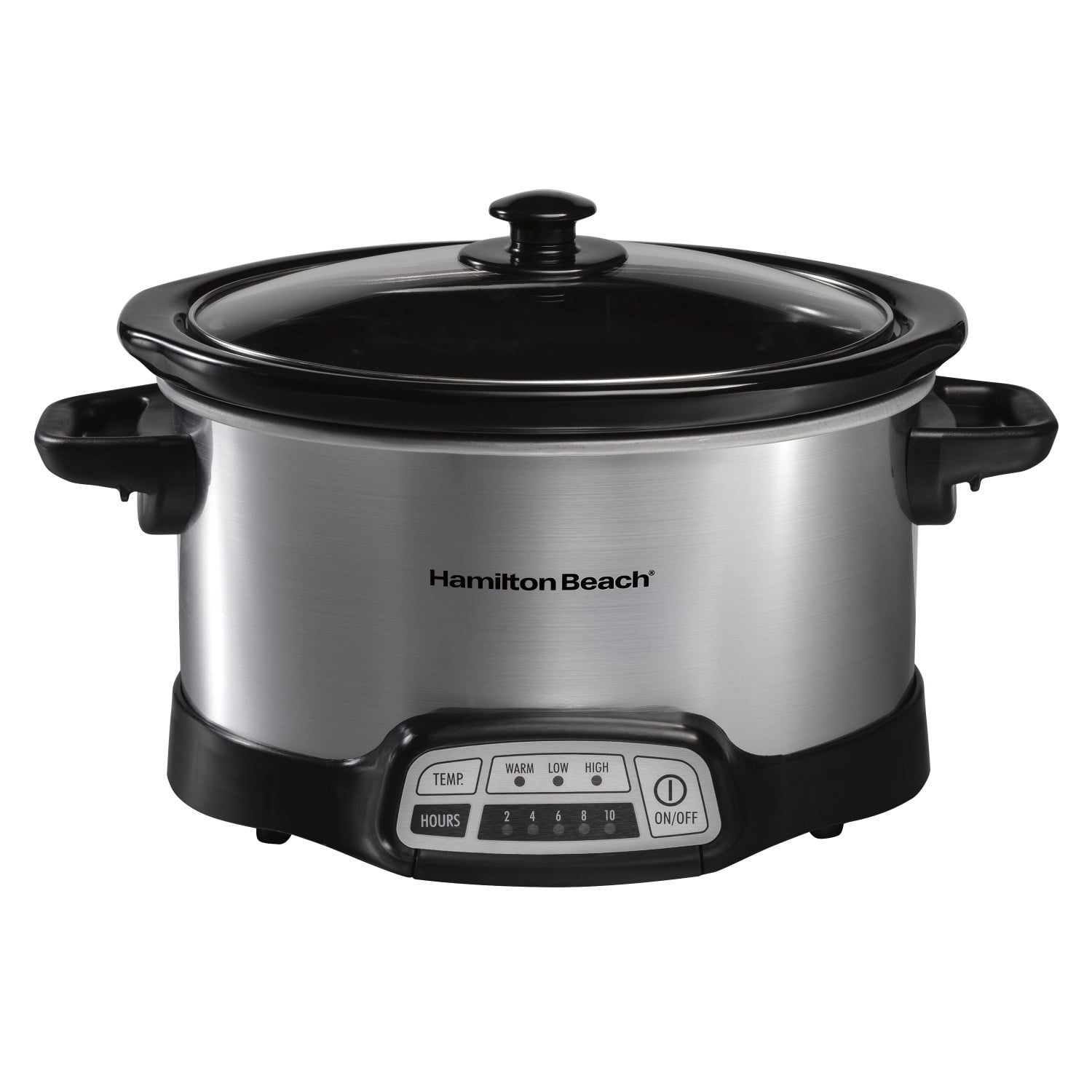
Modern 10-quart models frequently incorporate digital interfaces. These units replace physical dials with LCD screens and push-button timers that allow users to program exact cooking durations ranging from 30 minutes up to 20 or 24 hours. Once the programmed cooking time expires, the cooker automatically shifts to the Warm setting. This automation is vital for large-volume cooking, as a 10-quart batch of food takes longer to cool down naturally if left unattended.
Advanced programmable units may also feature probe thermometers that monitor internal meat temperatures, shutting off or shifting to warm the moment your roast reaches its target doneness. While these features add convenience, they also introduce electronic components that can fail over years of exposure to heavy steam and high humidity.
Price Comparison Across Brands and Feature Tiers
Slow cooker pricing is dictated by build materials, brand reputation, and the complexity of the control panel. In the 10-quart category, prices typically span a relatively tight band because manufacturing a vessel of this physical size requires robust heating elements and thick-walled inserts.
| Price Tier | Cost Range (Approx.) | Typical Features & Build Quality |
|---|---|---|
| Budget / Basic | $65 – $85 | Manual dial, stoneware insert, basic metal housing, simple lid. |
| Mid-Range | $90 – $130 | Digital timer, auto-warm function, programmable countdown, glass lid. |
| Premium / Pro | $140 – $190+ | Meat probe inclusion, heavy-duty locking lid, commercial-grade finish. |
Budget Tier ($65–$85)
At this entry level, you receive a functional, high-capacity appliance with a manual rotary dial. Brands in this space focus their manufacturing budget on the heating element and the massive stoneware or aluminum insert. You will not find advanced digital timers or custom temperature profiling here, but for users who simply want to plug in a massive pot, turn it to "Low," and let it run for eight hours, budget models deliver reliable performance.
Mid-Range Tier ($90–$130)
This is the most popular segment for home cooks upgrading to a 10-quart model. Units in this bracket introduce digital displays, countdown timers, and auto-warm capabilities. The exterior casing often features upgraded stainless steel finishes designed to match modern kitchen aesthetics. The inserts may feature non-stick coatings or heavy-duty ceramic that resists chipping better than lower-tier models.
Premium Tier ($140–$190+)
Premium 10-quart slow cookers incorporate specialized engineering for heavy home use or light catering. Features include gasket-sealed locking lids for spill-free transport to potlucks, integrated temperature probes for precision meat cooking, and multi-quart programmable cooking zones. When paying at the higher end of this scale, you are investing in durability, advanced safety cut-offs, and portability enhancements.
Operational Limitations and Common Misconceptions
Operating a 10-quart slow cooker differs from using a standard 4-quart or 6-quart appliance in ways that catch many users off guard. Recognizing these operational constraints prevents ruined meals and damaged equipment.
The Underfilling Trap
As noted earlier, a slow cooker requires a critical mass of ingredients to function correctly. If you attempt to cook a small meal in a 10-quart vessel, the heat from the perimeter walls will rapidly dehydrate the outer edges of the food long before the center reaches a safe temperature. If your household frequently cooks smaller portions, a 10-quart slow cooker is the wrong tool; you should look at 4-to-6-quart models or multi-cookers with smaller inner pots.
Preheat Times and Thermal Mass
Because a 10-quart insert holds a massive amount of ceramic or metal and requires heating gallons of ingredients, the preheat and ramp-up times are significantly longer than smaller cookers. It takes time for thermal energy to penetrate a massive roast or a full pot of chili. Adjust your recipe timelines to account for this extended thermal ramp-up phase, particularly when converting traditional stovetop recipes to slow cooker formats.
Storage and Handling Challenges
The sheer physical footprint of a 10-quart appliance means it rarely fits in standard upper kitchen cabinets. Many users must store them in pantries, lower base cabinets, or on dedicated kitchen carts. Furthermore, lifting a full 10-quart stoneware insert out of the heating base to wash it in a standard single-basin kitchen sink can be awkward and heavy. Always let the vessel cool completely before attempting to move or clean it to avoid thermal shock cracking or accidental burns.
Frequently Asked Questions
Can I use a 10-quart slow cooker to cook smaller meals?
It is technically possible, but generally discouraged. Cooking small portions in a 10-quart slow cooker often leads to overcooked, dried-out edges because the heating elements are spaced to handle a full-capacity load. If you must cook a smaller meal, reduce cooking times significantly and monitor the food closely to prevent scorching.
Do 10-quart slow cookers require a dedicated electrical circuit?
Most standard 10-quart slow cookers draw between 300 and 500 watts, which operates safely on a standard 15-amp household circuit. However, because they draw high wattage continuously for hours, avoid plugging them into overloaded power strips or sharing a circuit with other high-draw kitchen appliances like toaster ovens or microwaves.
Are the inserts dishwasher safe?
Most manufacturer guidelines state that removable ceramic or stoneware inserts are dishwasher safe, but hand washing is frequently recommended to preserve non-stick coatings and prevent chipping against dishwasher tines. Always check the specific user manual for your chosen brand before placing the insert in a dishwasher.
What is the difference between a 10-quart slow cooker and a 10-quart pressure cooker?
A slow cooker operates at ambient pressure using low, sustained heat over many hours to break down connective tissues. A pressure cooker (like an electric multi-cooker) seals the chamber to build internal steam pressure, dramatically reducing cooking times to a fraction of slow cooker requirements. A 10-quart slow cooker focuses exclusively on long, gentle simmering.
How do I transport a heavy 10-quart slow cooker safely?
If you are taking your slow cooker to a party or family gathering, look for models that feature gasket-sealed lids with locking latches. Never attempt to lift or carry a slow cooker by its side handles while it is full of hot liquid unless the lid is securely locked down, and always use a stable, padded surface in your vehicle to prevent tipping.
Conclusion and Next Actions
Investing in a 10-quart slow cooker transforms how you approach bulk food preparation, large family gatherings, and meal planning. By balancing your actual volume requirements against the physical storage footprint, control feature preferences, and price tiers ranging from $65 to $190+, you can select an appliance that delivers reliable, long-term value. Before making a purchase, measure your available counter and storage space, verify that your kitchen sink can accommodate the oversized insert for cleaning, and choose the control interface—manual or digital—that best matches your cooking style.