Choosing the right commercial real estate loan involves balancing interest rate structures, amortization schedules, leverage limits, and prepayment penalties against your specific investment horizon and asset type. The winning loan is determined by how well its terms align with your property's cash flow, your exit strategy, and your tolerance for financial risk in varying market conditions.
Navigating the landscape of commercial real estate financing requires looking past headline interest rates to evaluate the complete structure of a loan. Whether you are acquiring a multi-family apartment complex, a retail strip center, an industrial warehouse, or an office building, the debt you secure dictates your operational flexibility and ultimate profitability. Because commercial property loans are non-recourse or recourse agreements backed by complex underwriting criteria, finding the single best loan option demands a systematic comparison of your available financing choices.
Understanding the Commercial Property Loan Landscape
Commercial real estate (CRE) loans differ fundamentally from residential mortgages. They are typically issued to business entities—such as LLCs or corporations—rather than individuals, and their underwriting focuses primarily on the income-generating potential of the property rather than solely on the borrower’s personal W-2 income.
The primary metric lenders evaluate is the Net Operating Income (NOI), which is used to calculate the Debt Service Coverage Ratio (DSCR). Lenders generally require a DSCR of 1.25 or higher, meaning the property generates 25% more income than is necessary to cover the annual debt service. Understanding this foundational metric is critical before evaluating specific loan types, as even the most favorable loan structure will be denied if the property's cash flow falls short of lender thresholds.
Furthermore, commercial loans feature various structures regarding recourse (whether the lender can pursue your personal assets if you default), balloon payments, and interest rate adjustments. Evaluating these variables against your business plan is the first step toward determining which loan wins your scenario.
The Top 10 Commercial Property Loan Choices Compared
When evaluating the market, borrowers typically choose from ten primary commercial property loan structures. Each option serves distinct investment strategies, risk profiles, and property classes.
1. Conventional Commercial Mortgages
- Best For: Stabilized, cash-flowing properties with strong sponsorship.
- Overview: Offered by traditional banks and credit unions, conventional commercial mortgages are the benchmark of CRE financing. They usually require strong personal credit, a proven track record, and a lower Loan-to-Value (LTV) ratio, typically capping out at 65% to 75%.
- Pros & Cons: They offer competitive interest rates and predictable amortizations, but they come with stringent underwriting, extensive documentation, and often require personal guarantees.
2. SBA 504 Loans
- Best For: Owner-occupied commercial real estate and heavy equipment purchases.
- Overview: Administered through Certified Development Companies (CDCs) in partnership with the U.S. Small Business Administration, the SBA 504 loan program provides long-term, fixed-rate financing for major fixed assets that promote business growth and job creation.
- Pros & Cons: Features low down payments (often as low as 10%) and long fixed-rate terms. However, the application process is notoriously bureaucratic, slow, and restricted strictly to owner-occupied properties where the business occupies at least 51% of the space.
3. SBA 7(a) Loans
- Best For: Smaller commercial property acquisitions or working capital combined with real estate.
- Overview: The SBA 7(a) program is the agency's primary vehicle for helping start-ups and growing small businesses secure financing. It can be used for business-occupied real estate purchases, expansions, or debt refinancing.
- Pros & Cons: Offers high flexibility and attractive terms, but carries lower maximum loan amounts compared to traditional commercial mortgages and involves strict eligibility guidelines.
4. Fannie Mae and Freddie Mac (Agency) Loans
- Best For: Multifamily properties containing five or more units.
- Overview: Backed by government-sponsored enterprises, agency loans provide liquidity to the multifamily housing market. They offer some of the most competitive terms in the entire commercial real estate sector.
- Pros & Cons: Benefits include low interest rates, high leverage (up to 80% LTV), and non-recourse options. Downsides include strict reserve requirements, third-party reports, and stiff prepayment penalties such as yield maintenance or defeasance.
5. CMBS (Commercial Mortgage-Backed Securities) Loans
- Best For: Large, stabilized, income-producing properties (retail, office, hospitality) seeking high leverage and non-recourse debt.
- Overview: CMBS loans are originated by private lenders or banks, pooled together with other commercial mortgages, and sold as bonds to investors in the secondary market.
- Pros & Cons: They accommodate larger loan amounts and looser borrower net-worth requirements with non-recourse structures. However, they are inflexible, feature rigid servicing agreements, and carry severe prepayment penalties.
6. Life Insurance Company (Life Co) Loans
- Best For: Core, institutional-grade, low-risk properties with long investment horizons.
- Overview: Major life insurance companies invest their policy reserves into commercial real estate debt. They cater to pristine, well-located assets with conservative leverage.
- Pros & Cons: Offer exceptionally low interest rates and long amortization periods. Conversely, their underwriting is exceptionally strict, targeting only top-tier sponsors and premier assets.
7. Bridge Loans
- Best For: Value-add projects, property repositioning, or properties with temporary occupancy gaps.
- Overview: Short-term loans (typically 1 to 3 years) designed to bridge the gap between property acquisition/renovation and permanent stabilization or sale.
- Pros & Cons: Fast execution, interest-only options, and flexibility for distressed or un-stabilized assets. The major trade-off is higher interest rates, origination fees, and shorter repayment timelines.
8. Hard Money Loans
- Best For: Rapid acquisitions, distressed properties, or borrowers with imperfect credit profiles.
- Overview: Asset-based financing provided by private investors or boutique lending firms. The focus is almost entirely on the value of the collateral (the real estate) rather than the borrower's financials.
- Pros & Cons: Unmatched speed of funding (sometimes closing in days) and minimal documentation requirements. The primary disadvantage is exorbitant interest rates, short terms, and heavy upfront points.
9. Construction Loans
- Best For: Ground-up development or major structural renovations.
- Overview: Short-term financing disbursed in draws as construction milestones are met. Once construction concludes, the loan typically converts to permanent financing or is paid off via refinancing.
- Pros & Cons: Matches cash outflow directly to building phases, minimizing idle interest costs. However, they require extensive project management oversight, third-party architectural reviews, and higher equity contributions.
10. Mezzanine Debt and Preferred Equity
- Best For: Bridging the equity gap on large commercial acquisitions without diluting primary ownership equity.
- Overview: Subordinated debt secured by a pledge of equity interests in the borrowing entity rather than a direct mortgage on the real estate itself.
- Pros & Cons: Allows investors to achieve higher overall leverage without replacing the primary senior lender. The cost of capital is exceptionally high, and in default scenarios, mezzanine lenders can quickly seize equity control.
Comparative Matrix: Evaluating Your Commercial Loan Choices
To quickly analyze which loan structure fits your asset class, leverage requirement, and execution timeline, review the comparative matrix below:
| Loan Type | Typical LTV | Target Asset Class | Recourse Status | Speed to Close | Primary Risk Factor |
|---|---|---|---|---|---|
| Conventional | 65% - 75% | Mixed-Use, Retail, Industrial | Usually Recourse | 45 - 60 Days | Personal guarantee exposure |
| SBA 504 | Up to 90% | Owner-Occupied Commercial | Partial / Recourse | 60 - 90 Days | 51% occupancy requirement |
| Agency (Fannie/Freddie) | Up to 80% | Multifamily (5+ Units) | Non-Recourse | 45 - 60 Days | Strict ongoing reporting |
| CMBS Loan | 65% - 75% | Stabilized Commercial | Non-Recourse | 60 - 90 Days | Rigid servicing & prepayment penalties |
| Bridge Loan | 65% - 75% | Value-Add / Transitional | Recourse / Non-Recourse | 15 - 30 Days | Execution risk on business plan |
| Hard Money | 50% - 65% | Distressed / Raw Land | Recourse | 7 - 14 Days | High interest rates and fees |
Factors That Determine Which Loan Wins
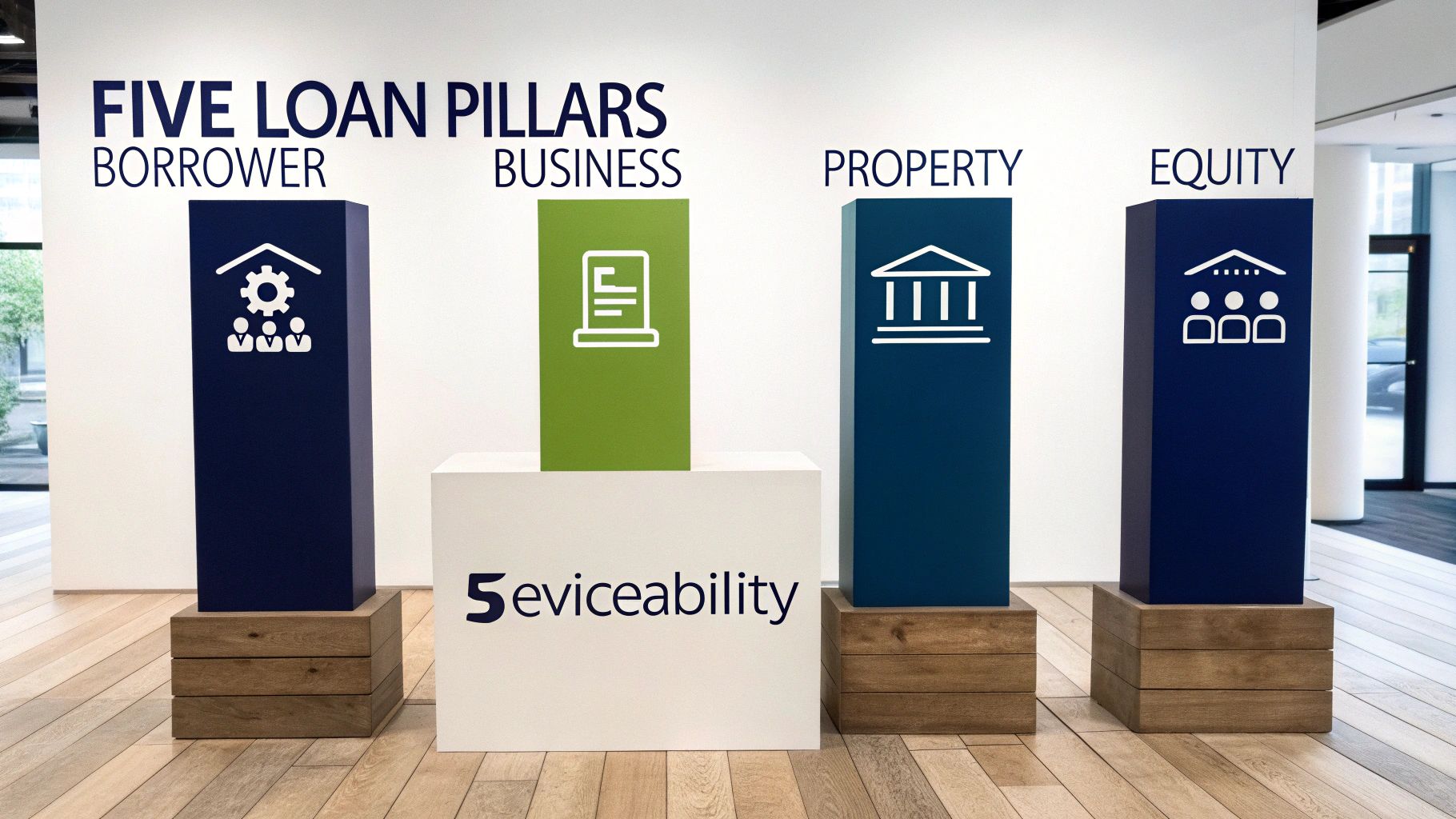
Selecting the ultimate winner among these ten choices requires weighing four key pillars of commercial real estate finance:
1. Investment Horizon and Exit Strategy
If you plan to hold a multifamily asset for fifteen years, a Fannie Mae fixed-rate loan wins because it locks in long-term debt and avoids refinancing risk. Conversely, if you are purchasing a distressed office building to renovate and sell within twenty-four months, a bridge loan wins by eliminating the heavy prepayment penalties associated with permanent agency or CMBS debt.
2. Recourse vs. Non-Recourse Debt
Recourse loans allow lenders to pursue your personal personal assets if the property defaults and a foreclosure shortfall occurs. Non-recourse loans limit the lender’s recovery to the property itself (subject to standard "bad boy" carve-outs like fraud or bankruptcy). While non-recourse loans are more desirable, they generally require lower leverage, pristine property performance, and institutional sponsorship.
3. Cost of Capital vs. Flexibility
Cheaper debt often comes with rigid covenants and severe penalties for early exit. For example, CMBS loans offer attractive interest rates but utilize yield maintenance, making early payoff nearly cost-prohibitive. Borrowers must decide whether saving a percentage point on interest is worth sacrificing the operational flexibility to sell or refinance on short notice.
4. Sponsor Balance Sheet and Track Record
Lenders underwrite the borrower as meticulously as the asset. First-time commercial investors will find that Life Insurance Companies and CMBS originators are inaccessible, steering them naturally toward local bank conventional loans, SBA programs, or private money options.
Common Mistakes to Avoid When Choosing a Commercial Loan
Borrowers frequently compromise their investment returns by falling into predictable financing traps. Avoiding these missteps will safeguard your capital:
- Failing to Model Prepayment Penalties: Assuming you can refinance or sell at any time without calculating yield maintenance or step-down prepayment costs can wipe out your projected equity gains upon exit.
- Underestimating Third-Party Report Costs: Commercial loan applications require environmental site assessments (Phase I ESA), property condition reports (PCR), and appraisal reports, which can easily cost between $5,000 and $15,000 out-of-pocket before loan approval is guaranteed.
- Ignoring Replacement Reserves: Lenders mandate ongoing escrow accounts for capital expenditures, taxes, and insurance. Failing to account for these frozen cash reserves can strain your operational liquidity.
- Chasing the Lowest Rate Exclusively: A loan with a slightly higher interest rate but more favorable amortization, flexible prepayment terms, and lower reserve requirements often outperforms a rigid low-rate loan over the life of an investment.
Frequently Asked Questions
What is the difference between recourse and non-recourse commercial property loans?
Recourse loans require the borrower to sign a personal guarantee, making their personal assets vulnerable if the property defaults and foreclosure proceeds do not cover the debt balance. Non-recourse loans prohibit the lender from seizing personal assets outside of the collateral property, though they still hold borrowers personally liable for intentional bad acts, fraud, or unauthorized debt encumbrances.
How do lenders calculate DSCR, and why does it matter?
Debt Service Coverage Ratio is calculated by dividing the property’s Net Operating Income (NOI) by its annual debt service (principal and interest). If a property generates $100,000 in NOI and has annual loan payments of $80,000, the DSCR is 1.25. Lenders use this ratio to ensure the property generates enough income to safely service the debt without relying on outside borrower funds.
Can I get a commercial property loan with bad credit?
Yes, though your options will be restricted primarily to hard money lenders or asset-based private lenders. Traditional banks, agency lenders, and life insurance companies enforce strict credit score minimums (typically 680 to 700+). Private lenders focus more heavily on the asset's value and your equity contribution rather than personal credit history, albeit at a significantly higher cost of capital.
How long does it take to close a commercial real estate loan?
Timelines vary widely based on the lender type. Private hard money or bridge lenders can often fund a deal in 7 to 14 days. Traditional bank conventional loans typically require 45 to 60 days. Government-backed programs like SBA 504 loans often take 60 to 90 days due to multi-agency reviews and bureaucratic approval workflows.
What are replacement reserves in commercial underwriting?
Replacement reserves are funds set aside monthly into an escrow account controlled by the lender to cover future capital expenditures, such as roof replacements, HVAC upgrades, or parking lot resurfacing. Lenders mandate these reserves to protect the long-term physical condition and value of their collateral.
Conclusion and Next Actions
Determining which commercial property loan wins ultimately comes down to matching your property's operational reality with the right capital structure. Start by auditing your property's net operating income, your projected holding period, and your personal risk tolerance. Next, consult with specialized commercial mortgage brokers who maintain relationships across multiple lending channels—from local banks to institutional debt funds. By securing competing term sheets and stress-testing your financial assumptions against various market cycles, you can lock in the financing strategy that maximizes your long-term return on investment.