1 All American Foundation Repair & Drainage Inc. is a professional structural contractor specializing in residential and commercial foundation stabilization and water management systems. Serving the Dallas-Fort Worth Metroplex for decades, the company provides pier-and-beam and slab-on-grade repairs, drainage correction, and root barriers, typically backed by lifetime transferable warranties and high consumer ratings.
The stability of a building depends entirely on the soil beneath it and the management of water around its perimeter. For property owners in North Texas, this is a perpetual challenge due to the region's highly expansive clay soils. 1 All American Foundation Repair & Drainage Inc. has positioned itself as a key player in this niche, offering a suite of services designed to counter the "heave and shrink" cycles that plague local structures. As of 2026, the company continues to operate as a high-volume provider known for its specific focus on permanent stabilization techniques and moisture control.
Company Profile and Historical Context
Founded on the principle of providing localized expertise for the unique geological conditions of the Southern United States, 1 All American Foundation Repair & Drainage Inc. has built a reputation for handling both minor residential settling and major structural failures. The company’s name, often starting with the numeral "1," was originally a tactical choice for alphabetical directory listings, but it has since evolved into a recognized brand in the DFW (Dallas-Fort Worth) area.
The company is characterized by its family-oriented business model and its adherence to industry standards set by the Foundation Repair Association (FRA). Over the years, they have maintained a consistent presence on consumer protection platforms. As of 2026, they hold an A+ rating with the Better Business Bureau (BBB), reflecting a long-term commitment to resolving customer disputes and maintaining transparent business practices. Their operational footprint covers major North Texas hubs, including Dallas, Plano, Richardson, Garland, and Irving.
The Science of North Texas Foundation Failure
To understand the services provided by 1 All American Foundation Repair & Drainage Inc., one must understand the problem they solve. North Texas sits atop "Blackland Prairie" soil, which contains high concentrations of smectite clays. These clays are chemically prone to significant volume changes:
- Expansion: During heavy rain or over-watering, the clay minerals absorb water and expand, exerting thousands of pounds of "uplift" pressure on concrete slabs.
- Contraction: During the hot, dry Texas summers, the soil loses moisture and shrinks, leaving voids beneath the foundation. Without support, the heavy concrete cracks and "drops" into these voids.
1 All American Foundation Repair & Drainage Inc. designs its interventions to bypass these volatile upper soil layers, anchoring the structure to more stable, deeper strata or managing the moisture levels to prevent the cycle from occurring.
Core Services: Foundation Stabilization
The primary revenue driver for the company is structural leveling. They utilize several specific methods depending on the severity of the damage and the budget of the homeowner.
Pressed Concrete Pilings
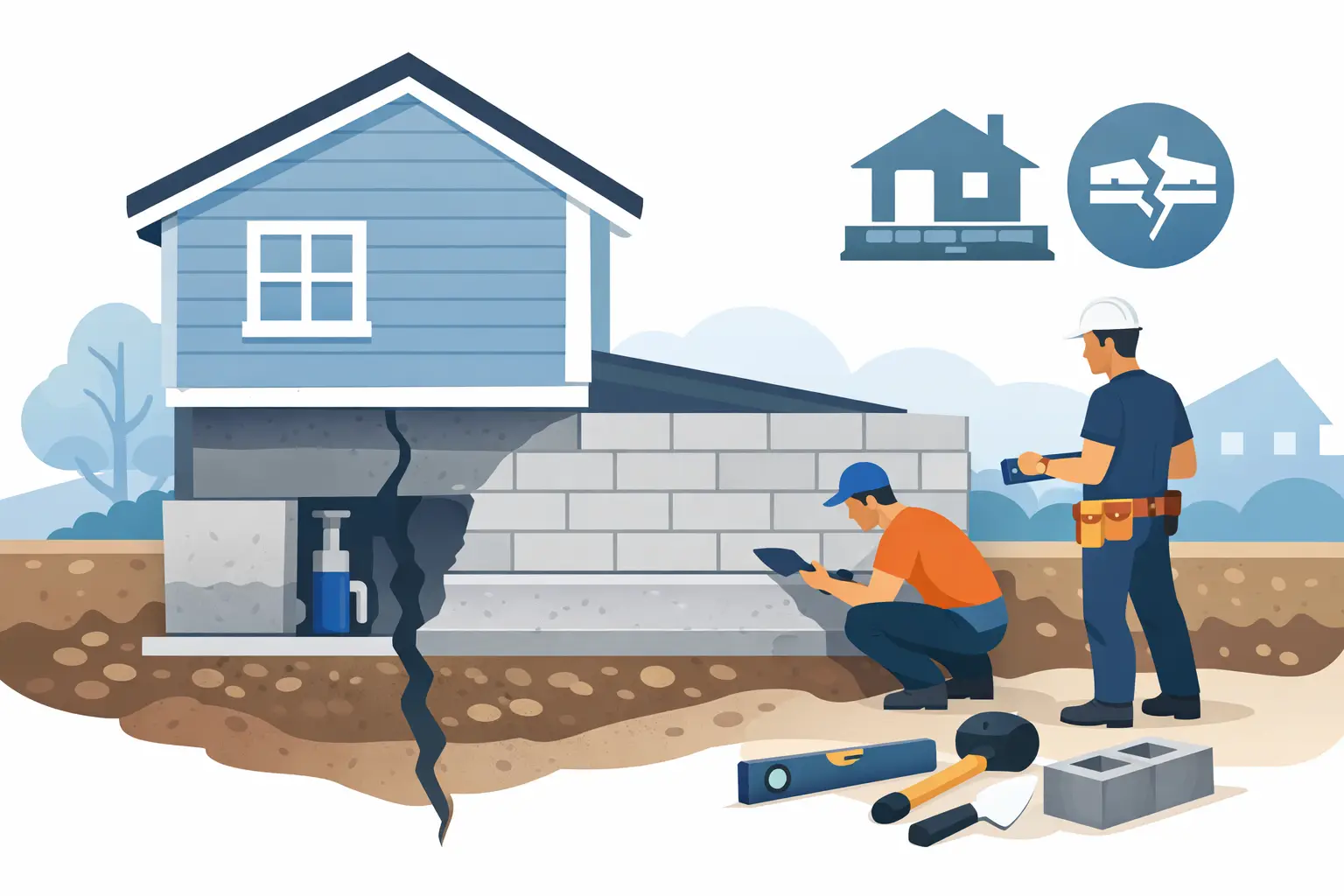
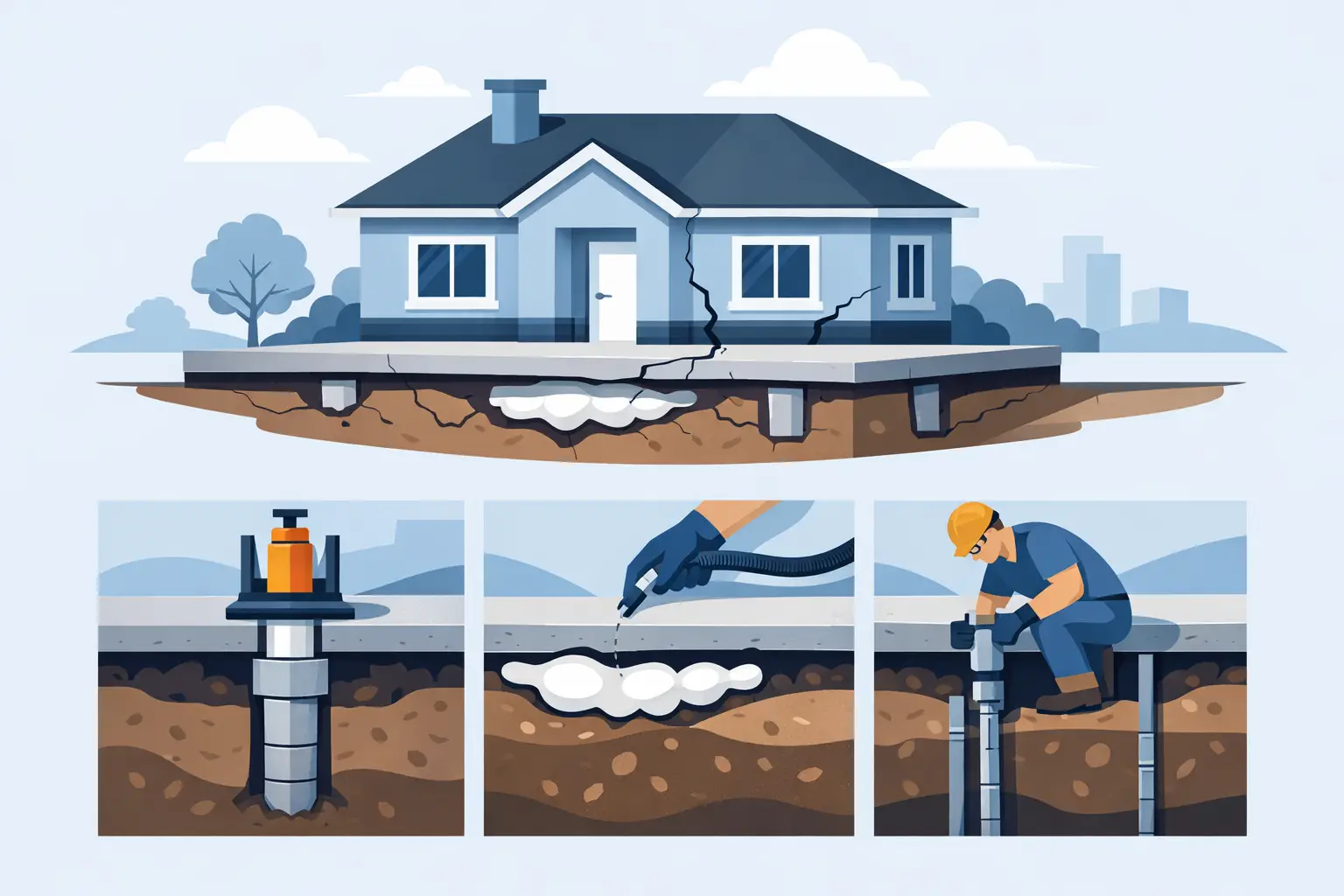
This is the most common method employed by the company. It involves driving pre-cast concrete cylinders (usually 6 inches in diameter and 12 inches long) into the ground using the weight of the house as a hydraulic jack.
- The Process: A small hole is excavated at the perimeter of the foundation. A hydraulic ram is placed between the bottom of the foundation and the first concrete cylinder. The cylinder is driven down, and subsequent cylinders are stacked on top until "refusal" is met—the point where the soil is too dense to allow further penetration.
- Why It Is Used: It is cost-effective, relatively fast to install, and provides a significant increase in load-bearing capacity for standard residential homes.
Steel Pilings
For structures requiring deeper penetration or those situated on particularly difficult terrain, 1 All American provides steel pier installation.
- The Advantage: Steel piers have a much thinner profile than concrete, allowing them to cut through dense clay and reach rock or load-bearing strata that concrete might not reach.
- Suitability: Often recommended for high-value properties or areas where the "active zone" of the soil (the depth at which moisture fluctuates) is exceptionally deep.
Pier and Beam Adjustments
Unlike modern slab-on-grade homes, older homes often feature a crawlspace with wooden beams supported by concrete or brick piers. 1 All American addresses these by replacing rotted wood, shimming existing piers, or installing new "sonotube" concrete piers to level the interior floors.
Drainage Correction and Moisture Management
A common mistake homeowners make is repairing the foundation without addressing the root cause of the movement: water. 1 All American Foundation Repair & Drainage Inc. emphasizes a "drainage-first" or "drainage-concurrent" approach.
French Drains
These are subsurface drains used to redirect groundwater away from the foundation. The company installs a perforated pipe surrounded by gravel and filter fabric in a trench. This prevents water from "pooling" near the foundation footing, which is the leading cause of edge-drop or localized upheaval.
Surface Drains and Catch Basins
For properties with poor grading where rainwater collects in the yard, surface drains are installed. These use heavy-duty grates and solid PVC piping to quickly move large volumes of water to the street or a designated discharge point.
Root Barriers
Large trees can transpire hundreds of gallons of water a day, drawing moisture from beneath a house and causing localized soil shrinkage. 1 All American installs vertical root barriers—typically made of specialized plastic or metal—to prevent tree roots from encroaching on the foundation area, preserving the soil's moisture equilibrium.
The Lifetime Transferable Warranty
One of the most significant aspects of 1 All American’s service model in 2026 is their warranty structure. For most piling installations, the company offers a Lifetime Transferable Warranty.
- For the Current Owner: If the piers settle beyond industry-standard tolerances, the company will return to "re-pump" or adjust the piers at no cost for labor or materials (though some contracts may include a small "service fee").
- For the Future Buyer: If the house is sold, the warranty can be transferred to the new owner. This is a critical document during real estate transactions in Texas, as most mortgage lenders and home inspectors require proof of foundation stability before a sale can proceed.
- Verification: To keep the warranty valid, homeowners are typically required to maintain "reasonable" moisture levels around the foundation, often through the use of soaker hoses during droughts.
Operational Process: What to Expect
The engagement process with 1 All American Foundation Repair & Drainage Inc. generally follows a standardized four-step workflow:
- Structural Evaluation: A technician uses a digital "Zip Level" or a transit to measure the elevation of the floor at various points throughout the house. They look for cracks in sheetrock, "stuck" doors, and exterior brick separation.
- The Proposal: The company provides a map of the home indicating where piers should be placed and where drainage needs improvement. This proposal includes a fixed cost and a timeline for completion.
- Installation: A crew excavates the necessary areas. If interior piers are needed, they may use "tunneling" to reach the center of the house from the outside, avoiding the need to cut holes through the home's flooring.
- Cleanup and Restoration: Once the house is leveled (a process called "lifting"), the holes are backfilled, and concrete breakouts are patched. It is important to note that foundation repair often causes small cosmetic cracks in the drywall as the house is moved back to its original position.
Service Comparison and Selection
| Service Feature | Pressed Concrete Pilings | Steel Pilings | Drainage Systems |
|---|---|---|---|
| Primary Goal | General stabilization | Deep-strata support | Prevention of soil movement |
| Average Depth | 12–20 feet | 20–40+ feet | 1–3 feet (trench depth) |
| Relative Cost | Moderate | High | Varies by linear footage |
| Durability | High (in stable clay) | Exceptional | Maintenance required |
| Best Use Case | Standard DFW residences | Heavy loads/deep rock | Pooling water/slope issues |
Critical Considerations and Limitations
While 1 All American Foundation Repair & Drainage Inc. is a leading provider, homeowners must manage expectations regarding foundation work.
- Cosmetic vs. Structural: Foundation repair is a structural fix. It is designed to level the frame of the house. It does not automatically "heal" cracks in brick or drywall; those usually require separate masonry or painting work after the house has settled into its new position.
- Plumbing Risks: When a house is lifted, old cast-iron or PVC plumbing lines buried in the slab may break. 1 All American typically recommends a "hydrostatic pressure test" after the lift to ensure the sewer lines are still intact.
- Landscape Impact: Installing piers and drains requires significant digging. While the company provides cleanup, shrubs or flower beds near the foundation may be disturbed during the excavation process.
Frequently Asked Questions
Does insurance cover the services provided by 1 All American?
Generally, standard homeowners insurance policies do not cover foundation repair resulting from soil compaction, expansion, or settling. Coverage is typically only available if the damage was caused by a specific covered peril, such as a major plumbing leak (and even then, only for the "access" to the leak, not always the piers). It is best to consult your specific policy or an insurance adjuster.
How long does a typical foundation repair project take?
For a standard residential home requiring 15 to 25 piers, 1 All American can usually complete the work in 2 to 4 days. Drainage projects may take an additional 1 to 2 days depending on the length of the trenching required and the complexity of the discharge exit.
Will the cracks in my brick close up once the house is lifted?
In many cases, cracks in the exterior brick veneer will close significantly or completely once the foundation is returned to its original elevation. However, if the house has been settled for many years, the brick may have shifted or "re-set" in its fallen position. In these instances, some masonry repair may still be necessary after the structural work is complete.
Why is drainage correction as important as the piers?
Piers provide a vertical support system, but they do not stop the soil from moving. If water continues to pool under the house, the "un-piered" sections of the home may experience "upheaval," which can create new stress points and cracks. Correcting the drainage ensures that the soil moisture remains consistent, which protects the longevity of the foundation repair.
Is the lifetime warranty truly "lifetime"?
The warranty is tied to the life of the structure and the continued existence of the company. 1 All American has a long history in the DFW area, which provides more security than a "fly-by-night" contractor. However, the warranty usually requires the homeowner to adhere to certain maintenance standards, such as preventing soil desiccation during the summer.
Final Recommendation for Property Owners
If you are dealing with doors that won't latch, visible cracks in your exterior brick, or sloping floors, 1 All American Foundation Repair & Drainage Inc. is a vetted option for the North Texas region. Their longevity and A+ BBB rating make them a reliable choice for the heavy structural work required in expansive clay environments.
Before signing a contract, ensure you have a clear understanding of the pier locations and a plan for plumbing testing post-lift. For those planning to sell their home in the near future, the transferable warranty offered by 1 All American is a significant asset that can help clear the path for a smooth real estate closing. Always request a written estimate and verify the current status of their liability insurance before work begins.