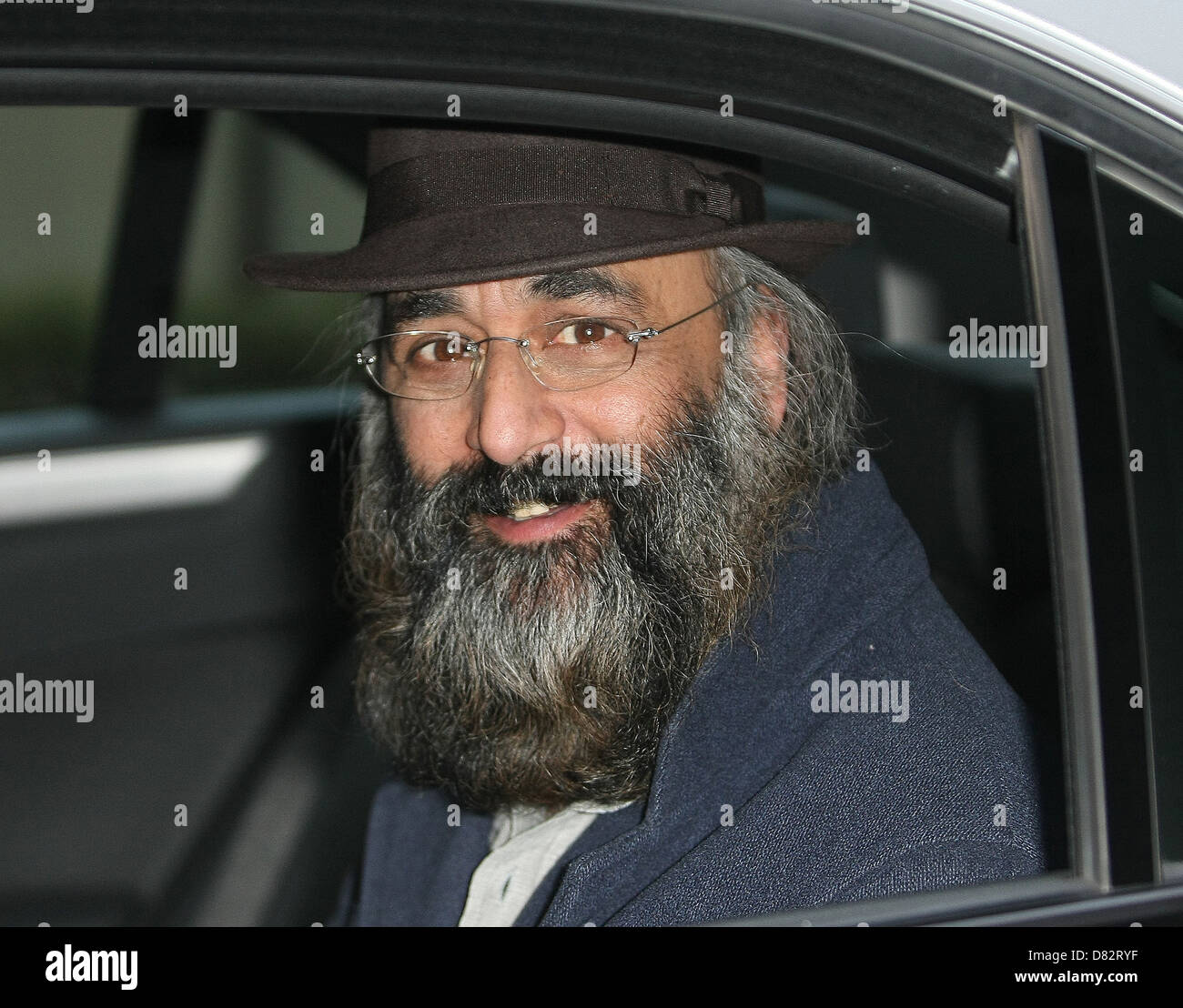
Art Malik is an established British-Pakistani actor widely recognized for his extensive body of work in television, film, and theater, which spans over four decades. His career is defined by his ability to portray complex, nuanced characters across diverse genres, ranging from historical dramas and high-stakes political thrillers to mainstream science fiction and contemporary narrative cinema.
Early Life and Artistic Foundations
Born Atharul Haque Malik in 1952 in Bahawalpur, Pakistan, he moved to the United Kingdom at the age of three. His upbringing in London provided him with a unique bicultural perspective that would eventually become a hallmark of his acting style. Before fully committing to the craft of acting, Malik attended the Guildhall School of Music and Drama in London, an institution renowned for rigorous training in classical and contemporary performance techniques.
This formal education provided the bedrock for his professional entry into the industry. During the 1970s, he gained critical experience on the stage, particularly through his association with the Old Vic and the Royal Shakespeare Company. These formative years in repertory theater allowed him to develop the vocal control, character immersion, and emotional range necessary for the intense screen roles he would later inhabit. Unlike performers who prioritize celebrity, Malik’s early trajectory was firmly rooted in the tradition of the working actor, emphasizing ensemble participation and the demands of live audiences.
Breakthrough: The Jewel in the Crown
While Malik had been active in professional productions for years, his breakout moment occurred in 1984 with the landmark ITV series The Jewel in the Crown. In this adaptation of Paul Scott’s Raj Quartet, Malik portrayed Hari Kumar, an Anglo-Indian journalist whose life is shattered by the racial tensions of the British Raj.
The role was a watershed moment for South Asian actors in British television. Malik’s performance captured the profound internal conflict of a man caught between two cultures—educated in England but treated as a colonial subject in India. The acclaim he received for this performance solidified his reputation as a dramatic actor of high caliber. The series remains a touchstone of period television, and Malik’s ability to anchor such a emotionally taxing narrative established the template for his future work: playing characters defined by their intellectual depth and moral ambiguity.
Expanding Into International and Genre Cinema
Following his success in British television, Malik transitioned into international film, demonstrating a remarkable versatility that allowed him to navigate both auteur-driven dramas and high-budget blockbusters.
Global Collaborations
Malik’s filmography in the late 1980s and 1990s reflects an actor who refused to be typecast within a single regional market. His role as the villain Salim Aziz in the James Bond film The Living Daylights (1987) introduced him to a global audience of millions. Simultaneously, his performance in David Lean’s A Passage to India (1984) showed his capacity for subtlety in high-end prestige projects.
Science Fiction and Fantasy
A testament to his range is his recurring presence in speculative fiction. His performance as Uncle Ian in the 2010 film John Carter and his various roles in British science fiction television highlight a career that prioritizes character-driven storytelling regardless of the setting. He has consistently brought a grounded sense of reality to fantastical narratives, ensuring that even in heightened scenarios, his characters retain human stakes.
Professional Versatility and The Craft of Acting
Art Malik’s longevity in a notoriously volatile industry can be attributed to his disciplined approach to the craft. He does not approach roles merely as vehicles for performance but as puzzles requiring sociological and psychological reconstruction.
Comparative Analysis of Performance Styles
To understand Malik’s impact, one must look at how his professional choices contrast with his contemporaries.
| Performance Context | Typical Approach | Key Skills Employed |
|---|---|---|
| Historical Drama | Methodological research | Period-accurate speech, subtle physicality |
| Political Thriller | High-tension realism | Pacing, subtextual delivery |
| Mainstream Blockbuster | Stylized precision | Charisma, physicality, narrative clarity |
| Contemporary Theater | Emotional vulnerability | Improvisational responsiveness, stamina |
This table illustrates that Malik’s work is not defined by one "type" of character but by the technical ability to adjust his performance to the required medium. Whether he is performing in a tightly controlled television studio or on a sprawling film set, he maintains a consistency of tone that prevents his work from appearing caricatured.
The Evolution of Representation
Throughout his career, Malik has witnessed and contributed to the shifting landscape of representation for actors of color in the United Kingdom. In the 1980s, the roles available to actors of South Asian descent were frequently limited to secondary, stereotypical, or narrow archetypes. Malik was instrumental in pushing for more substantive, three-dimensional characters.
By selecting projects that challenged the status quo, he expanded the creative possibilities for subsequent generations of performers. His choices—moving between prestigious BBC literary adaptations and gritty, modern investigative dramas—helped shift the industry's perception of what a British actor of his background could achieve. He demonstrated that an actor’s cultural heritage did not have to dictate the limitations of their career, but rather could be one of many tools in a wider creative toolkit.
Current Status and Contributions (2026)
As of 2026, Art Malik continues to be an active and respected figure in the British entertainment industry. His recent work reflects a transition into character roles that require a seasoned presence, providing mentorship and narrative gravitas to younger casts. He remains a fixture in both high-budget television serials and independent film projects, maintaining a work ethic that is widely respected by peers and directors alike.
His longevity is often cited in industry discussions regarding the "working actor" model. In an era where social media branding often outweighs raw acting talent, Malik serves as a reminder of the value of sustained, career-long skill acquisition. His professional stability—consistently finding work in a competitive market—is a direct result of his reputation for reliability and his refusal to rely on one-note portrayals.
Frequently Asked Questions
Is Art Malik still active in the film industry?
Yes, as of 2026, Art Malik remains an active professional actor. He continues to appear in both television dramas and feature films, balancing roles in established series with select independent projects.
What is considered Art Malik’s most significant role?
While he has had a prolific career, his role as Hari Kumar in The Jewel in the Crown (1984) is widely regarded by critics as his breakthrough and one of his most significant contributions, as it redefined the scope of South Asian representation in British television.
Does Art Malik only perform in historical dramas?
No, Art Malik has an extensive range. While he is celebrated for historical dramas, his filmography includes significant contributions to action cinema, science fiction, contemporary crime thrillers, and theater. He has explicitly sought out diverse roles to avoid being typecast.
Did Art Malik attend formal acting training?
Yes, he received formal training at the Guildhall School of Music and Drama in London. This classical foundation has been a consistent influence on his performance style throughout his career.
How has Art Malik influenced British television?
Malik helped break down barriers for non-white actors by consistently taking on complex, lead, or substantial supporting roles that rejected the narrow stereotypes prevalent in the late 20th-century entertainment industry.
Practical Recommendations for Aspiring Actors
For those studying the career of Art Malik with the intent of pursuing professional acting, the primary takeaway is the importance of technical versatility. The modern actor must be prepared to move fluidly between media, from the intimacy of the camera lens to the projection required for the stage.
- Prioritize Training: Do not overlook the importance of fundamental techniques such as vocal projection, physical movement, and script analysis.
- Seek Depth over Visibility: Focus on projects that offer character substance rather than those that prioritize short-term exposure.
- Cultivate Adaptability: The ability to pivot between different genres—and to respect the unique requirements of each—is what sustains a career over decades.
- Understand Industry History: Study how actors of previous generations navigated systemic limitations and contributed to changing the industry from within.
By focusing on the craft and maintaining a commitment to high-quality performance, one can emulate the longevity and respect that Art Malik has secured within the global arts community.