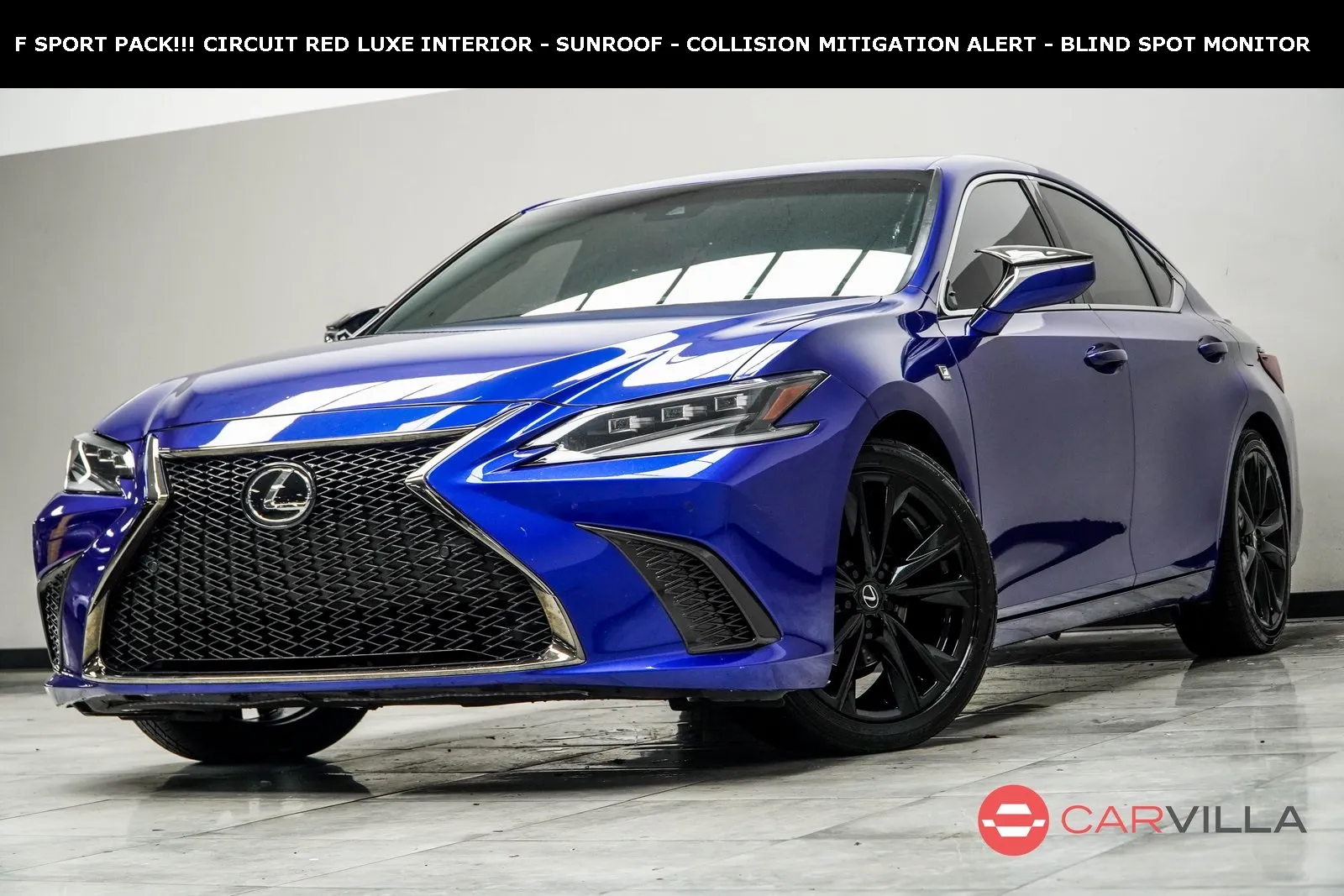
The 2022 Lexus ES 350 delivers a surprisingly quick 0–60 mph time of 6.1 seconds in independent real-world testing, surpassing the manufacturer’s conservative estimate of 6.6 seconds. This performance is driven by its robust 302-horsepower 3.5-liter V6 engine and a refined 8-speed automatic transmission that balances luxury smoothness with urgent acceleration.
The Engineering Behind the 6.1-Second Sprint
To understand how a front-wheel-drive luxury sedan weighing roughly 3,700 pounds achieves a 6.1-second 0–60 mph time, one must look closely at the powertrain. The 2022 Lexus ES 350 is equipped with the 2GR-FKS engine, a 3.5-liter naturally aspirated V6. As of 2026, this engine remains a benchmark for reliability and linear power delivery in the executive sedan segment.
Unlike many of its European competitors that shifted toward small-displacement turbocharged four-cylinder engines, Lexus maintained the V6 for the ES 350. This engine utilizes the D-4S injection system, which combines both direct and port fuel injection. This dual-injection strategy allows the engine to optimize fuel delivery based on the driving load. Under hard acceleration, such as a 0–60 mph run, the system prioritizes direct injection to cool the intake charge and prevent detonation, allowing for higher compression and more aggressive timing.
The 302 horsepower peaks at 6,600 rpm, while the 267 lb-ft of torque arrives at 4,700 rpm. While those numbers might suggest a "peakier" engine, the variable valve timing (VVT-iW on the intake and VVT-i on the exhaust) ensures a broad enough torque curve to propel the car forward without the lag associated with turbocharging. In a 0–60 test, the lack of turbo lag gives the ES 350 an immediate off-the-line response that helps it achieve that 6.1-second mark when conditions are ideal.
Transmission Calibration and Gearing
The engine is paired with the Direct Shift-8AT (eight-speed automatic transmission). This unit was designed specifically to bridge the gap between the efficiency of a CVT and the engagement of a traditional torque-converter automatic.
In the 2022 model, the first gear is relatively short, which is essential for overcoming static inertia. The transmission's control logic is tuned to provide quick, crisp shifts when the driver is at wide-open throttle. During a 6.1-second run, the 8-speed automatic executes shifts that minimize the drop in engine RPM, keeping the V6 within its power band.
Furthermore, the transmission features a wide-range torque converter lock-up. By locking the torque converter earlier in the acceleration cycle, the mechanical connection between the engine and the drive wheels becomes more direct, reducing the power loss typically associated with fluid-coupled automatics. This efficiency is a primary reason why independent testers, using high-precision GPS timing equipment, often beat the official Lexus 6.6-second figure.
Real-World Testing vs. Manufacturer Specifications
Lexus, like many Japanese automakers, tends to be conservative with their published performance figures. The official 6.6-second 0–60 mph time is a "worst-case scenario" figure, often calculated with a full tank of fuel, multiple passengers, or less-than-ideal surface conditions.
When professional automotive journalists test the 2022 Lexus ES 350, they typically utilize a "1-foot rollout." This is a standard industry practice where the timer starts after the vehicle has moved one foot forward, simulating the timing lights at a drag strip. Under these conditions, on a prepped surface with optimal ambient temperatures (around 60–70 degrees Fahrenheit), the ES 350 consistently hits the 6.1 to 6.2-second range.
Several factors influence whether a driver can replicate these results:
- Tire Compound: The ES 350 typically comes with all-season tires designed for longevity and low noise. Swapping these for high-performance summer tires can shave tenths of a second off the launch by reducing wheel spin.
- Drive Mode Selection: Moving the drive mode dial to "Sport" or "Sport+" (available on F Sport trims) alters the throttle mapping and delays upshifts, ensuring the engine stays in the meat of the power band.
- Traction Control: In a front-wheel-drive car with 302 horsepower, managing wheel spin is the biggest challenge. Modern Lexus traction control systems are sophisticated, but some testers find that a slight amount of controlled slip in "Sport" mode yields the best 0–60 results.
The GA-K Platform: Stability During Acceleration
The 2022 Lexus ES 350 is built on the Global Architecture-K (GA-K) platform. This high-strength chassis is significantly more rigid than previous generations of the ES. For performance enthusiasts, chassis rigidity is not just about cornering; it is about how the car handles the transfer of weight during a hard launch.
When you floor the accelerator, weight shifts to the rear of the vehicle. In a front-wheel-drive car, this unloads the front tires, which are responsible for both steering and putting power to the ground. The GA-K platform uses laser screw welding and extensive structural adhesives to minimize flex. This structural integrity, combined with a well-tuned MacPherson strut front suspension and a trailing-arm multi-link rear setup, helps keep the front tires planted as firmly as possible, allowing for that 6.1-second sprint without excessive "nose-up" attitude.
Performance Comparison: 2022 Lexus ES 350 vs. Competitors
To put the 6.1-second time into perspective, it is helpful to compare the ES 350 against other mid-size luxury sedans from the same era. While the ES is often marketed as a "comfort-first" cruiser, its V6 engine allows it to hold its own against entry-level turbocharged four-cylinders found in German rivals.
| Vehicle | Engine Type | Horsepower | 0–60 MPH (Tested) | Drivetrain |
|---|---|---|---|---|
| 2022 Lexus ES 350 | 3.5L V6 | 302 hp | 6.1 sec | FWD |
| 2022 BMW 530i | 2.0L Turbo I4 | 248 hp | 5.9 - 6.1 sec | RWD |
| 2022 Audi A6 45 TFSI | 2.0L Turbo I4 | 261 hp | 6.1 - 6.3 sec | AWD |
| 2022 Genesis G80 2.5T | 2.5L Turbo I4 | 300 hp | 5.8 - 6.0 sec | RWD |
| 2022 Acura TLX (Standard) | 2.0L Turbo I4 | 272 hp | 5.9 - 6.2 sec | FWD/AWD |
As shown in the table, the ES 350's 6.1-second performance puts it right in the mix with the four-cylinder versions of the BMW 5 Series and Audi A6. While it cannot compete with the high-performance variants like the BMW M550i or the Lexus's own GS-F (discontinued prior to 2022), it provides more than enough power for confident highway merging and overtaking.
Driving Dynamics: The F Sport Difference
For buyers specifically interested in the performance side of the ES 350, the F Sport trim is the definitive choice. While the engine and transmission remain identical to the Luxury or Ultra Luxury trims, the F Sport adds mechanical and aesthetic upgrades that enhance the feeling of speed.
The 2022 ES 350 F Sport includes:
- Adaptive Variable Suspension (AVS): This system uses sensors to monitor driving conditions and adjust the damping force at each wheel. In Sport+ mode, the suspension stiffens significantly, reducing body roll and improving the car's composure during rapid transitions or hard acceleration.
- Performance Dampers: Developed to absorb minute vibrations and increase body rigidity, these dampers help the ES 350 feel more "shored up" during high-speed maneuvers.
- Active Noise Control: While some purists dislike synthesized engine noise, the F Sport pipes in a more aggressive V6 growl through the speakers, which enhances the sensory experience of a 6.1-second 0–60 run.
Even without these features, the base ES 350 remains a formidable performer. The 2022 model year was particularly significant because Lexus improved the braking system across all trims, providing a more linear pedal feel and better stopping power, which is the necessary counterpart to its 302-horsepower engine.
The Longevity of the 3.5L V6 in 2026
Writing from the perspective of 2026, the 2022 Lexus ES 350 is now a staple of the high-end pre-owned market. Its 6.1-second performance has aged remarkably well. In an era where many manufacturers have moved entirely to small-displacement hybrids or full EVs, the naturally aspirated V6 in the ES 350 is increasingly prized for its mechanical simplicity and historical reliability.
Owners in 2026 report that as long as standard maintenance is performed—primarily oil changes and transmission fluid inspections—the 2GR-FKS engine maintains its factory-level performance even past the 100,000-mile mark. This is a contrast to some turbocharged competitors where carbon buildup on intake valves or turbocharger wear can lead to a noticeable "softening" of 0–60 times as the vehicle ages.
For those looking to maintain that 6.1-second capability in 2026, it is recommended to:
- Use High-Quality Fuel: While the ES 350 can run on 87 octane, the ECU can advance timing more aggressively on 91 or 93 octane, which can marginally improve wide-open-throttle performance.
- Inspect the Air Intake: Ensure the engine air filter is clean. A restricted intake is the fastest way to lose horsepower.
- Monitor Tire Health: Rubber hardens over time. A 2022 model may still be on its original tires in some low-mileage cases, but for maximum traction, fresh rubber is essential.
Safety and Technology at Speed
Fast acceleration is only useful if it is controllable. The 2022 Lexus ES 350 came standard with the Lexus Safety System+ 2.5. This suite includes features that are particularly relevant when driving a car with 300+ horsepower.
The Pre-Collision System (PCS) was enhanced for 2022 to include Intersection Turn Assist and Emergency Steering Assist. These systems work in the background to ensure that if a driver uses the car’s 6.1-second acceleration to execute a quick maneuver, there is a safety net in place to mitigate potential collisions. Additionally, the All-Speed Dynamic Radar Cruise Control allows for smooth speed adjustments on the highway, making the ES 350 an exceptional long-distance cruiser as well as a capable sprinter.
Frequently Asked Questions
Does the 2022 Lexus ES 350 require premium fuel for maximum performance?
No, the 2022 Lexus ES 350 is engineered to run on 87-octane regular unleaded gasoline. However, the knock sensors and engine management system are sophisticated enough to detect higher-octane fuel. While Lexus does not officially claim higher horsepower with premium fuel, some independent dyno tests of the 2GR-FKS engine suggest a slight increase in timing and power when using 91 or 93 octane, which may help in reaching the 6.1-second 0–60 mph mark.
How does the ES 350 0–60 time compare to the ES 250 AWD?
The difference is significant. The ES 250 uses a 2.5-liter four-cylinder engine producing 203 horsepower. Its 0–60 mph time is approximately 8.1 to 8.4 seconds. While the ES 250 offers all-wheel drive, which helps with traction in snow, it cannot match the raw acceleration of the front-wheel-drive V6 ES 350. If straight-line performance and highway passing power are priorities, the ES 350 is the superior choice.
Is the 2022 Lexus ES 350 faster than the ES 300h hybrid?
Yes. The ES 300h hybrid focuses on fuel efficiency (achieving an EPA-estimated 44 MPG combined). It produces a total system output of 215 horsepower and typically records a 0–60 mph time of roughly 8.1 to 8.3 seconds. The ES 350 is approximately two seconds faster to 60 mph than its hybrid sibling, though it carries a much lower fuel economy rating (22 city / 32 highway).
Can the F Sport trim reach 60 mph faster than the base model?
Mechanically, the engines are identical, so the theoretical 0–60 times are the same. However, the F Sport's unique 19-inch wheels and potentially stickier tire options can provide a slight advantage in "hooking up" off the line compared to the 17-inch or 18-inch wheels found on the base or Luxury trims. The differences are usually measured in tenths of a second and are often negligible in real-world street driving.
Why does Lexus claim 6.6 seconds if the car can do 6.1 seconds?
Lexus, and its parent company Toyota, generally provide performance figures that are reproducible by the average driver under a variety of conditions. Automotive journalists use specialized equipment and "launch" techniques (such as brake-torquing the engine slightly before releasing the brake) to achieve the absolute fastest possible time. The 6.1-second figure represents the car's maximum potential, while 6.6 seconds represents its everyday reliable performance.
Practical Recommendation
If you are evaluating a 2022 Lexus ES 350 for its performance, focus your search on the F Sport or Ultra Luxury trims. The F Sport provides the best sensory experience and handling composure, making the 6.1-second acceleration feel more engaging. However, if you prefer a "sleeper" vehicle that offers executive-level comfort with surprising speed, the base ES 350 offers identical engine performance at a lower price point. Regardless of the trim, ensure the vehicle has been maintained with high-quality lubricants and that the tires are in peak condition to ensure you can safely and consistently access the car's full 302-horsepower potential.