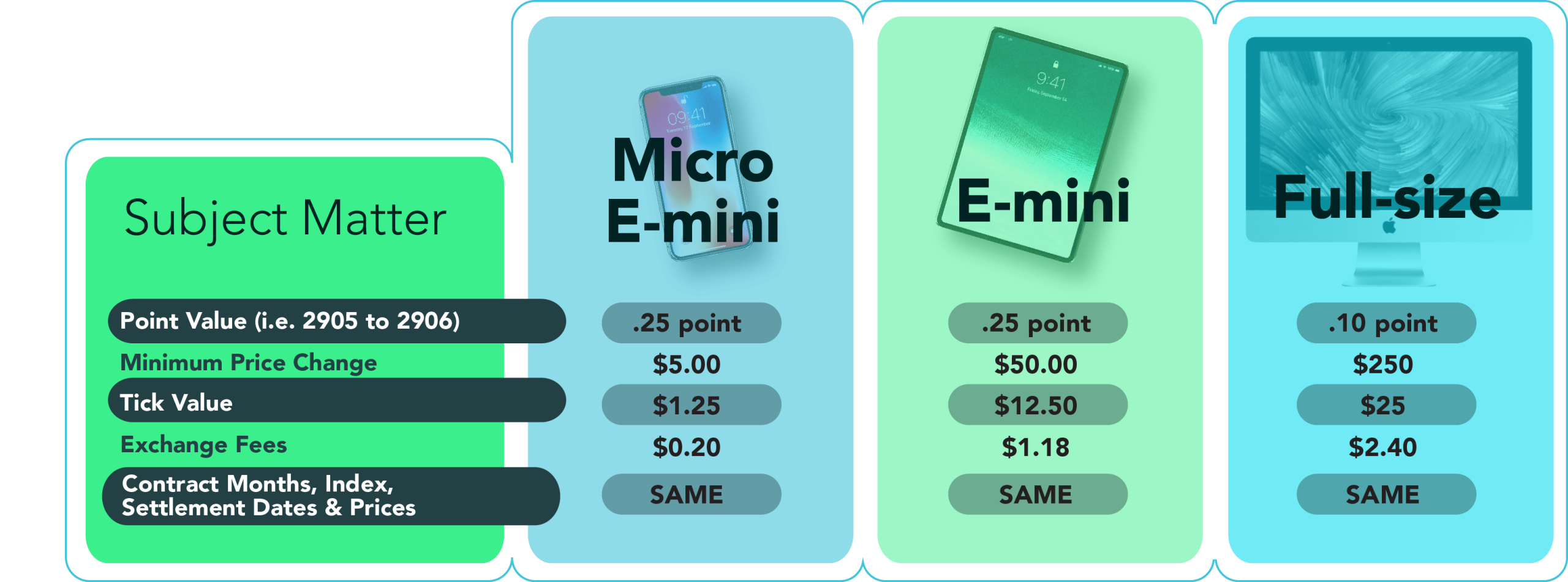
The 377k notional value of the E-mini S&P 500 futures represents the total underlying economic exposure controlled by a single futures contract, calculated by multiplying the current index level by the contract multiplier of $50. This substantial contract value enables institutional and retail market participants to hedge or speculate on the broad United States equity market while trading on a fraction of that amount via leveraged margin requirements.
Introduction to E-mini S&P 500 Futures
The E-mini S&P 500 futures contract (ticker symbol: ES) is one of the most actively traded financial derivatives globally. Introduced by the Chicago Mercantile Exchange (CME) in 1997, it was designed to offer smaller investors access to the benchmark S&P 500 Index with a contract size one-fifth the scale of the standard S&P 500 futures contract.
When market observers or risk managers reference a "377k notional value," they are describing the actual aggregate market exposure of the underlying index represented by one single contract. For example, if the S&P 500 Index trades at 7,540 points, multiplying that figure by the $50 multiplier yields a total notional value of $377,000. Because financial markets fluctuate continuously, this notional value changes dynamically throughout every trading session. Understanding this calculation is essential for traders, portfolio managers, and risk analysts who must manage market exposure, calculate precise position sizing, and maintain adequate collateral to prevent forced liquidation.
Deconstructing Notional Value vs. Margin Requirements
One of the most common points of confusion for individuals transitioning from cash equities to index futures is the distinction between notional value and margin requirements. In traditional stock trading, purchasing $377,000 worth of an equity portfolio requires committing the full $377,000 in capital (or 50% under standard Regulation T margin rules). Futures operate under an entirely different mechanism known as performance bond or margin requirements.
The Role of Leverage
Futures are leveraged instruments. Instead of paying the full notional value upfront, a trader deposits a fraction of that amount—known as initial margin—to open a position.
- Notional Value: Represents the total economic value of the underlying assets controlled by the contract. If the S&P 500 moves by 1%, the position gains or loses approximately $3,770 (1% of $377,000), regardless of how much capital was deposited in the account.
- Initial Margin: The minimum cash or collateral a trader must deposit with their futures commission merchant (FCM) to initiate a position. While initial margin requirements fluctuate based on market volatility and exchange rules, they typically hover between 3% and 6% of the total notional value.
- Maintenance Margin: The minimum equity a trader must maintain in their account at the end of each trading day to keep the position open. If market losses drag the account balance below this threshold, a margin call is issued.
Financial Implications of High Leverage
Controlling a $377,000 asset base with a relatively small cash outlay amplifies both potential returns and potential losses. A minor adverse move in the S&P 500 Index can result in a loss that exceeds the initial cash deposited if risk management protocols are ignored. Consequently, professional traders view the notional value—rather than the margin requirement—as their true risk exposure when calculating portfolio beta and asset allocation limits.
Contract Specifications and Calculation Mechanics
To understand how a notional value of approximately $377k is derived, one must examine the fundamental mathematical formula governing E-mini S&P 500 futures contracts.
The Mathematical Formula
The notional value of an E-mini S&P 500 futures contract is determined by a straightforward formula:
$$\text{Notional Value} = \text{Current Index Price} \times \text{Contract Multiplier}$$
- Current Index Price: The real-time trading price of the E-mini S&P 500 futures contract (which tracks very closely, but not identically, to the cash S&P 500 Index).
- Contract Multiplier: Fixed by the CME Group at $50 per index point.
If the futures contract is trading at 7,540.00 points, the calculation is:
$$7,540.00 \times $50 = $377,000$$
Table: Impact of Index Price Fluctuations on a 377k Baseline Notional Value
The following table illustrates how changes in the S&P 500 futures price impact the total notional value and the dollar value of a single index point move.
| Index Price Level | Contract Multiplier | Total Notional Value | Value of 1-Point Move | Estimated Margin Requirement (Approx.) |
|---|---|---|---|---|
| 7,400.00 | $50 | $370,000 | $50 | ~$12,000 - $15,000 |
| 7,480.00 | $50 | $374,000 | $50 | ~$12,000 - $15,000 |
| 7,540.00 | $50 | $377,000 | $50 | ~$12,000 - $15,000 |
| 7,600.00 | $50 | $380,000 | $50 | ~$12,000 - $15,000 |
| 7,700.00 | $50 | $385,000 | $50 | ~$12,000 - $15,000 |
Note: Margin requirements are dynamic and set by the exchange and individual clearing brokers based on current market volatility. Traders should verify exact daily requirements directly through their broker.
Practical Applications for Portfolio Management
Institutional investors, registered investment advisors, and advanced retail traders utilize E-mini S&P 500 futures to achieve several distinct financial objectives. Managing a large notional exposure requires precise planning.
Hedging Equity Portfolios
Investors holding large, diversified stock portfolios often use E-mini S&P 500 futures to protect against market downturns without selling their underlying equities. Selling futures contracts creates a short position that offsets losses in the cash portfolio during a market correction.
- Example: An investor holds a $3,770,000 portfolio of large-cap US stocks that mirror the S&P 500. To fully hedge this portfolio against a projected market decline, the investor could sell 10 E-mini S&P 500 contracts ($377,000 notional value each, totaling $3,770,000 in short exposure). If the market drops, the gains on the short futures contracts help buffer the decline in the physical stock portfolio.
Tactical Asset Allocation and Cash Equitization
Institutional managers often experience cash inflows that cannot be immediately deployed into individual equities. To prevent cash drag—where uninvested cash lowers overall portfolio performance during a bull market—managers use futures. By buying E-mini contracts, they gain immediate exposure to the equity market while keeping their cash safe in short-term fixed-income instruments.
Risk Management and Operational Considerations
Operating with a notional exposure of $377k per contract demands rigorous risk management disciplines. Failing to account for the true scale of the underlying position is a primary cause of account depletion among retail futures traders.
Setting Stop-Loss Orders and Managing Slippage
Because the point value is $50, every single point the market moves against a position results in a $50 gain or loss per contract. A routine intraday swing of 30 points equates to a $1,500 fluctuation per contract. Traders must utilize reliable stop-loss orders, understand order types (such as stop-market versus stop-limit), and account for market volatility and slippage during high-impact economic news releases.
Understanding Intraday vs. Overnight Margins
Brokers often grant lower margin rates for day traders who close their positions before the market close. However, holding a $377k notional position overnight exposes the trader to gap risk—the risk that the market opens significantly higher or lower the next day due to geopolitical events or overnight macroeconomic data releases. Overnight margin requirements are invariably higher and require sufficient account equity to sustain potential gaps.
Frequently Asked Questions
What is the exact contract multiplier for E-mini S&P 500 futures?
The contract multiplier for standard E-mini S&P 500 futures (ticker ES) is $50 per index point. This means for every 1.00 point the S&P 500 index moves up or down, the value of one contract changes by $50.
How much cash do I actually need in my account to trade a contract with a 377k notional value?
While the notional value is $377,000, you do not need to deposit that full amount. You only need to meet the exchange and broker initial margin requirement, which typically ranges between 3% and 6% of the notional value (roughly $12,000 to $15,000 per contract, depending on current volatility).
What is the difference between E-mini and Micro E-mini S&P 500 futures?
Micro E-mini S&P 500 futures (ticker MES) have a contract multiplier of $5 per index point—precisely one-tenth the size of the standard E-mini contract. If an E-mini contract has a notional value of $377k, a Micro E-mini contract at the same index level has a notional value of $37,700, making it more accessible for smaller accounts.
Can I lose more money than I deposit in my futures account?
Yes. Because futures are leveraged derivatives, rapid market movements can create losses that exceed your initial account balance. If your account equity falls below maintenance margin requirements and you fail to meet a margin call, your broker will liquidate your positions, and you remain legally obligated to cover any negative balance.
How is the notional value affected when the futures contract expires?
E-mini S&P 500 futures are cash-settled quarterly contracts (expiring in March, June, September, and December). Expiration does not change the underlying notional value calculation, but traders holding positions into expiration must roll them over to the next contract month to maintain their market exposure.
Conclusion and Next Actions
Evaluating the 377k notional value of the E-mini S&P 500 futures contract highlights the powerful leverage inherent in index derivatives. While this leverage provides capital efficiency and liquidity for hedging or speculative strategies, it also introduces substantial financial exposure that requires disciplined risk controls.
If you plan to trade or hedge using E-mini contracts, your immediate next actions should include:
- Verify the current index level and calculate the exact daily notional value for your targeted contract month.
- Review your broker's specific initial and maintenance margin requirements to ensure your account capitalization is robust.
- Establish a strict risk management plan that defines your maximum acceptable drawdown per trade relative to your total account equity.