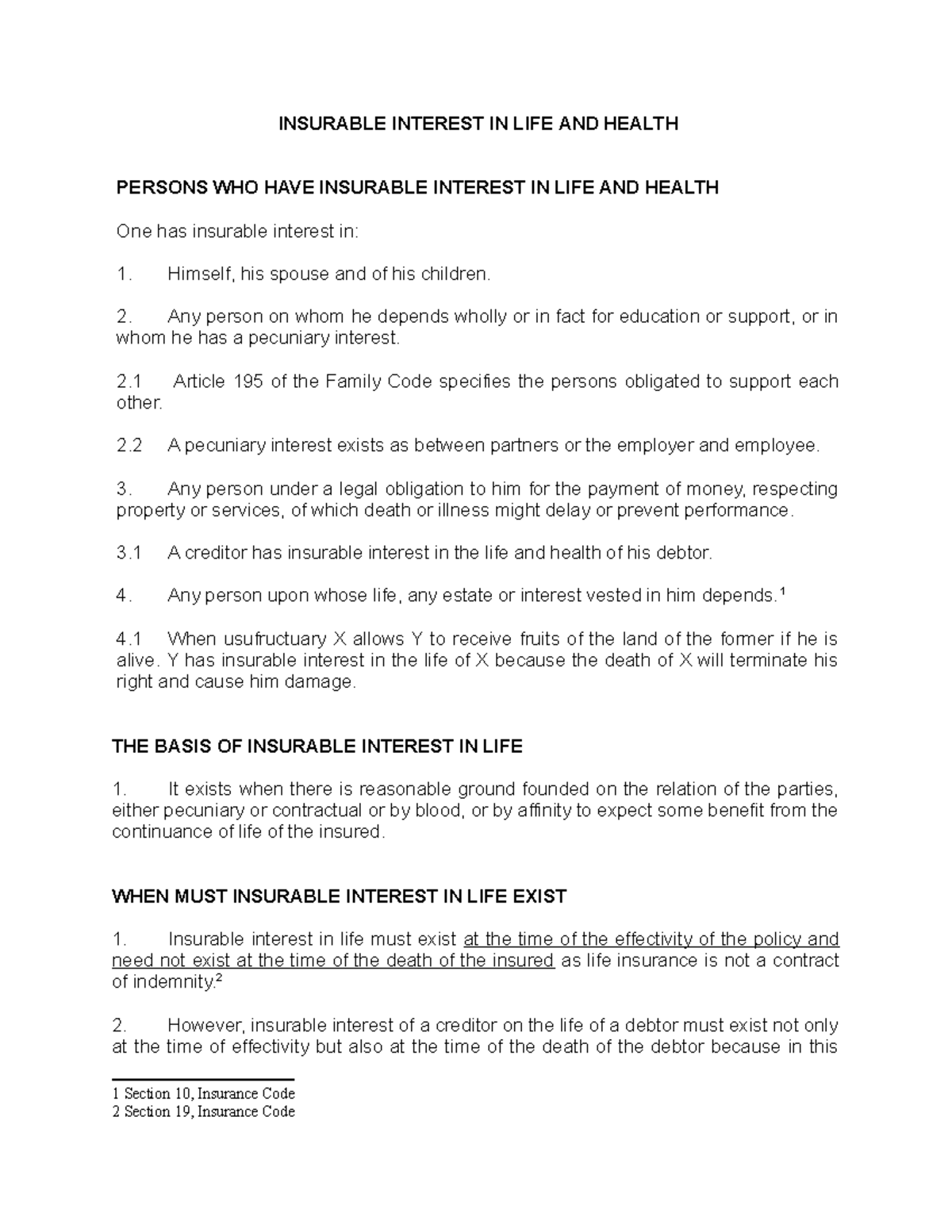
Under established insurance law, every individual possesses an inherent and unlimited insurable interest in their own life. This legal doctrine permits a person to apply for and maintain life insurance in any amount they choose, provided they can satisfy the insurer’s financial underwriting and medical requirements. It serves as the fundamental boundary between legitimate risk management and speculative wagering.
The Core Doctrine of Self-Insurable Interest
The principle that a person has an insurable interest in the life of themselves is the most basic and uncontested rule in the insurance industry. In legal terms, an insurable interest exists when the policyholder stands to benefit from the continued existence of the insured subject or would suffer a financial loss or significant hardship upon the subject's death. While third-party insurance requires proof of a specific relationship—such as marriage or business partnership—the law presumes that an individual’s interest in their own continued existence is self-evident and boundless.
As of 2026, this doctrine remains the cornerstone of the multi-billion dollar life insurance market. Without the requirement of insurable interest, life insurance would essentially function as a "wager policy," where strangers could bet on the timing of an individual's death. By affirming that a person always has an interest in their own life, the law enables individuals to use insurance as a tool for estate planning, debt protection, and wealth transfer without having to justify the "value" of their own life to a court.
The Legal Evolution of the "Unlimited" Interest
Historically, the concept emerged to prevent "moral hazard"—the risk that someone might intentionally cause the death of the insured to collect the proceeds. When you insure your own life, the moral hazard is naturally mitigated because you cannot personally collect the death benefit (except in cases of terminal illness riders or living benefits).
Court rulings throughout the 20th and early 21st centuries have consistently upheld that the "amount" of interest a person has in themselves is legally infinite. While an insurance company may limit the policy size based on your income or net worth—a process known as financial underwriting—the law itself does not cap the value of your own life. This distinguishes life insurance from property insurance, where you can only insure a building for its actual replacement cost or fair market value.
The Role of the Beneficiary and Insurable Interest
A common point of confusion is whether the beneficiary of a life insurance policy must also have an insurable interest in the insured. When a person insures their own life, the general rule in most jurisdictions is that they may name anyone as their beneficiary, regardless of whether that person has a financial stake in their survival.
This freedom of choice is a direct byproduct of having an insurable interest in oneself. Because the policyholder owns the contract and has the legal right to insure their own life, they are granted the autonomy to direct the proceeds to any person, charity, or trust they deem appropriate.
Third-Party Ownership vs. Self-Ownership
The dynamics change significantly when a third party—someone other than the person whose life is being insured—applies for the policy. In these scenarios:
- Inception Requirement: The applicant must prove an insurable interest in the "proposed insured" at the time the policy is issued.
- Consent: In almost all jurisdictions, the person being insured must provide written consent for the policy to be valid.
- Relationships: Interest is usually found in "love and affection" (spouses, children, parents) or "financial interdependence" (business partners, key employees, creditors).
However, when you buy a policy on yourself, these hurdles are bypassed. You are both the owner and the insured, satisfying the legal requirements automatically at the moment of application.
Preventing the "Wager Policy": STOLI and Viatical Settlements
The requirement of insurable interest is the primary defense against Stranger-Owned Life Insurance (STOLI). STOLI occurs when an individual is incentivized to take out a life insurance policy on themselves with the sole intent of immediately selling that policy to an investor or a group of strangers.
Regulators in 2026 continue to scrutinize these arrangements because they violate the spirit of the insurable interest rule. If a person takes out a policy not for their own protection or their heirs' benefit, but as a pre-arranged investment vehicle for a third party, courts may find the policy void from its inception.
Life Settlements and the "At Inception" Rule
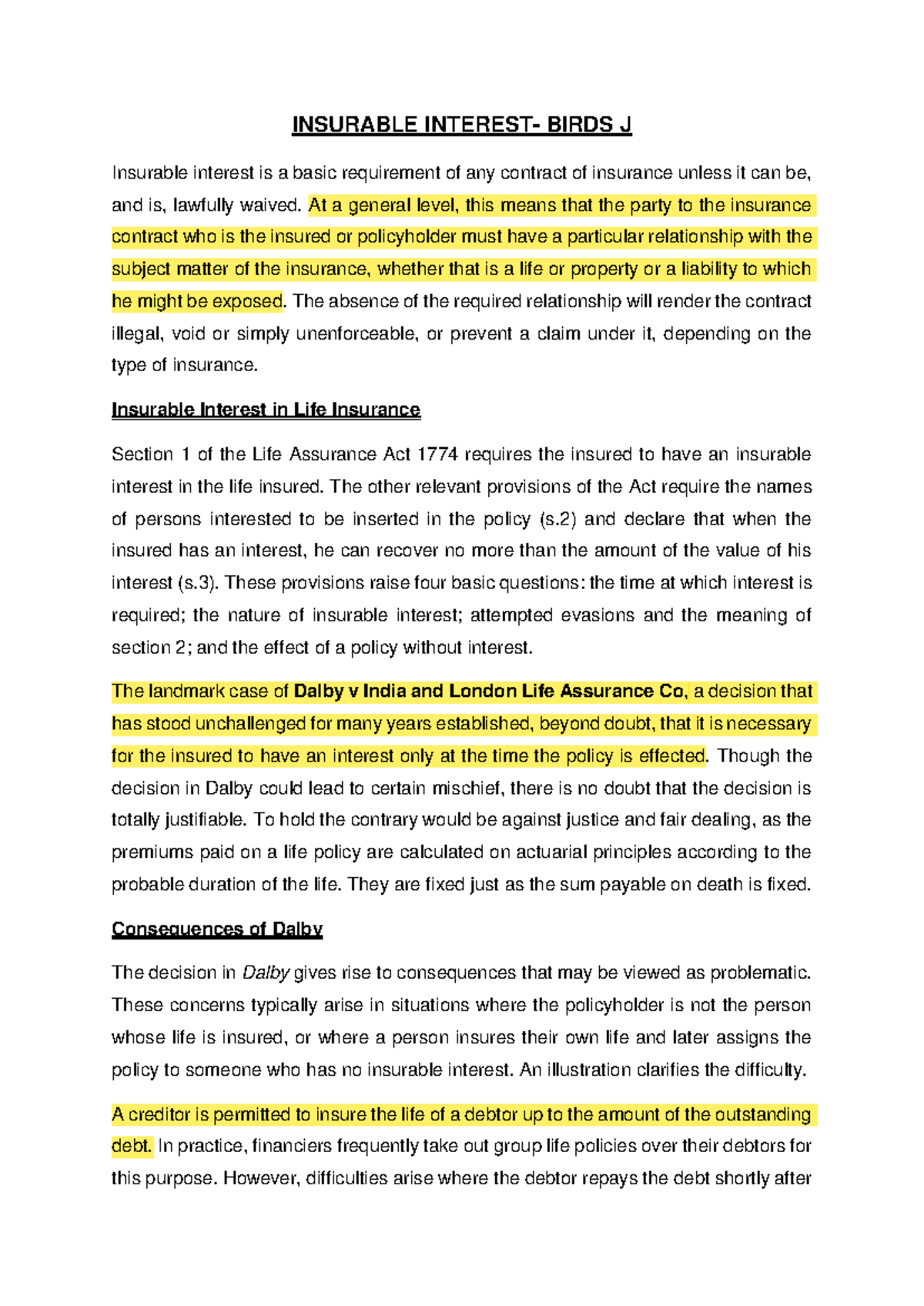
It is important to distinguish between illegal STOLI and legal Life Settlements. In most states and international jurisdictions, the law only requires insurable interest to exist at the inception (the start) of the policy.
- If you buy a policy on yourself today because you need the coverage, you have met the insurable interest requirement.
- If, ten years from now, you no longer need the coverage and decide to sell the policy to a third-party investor for its cash value, that transaction is generally legal.
- The fact that the investor has no "interest" in your life is irrelevant because the requirement was satisfied when the policy was originally issued.
Financial Underwriting: The Practical Limit on "Unlimited" Interest
While the law says your interest in your own life is unlimited, insurance companies in 2026 apply practical limits through financial underwriting. Underwriters use formulas to ensure that the death benefit bears a reasonable relationship to the insured's economic value or estate tax liability.
| Factor | Underwriting Perspective | Legal Perspective |
|---|---|---|
| Income Replacement | Usually capped at 10x to 30x annual income depending on age. | No legal limit; the individual can value themselves higher. |
| Estate Liquidity | Based on projected tax liabilities and settlement costs. | No legal limit; used to preserve wealth. |
| Charitable Intent | Limited to a percentage of net worth or historical giving. | The individual has the right to name any charity. |
| Debt Protection | Limited to the total value of outstanding loans/mortgages. | The individual can insure beyond the debt. |
This table illustrates the gap between what the law allows (unlimited interest) and what the market provides (calculated risk). If a person earning $50,000 a year attempts to buy a $100 million life insurance policy on themselves, the insurer will likely deny the application—not because of a lack of insurable interest, but because the "speculative" nature of the policy creates an unacceptable risk for the company.
Legal Precedents and Statutes
The foundation of the "interest in oneself" rule is rooted in several landmark legal frameworks. In the United States, the National Association of Insurance Commissioners (NAIC) provides model acts that most states have adopted. These acts explicitly define insurable interest to include an individual's interest in their own life.
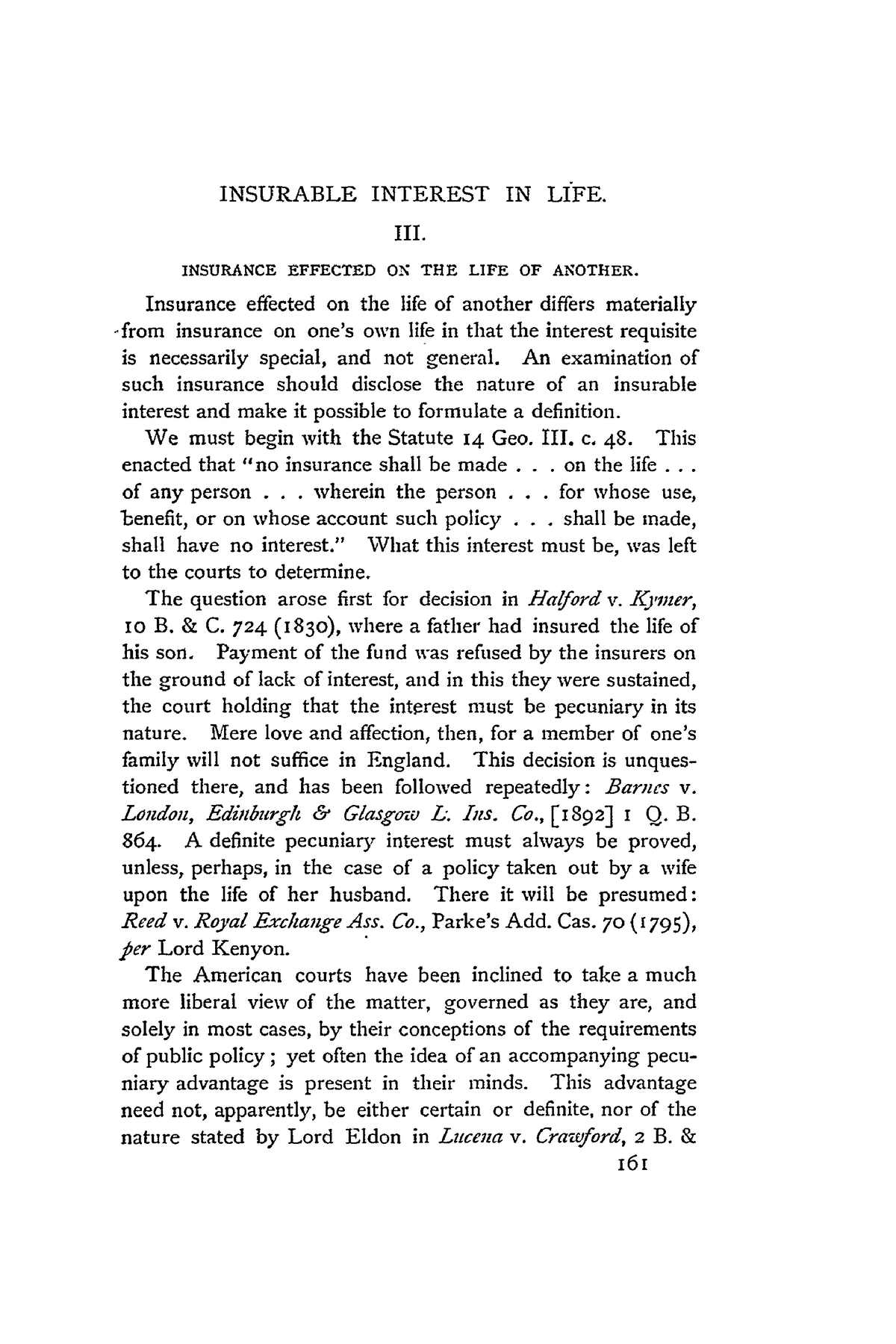
In the United Kingdom, the Insurance Act 2015 and the older Life Assurance Act 1774 form the basis of these rules. The 1774 Act was specifically designed to stop the practice of people taking out insurance on the lives of others in whom they had no interest—a practice that had turned the London coffee houses of the time into gambling dens.
Key Legal Characteristics in 2026
- The Inception Rule: The interest must exist when the contract is made. If the interest disappears later (e.g., a divorce in a third-party policy), the policy typically remains valid.
- The Consent Rule: You cannot be insured by another person without your knowledge and written consent, even if they have an insurable interest in you.
- The Indemnity vs. Valued Policy: Life insurance is a "valued policy" (pays a specific sum) rather than a "contract of indemnity" (reimburses a specific loss), which is why the "unlimited" interest in oneself is possible.
Why This Principle Matters for Estate Planning
For high-net-worth individuals in 2026, the fact that they have an insurable interest in themselves is the gateway to sophisticated estate planning. Because they own the interest, they can transfer the policy to an Irrevocable Life Insurance Trust (ILIT).
When a policy is moved to an ILIT, the trust becomes the owner, but the "insurable interest" requirement was already satisfied by the original purchase. This allows the death benefit to be excluded from the individual's taxable estate, providing liquidity to pay estate taxes or equalize inheritances among heirs without violating the anti-wagering laws.
Common Pitfalls and Misunderstandings
Despite the clarity of the "self-interest" rule, several mistakes can jeopardize coverage or lead to legal disputes:
- Straw Man Applications: This occurs when a person applies for a policy on themselves (using their own insurable interest) but is secretly being funded by a third party who intends to take over the policy. This is often flagged as fraud.
- Lack of Financial Justification: Assuming that "unlimited interest" means an insurer must issue any amount requested. As noted, financial underwriting is a separate hurdle from legal insurable interest.
- Misrepresenting Ownership: If the application states the individual is the owner but the premiums are paid by a stranger from day one, the "insurable interest" may be challenged by the insurer during the contestability period.
Frequently Asked Questions
Can I buy life insurance on myself and name a stranger as the beneficiary?
Yes. Because you have an unlimited insurable interest in your own life, you have the legal right to designate any beneficiary you choose. The insurance company may ask for clarification to ensure there is no foul play or "moral hazard," but there is no legal prohibition against naming a non-relative or a stranger.
Does insurable interest need to continue until I die?
No. For life insurance, the legal requirement for insurable interest generally only applies at the time the policy is issued (at inception). If you buy a policy on yourself and later decide you no longer care about your financial future, or if a business partner buys a policy on you and you later leave the company, the policy remains valid as long as premiums are paid.
What happens if a policy is found to lack insurable interest?
If a court determines that a policy was issued without a valid insurable interest, the contract is typically declared "void ab initio" (void from the beginning). In such cases, the insurance company usually returns the premiums paid, but they are not required to pay the death benefit.
Can a creditor have an insurable interest in my life?
Yes, a creditor has a legal insurable interest in your life, but only up to the amount of the debt plus interest. This is a "third-party" interest. However, if you buy a policy on yourself to cover a debt, you are exercising your own unlimited interest, which is a simpler legal path.
Is there a limit to how many policies I can have on myself?
Legally, no. You can have as many policies as you wish with as many different companies as you want. However, insurance companies share data through services like MIB (formerly the Medical Information Bureau). They will total your coverage across all carriers to ensure the cumulative amount aligns with your financial status.
Practical Recommendations
When leveraging the principle of insurable interest in your own life, consider the following steps to ensure your coverage is secure:
- Document Your Intent: If you are purchasing a high-value policy, keep records of the financial purpose (e.g., estate tax calculations, buy-sell agreements, or income replacement needs). This helps satisfy underwriters and prevents future challenges.
- Understand the Contestability Period: Be aware that for the first two years of a policy, the insurer has the right to investigate the application for fraud, including whether the insurable interest was genuine or part of a STOLI scheme.
- Consult a Professional: Especially in 2026, where digital applications and automated underwriting are common, ensure that your ownership structure (Individual vs. Trust) is set up correctly from the start to avoid "transfer for value" tax issues later.
- Review Beneficiaries Regularly: Since you have the right to name anyone, ensure your designations reflect your current wishes, as your "unlimited interest" gives you the power to change these at any time.