An epidemiological study is a scientific investigation used to determine the distribution and causes of health-related states or events in specific populations. It serves as the foundation of public health by identifying risk factors for disease and informing the development of strategies for prevention and control across global communities.
Understanding the Core Components of Epidemiology
To provide a clear definition of an epidemiological study, one must first understand that epidemiology is the "basic science of public health." Unlike clinical medicine, which focuses on the health of the individual patient, epidemiology focuses on the health of populations. This population can be as small as a neighborhood or as large as the global community in 2026.
An epidemiological study is characterized by four primary elements:
- Distribution: This refers to the frequency and pattern of health events. Frequency includes not just the number of health events (such as the number of cases of diabetes in a city), but also the relationship of that number to the size of the population. Pattern refers to the occurrence of health-related events by time, place, and person.
- Determinants: These are the causes and other factors that influence the occurrence of disease and other health-related events. Epidemiologists use studies to determine if certain exposures are linked to specific outcomes.
- Health-related states or events: While epidemiology originally focused exclusively on infectious diseases, it now encompasses chronic diseases, environmental health, behavioral health, and even injury prevention.
- Application: The ultimate goal of an epidemiological study is not just to gather data, but to apply that knowledge to control health problems and improve public health outcomes.
By integrating these elements, researchers can move from observing a problem to identifying its source and, eventually, recommending a solution.
The Distinction Between Descriptive and Analytical Studies
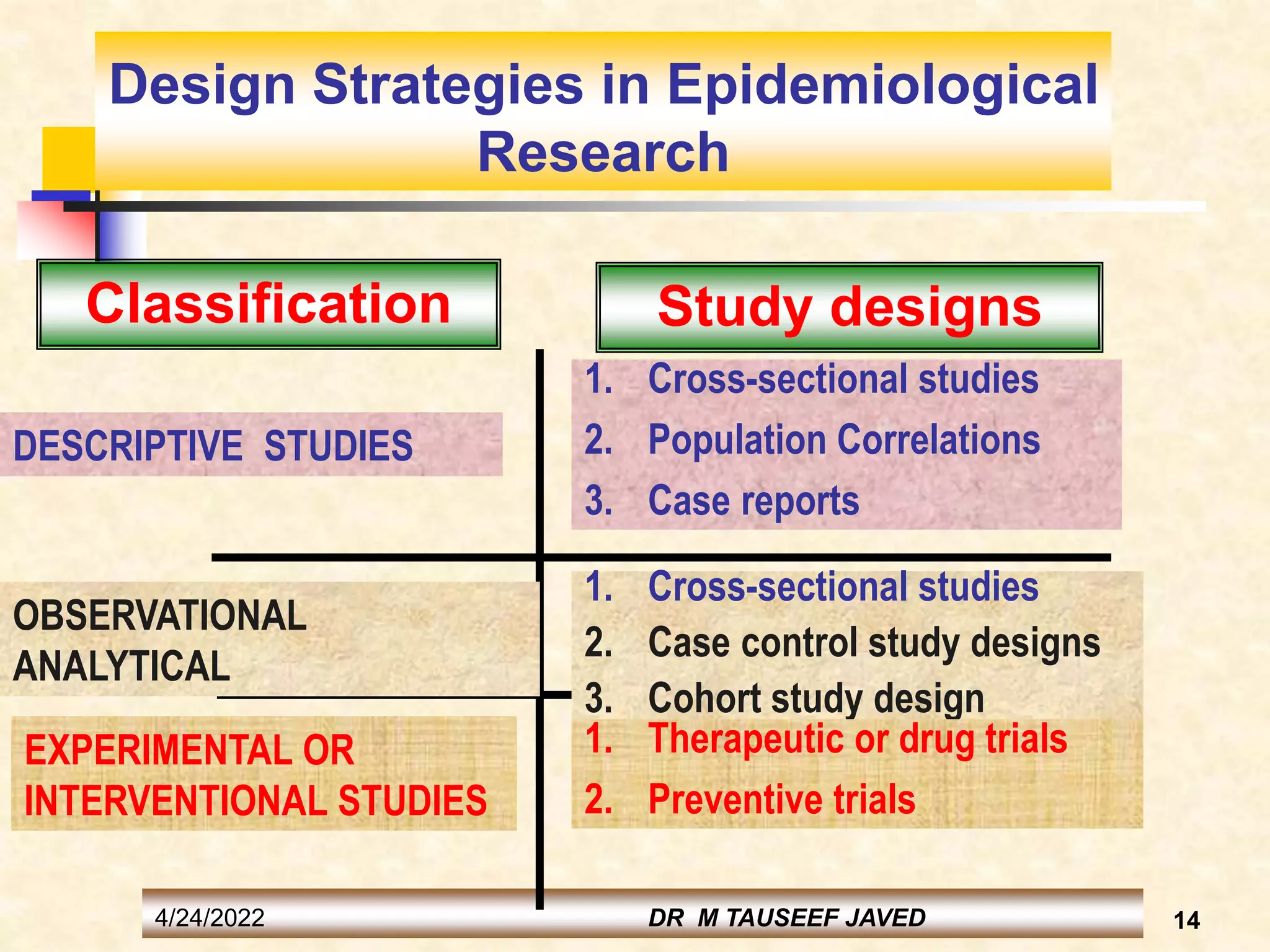
Epidemiological studies are generally categorized into two broad types: descriptive and analytical. Understanding the difference between these two is vital for interpreting scientific data.
Descriptive Epidemiology
Descriptive epidemiology is often the first step in an investigation. Its primary purpose is to describe the "who, where, and when" of a health status. Researchers look for patterns in the data to generate hypotheses about potential causes. For example, if a high concentration of respiratory issues is found among residents living near a specific industrial site in 2026, a descriptive study would document the demographics of those affected and the timing of their symptoms.
Common descriptive study designs include case reports and case series. These provide detailed accounts of individual patients or groups of patients with a similar diagnosis. While they are excellent for identifying new or rare conditions, they cannot be used to establish a definitive cause-and-effect relationship because they lack a comparison group.
Analytical Epidemiology
Analytical epidemiology goes a step further by testing the hypotheses generated by descriptive studies. Its primary purpose is to identify the "how and why" of a health event. The key feature of an analytical study is the presence of a comparison group. By comparing a group of people who have a disease with a group of people who do not, researchers can quantify the association between an exposure and an outcome.
Analytical studies are further divided into observational and experimental designs. In observational studies, the researcher does not intervene but rather observes the natural course of events. In experimental studies, the researcher controls the exposure or intervention.
Observational Study Designs: Analyzing the Real World
Most epidemiological research is observational because it is often unethical or impractical to intentionally expose humans to harmful substances. There are three primary types of observational analytical studies: cross-sectional, case-control, and cohort studies.
Cross-sectional Studies
A cross-sectional study acts as a "snapshot" of a population at a single point in time. Researchers measure the presence of an exposure and the presence of a disease simultaneously. For instance, a researcher might survey a group of people in 2026 to see how many of them smoke and how many have chronic obstructive pulmonary disease (COPD).
The main advantage of cross-sectional studies is that they are relatively quick and inexpensive. However, they suffer from a major limitation known as temporal ambiguity. Because the exposure and the outcome are measured at the same time, it is impossible to prove that the exposure occurred before the disease. Therefore, cross-sectional studies are better for determining the prevalence of a condition rather than its cause.
Case-Control Studies
In a case-control study, researchers start with the outcome. They identify a group of individuals who have the disease (the "cases") and a group of similar individuals who do not have the disease (the "controls"). They then look backward in time (retrospectively) to see if the cases were more likely to have been exposed to a particular risk factor than the controls.
Case-control studies are highly efficient for studying rare diseases or diseases with long latency periods. For example, if a researcher is investigating a rare form of brain cancer, they would find patients who already have the cancer and compare their past behaviors (such as cell phone usage or chemical exposure) to a healthy control group. The primary measure of association in these studies is the Odds Ratio (OR).
Cohort Studies
A cohort study is the most robust type of observational design. It starts with a group of people (a "cohort") who are currently free of the disease under investigation. The cohort is divided into those who have been exposed to a certain factor and those who have not. Researchers then follow both groups forward in time (prospectively) to see who develops the disease.
The primary advantage of a cohort study is that it establishes a clear temporal sequence—the exposure definitely occurred before the disease. This allows researchers to calculate Incidence Rates and Relative Risk (RR). While cohort studies provide strong evidence, they are often expensive and time-consuming, especially for diseases that take decades to develop.
Experimental Studies: The Gold Standard of Evidence
When researchers want the highest level of evidence regarding the effectiveness of a treatment or prevention strategy, they turn to experimental studies, specifically Randomized Controlled Trials (RCTs).
In an RCT, the investigator actively intervenes. Participants are randomly assigned to either an experimental group (receiving the new drug or intervention) or a control group (receiving a placebo or the current standard of care). Randomization is the most critical component because it ensures that both groups are as similar as possible, minimizing the risk of "confounding variables"—outside factors that could skew the results.
Furthermore, many RCTs use blinding. In a single-blind study, the participants do not know which group they are in. In a double-blind study, neither the participants nor the researchers know who is receiving the intervention. This prevents bias from influencing the reporting of symptoms or the interpretation of data.
Challenges in Epidemiological Research: Bias and Confounding
No epidemiological study is perfect. Researchers must constantly account for factors that can lead to incorrect conclusions. The two most common challenges are bias and confounding.
- Selection Bias: This occurs when the people included in the study are not representative of the target population. For example, if a study on heart disease only recruits marathon runners, the results cannot be applied to the general public.
- Information Bias: Also known as observation bias, this happens when information is collected or recorded inaccurately. Recall bias is a common type of information bias in case-control studies, where people with a disease may remember past exposures more vividly (or differently) than healthy people.
- Confounding: A confounding variable is a "third factor" that is associated with both the exposure and the outcome, making it look like there is a direct link when there isn't. For example, a study might find an association between coffee drinking and lung cancer. However, if coffee drinkers are also more likely to smoke, smoking is a confounder that explains the link to lung cancer, not the coffee itself.
Comparison of Major Epidemiological Study Designs
| Study Type | Direction of Inquiry | Primary Goal | Main Advantage | Major Limitation |
|---|---|---|---|---|
| Cross-sectional | Snapshot (Present) | Determine Prevalence | Fast and inexpensive | Cannot establish causality |
| Case-Control | Retrospective (Past) | Identify Risk Factors | Excellent for rare diseases | Prone to recall bias |
| Cohort | Prospective (Future) | Determine Incidence | Establishes temporal sequence | Expensive and time-consuming |
| RCT | Experimental | Test Interventions | Minimizes bias/confounding | Ethical and cost constraints |
The Evolving Landscape of Epidemiology in 2026
As of 2026, the definition of an epidemiological study has expanded to incorporate advanced technology and data science. The field is no longer limited to manual surveys and hospital records.
Digital Epidemiology now utilizes "big data" from wearable devices, social media trends, and real-time GPS tracking to monitor the spread of pathogens. Furthermore, Molecular and Genetic Epidemiology allows researchers to look at the cellular level to understand how specific gene-environment interactions lead to disease. These modern tools enhance the precision of epidemiological studies, allowing for "precision public health" interventions that are tailored to specific sub-populations based on their unique risk profiles.
Despite these technological leaps, the core methodology remains grounded in the principles of comparison and scientific rigor. Whether using a smartphone app or a traditional paper survey, the goal remains the same: to find the patterns that lead to better health.
Frequently Asked Questions
What is the difference between incidence and prevalence?
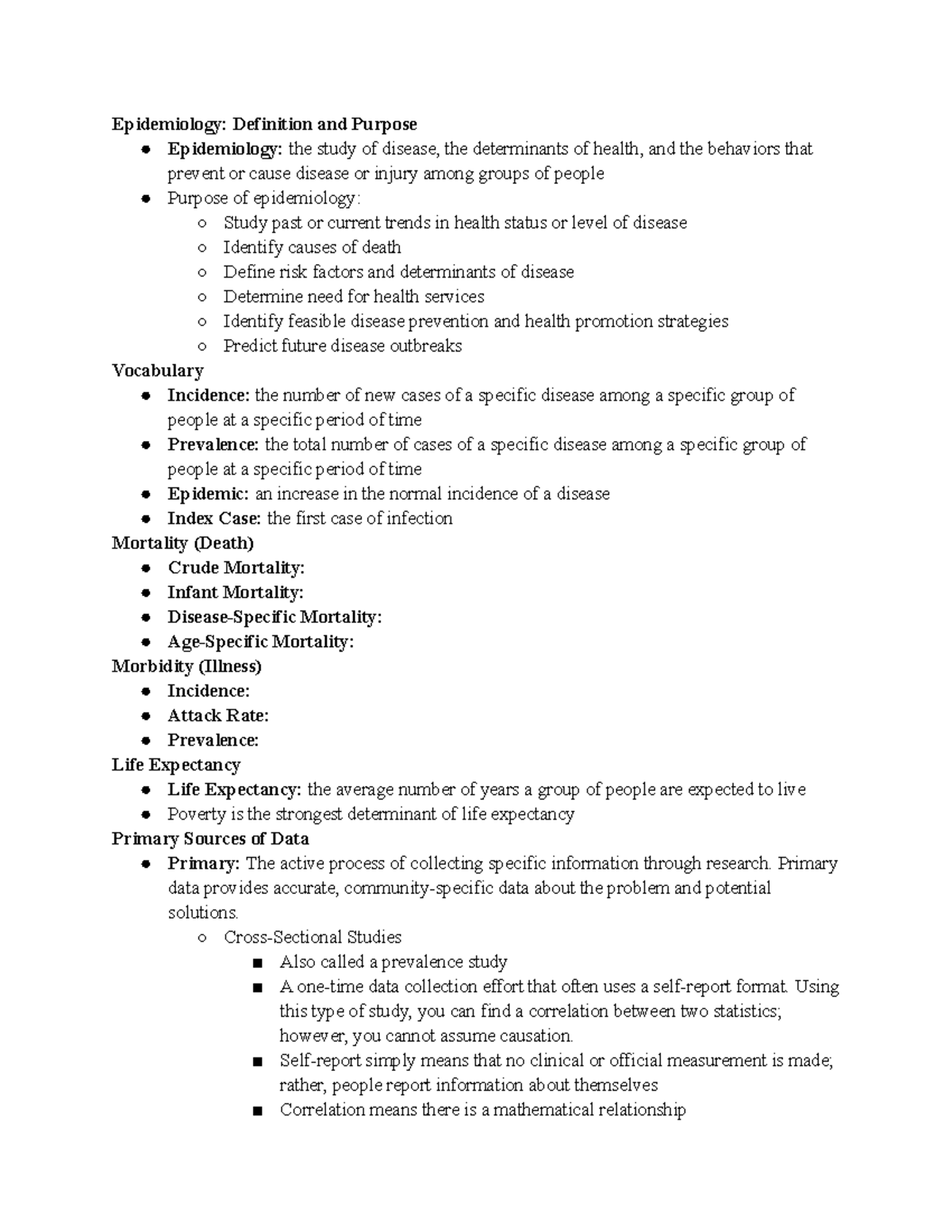
Incidence refers to the number of new cases of a disease that develop in a population over a specific period. It measures the risk of contracting the disease. Prevalence refers to the total number of cases (both old and new) existing in a population at a specific point in time. It measures the overall burden of the disease on a community.
Why is a control group necessary in an epidemiological study?
A control group provides a baseline for comparison. Without a control group, researchers cannot know if the health outcome was caused by the exposure being studied or if it would have happened anyway due to chance or other environmental factors. It is the only way to scientifically isolate the effect of a specific variable.
Can an epidemiological study prove that one thing causes another?
While some designs (like RCTs and well-conducted Cohort studies) provide very strong evidence for causality, epidemiology generally speaks in terms of associations and probabilities. To move from "association" to "causation," researchers often use the Bradford Hill Criteria, which include factors like the strength of the association, consistency across different studies, and biological plausibility.
What is a "blinded" study, and why is it used?
Blinding is a technique used in experimental studies to prevent bias. If participants know they are receiving a "miracle drug," they might report feeling better due to the placebo effect. If researchers know who is receiving the drug, they might unconsciously interpret data more favorably. Blinding ensures that the results are based on the intervention itself rather than expectations.
What are the ethical limits of epidemiological studies?
Researchers must adhere to strict ethical guidelines, such as those outlined in the Declaration of Helsinki. It is unethical to intentionally expose people to known hazards (like toxins) in an experimental setting. For this reason, many questions about harmful exposures must be answered through observational studies rather than experiments.
Summary and Next Actions
To define an epidemiological study is to describe the systematic process of mapping health and disease across populations. Whether you are a student, a healthcare provider, or a policymaker in 2026, understanding these study designs is essential for evaluating the validity of health claims.
If you are looking to apply this knowledge, your next step should be to practice identifying the study design when reading medical news. When you see a headline claiming a "new link" between a habit and a disease, look for the methodology. Was it a Case-Control study looking at the past, or a Cohort study following people into the future? Recognizing the design will help you understand the strength of the evidence and the limitations of the findings.
For further authoritative information on epidemiological standards and current public health data, refer to the World Health Organization (WHO) or the Centers for Disease Control and Prevention (CDC). These organizations provide the foundational frameworks used in modern epidemiological research.