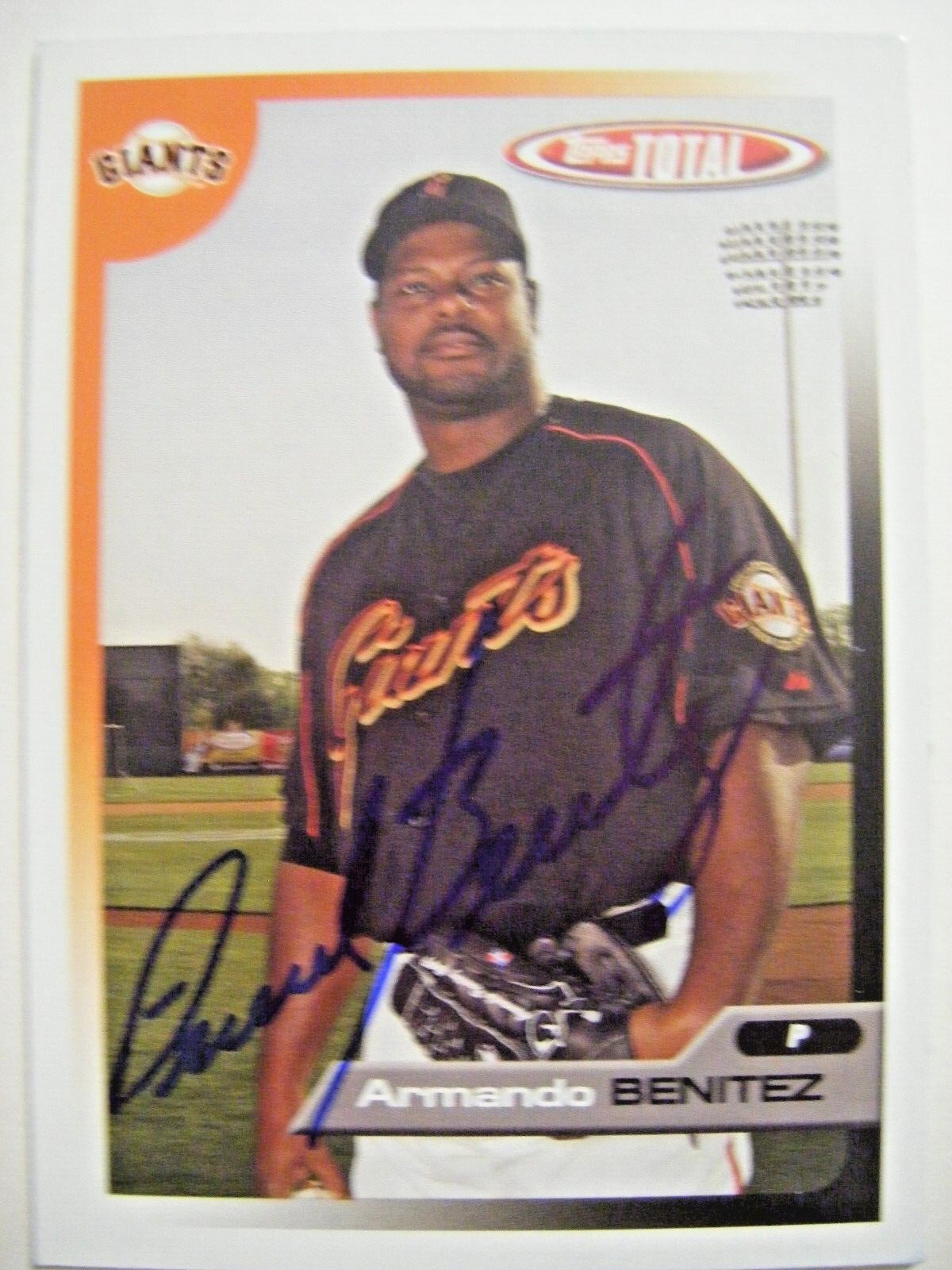
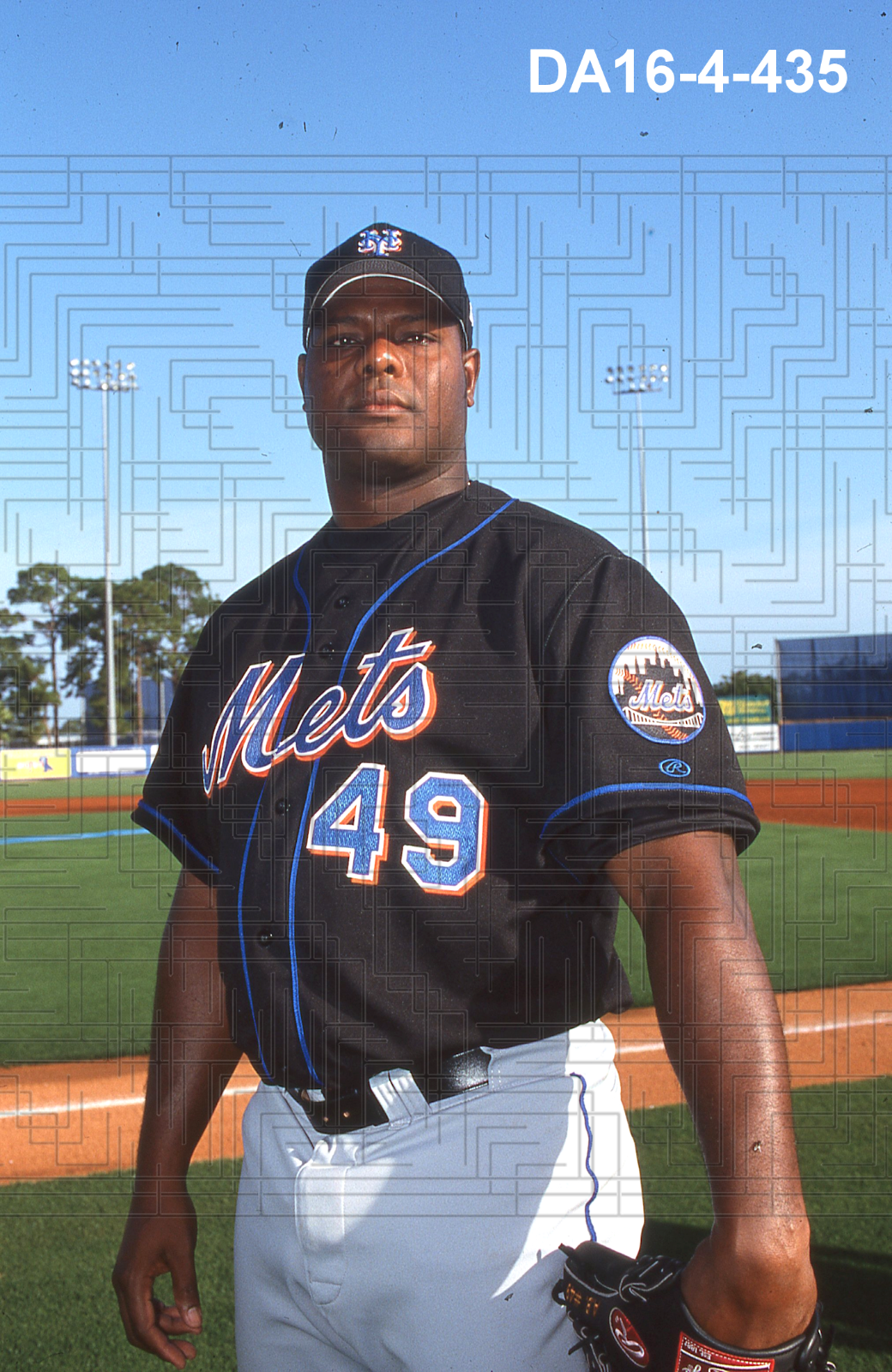
Armando Benítez was one of the most dominant and polarizing relief pitchers in Major League Baseball history, recording 289 career saves and a lifetime 2.89 ERA across 15 seasons (1994–2008). Known for his triple-digit fastball and high strikeout rates, his career remains a case study in the psychological gap between regular-season dominance and high-profile postseason struggles.
As we look back from the perspective of 2026, the career of Armando Benítez serves as a bridge between the traditional "fireman" role of the 1980s and the specialized, high-velocity "closer" era that defines the modern game. While his name is often associated with a handful of high-leverage failures, a technical and statistical analysis reveals a pitcher who was, for long stretches, among the most untouchable arms in the sport.
The Rise of a Power Arm: Early Years in Baltimore (1994–1998)
Armando Benítez signed with the Baltimore Orioles as an amateur free agent in 1990 out of the Dominican Republic. At the time, the Orioles saw a massive, 6'4" frame with a lightning-quick arm. By the time he made his Major League debut in 1994, he was already being groomed as a future closer.
During his early years in Baltimore, Benítez served primarily as the setup man for veteran closer Randy Myers. It was here that the baseball world first witnessed the raw power of his four-seam fastball, which frequently touched 100 mph—a rarity in the mid-1990s compared to today’s velocity-saturated environment. In 1997, Benítez posted a 2.45 ERA and struck out 106 batters in just 73.1 innings, an incredible 13.0 K/9 ratio that foreshadowed the modern era of relief dominance.
However, the "Benítez Narrative" began to take shape during the 1996 and 1997 postseasons. In the 1996 ALCS against the New York Yankees, he surrendered a crucial home run to Bernie Williams. In 1997, he gave up a tie-breaking home run to Tony Fernández in the 11th inning of Game 6 of the ALCS, ending Baltimore’s season. These moments created a lasting impression that Benítez lacked the "clutch" gene, despite his overwhelming statistical superiority during the regular season.
The 1998 Brawl and Departure
One of the most infamous moments of his career occurred on May 19, 1998. After surrendering a three-run home run to Bernie Williams, Benítez hit the next batter, Tino Martinez, squarely in the back. The resulting bench-clearing brawl between the Orioles and Yankees was one of the most violent in recent MLB history. This incident solidified his reputation as a volatile presence on the mound and eventually paved the way for his trade to the New York Mets in the 1998-1999 offseason.
The Peak Years: Dominance and Heartbreak in New York (1999–2003)
The trade to the New York Mets marked the beginning of Benítez’s most statistically productive years. Replacing John Franco as the primary closer, Benítez became a fixture at the back end of the Mets' bullpen. Between 1999 and 2002, he was arguably one of the top three closers in the National League.
Statistical Dominance by the Numbers
During his tenure with the Mets, Benítez recorded save totals of 22, 41, 43, and 33. His 1999 season was particularly spectacular, featuring a 1.85 ERA and a 0.92 WHIP. He was an All-Star in 2003 and finished in the top ten of Cy Young voting in 1999.
From a technical standpoint, his success was built on a "heavy" fastball and a devastating split-finger fastball. The splitter acted as his primary "out pitch," diving out of the strike zone just as hitters geared up for his high-velocity heater. This combination led to a 10.9 K/9 rate during his time in Queens, making him one of the most difficult pitchers to contact in the league.
The 2000 World Series and "The Choker" Label
Despite his regular-season brilliance, the 2000 "Subway Series" against the Yankees became the defining moment of his Mets career. In Game 1, Benítez entered the 9th inning with a 3-2 lead but blew the save, allowing the Yankees to tie the game and eventually win in extra innings.
For Mets fans, this was an unforgivable lapse. While Benítez’s overall stats with the Mets were elite (160 saves and a 2.70 ERA), the timing of his blown saves often overshadowed his successes. This highlights a common phenomenon in sports psychology: the "availability heuristic," where fans and media place disproportionate weight on high-stakes failures while discounting consistent, everyday performance.
The Resurgence in Florida and the San Francisco Years (2004–2007)
After a brief, unsuccessful stint with the New York Yankees and Seattle Mariners in 2003, many believed Benítez was past his prime. However, his 2004 season with the Florida Marlins remains one of the most underrated relief performances in history.
In 2004, Benítez led the National League with 47 saves while maintaining a minuscule 1.29 ERA. He allowed only 36 hits in 69.2 innings and earned another All-Star nod. This season proved that when healthy and mentally locked in, Benítez remained a tier-one closer.
The San Francisco Contract and Decline
Based on his success in Florida, the San Francisco Giants signed Benítez to a three-year, $21.5 million contract in 2005. His time in San Francisco was marred by injuries, specifically a significant hamstring tear that required surgery. Despite these setbacks, he managed to record 19 saves in 2005 and 17 in 2006.
By 2007, his velocity began to dip, and the league-wide transition toward younger, even harder-throwing relievers began to push veterans like Benítez to the periphery. He finished his career with short stints in Florida, Toronto, and several minor league organizations before officially retiring from professional baseball.
Technical Analysis: Pitching Mechanics and Strategy
Armando Benítez’s longevity and success were not merely the result of raw power; they were the product of specific mechanical advantages and a disciplined approach to the "Save" situation.
Mechanics and Delivery
Benítez employed a high-effort, high-leverage delivery. He featured a significant leg kick that helped him generate power from his lower half, a necessity given his large frame. His release point was relatively high, which gave his fastball a "downward" plane, making it harder for hitters to lift the ball. This resulted in a high number of pop-ups and weak fly balls when hitters did manage to make contact.
The Split-Finger Fastball
The hallmark of a great power pitcher is the ability to change planes. Benítez’s splitter was effective because it mimicked the arm speed of his fastball. In the mid-to-late 90s, the splitter was the "it" pitch for closers (famously used by Roger Clemens and Bruce Sutter). Benítez’s version had late, vertical tumble.
Advanced Metrics Comparison
To understand Benítez's value, we must look at ERA+ (a stat that adjusts ERA for ballpark and league averages). A 100 ERA+ is league average.
| Pitcher | Career Saves | Career ERA | Career ERA+ | K/9 Ratio |
|---|---|---|---|---|
| Armando Benítez | 289 | 2.89 | 146 | 10.9 |
| Trevor Hoffman | 601 | 2.87 | 141 | 9.4 |
| Lee Smith | 478 | 3.03 | 132 | 8.7 |
| Billy Wagner | 422 | 2.31 | 187 | 11.9 |
The table above illustrates that while Benítez does not have the volume of saves found in the Hall of Fame elite, his ERA+ and K/9 ratios are remarkably similar to—and in some cases better than—legendary closers like Trevor Hoffman and Lee Smith. An ERA+ of 146 indicates that Benítez was 46% better than the average pitcher during his career.
The "Blown Save" Narrative: Reality vs. Perception
The primary criticism of Armando Benítez is his 289 saves against 69 blown saves (an 80.7% success rate). In comparison, Mariano Rivera had an 89.1% success rate, and Trevor Hoffman had an 88.8% success rate.
While Benítez’s percentage is lower than the all-time greats, it is comparable to many of his contemporaries who are viewed more favorably by history. The disparity lies in the visibility of the failures. Benítez pitched in New York and Baltimore during years when both teams were perennial contenders. Every blown save was magnified by the postseason stakes or the intensity of the New York media market.
Furthermore, Benítez often suffered from "lengthy" blown saves—games where he would allow multiple baserunners rather than a single home run. This created a sense of prolonged agony for fans, which contributed to his reputation as a "heart attack" closer.
Life After Baseball and Legacy in 2026
As of 2026, Armando Benítez has largely moved away from the public spotlight, though he remains a figure of intense discussion among baseball historians and Mets fans. He has occasionally appeared at Mets alumni events and has been involved in youth baseball development in the Dominican Republic.
His legacy is one of the most interesting in the "Steroid Era" of baseball. Benítez achieved his numbers during an era of historic offensive explosion. Pitching to a sub-3.00 ERA during the late 90s and early 2000s is significantly more difficult than doing so in the modern, pitcher-friendly 2020s.
Why he is not in the Hall of Fame
Benítez fell off the Hall of Fame ballot quickly. His lack of 300 saves (the traditional benchmark for relievers) and his postseason reputation were the primary hurdles. However, as modern analytics (like Win Probability Added and FIP) become more prevalent in HOF voting, Benítez's "peak" years are being viewed with renewed respect by the sabermetric community.
Common Questions About Armando Benítez
Did Armando Benítez ever win a World Series?
While Benítez reached the World Series with the New York Mets in 2000, he did not win a championship. His teams often reached the playoffs (the 1996 and 1997 Orioles, the 1999 and 2000 Mets), but he was never on the roster of a team that won the final game of the season.
How fast did Armando Benítez actually throw?
At his peak (1996–1999), Benítez consistently sat between 96 and 98 mph, frequently touching 100 or 101 mph. In the context of the 1990s, this made him one of the three hardest-throwing pitchers in the game alongside Rob Nen and Billy Wagner.
What happened in the 1998 brawl with the Yankees?
The brawl was sparked when Benítez hit Tino Martinez in the back with a fastball following a home run. The Yankees’ dugout cleared, and a massive fight ensued in the Orioles' dugout area. Benítez was suspended for eight games for his role in the incident, which remains one of the most cited examples of "beanball" culture in MLB history.
Is Armando Benítez among the leaders in career saves?
Yes. As of 2026, his 289 saves rank him within the top 40 in MLB history. While he is no longer in the top tier (which is now dominated by pitchers with 350-600 saves), he remains ahead of many prominent closers from the 70s and 80s.
Why did the Mets trade him in 2003?
By 2003, the relationship between Benítez and the New York fans had become untenable. Despite his stats, every appearance was met with boos. The Mets traded him to the Yankees (of all teams) in mid-2003 as part of a roster shakeup. The Yankees eventually moved him to Seattle just weeks later.
Final Perspective: A Great Pitcher in a Difficult Era
In retrospect, Armando Benítez was an elite talent who suffered from the high expectations of the New York market and a handful of poorly timed performances. If Benítez had pitched in a smaller market with less postseason exposure, he might be remembered purely as a dominant power arm.
Instead, he remains a symbol of the high-wire act that is the closer’s role. For a decade and a half, he provided his teams with a legitimate chance to win nearly every time he stepped on the rubber. While he didn't have the "ice-water" veins of a Mariano Rivera, his 289 saves and nearly 1,000 strikeouts secure his place as one of the most formidable relief pitchers of his generation. For any modern fan studying the evolution of the bullpen, the career of Armando Benítez is an essential, if complicated, chapter.