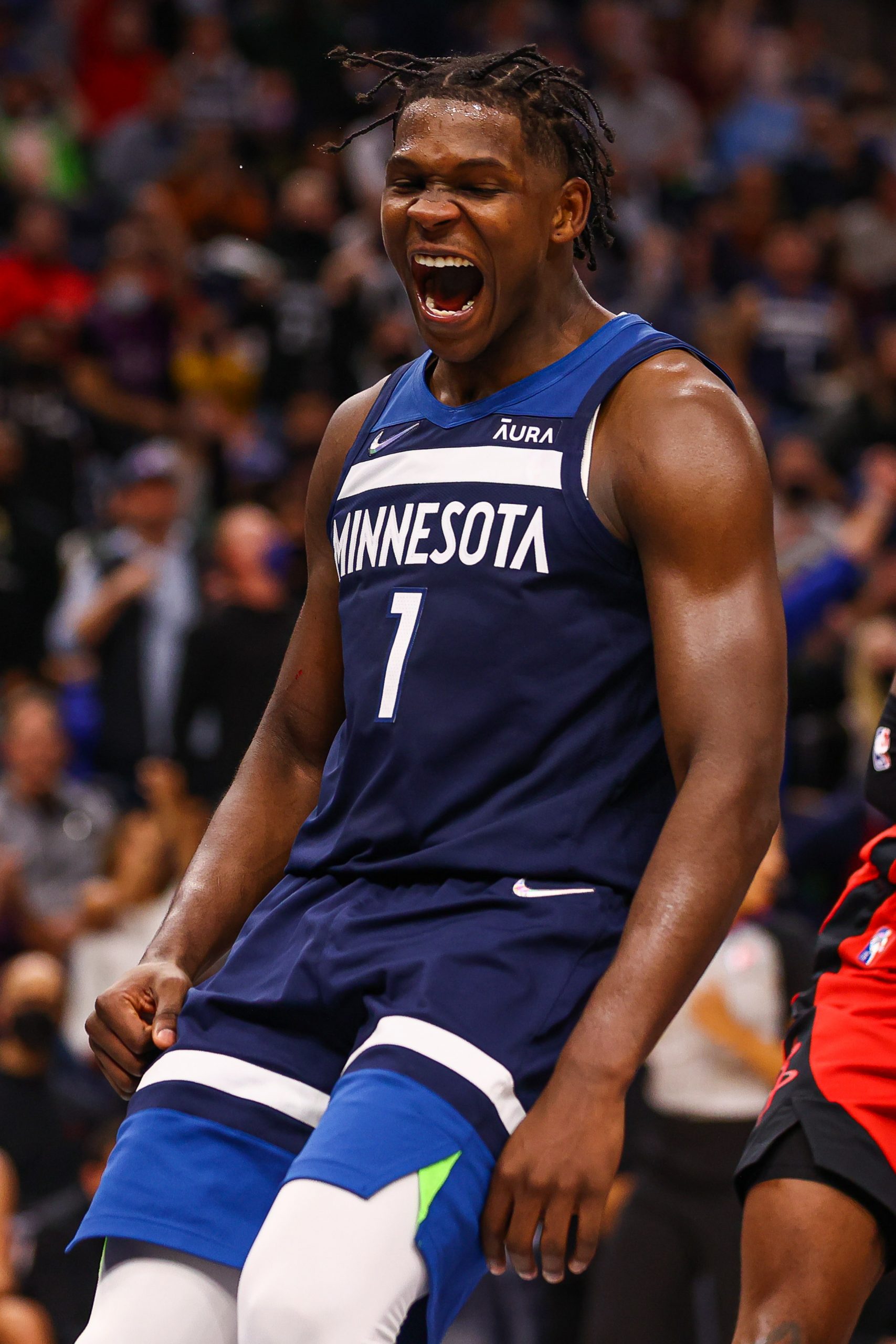
Anthony Edwards' worth in the NBA market is anchored by his five-year designated rookie maximum contract extension with the Minnesota Timberwolves, valued at approximately $245 million through the 2028–29 season. As a multi-time All-Star, All-NBA selection, and global sneaker icon, his total market value combines elite on-court trade value with tens of millions in annual off-court endorsements.
Contract Breakdown: The Financial Mechanics of Edwards' Max Extension
Anthony Edwards signed a five-year Designated Rookie Maximum Extension with the Minnesota Timberwolves in July 2023. The deal officially took effect at the start of the 2024–25 NBA season and runs through the 2028–29 campaign. Contractual mechanisms in the NBA Collective Bargaining Agreement (CBA) tie maximum rookie extensions directly to a percentage of the total salary cap during the first year of the new deal.
When Edwards signed the contract, it carried a standard base value equal to 25% of the 2024–25 salary cap (roughly $204.5 million over five years). However, the contract included a "Derrick Rose Rule" escalator clause. This provision allows a player completing their four-year rookie contract to qualify for a maximum starting salary equal to 30% of the salary cap if they meet specific criteria, such as earning an All-NBA selection, winning Most Valuable Player (MVP), or being named Defensive Player of the Year (DPOY) in the season immediately preceding the extension.
By earning an All-NBA Second Team selection at the conclusion of the 2023–24 season, Edwards triggered the full 30% salary cap criteria. Because the 2024–25 NBA salary cap was set at $140.588 million, Edwards' starting salary for year one of the extension escalated to $42.176 million. Annual 8% raises built into the contract—the maximum allowed for teams re-signing their own bird-rights free agents—shape the total guaranteed financial value across the five-year term.
Year-by-Year Salary Trajectory
The structure of Edwards' contract reflects the aggressive standard growth allowed under NBA salary rules. Because these raises are fixed based on 8% of the first-year salary ($3.374 million annual increments), the compensation schedule develops as follows:
- 2024–25 Season: $42,176,400
- 2025–26 Season: $45,550,512
- 2026–27 Season: $48,924,624
- 2027–28 Season: $52,298,736
- 2028–29 Season: $55,672,848
Total 5-Year Value: $244,623,120
Unlike some max contracts granted to veteran stars, Edwards' contract contains no player options or team options in the final year, ensuring that Minnesota maintains full contractual control through his age-27 season without the risk of early termination.
On-Court Market Value: Trade Equity and Asset Status
In modern NBA front-office valuation, a player's "trade equity" represents what another team would theoretically package to acquire them via trade. Edwards possesses what executives classify as "tier-one untradeable asset status." This designation is reserved for elite, young franchise cornerstones who combine immediate high-level production with significant career longevity.
| Tier | Description |
|---|---|
| TIER 1 | Untradeable Franchise Anchor (Anthony Edwards, Victor Wembanyama) |
| TIER 2 | Perennial All-NBA Stars on Max Deals (Prime Veterans) |
| TIER 3 | High-Value Core Contributors & Quality Starter Assets |
| TIER 4 | Salary Matching Expiring Contracts & Rotation Players |
Factors Establishing Edwards' High Trade Value
- Age and Durability Profile: Selected first overall in the 2020 NBA Draft, Edwards entered the league at 19 years old. He has demonstrated consistent availability throughout his career, regularly avoiding prolonged multi-week absences due to minor injuries. High game participation rates protect team investment under the NBA's 65-game minimum eligibility rule for postseason awards.
- Two-Way Scoring Capacity: Edwards combines high-volume scoring (driving and perimeter shooting) with elite perimeter defense against top opposition. Dynamic wing players who can score 25+ points per game while functioning as point-of-attack defenders command the highest premium in team construction.
- Playoff Performance Escalation: Historically, player efficiency drops in the postseason due to game-planning and physical defense. Edwards has elevated his scoring average, true shooting percentage, and assist rate during postseason series, solidifying his status as a primary option under playoff intensity.
If Minnesota were ever to entertain trade offers for Edwards, standard league precedents indicate the baseline package would exceed historic superstar trade returns. A realistic theoretical return would require four to five unprotected first-round draft picks, multiple draft swap rights, and at least two high-level young rotation players. Consequently, front-office executives consider him functionally untradeable.
Impact of the NBA Collective Bargaining Agreement (CBA) and Apron Caps
Evaluating Edwards' worth requires examining his contract alongside the stringent roster-building rules introduced in the 2023 NBA Collective Bargaining Agreement. The addition of the First Apron and Second Apron tax thresholds has reshaped how teams manage high-earning superstars.
- Base Salary Cap: Standard payroll limit
- Luxury Tax Threshold: Financial penalty triggers
- First Luxury Tax Apron: Hard cap restrictions on trades/signings
- Second Tax Apron: Severe penalties: Frozen draft picks, loss of MLE, trade aggregation bans
The Second Apron penalizes teams with payrolls exceeding the threshold by restricting trade aggregation, prohibiting the use of the Mid-Level Exception (MLE), freezing future first-round draft picks, and automatically moving first-round picks to the end of the draft order if teams remain over the apron for multiple years.
Because Edwards' maximum salary occupies 30% of the salary cap, Minnesota's management must carefully structure the rest of the roster. The team's financial maneuvering—such as trading Karl-Anthony Towns to the New York Knicks—was driven directly by the need to maintain financial flexibility, avoid perpetual Second Apron penalties, and surround Edwards with complementary talent within salary cap limits.
Despite these roster restrictions, paying 30% of the cap to a player of Edwards' caliber represents an efficient allocation of payroll. Under modern NBA cap economics, granting a maximum contract to a true top-10 player yields positive value relative to production, whereas giving max contracts to non-elite secondary options creates financial liabilities.
Off-Court Market Value: Endorsements and Commercial Footprint
Beyond his NBA playing salary, Anthony Edwards has built one of the most lucrative endorsement profiles among younger professional athletes. His off-court earnings are estimated at $15 million to $20 million annually, driven by key global partnerships.
| Category | Details |
|---|---|
| Primary Sneaker Partner | Adidas (Multi-year, signature line) |
| Key Corporate Partners | Bose, Sprite / Coca-Cola, Kia |
| Media & Pop Culture | Major film roles, apparel collaborations |
The Adidas Signature Line
The cornerstone of Edwards' off-court valuation is his long-term shoe and apparel endorsement deal with Adidas. Following the release of his debut signature sneaker, the Adidas AE 1, in late 2023, Edwards became the focal point of Adidas Basketball's global marketing campaign.
The AE 1 achieved widespread commercial success, driven by:
- Distinct Physical Design: Utilizing a TPU honeycomb architecture that departed from traditional performance basketball shoe designs.
- Direct Marketing Campaigns: Promotional spots directly targeting competing signature shoe lines generated high social media engagement and consumer interest.
- Accessible Pricing: Positioning the shoe at a competitive retail price point relative to competing signature lines increased consumer adoption among younger demographics.
Following the success of the AE 1, Adidas negotiated a multi-year contract extension with Edwards valued in the eight-figure annual range, solidifying his standing alongside top global shoe endorsers.
Corporate Sponsorships and Media Presence
In addition to Adidas, Edwards maintains an active portfolio of major corporate sponsorships:
- Sprite / The Coca-Cola Company: Featured prominently in national television campaigns, continuing the brand's long history of partnering with elite NBA wing players.
- Bose: Premium audio endorsement covering global advertising and social media campaigns.
- Fanatics: Exclusive memorabilia and autographed merchandise agreements.
Edwards' personality, trash-talking playing style, and authentic interviews enhance his marketability. His co-starring role in the 2022 feature film Hustle introduced him to audiences beyond basketball, giving him crossover appeal rare for players in smaller media markets like Minnesota.
Financial Comparison: Edwards vs. Elite NBA Shooting Guards
To understand Edwards' place in the market, it helps to compare his financial metrics with other elite wing players and guards across the league.
| Player | Team | Contract Type | Total Contract Value | Average Annual Value (AAV) | Contract Expiration |
|---|---|---|---|---|---|
| Anthony Edwards | Minnesota Timberwolves | 5-Year Max Extension (30%) | $244.6 Million | $48.9 Million | 2029 |
| Devin Booker | Phoenix Suns | 4-Year Supermax Extension | $221.1 Million | $55.2 Million | 2028 |
| Shai Gilgeous-Alexander | Oklahoma City Thunder | 5-Year Designated Max | $179.3 Million | $35.8 Million | 2027 |
| Jaylen Brown | Boston Celtics | 5-Year Supermax Extension | $286.2 Million | $57.2 Million | 2029 |
| Donovan Mitchell | Cleveland Cavaliers | 3-Year Max Extension | $150.3 Million | $50.1 Million | 2028 |
Note: Shai Gilgeous-Alexander signed his previous extension under an earlier salary cap figure and becomes eligible for a major supermax extension, which will alter his position on future salary leaderboards.
Key Insights from the Financial Comparison
- Contract Efficiency: Edwards' contract delivers strong value relative to market performance. Because he qualified for the 30% rookie max escalator rather than the veteran 35% Designated Veteran Supermax (which requires eight years of service), Minnesota pays less per year for Edwards than Boston pays for Jaylen Brown or Phoenix pays for Devin Booker.
- Age-to-Cost Alignment: Edwards enters the prime years of his career (ages 23 to 27) fully under contract, ensuring his peak athletic seasons are captured entirely within this deal.
- Cap Increase Adjustments: With the NBA's national media rights deals driving a projected 10% annual increase in the salary cap, Edwards' contract will take up a smaller percentage of the total cap in its later years.
Roster Construction and Cap Strategy Around Edwards
Managing an NBA team around a $48.9 million average annual salary requires disciplined cap management. For the Minnesota Timberwolves, maximizing Edwards' market value involves balancing competitive talent with cap compliance.
| Category | Details |
|---|---|
| Core Anchor | Anthony Edwards (30% Max Salary Base) |
| Frontcourt | Jaden McDaniels, Rudy Gobert |
| Depth Assets | Draft-developed rookies & veteran ring-chasers |
| Cap Constraint | Avoiding prolonged Second Apron penalties |
Strategic Priorities for Minnesota
- Draft-and-Develop Complementary Talent: Because high-earning max players limit available cap room for mid-tier free agents, front offices must use the NBA Draft to secure low-cost rotation players on rookie-scale contracts.
- Spacing and Playmaking: To optimize Edwards' slashing ability, teams must prioritize surrounding him with high-percentage spot-up shooters and secondary playmakers who can handle the ball when opponents double-team him.
- Defensive Support: Pair Edwards with length on the perimeter (such as Jaden McDaniels) and interior rim protection (such as Rudy Gobert) to keep his defensive burden manageable during the regular season.
By restructuring their payroll—including roster moves designed to maintain flexibility below the Second Apron—Minnesota's management has kept the team built to compete long-term around Edwards without exceeding tax limits.
Frequently Asked Questions
What is Anthony Edwards' current NBA salary for the 2025–26 season?
For the 2025–26 NBA season, Anthony Edwards earns $45,550,512. This represents the second year of his five-year designated rookie max contract extension with the Minnesota Timberwolves.
How did Anthony Edwards' contract increase from $204 million to $245 million?
Edwards' contract contained a "Rose Rule" clause, which raises a rookie extension's starting salary from 25% to 30% of the salary cap if the player earns an All-NBA selection, wins MVP, or is named Defensive Player of the Year. Edwards achieved an All-NBA Second Team selection at the end of the 2023–24 season, triggering the full 30% escalator.
Can the Minnesota Timberwolves trade Anthony Edwards?
While NBA rules allow players to be traded after the standard post-extension trade restriction period passes, Edwards is considered virtually untradeable. His age, production, and long-term contract make him the franchise cornerstone, meaning Minnesota would not trade him short of an unprecedented trade package.
How much does Anthony Edwards make from off-court endorsements?
Anthony Edwards earns an estimated $15 million to $20 million per year from endorsement contracts. His largest endorsement deal is with Adidas, which features his AE signature sneaker line, alongside deals with brands like Sprite and Bose.
When does Anthony Edwards become an unrestricted free agent?
Anthony Edwards will become an unrestricted free agent in the summer of 2029 upon the completion of his five-year contract extension. His contract does not contain any player or team options for the final season (2028–29).
How does the 2023 NBA CBA affect Anthony Edwards' contract value?
The 2023 CBA introduced strict luxury tax penalties, specifically the First and Second Apron restrictions. While these rules restrict how teams build around high earners, Edwards' production justifies a 30% max salary slot, giving Minnesota strong return on investment relative to non-elite max contracts.
Strategic Summary and Market Outlook
Anthony Edwards represents one of the highest-value player assets in professional sports. His market worth is supported by a fully guaranteed five-year, $244.6 million contract running through 2029, a multi-million dollar global signature shoe deal with Adidas, and elite trade equity as an untradeable franchise player.
For NBA front-office executives, sports analysts, and fans tracking NBA economics, Edwards serves as a model of efficient roster investment: a young player whose on-court performance and commercial reach fully justify a 30% max contract, even under the strict financial limits of the NBA's salary cap rules.