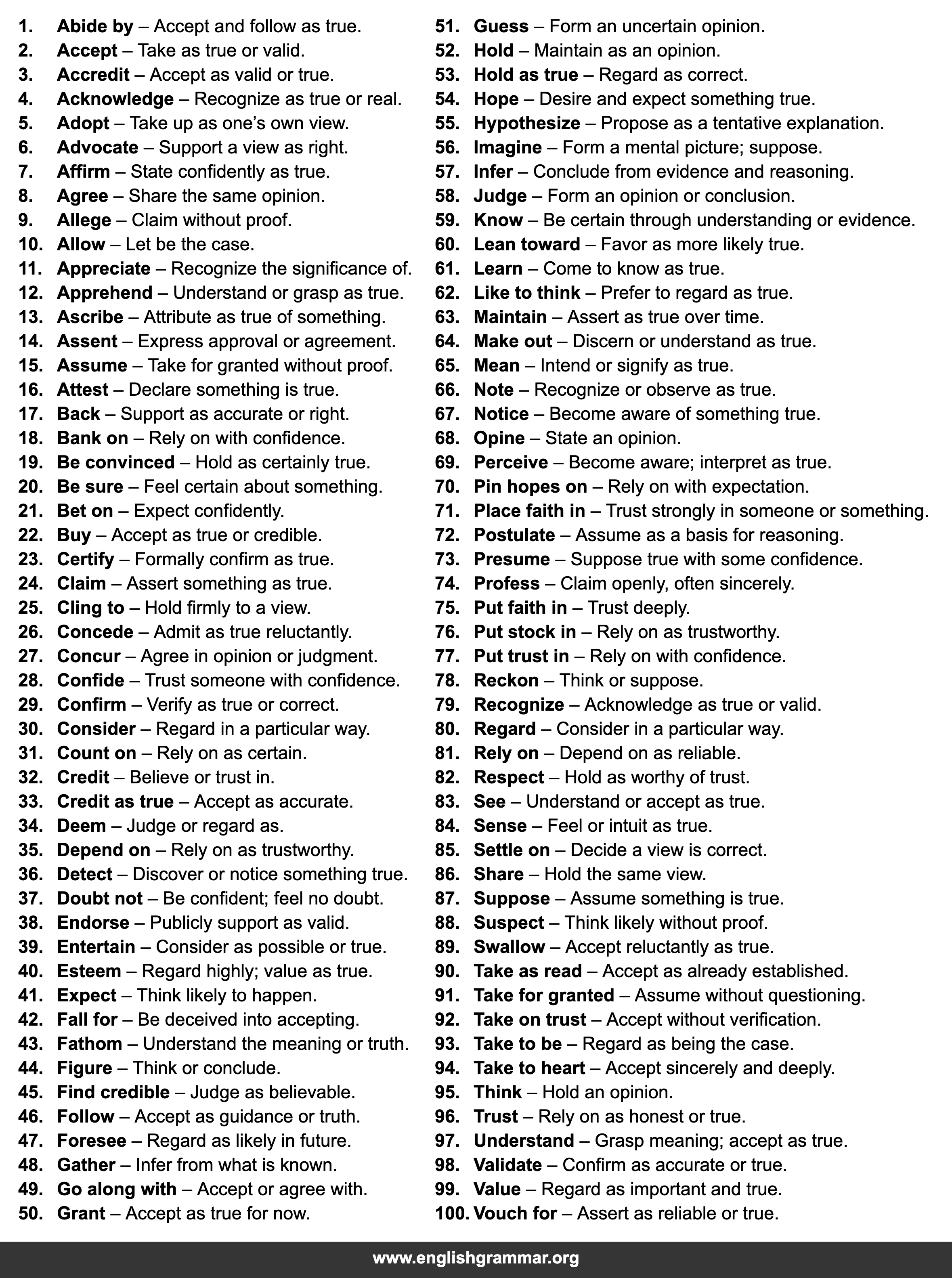
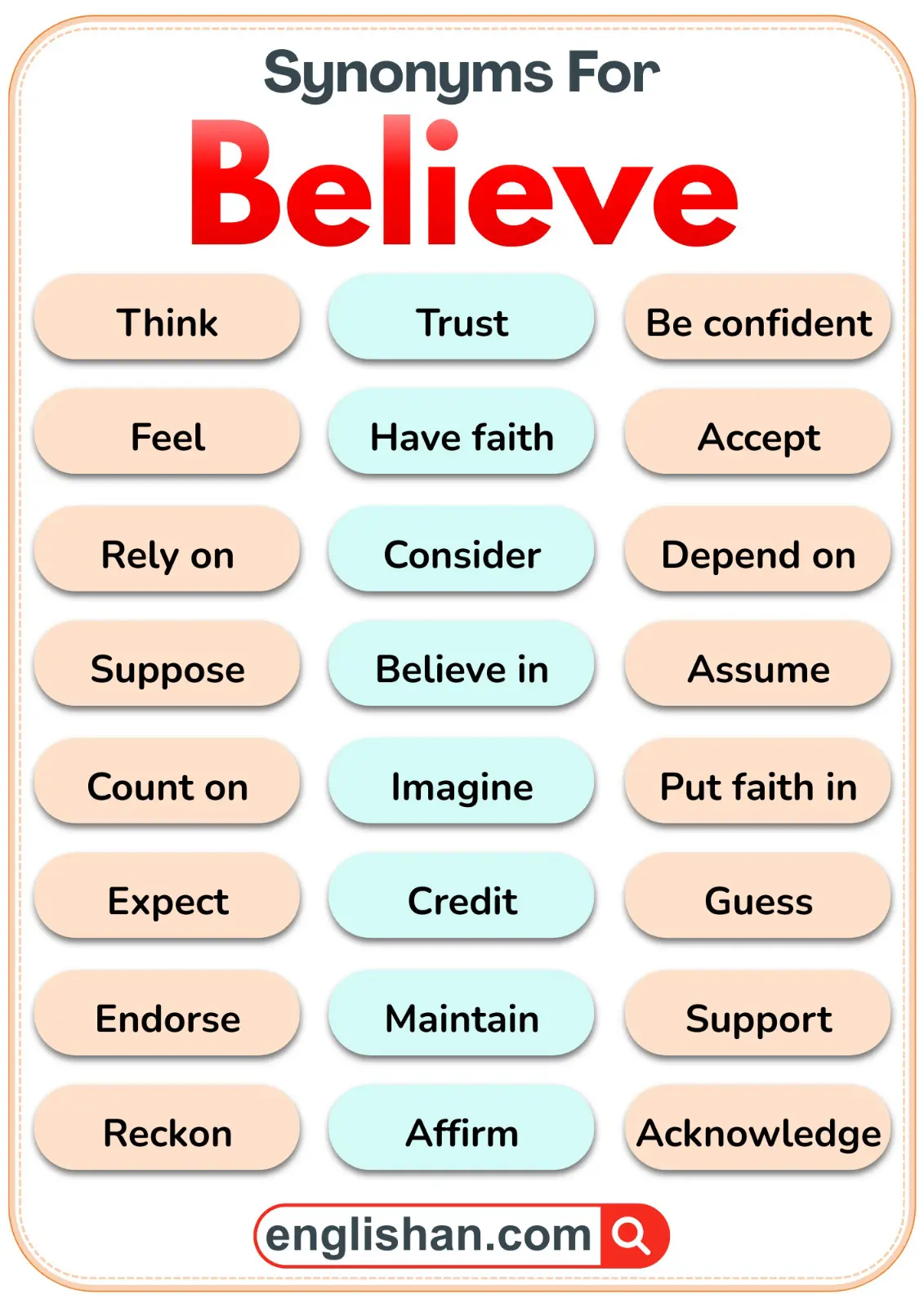
Replacing "I believe" with more precise language improves the authority, clarity, and persuasive power of your writing. Depending on the context, effective alternatives include "I contend," "I maintain," "I assert," or "it is evident that." Often, the most impactful choice is to remove the phrase entirely, allowing the strength of your evidence to speak for itself.
The Evolution of Personal Voice in Writing
As we navigate the communication standards of 2026, the demand for precision in language has never been higher. Whether you are drafting a technical white paper, a corporate strategy document, or an academic dissertation, the phrases you choose to signal your perspective dictate how your audience perceives your expertise. The phrase "I believe" often functions as a "filler" or a "hedge," a linguistic cushion that writers use when they are unsure of their standing or when they want to soften the impact of a claim.
However, in professional environments, "I believe" can inadvertently signal a lack of objective evidence. It frames the statement as a personal preference rather than a logical conclusion drawn from data or experience. To elevate your writing, you must understand the spectrum of conviction, from the cautious surmise to the forceful assertion, and select the specific term that matches your intended level of certainty.
Why Writers Rely on "I Believe" (And Why They Should Stop)
Most writers fall into the "I believe" habit during their early education. It is a natural way to introduce an opinion. In a classroom setting, expressing a personal belief is often encouraged to foster individual thought. However, as one moves into higher-level discourse, the focus shifts from who thinks a certain way to why a certain conclusion is valid.
Using "I believe" frequently creates several rhetorical issues:
- Redundancy: If you are the author of the piece, it is already understood that the ideas presented are yours. Prefacing a sentence with "I believe" is often a waste of words.
- Weakening the Argument: It introduces an element of doubt. Saying "I believe this strategy will work" is significantly less convincing than saying "This strategy will work because..."
- Subjectivity: It centers the writer rather than the subject matter. In technical or scientific writing, the goal is usually to remain as objective as possible.
Assertive Alternatives: Expressing Strong Conviction
When you are confident in your position and want to project authority, you need "strong" verbs. These words suggest that your opinion is backed by rigorous thought, experience, or evidence.
I Contend
This is a powerful alternative often used in debates or argumentative essays. To "contend" implies that you are prepared to defend your position against counterarguments. It suggests a level of intellectual engagement that "believe" lacks.
I Maintain
Use "maintain" when you are reaffirming a position that has been held over time or despite opposition. It signals consistency and steadfastness. It is particularly useful in legal or formal business contexts where a long-term stance is being communicated.
I Assert
To "assert" is to state a fact or belief confidently and forcefully. This is one of the most direct replacements for "I believe." It removes the "feeling" aspect and replaces it with a "stating" aspect.
I Postulate
In more theoretical or scientific contexts, "postulate" suggests that you are putting forward a theory or a starting point for further reasoning. It is more sophisticated than "believe" because it invites the reader to follow your logic toward a conclusion.
Nuanced and Hedged Alternatives: Expressing Caution
Sometimes, you cannot be 100% certain. In these cases, using a word that is too strong can be dangerous. You need "hedging" language that signals a reasoned opinion without over-claiming.
I Suggest
"Suggest" is a humble yet professional way to offer an opinion. It implies that while you see a clear path or explanation, you remain open to other possibilities. This is ideal for peer reviews or collaborative business environments.
I Suspect
This indicates an intuition based on limited evidence. It is more honest than "believe" when you are operating on a hunch or preliminary data. It signals to the reader that more investigation may be required.
I Surmise
"Surmise" is a more formal version of "guess" or "suppose." It suggests that you have looked at the available information and reached a tentative conclusion. It carries a tone of intellectual sophistication.
It Appears That
By shifting the focus from "I" to "It," you create a sense of objective observation. This phrase suggests that any reasonable person looking at the same evidence would come to the same conclusion you have.
Removing the First Person: The "Objective" Approach
The most effective way to replace "I believe" is often to delete it and any other first-person references. This is known as "removing the authorial mask." It forces the writer to make a direct claim, which is inherently more persuasive.
- Original: I believe that the 2026 economic projections are overly optimistic.
- Revised: The 2026 economic projections are overly optimistic.
By removing the introductory phrase, the second sentence becomes a statement of fact (or at least a very strong argument) that the writer must then support with data. This structure is the gold standard for academic journals, journalistic reporting, and executive summaries.
Contextual Usage Comparison
The following table provides a breakdown of different alternatives and the specific contexts where they are most effective.
| Alternative Phrase | Tone | Primary Use Case | Impact on Reader |
|---|---|---|---|
| I Contend | Formal / Argumentative | Academic essays, legal briefs | Signals readiness to defend a point. |
| I Assert | Confident / Direct | Executive summaries, manifestos | Projects authority and certainty. |
| I Maintain | Persistent / Steady | Position papers, formal rebuttals | Suggests a long-held, consistent view. |
| I Propose | Collaborative / Forward-looking | Project plans, research bids | Suggests a path forward for consideration. |
| In my assessment | Professional / Analytical | Business reports, consultations | Bases the opinion on expertise/analysis. |
| It is evident that | Objective / Factual | Scientific writing, data analysis | Implies the conclusion is undeniable. |
| One could argue | Nuanced / Academic | Theoretical discussions, literary critique | Opens the door for multiple perspectives. |
| I Suspect | Cautious / Intuitive | Preliminary reports, investigations | Acknowledges limited evidence. |
| From my perspective | Subjective / Personal | Opinion pieces, creative non-fiction | Clearly labels the view as individual. |
The Impact of Word Choice on Ethos
In rhetoric, ethos refers to the credibility or character of the speaker/writer. Your choice of words directly impacts your ethos. If you constantly use "I believe," you may appear as someone who relies on "gut feelings" rather than rigorous analysis. Conversely, if you use "I maintain" or "the evidence suggests," you build the persona of an expert who is grounded in reality and logic.
In 2026, where information is abundant but clarity is scarce, the ability to signal the source and strength of your convictions is a vital skill. For example, using "I advocate" tells the reader you are not just a passive observer but an active supporter of an idea. This level of precision helps avoid misunderstandings and ensures your message is received with the appropriate weight.
Practical Steps for Refining Your Drafts
To eliminate "I believe" from your writing, follow this three-step editing process:
- The Highlight Test: Go through your draft and highlight every instance of "I believe," "I think," and "I feel."
- The Deletion Test: Try deleting the highlighted phrase. If the sentence still makes sense and sounds stronger, leave it out.
- The Substitution Test: If the sentence needs an introductory phrase for clarity or tone, choose one of the alternatives from the table above based on the level of certainty you wish to convey.
Common Mistakes to Avoid
When seeking a synonym for "I believe," there are a few traps that writers often fall into:
- Over-formalizing: Don't use "I postulate" if you are writing a casual email to a colleague. Match the word to the environment.
- False Objectivity: Phrases like "It is a well-known fact that" can be dangerous if the "fact" is actually just your opinion. This can damage your credibility more than "I believe" ever could.
- Redundant Phrases: Avoid "In my personal opinion, I believe." This uses three different ways to say the same thing. Choose one clear method and stick to it.
Frequently Asked Questions
Is it ever okay to use "I believe" in writing?
Yes. "I believe" is appropriate in personal narratives, memoirs, or certain types of opinion columns where the focus is explicitly on your personal journey or internal state. It is also acceptable in some religious or philosophical contexts where "belief" is the core subject matter.
What is the best alternative for "I believe" in a college essay?
In academic writing, it is usually best to use phrases like "This evidence suggests," "One might conclude," or "The data indicates." If you must use the first person, "I contend" or "I argue" are the standard academic choices.
How do I sound more confident without being aggressive?
Use phrases like "In my assessment" or "I am confident that." These phrases root your confidence in your professional judgment or specific evidence rather than just your personal willpower, which makes them sound authoritative rather than pushy.
Can I use "I feel" instead of "I believe"?
Generally, no. "I feel" is even more subjective than "I believe." In professional and academic writing, "feel" should be reserved for physical sensations or deep emotional responses. If you are discussing a thought or an opinion, "believe," "think," or any of the stronger alternatives are preferred.
Does removing "I believe" make my writing too blunt?
It can, depending on the sentence. If a direct statement feels too harsh, you can soften it with a nuance-based alternative like "It appears that" or "Evidence suggests." This maintains the professional tone while avoiding the bluntness of a standalone claim.
Is "I believe" acceptable in 2026 business communication?
While it is not "wrong," the trend in 2026 is toward high-efficiency, data-backed communication. Executives and stakeholders generally prefer "My analysis shows" or "I recommend," as these phrases are more actionable and less centered on the individual's internal state.
Final Recommendation
To truly improve your writing, move beyond the simple substitution of words. Instead, focus on the structure of your arguments. When you find yourself wanting to write "I believe," take it as a signal that you need to provide more evidence. By replacing subjective fillers with objective observations or assertive claims, you shift the focus from your own mind to the reality of the topic at hand. This not only makes you a more persuasive writer but also a more critical thinker. In the professional world of 2026, the strongest voice is not the one that shouts the loudest about what it believes, but the one that demonstrates its conclusions most clearly.