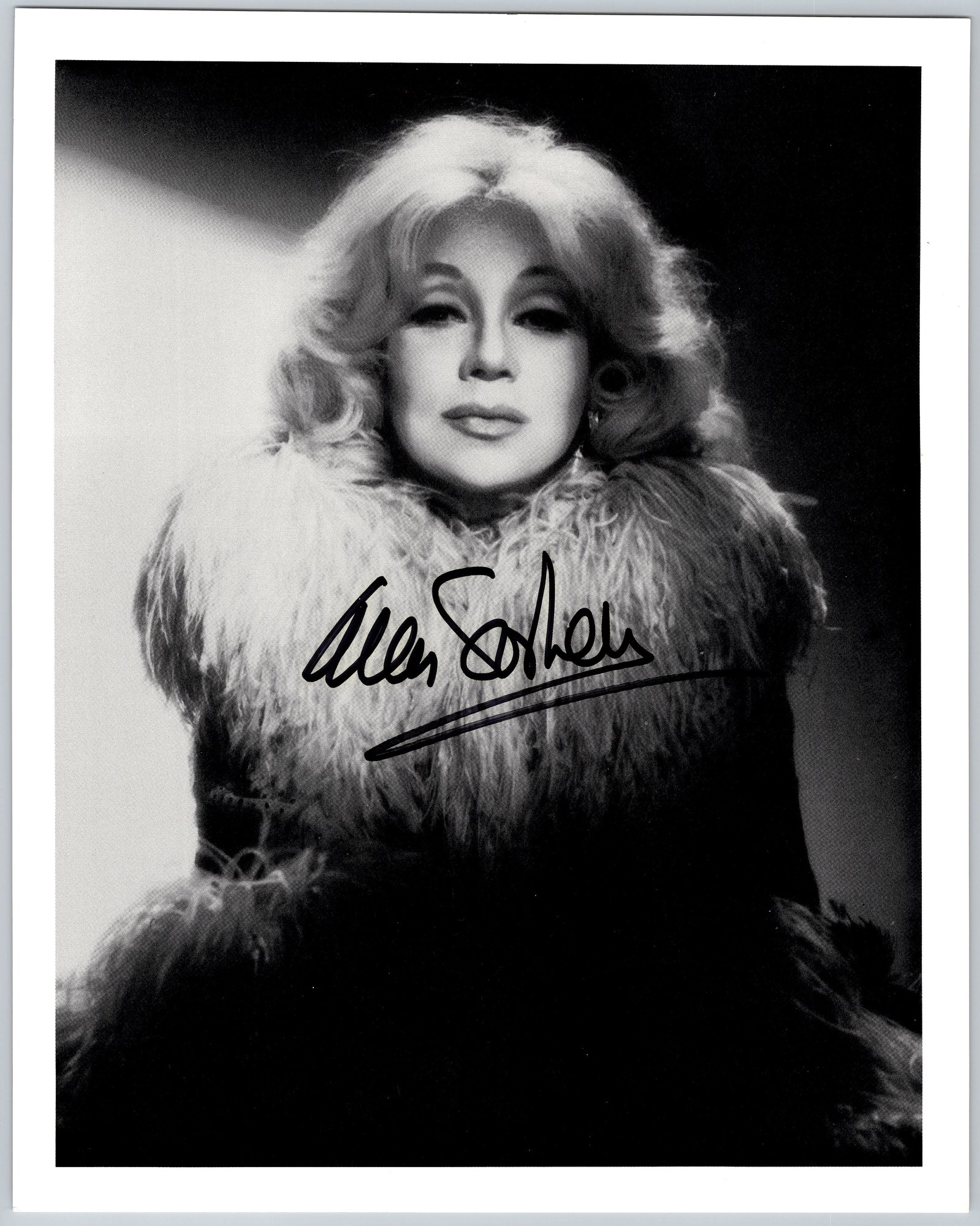
Ann Sothern died of heart failure on March 15, 2001, at her home in Ketchum, Idaho, on her 92nd birthday. Renowned for playing spunky, quick-witted heroines across a six-decade career in film and television—most notably as Maisie Ravier and in The Whales of August—her passing marked the conclusion of a vibrant Golden Age career.
The Circumstances of Ann Sothern’s Death in 2001
Ann Sothern passed away peacefully on March 15, 2001, coinciding precisely with her 92nd birthday. Her death occurred at her residence in Ketchum, Idaho, where she had lived quietly for many years following her retirement from acting. The official cause of death was attributed to heart failure.
Her passing ended a long chapter of quiet fortitude during her twilight years. Sothern had withdrawn from public life and the Hollywood spotlight in the early 1990s, spending her final decade in the scenic environment of Sun Valley and Ketchum. At the time of her death, she was survived by her daughter, actress Tisha Sterling, and her granddaughter, Heidi Bates Hogan.
Although Sothern spent her final years far from movie sets and television studios, her death prompted widespread tributes across the entertainment industry. Film historians, former colleagues, and fans commemorated her remarkable versatility, sharp comedic timing, and resilience through decades of changing industry trends and personal health struggles.
Early Life and the Transition to Screen Stardom
Born Harriette Arlene Lake on March 15, 1909, in Valley City, North Dakota, Sothern was raised in a musical family. Her mother, Hannah Lake, was a concert singer and vocal coach who nurtured young Harriette’s musical abilities. Trained as a pianist and vocalist, Sothern demonstrated early artistic promise, winning statewide high school music competitions in New Mexico, where her family later settled.
In the late 1920s, Sothern moved to New York City to pursue a career in musical theater. Appearing under her birth name, she landed chorus roles and eventually featured parts in Broadway productions such as America's Sweetheart (1931) and Everybody's Welcome (1931). Her vibrant stage presence and distinct vocal delivery quickly attracted the attention of Hollywood talent scouts.
- Harriette Arlene Lake (1909)
- Broadway Chorus & Stage Roles (Late 1920s – Early 1930s)
- Hollywood Debut & Studio Name Change to "Ann Sothern" (1933)
- Breakthrough as "Maisie Ravier" at MGM (1939)
Upon moving to Los Angeles, studio executives suggested a name change to stand out in the crowded studio system. Rechristened Ann Sothern—a combination honoring mother figure names and theatrical precedent—she signed contracts with Columbia Pictures and RKO Radio Pictures. Throughout the mid-1930s, Sothern appeared in a steady succession of light comedies, B-movies, and musicals, honing the clever, self-assured persona that would define her career.
The Maisie Series and Golden Age Success
Sothern’s career achieved a breakthrough in 1939 when Metro-Goldwyn-Mayer (MGM) cast her as the lead in Maisie. Originally intended as a vehicle for Jean Harlow before Harlow's untimely death, the role of Maisie Ravier—a brassy, big-hearted, wise-cracking Brooklyn burlesque dancer—fit Sothern's natural comic timing.
- THE MAISIE RAVIER FILM SERIES (1939 – 1947)
- [1939] Maisie
- [1940] Congo Maisie
- [1940] Gold Rush Maisie
- [1941] Ringside Maisie
- [1942] Maisie Gets Her Man
- [1943] Swing Shift Maisie
- [1944] Maisie Goes to Reno
- [1947] Undercover Maisie
The success of the initial film prompted MGM to launch an entire franchise built around the character. Between 1939 and 1947, Sothern starred in ten Maisie films, including:
- Congo Maisie (1940)
- Gold Rush Maisie (1940)
- Ringside Maisie (1941)
- Swing Shift Maisie (1943)
- Undercover Maisie (1947)
The Maisie character resonated strongly with American audiences, particularly during World War II. Maisie represented working-class resilience, quick humor, and moral integrity. The popular film series also expanded into a long-running radio show, The Adventures of Maisie, which Sothern starred in from 1945 through the early 1950s.
While the Maisie films established her commercial popularity, Sothern also demonstrated dramatic range in major studio productions. In 1949, she delivered a critically acclaimed performance in Joseph L. Mankiewicz’s A Letter to Three Wives, playing Rita Phipps, a busy radio writer navigating marital strain opposite Kirk Douglas. Her performance demonstrated that behind her broad comedic skill lay a refined dramatic talent.
Television Success: Private Secretary and Beyond
As the studio system shifted in the 1950s, Sothern transitioned to the emerging medium of television. She was one of the first major film actresses to build a successful second career as a TV star and executive producer.
In 1953, Sothern debuted as Susie MacNamara in the CBS sitcom Private Secretary. Playing a resourceful secretary who regularly solved her boss's personal and professional problems, Sothern earned four consecutive Emmy Award nominations for Best Actress in a Series (1954–1957). The show was a ratings success and ran for five seasons.
- ANN SOTHERN ON TELEVISION
- Private Secretary (1953–1957)
- Role: Susie MacNamara
- 4 Emmy Nominations
- The Ann Sothern Show (1958–1961)
- Role: Katy O'Connor
- Hotel Assistant Manager
- My Mother the Car (1965–1966)
- Role: Voice of the Car
- Cult Classic Voice Role
- Private Secretary (1953–1957)
Following creative disagreements with the producer of Private Secretary, Sothern launched The Ann Sothern Show in 1958. Playing Katy O'Connor, an assistant manager at the fictional Bartley House Hotel in New York, Sothern maintained control over the production through her company, Anso Productions. The series aired until 1961 and featured high-profile guest stars, including her close friend Lucille Ball.
During the mid-1960s, Sothern took on an unusual television assignment: providing the voice for the 1928 Porter automobile in the fantasy sitcom My Mother the Car (1965–1966), starring Jerry Van Dyke. Though short-lived, the series became a notable pop-culture footnote, showcasing Sothern’s distinctive vocal delivery.
Comparative Overview of Ann Sothern’s Major Milestones
The table below outlines the primary eras, projects, roles, and significance of Ann Sothern's career over six decades in entertainment:
| Era | Key Project / Film | Character / Role | Industry Significance & Accolades |
|---|---|---|---|
| 1931–1938 | Broadway & Early Films | Various (e.g., Jean Ellyn) | Transition from Broadway musicals (America's Sweetheart) to Columbia and RKO contract player. |
| 1939–1947 | Maisie Film Series (10 Movies) | Maisie Ravier | Established her as a major MGM star; spawned a successful CBS radio series (The Adventures of Maisie). |
| 1949 | A Letter to Three Wives | Rita Phipps | Critically acclaimed ensemble drama directed by Joseph L. Mankiewicz; highlighted her dramatic depth. |
| 1953–1957 | Private Secretary (TV) | Susie MacNamara | Pioneering female-led sitcom; earned four consecutive Emmy Award nominations for Best Actress. |
| 1958–1961 | The Ann Sothern Show (TV) | Katy O'Connor | Produced via her own company, Anso Productions; featured prominent Golden Age guest stars. |
| 1965–1966 | My Mother the Car (TV) | Voice of the 1928 Porter | Distinctive voice-over role in a notable cult television project. |
| 1987 | The Whales of August | Tisha Doughty | Final film performance; earned an Academy Award nomination for Best Supporting Actress at age 78. |
Health Struggles and Life in Idaho
Behind Sothern's professional accomplishments lay significant personal and physical challenges. In 1974, during a theatrical production of My Fat Friend at a dinner theater in Jacksonville, Florida, a severe accident altered the course of her life. A piece of heavy stage scenery—a decorative tree—fell on her, striking her spine.
- 1974 Stage Accident (Jacksonville, FL)
- Fractured Vertebrae & Nerve Damage
- Enforced Immobility & Severe Weight Gain
- Retirement to Ketchum, Idaho (Focus on Art, Needlepoint, & Family)
The accident resulted in fractured vertebrae and severe spinal nerve damage. Sothern endured months of hospitalization, back surgeries, and prolonged bed rest. The forced immobility led to severe weight gain and chronic pain, requiring her to walk with a cane or use a wheelchair for the remainder of her life.
Despite these physical limitations, Sothern continued to accept occasional character roles in television films and feature pictures during the late 1970s and 1980s. However, the physical strain made full-time acting impossible.
In 1984, seeking relief from public life and a peaceful climate, Sothern moved permanently to Ketchum, Idaho. She devoted her time to needlepoint, painting, fine arts, and spending time with her daughter, Tisha Sterling. Sothern became a respected resident of the Sun Valley area community, known for supporting local arts and living modestly away from Hollywood studio politics.
Late Career Triumph: The Whales of August
In 1987, Sothern made a remarkable final return to the screen in The Whales of August, directed by Lindsay Anderson. Adapted from David Berry’s play, the film dramatized the lives of elderly sisters spending a summer in Maine. Sothern was cast as Tisha Doughty, the vibrant, gossipy neighbor to sisters portrayed by screen legends Bette Davis and Lillian Gish, alongside co-star Vincent Price.
- THE WHALES OF AUGUST (1987)
- Ann Sothern as Tisha Doughty
- Bette Davis as Sarah Webber
- Lillian Gish as Libby Strong
- Vincent Price as Mr. Maranov
- Academy Award Nomination for Best Supporting Actress (1988)
Despite her mobility challenges, Sothern delivered a standout performance that balanced lighthearted humor with poignant awareness of aging. Critics praised her ability to hold her own alongside Davis and Gish.
In 1988, at age 78, Sothern received her first and only Academy Award nomination for Best Supporting Actress for her performance in The Whales of August. Though the Oscar ultimately went to Olympia Dukakis for Moonstruck, the nomination served as a career-capping recognition from the Academy of Motion Picture Arts and Sciences for her lifelong contributions to cinematic art.
Preserving Ann Sothern’s Legacy
Sothern’s contributions across radio, film, and television remain valuable objects of study for broadcast historians and classic cinema enthusiasts. Her career bridged the golden eras of early studio filmmaking, mid-century radio broadcasting, and early television comedy production.
For audiences and historians seeking to explore her work today, several official resources and archival platforms offer preserved media:
- Warner Archive Collection: Maintains remastered releases of the complete Maisie film series, alongside classic studio productions like Cry 'Havoc' (1943) and Words and Music (1948).
- The Paley Center for Media: Preserves archival episodes and production history for Private Secretary and The Ann Sothern Show.
- Academy of Motion Picture Arts and Sciences: Houses physical archives, press materials, and awards documentation regarding her nomination for The Whales of August.
- Turner Classic Movies (TCM): Routinely broadcasts Sothern's filmography, including her key performances in MGM comedies and studio dramas.
Frequently Asked Questions
When and where did Ann Sothern die?
Ann Sothern died on March 15, 2001, at her home in Ketchum, Idaho. Coincidentally, her passing occurred on her 92nd birthday.
What was the cause of Ann Sothern's death?
The official cause of death was heart failure. Sothern had spent her final years living quietly in Idaho following a long retirement from public life and screen acting.
What was Ann Sothern’s real name?
She was born Harriette Arlene Lake in Valley City, North Dakota. Studio executives encouraged her to adopt the stage name Ann Sothern when she signed with Hollywood studios in the early 1930s.
Why did Ann Sothern suffer mobility issues in her later years?
In 1974, during a stage play in Jacksonville, Florida, a heavy piece of scenery fell on her, damaging her spine. The injury resulted in long-term nerve damage, chronic pain, and forced immobility, which restricted her physical movement for the rest of her life.
Did Ann Sothern ever win an Academy Award?
Sothern was nominated for an Academy Award for Best Supporting Actress for her role in The Whales of August (1987), but she did not win. However, her nomination at age 78 was widely celebrated as a career-capping honor by critics and peers.
How many Maisie movies did Ann Sothern star in?
Ann Sothern starred in ten Maisie films produced by Metro-Goldwyn-Mayer between 1939 and 1947. The popular series established her as a major box-office star and led to a long-running radio adaptation.
Recommended Next Steps for Classic Film Enthusiasts
To fully appreciate Ann Sothern's range and contribution to American entertainment history, consider exploring her filmography chronologically:
- Start with the Maisie Series: Watch Maisie (1939) and Swing Shift Maisie (1943) to observe her comedic timing and working-class heroine persona.
- Examine Her Dramatic Work: Stream A Letter to Three Wives (1949) to see her performance in an Oscar-winning ensemble drama.
- Explore Her Television Legacy: Look for restored episodes of Private Secretary through broadcast archives to evaluate her role in shaping early American television sitcoms.
- Watch Her Final Feature: View The Whales of August (1987) to see her Oscar-nominated performance alongside Bette Davis, Lillian Gish, and Vincent Price.