Andy Rubin’s path from Android to Essential represents a transition from building the world’s most pervasive software ecosystem to attempting a radical simplification of hardware. After scaling Android at Google, Rubin founded Essential Products in 2015 to challenge industry stagnation with premium materials and modularity, though the venture eventually shuttered in 2020.
The trajectory of Andy Rubin is not merely a career chronology; it is a case study in the friction between open-source software dominance and the uncompromising reality of consumer hardware manufacturing. Known widely as the "Father of Android," Rubin’s influence on the mobile landscape is undeniable. However, his subsequent journey with Essential Products serves as a narrative of ambition, technical innovation, and the eventual impact of corporate controversy and market saturation.
The Foundations: From General Magic to Danger Inc.
To understand Rubin’s work on Android and Essential, one must examine his early career at General Magic and Apple. In the early 1990s, General Magic was working on "Magic Cap," an object-oriented operating system and personal communicator that was decades ahead of its time. This environment instilled in Rubin a "device-first" philosophy—the idea that software exists primarily to empower a physical tool in a user's hand.
In 1999, Rubin co-founded Danger Inc., which produced the T-Mobile Sidekick (also known as the Danger Hiptop). The Sidekick was revolutionary because it was an "always-on" device that utilized a cloud-based backend to sync data, a precursor to the modern smartphone experience. It was here that Rubin’s vision for a mobile platform began to crystallize. He saw that the hardware was only as good as the services it connected to, a theme that would define his later work.
The Android Revolution: Building the Open Standard
In 2003, after leaving Danger, Rubin founded Android Inc. with the original intention of creating an advanced operating system for digital cameras. When the market for standalone cameras shifted, the team pivoted toward mobile handsets. The core mission was to create an open platform that would rival the closed systems of Symbian and Microsoft’s Windows Mobile.
The Google Acquisition and Scaling
Google acquired Android Inc. in 2005 for an estimated $50 million. Under Rubin’s leadership as Senior Vice President of Mobile and Digital Content, Android underwent a massive transformation. Rubin was instrumental in forming the Open Handset Alliance (OHA) in 2007, a coalition of hardware manufacturers, carriers, and chipmakers committed to the Android platform. This strategic move ensured that Android would not be tied to a single hardware provider, unlike Apple’s iPhone.
The Engineering Philosophy of Android
Rubin’s Android was built on a Linux kernel and utilized a Java-based middleware layer. The technical goal was to minimize fragmentation while allowing for maximum customization. By the time Rubin stepped down from the Android division in 2013, the OS was powering hundreds of millions of devices globally. His departure marked the end of the "wild west" era of Android development and the beginning of a more unified, Google-centric approach under Sundar Pichai.
The Transition: Leaving the Google Empire
In March 2013, Rubin moved from the Android team to a new "moonshot" project at Google: Google Robotics (Replicant). This division acquired several high-profile firms, including Boston Dynamics. However, Rubin’s tenure in robotics was relatively short. In October 2014, he officially left Google.
The circumstances of his departure remained a subject of intense speculation until 2018, when a New York Times investigation revealed that Google had asked for Rubin's resignation following a credible allegation of sexual misconduct. Despite the investigation's findings, Google reportedly provided Rubin with a $90 million exit package. This historical context is critical, as it significantly impacted the brand equity and public reception of his subsequent venture, Essential.
Playground Global and the Birth of Essential Products
After leaving Google, Rubin founded Playground Global, a venture capital firm and hardware incubator. His goal was to provide entrepreneurs with the resources—modular components, engineering talent, and manufacturing connections—to build complex hardware. It was out of this incubator that Essential Products was born in late 2015.
Rubin’s vision for Essential was a reaction to what he perceived as the "bloatware" and complexity of the modern smartphone market. He wanted to return to a "pure" version of Android, housed in hardware that felt like a collectible object rather than a disposable commodity.
The Essential Phone (PH-1): Innovation and Obstacles
Launched in 2017, the Essential PH-1 was a technical marvel with several industry firsts. It was one of the first mainstream devices to feature an "edge-to-edge" display with a camera notch, a design trend that would be adopted by Apple and others shortly thereafter.
Technical Specifications and Build Quality
The PH-1 was constructed using a titanium frame and a ceramic back, materials far more durable and difficult to manufacture than the aluminum and glass used by competitors. Rubin’s engineering team focused on a modular "Click" connector—two magnetic pins on the back of the device that allowed for data transfer and power, enabling accessories like a 360-degree camera to be attached without cables.
| Feature | Essential PH-1 Specification | Technical Significance |
|---|---|---|
| Material | Titanium frame, Ceramic back | High durability; scratch resistance superior to aluminum. |
| Display | 5.71-inch LTPS LCD (2560 x 1312) | Early adoption of the "notch" and slim-bezel design. |
| Processor | Qualcomm Snapdragon 835 | Flagship-grade performance for 2017. |
| Software | Near-stock Android | Minimal bloatware; fast security updates. |
| Modularity | Magnetic "Click" Connector | 6Gbps wireless data transfer for external modules. |
| Camera | Dual 12MP (RGB + Monochrome) | Focused on detail and low-light contrast. |
Market Challenges
Despite the impressive hardware, the PH-1 faced significant headwinds. The initial launch was delayed, missing critical seasonal sales windows. Furthermore, the camera software at launch was widely criticized for poor performance, a major drawback for a $699 premium device. Although the company lowered the price and improved the software over time, the PH-1 struggled to find a mass audience in a market dominated by Samsung and Apple.
The Ecosystem Vision: Ambient OS and Home Hubs
Rubin did not intend for Essential to be just a phone company. The broader goal was an ecosystem powered by Ambient OS, a platform designed to unify disparate smart home devices. The Essential Home—a circular smart hub—was announced alongside the phone. It was intended to run locally rather than in the cloud, prioritizing user privacy.
However, the Essential Home never reached the market. The technical difficulty of creating a new OS that could interface with the walled gardens of Amazon Alexa, Google Assistant, and Apple HomeKit proved insurmountable for a startup, even one led by the creator of Android.
Controversy and the Decline of Essential
The 2018 reports regarding Rubin’s tenure at Google caused a massive shift in Essential’s trajectory. Potential investors and partners became wary of being associated with the brand. Following the news, Rubin took a short leave of absence for personal reasons. During this period, reports surfaced that Essential was canceling its second-generation smartphone and exploring a sale of the company.
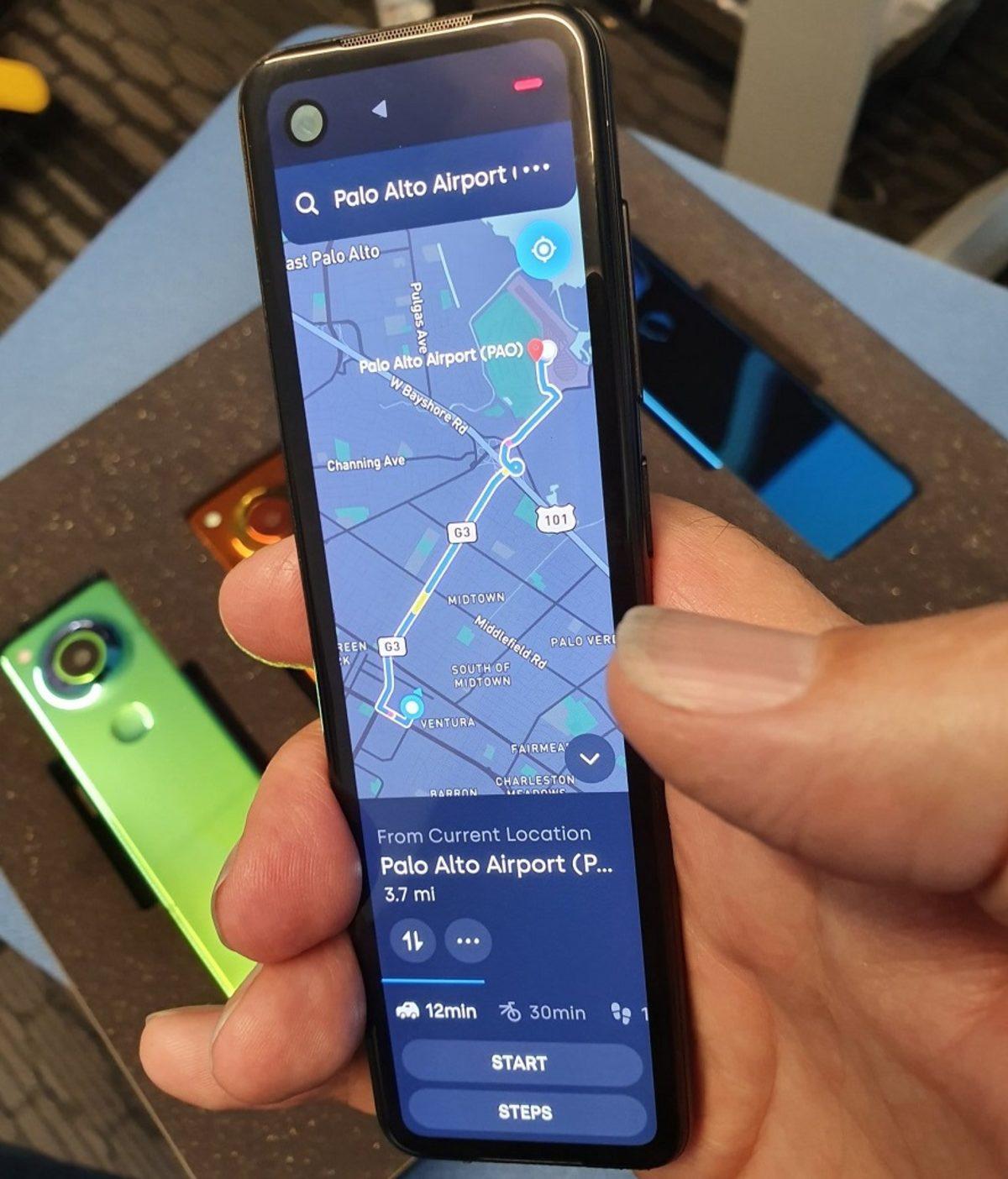
Despite these challenges, the team continued to work on a radical new project known as "Project GEM." This was a tall, thin smartphone designed for voice-first interaction and extreme portability. It featured a unique tiled UI and a form factor unlike anything else in the industry.
The Final Chapter: The Shut Down and Legacy
In February 2020, Essential Products officially announced that it would cease operations. The company stated that Project GEM had no "clear path to deliver it to customers." With the closure, the dream of a Rubin-led hardware revolution ended.
In 2021, it was revealed that Nothing, the tech company founded by Carl Pei (formerly of OnePlus), had acquired the Essential brand and its remaining trademarks. While Nothing has not released an "Essential" branded phone as of 2026, many design philosophies—such as the emphasis on unique aesthetics and a "clean" software experience—echo the original goals of Rubin's startup.
Analysis of the Path: From Software to Hardware
The transition from Android to Essential highlights the fundamental difference between software scaling and hardware manufacturing. At Google, Rubin’s success was built on an "open" philosophy where the hardware didn't matter as much as the reach of the OS. At Essential, he reversed this, making the hardware the primary differentiator.
The failure of Essential was not necessarily a failure of technical vision. The PH-1 is still remembered by enthusiasts for its build quality and software longevity (it received Android updates faster than many flagship phones). Instead, it was a combination of timing, manufacturing complexity, and the inescapable weight of corporate history that curtailed the venture.
FAQs
What happened to the Essential Phone 2?
The Essential Phone 2 (PH-2) was reportedly in development but was canceled in favor of "Project GEM," a drastically different mobile device. The company decided that a standard second-generation smartphone would not be enough to compete in the saturated mobile market.
Did Andy Rubin invent the notch?
While Andy Rubin's Essential PH-1 was the first widely publicized smartphone to feature a "display cutout" or notch for the front-facing camera, the concept was being explored by several manufacturers simultaneously. However, the PH-1 predated the iPhone X's notch by several months.
Is the Essential Phone still supported in 2026?
Official support for the Essential PH-1 ended in February 2020. While the hardware remains functional, it no longer receives security updates or OS upgrades from the original manufacturer. Some community-driven projects, like LineageOS, have provided extended life for the device through custom ROMs.
Why did Essential fail?
Essential failed due to several factors: the high cost and difficulty of manufacturing titanium/ceramic hardware, the initial poor reception of the PH-1's camera, the massive market dominance of Apple and Samsung, and the significant brand damage caused by the 2018 reports regarding Andy Rubin's departure from Google.
What is Project GEM?
Project GEM was the final experimental device from Essential. It featured a very narrow, "remote control" like form factor designed to be used primarily with one hand and voice commands. It was never released to the public.
Practical Next Action for Tech Historians
For those interested in the technical legacy of this era, the best way to explore Andy Rubin's hardware philosophy is to study the Essential PH-1's design documentation and community-led software archives. The device remains a benchmark for how premium materials can be integrated into mobile design, and its "stock Android" approach continues to influence the "Nothing Phone" and "Google Pixel" lines today.