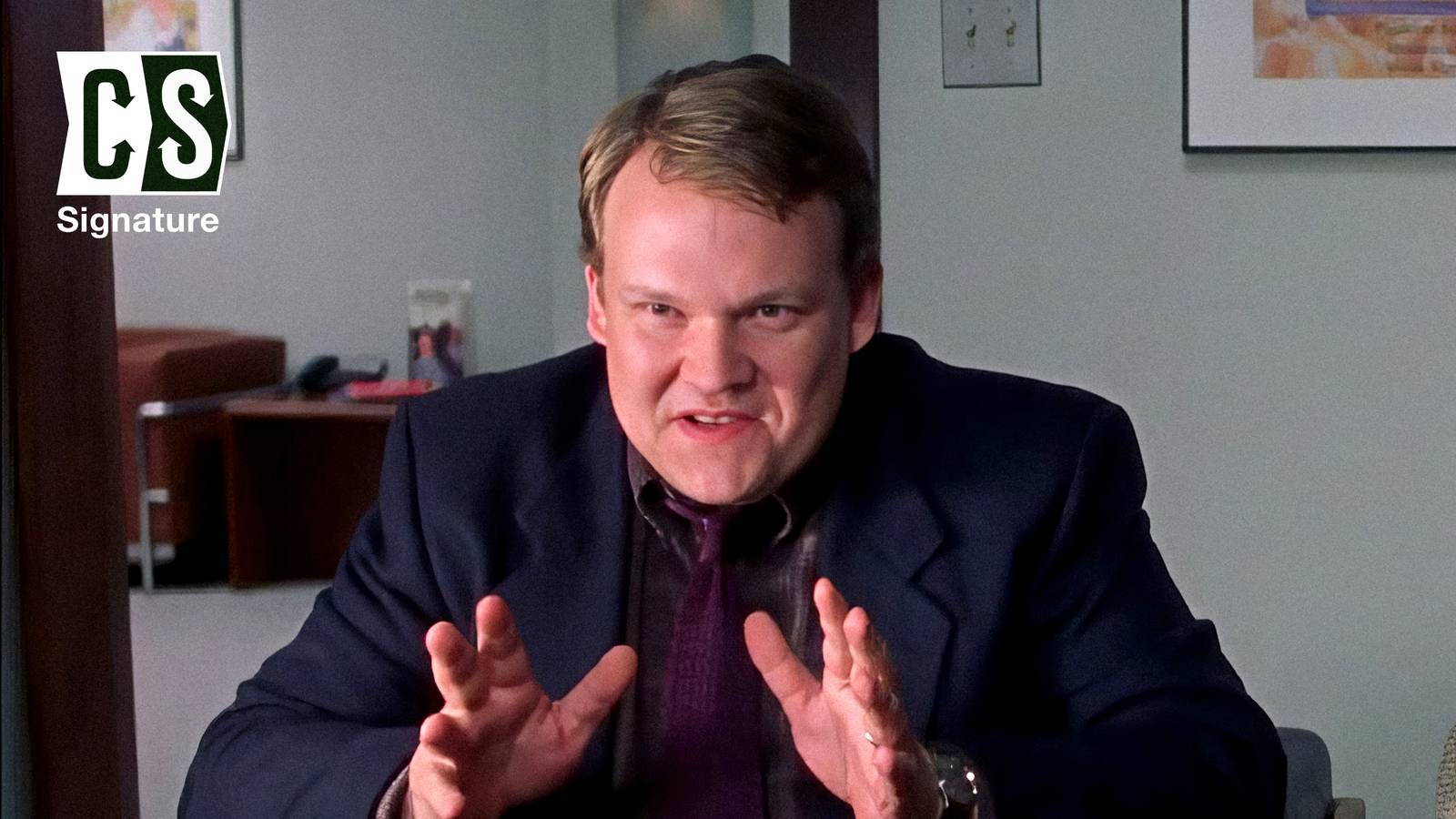
Andy Richter plays the character Morris in the 2003 holiday classic Elf. Morris is one of the two stressed-out staff writers employed by Walter Hobbs (James Caan) at Greenway Press. Alongside his writing partner Eugene (Kyle Gass), Richter’s character is tasked with creating a bestselling children's book to save the struggling publishing house.
The presence of Andy Richter in Elf serves as a testament to the film's impeccable casting strategy, which utilized established comedic talent even for supporting roles. While the narrative focus remains on Buddy the Elf (Will Ferrell) and his journey to find his father, the workplace dynamic at Greenway Press—anchored by Richter’s dry, frantic performance—provides the necessary grounded cynicism that makes Buddy’s whimsical nature pop. As we look back from the perspective of 2026, Richter’s contribution remains a highlight for fans of the "alternative" comedy scene of the early 2000s.
The Role of Morris: Corporate Stress and Comedic Timing
In the world of Elf, Andy Richter’s Morris is a quintessential corporate "yes-man" who is simultaneously terrified of his boss, Walter Hobbs. Morris and his partner Eugene are introduced during a period of high stakes for Greenway Press. The company is facing a decline in revenue, and Walter is under immense pressure from the board to produce a hit book.
Richter portrays Morris with a specific blend of professional anxiety and comedic resignation. Unlike the over-the-top physicality of Will Ferrell, Richter’s performance is rooted in reaction. He represents the "real world" of New York City—exhausted, deadline-driven, and devoid of the Christmas spirit. This juxtaposition is vital for the film’s structure; without the cold, corporate reality provided by characters like Morris, Buddy’s infectious joy would have nothing to contrast against.
The Creative Struggle at Greenway Press
A significant portion of Richter’s screen time involves the "brainstorming" sessions at the Greenway Press offices. These scenes are a masterclass in ensemble comedy. As Morris, Richter must convey the absurdity of two grown men trying to manufacture "magic" for children while under the threat of unemployment.
The irony of Morris and Eugene is that they are clearly out of ideas. They represent the stagnation of the publishing industry within the film's narrative. When Walter Hobbs demands a "new" idea, Morris’s suggestions highlight the creative bankruptcy that Buddy eventually inadvertently solves (or complicates). Richter’s ability to deliver lines with a mix of earnestness and defeat makes Morris a relatable figure for anyone who has ever felt "stuck" in a corporate environment.
The Dynamic Between Andy Richter and Kyle Gass
One of the most inspired casting choices in Elf was pairing Andy Richter with Kyle Gass, who plays Eugene. At the time of filming, Gass was widely known as one-half of the comedy-rock duo Tenacious D, while Richter was famous as Conan O'Brien’s sidekick and the star of his own critically acclaimed (though short-lived) sitcom, Andy Richter Controls the Universe.
Together, they form a comedic "double act" within the larger film. Their chemistry is evident in how they play off each other’s nervousness.
- The Shared Panic: Both characters are equally afraid of Walter Hobbs.
- The Collaborative Failure: Their joint inability to come up with a story about a "puppy and a pigeon" or other mundane concepts provides several of the film's quieter, yet sharper, laughs.
- The Visual Contrast: The physical pairing of Richter and Gass creates a recognizable "everyman" duo that fits perfectly into the drab, wood-paneled aesthetic of the Greenway Press boardroom.
This duo serves as a bridge between the family-friendly humor of the movie and the slightly more "alt-comedy" sensibilities of the early 2000s. Director Jon Favreau utilized their existing comedic reputations to ensure that the scenes in the publishing house didn't feel like filler, but rather a vital part of the film’s world-building.
Key Scenes Featuring Andy Richter
While Richter is a supporting player, several of his scenes are among the most quoted by hardcore Elf enthusiasts. His presence is most felt during the sequences involving the "Miles Finch" incident and the final pitch to Walter.
The Miles Finch Meeting
Perhaps the most famous sequence involving Morris is the arrival of Miles Finch (Peter Dinklage), the world-renowned children's book author. In this scene, Morris and Eugene are essentially the "hype men" for Finch, having convinced Walter that hiring a "pro" is the only way to save the company.
Richter’s performance here is characterized by extreme deference. He treats Miles Finch with a level of respect bordering on fear, which heightens the comedy when Buddy enters the room and mistakes Finch for a "South Pole elf." Morris’s horrified reactions to Buddy’s insults—and his subsequent attempts to de-escalate the situation—showcase Richter’s talent for playing the "straight man" in a chaotic environment.
The "Boardroom" Pitch
Throughout the film, Morris is seen clutching notebooks and attempting to look busy. In the climactic boardroom scenes, Richter demonstrates the high-pressure environment of the 1990s and early 2000s corporate culture. Even as Buddy is causing havoc, Morris is focused on the survival of the book project. This dedication to the "bit" of being a serious professional in an absurd movie is what makes Richter’s performance endure.
Andy Richter’s Career Context in 2003
To understand why Andy Richter was in Elf, one must look at his career trajectory at the time. In 2003, Richter was in a transitional phase. He had left Late Night with Conan O'Brien in 2000 to pursue acting and his own projects.
- Andy Richter Controls the Universe (2002-2003): This show was a cult favorite that proved Richter could lead a cast and handle surrealist humor.
- The Favreau Connection: Jon Favreau, the director of Elf, has a history of casting fellow comedians and actors he admires from the improv and stand-up circuits. Casting Richter was a nod to the comedy community.
Richter was becoming a go-to character actor for films that needed a recognizable face who could deliver smart, understated comedy. Elf remains one of his most-seen film roles, alongside his work in the Madagascar franchise (as the voice of Mort) and various other comedies like Talladega Nights: The Ballad of Ricky Bobby.
The Technical Specs of Elf (2003)
For those looking for the logistical details of the film where Andy Richter made his mark, the following table summarizes the production context:
| Feature | Details |
|---|---|
| Director | Jon Favreau |
| Release Date | November 7, 2003 |
| Andy Richter's Character | Morris (Staff Writer) |
| Primary Location | New York City (Empire State Building/Greenway Press) |
| Studio | New Line Cinema |
| Box Office (Original Run) | $220+ Million |
| Key Co-Stars | Will Ferrell, James Caan, Kyle Gass, Peter Dinklage |
| Genre | Holiday/Family/Comedy |
Why the Characters of Morris and Eugene Matter
In many holiday movies, the "antagonists" or the "unbelievers" are written as one-dimensional villains. However, in Elf, Morris and Eugene are not villains; they are victims of a high-pressure system. They are the audience's surrogate for the "daily grind."
By including a talented comedian like Richter, the film avoids making these characters boring. Instead of being generic employees, they are specific, funny, and slightly pathetic individuals. This depth is part of why Elf has maintained its status as a top-tier Christmas movie for over two decades. As of 2026, the portrayal of the "creative burnout" at Greenway Press still resonates with modern professionals, perhaps even more so in the era of constant connectivity and shrinking media budgets.
The Lasting Legacy of the "Greenway Press" Duo
In the years since Elf was released, fans have often wondered what happened to Morris and Eugene after the events of the film. While the movie ends with Walter Hobbs starting his own independent publishing company (with Buddy’s story as his first hit), it is implied that the writers moved on or were part of this new, more wholesome venture.
Andy Richter himself has often spoken fondly of the production. In various interviews throughout the 2010s and early 2020s, he noted that the atmosphere on set was collaborative and that Favreau allowed for a significant amount of improvisation among the comedic cast members. This improvisational background is what allowed the boardroom scenes to feel natural rather than scripted.
Looking Back from 2026: A Retrospective
In 2026, Elf is more than just a movie; it is a cultural institution. It is aired annually, quoted endlessly, and has spawned a Broadway musical and various animated specials. Andy Richter’s role, while supporting, is a crucial piece of the puzzle that makes the film work.
His presence serves as a reminder of a specific era of comedy where the lines between late-night television, improv theater, and big-budget Hollywood movies were blurring. For Richter, Elf was a successful foray into the world of "evergreen" cinema—content that continues to generate revenue and viewership decades after its initial release.
Analysis of the Workplace Satire
If one looks closely at the scenes featuring Richter, Elf functions as a satire of the 2000s publishing world. The focus on "branding" and "marketable ideas" over actual storytelling is a theme that remains relevant. Richter’s Morris is the face of this struggle. He wants to be creative, but he is trapped in a system that only values the bottom line. This subtext adds a layer of sophistication to Elf that many other holiday films lack.
Frequently Asked Questions
Did Andy Richter and Kyle Gass improvise their lines in Elf?
While there was a clear script by David Berenbaum, Jon Favreau encouraged his comedic cast to explore the scenes. Andy Richter and Kyle Gass, both being experienced in improv, added several nuances to their interactions. Many of their smaller reactions and "office chatter" were developed during rehearsals to create a more authentic workplace atmosphere.
Is Andy Richter in the Elf musical or animated specials?
No, Andy Richter did not reprise the role of Morris for the Broadway musical or the animated special Elf: Buddy's Musical Christmas. In those adaptations, the supporting characters were either redesigned or played by different voice/stage actors. However, Richter’s original performance remains the definitive version of the character.
What happened to Morris at the end of the movie?
At the conclusion of Elf, Walter Hobbs leaves the corporate environment of Greenway Press to start his own publishing house. While the movie doesn't explicitly show Morris and Eugene at the new office, it is widely interpreted by fans that Walter took his staff writers with him to produce "Buddy the Elf's" story, finally giving them the "hit" they had been searching for.
How did Andy Richter get cast in Elf?
Richter was cast primarily due to his standing in the comedy community and his previous work with other members of the production. Director Jon Favreau aimed to fill the movie with seasoned comedic actors who could ground the film’s more fantastical elements. Richter’s persona as a relatable, witty "everyman" made him perfect for the role of a New York City office worker.
Was Andy Richter's role supposed to be bigger?
In the original drafts of many scripts, supporting roles fluctuate in size. While Morris is not a protagonist, his role is exactly as large as it needs to be to facilitate the plot at Greenway Press. There is no publicly available evidence that a significant "Morris-centric" subplot was cut, though many fans of Richter would have welcomed more screen time for the character.
Expert Recommendation for Fans
If you are a fan of Andy Richter's work in Elf, you should explore his early 2000s television work, specifically Andy Richter Controls the Universe. Much of the "cubicle humor" and corporate satire found in his Elf scenes is expanded upon in that series. Additionally, for a deeper look at the making of the film, the Netflix series The Movies That Made Us features an episode on Elf that highlights the casting process and how Jon Favreau brought together such a diverse group of comedians to create a holiday masterpiece.