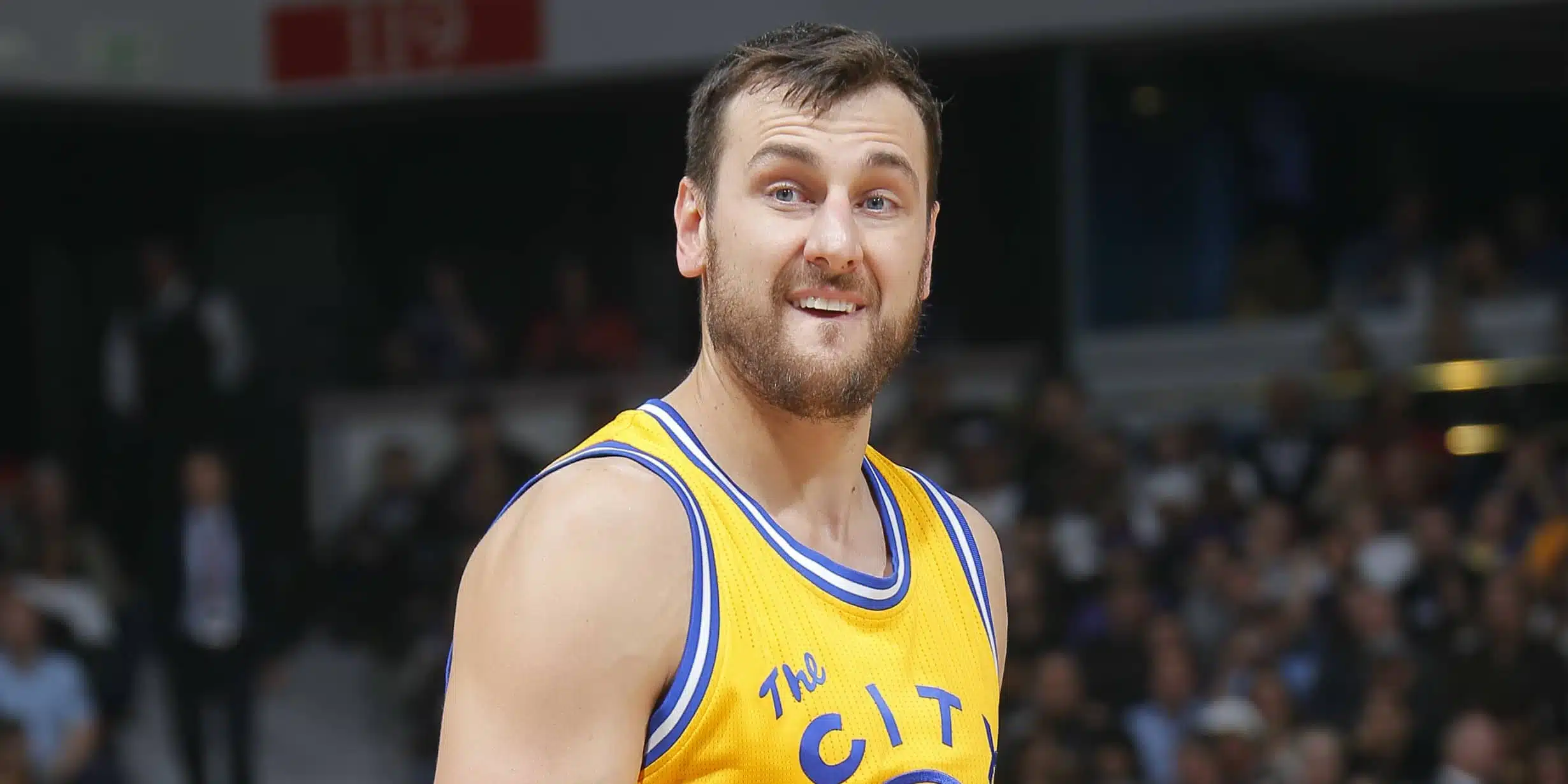
Andrew Braccia's net worth in 2026 is estimated to be in the mid-to-high hundreds of millions of dollars, with some industry analysts suggesting it could approach the billionaire threshold depending on the performance of Accel’s recent funds. His wealth is primarily derived from his long-standing tenure as a General Partner at Accel and his carried interest in historic exits like Slack, Braintree, and Squarespace.
The Foundation of Andrew Braccia’s Wealth
To understand the net worth of a venture capitalist like Andrew Braccia, one must look beyond a simple salary. In the world of tier-one venture capital (VC) firms like Accel, wealth is built through a combination of management fees, personal capital commitments, and, most importantly, "carried interest."
Braccia joined Accel in 2005, a period that preceded the explosion of the modern SaaS (Software as a Service) and consumer internet era. By positioning himself at the center of Silicon Valley’s most influential firm, Braccia gained access to deal flows that are unavailable to the general public or even smaller investment firms. His ability to identify "category-defining" companies early in their lifecycle is the primary engine behind his financial success.
Before his transition into venture capital, Braccia spent nearly a decade at Yahoo during its era of dominance. This provided him with not only the initial capital to begin his career as an investor but also the operational insights required to evaluate growth-stage companies. His move to Accel was a strategic pivot that allowed him to leverage his corporate experience into a high-stakes, high-reward investment role.
The Financial Mechanics: How Accel Partners Build Net Worth
The net worth of a General Partner (GP) at a firm like Accel is structured differently than that of a corporate executive. It is essential to break down the specific components that contribute to Braccia’s estimated wealth as of 2026.
Management Fees and Base Compensation
VC firms typically operate on a "2 and 20" model. This means they charge Limited Partners (LPs)—the institutions that provide the capital—a 2% annual management fee. For a firm like Accel, which manages billions of dollars across multiple funds (such as Accel XIV or their various London and India funds), these fees cover high-end salaries, office operations, and research. While substantial, this is the "floor" of a partner's income.
Carried Interest: The True Wealth Driver
The "20" in the "20 and 20" model refers to carried interest—a 20% share of the profits generated by a fund after the initial capital is returned to the LPs. Because Braccia has been a lead investor in several companies that achieved multi-billion dollar exits, his share of the "carry" is where the majority of his net worth originates. When a company like Slack is acquired for $27.7 billion, the profit distributed to the General Partners of the early-stage funds is astronomical.
Co-Investment and Personal Capital
Standard industry practice requires GPs to "put skin in the game" by committing their own capital to the funds they manage. As Braccia’s career progressed and his liquidity increased from early wins, his ability to co-invest larger sums into Accel's funds allowed his personal wealth to grow at the same compounded rate as the firm’s institutional capital.
Significant Investment Milestones
Andrew Braccia’s portfolio is a "who's who" of the last two decades of tech innovation. Each of these investments contributed significantly to the capital under management (AUM) at Accel and, by extension, Braccia’s personal balance sheet.
The Slack Acquisition
Perhaps the most significant contributor to Braccia’s financial standing was his early backing of Slack. Accel was a lead investor in Slack’s Series Asset rounds. When Salesforce completed its acquisition of Slack in 2021 for approximately $27.7 billion, it marked one of the largest software acquisitions in history. As a board member and the lead partner on the deal, Braccia’s carried interest from this single exit likely reached into the nine-figure range.
Braintree and the Fintech Boom
Braccia led Accel’s investment in Braintree, the payment gateway that eventually acquired Venmo. In 2013, PayPal (then owned by eBay) acquired Braintree for $800 million in cash. While smaller than the Slack deal, the "multiple" on the invested capital was significant, providing an early boost to the funds Braccia managed and establishing his reputation in the fintech space.
Squarespace and the Public Markets
Squarespace is another cornerstone of the Braccia portfolio. Accel led a $38.5 million investment in the company in 2010. By the time Squarespace went public via a direct listing in 2021 with a valuation hovering around $6.6 billion, the stake held by Accel had appreciated exponentially. Braccia’s long-term involvement with the company—serving on the board for over a decade—ensured he was positioned to benefit from the ultimate liquidity event.
Portfolio Comparison and Exit Impact
The following table outlines the key companies where Andrew Braccia served as the lead investor or board member, showcasing the scale of the value created under his guidance.
| Company | Key Role | Major Event / Exit | Estimated Valuation at Exit/IPO |
|---|---|---|---|
| Slack | Board Member / Lead | Acquired by Salesforce (2021) | $27.7 Billion |
| Braintree | Lead Investor | Acquired by PayPal (2013) | $800 Million |
| Squarespace | Board Member / Lead | Direct Listing (2021) | $6.6 Billion |
| Lynda.com | Lead Investor | Acquired by LinkedIn (2015) | $1.5 Billion |
| MyFitnessPal | Lead Investor | Acquired by Under Armour (2015) | $475 Million |
| HotelTonight | Lead Investor | Acquired by Airbnb (2019) | $400+ Million |
| PagerDuty | Board Member | IPO (2019) | $1.8 Billion (at IPO) |
| UserTesting | Board Member | Acquired by PE Firms (2023) | $1.3 Billion |
The Role of Board Seats and Influence
Net worth in the venture capital world is often a proxy for influence. Andrew Braccia’s wealth is supplemented by his positions on various boards of directors. While board members of private, VC-backed companies are often compensated with equity rather than large cash retainers, this equity becomes immensely valuable upon an IPO or acquisition.
By 2026, Braccia’s influence extends into the next generation of enterprise software and consumer platforms. His presence on a board often signals to other investors that a company has reached a certain level of maturity and fiscal discipline. This "signaling effect" helps drive up the valuation of his portfolio companies, creating a virtuous cycle that increases his personal net worth alongside the firm's success.
Strategic Shift into 2026: AI and Infrastructure
As we look at Braccia’s financial trajectory in 2026, it is clear that he has pivoted toward the infrastructure required to support the artificial intelligence (AI) revolution. Following the initial hype cycles of the early 2020s, Accel has focused on "durable" AI companies—those providing the picks and shovels for the new economy.
Braccia’s recent investments in data privacy, specialized cloud computing, and AI-driven enterprise workflows are expected to be the next major drivers of his net worth. As these 2024-2025 vintage investments mature toward liquidity events in the late 2020s, his current estimated net worth may see another significant upward adjustment.
Understanding the Risks to VC Wealth
It is important to note that a venture capitalist’s net worth is often "illiquid." While Braccia is undoubtedly wealthy, a large portion of that wealth is tied up in private company shares and fund commitments that cannot be easily converted to cash.
The primary risks to his net worth include:
- Market Volatility: A downturn in the Nasdaq or a cooling of the IPO market can delay liquidity events, keeping wealth "on paper" rather than in the bank.
- Portfolio Concentration: While Accel is diversified, a partner’s individual legacy is often tied to a few "home run" deals. If a major unicorn in the portfolio fails to exit at a high valuation, it impacts the carried interest for that specific fund.
- Regulatory Changes: Changes to the taxation of carried interest (often debated in the U.S. Congress) could significantly impact the net take-home pay of General Partners.
Frequently Asked Questions
What is Andrew Braccia's primary source of wealth?
His primary source of wealth is his role as a General Partner at Accel. This includes his share of the profits (carried interest) from successful company exits like Slack and Squarespace, as well as his personal investments into Accel’s venture funds.
How did the Slack acquisition affect his net worth?
The $27.7 billion acquisition of Slack by Salesforce was likely the single largest liquidity event of Braccia's career. As the lead investor who sat on the board from the early stages, his share of the carried interest from Accel’s multi-billion dollar profit on the deal likely added hundreds of millions to his career earnings.
Is Andrew Braccia a billionaire in 2026?
While his exact net worth is private, most estimates place him in the high hundreds of millions. Whether he has reached "billionaire" status depends on the private valuation of his remaining stakes in Accel's newest funds and the performance of recent IPOs in his portfolio.
What companies has Andrew Braccia invested in recently?
In the mid-2020s, Braccia has focused heavily on enterprise software, AI infrastructure, and cybersecurity. He continues to look for companies that demonstrate "product-led growth," a philosophy he championed during his time with Slack.
How much does a General Partner at Accel earn?
A GP at a top-tier firm like Accel typically receives a high six-figure or low seven-figure base salary funded by management fees. However, their total compensation is dominated by carried interest, which can reach tens or hundreds of millions of dollars during years with major exits.
Final Perspective for 2026
Andrew Braccia’s net worth is a testament to the power of long-term thinking in the venture capital industry. Unlike hedge fund managers who may trade daily, Braccia’s wealth has been built over decades of sitting on boards, mentoring CEOs, and weathering multiple economic cycles. In 2026, he remains one of the most respected figures in Silicon Valley, with a balance sheet that reflects his role in shaping the modern software landscape. For those tracking the intersection of finance and technology, Braccia represents the "gold standard" of the venture capital career path—moving from an operational role at a tech giant to a dominant position in the investment world.