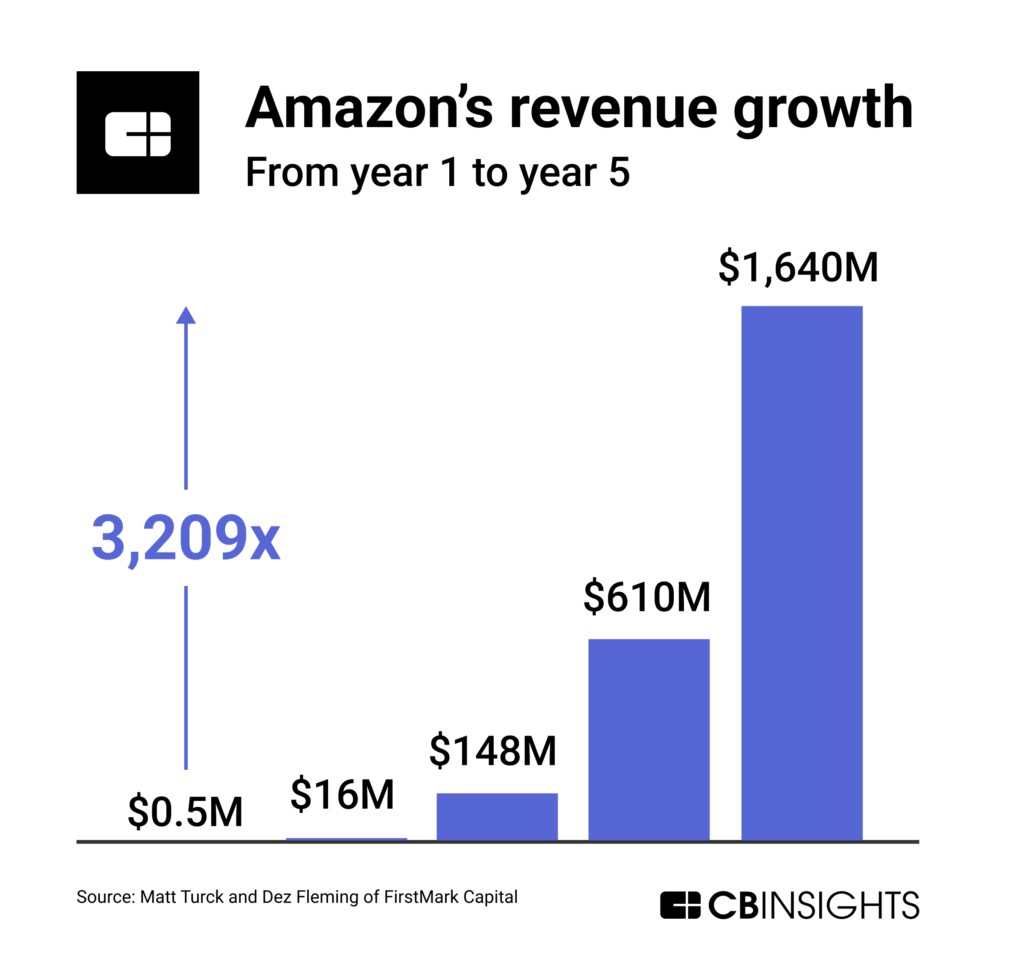
In 1996, Amazon functioned primarily as an online bookstore with a singular mission to build a vast catalog of titles that physical retailers could not stock. During this formative year, Amazon achieved $15.7 million in revenue by leveraging a unique "virtual" inventory model, utilizing its website to capture customer demand while maintaining lean operational overhead, ultimately setting the stage for its later transition into a comprehensive marketplace.
The Genesis of Amazon’s Revenue Model
When Jeff Bezos incorporated Amazon in 1994 and launched the website in July 1995, the strategy was focused on the "long tail" of literature. By 1996, this strategy solidified into a clear, data-driven business model. Unlike traditional brick-and-mortar bookstores, which were limited by the physical square footage of their shelves, Amazon marketed its "Earth's Biggest Bookstore" claim based on its ability to access a database of over one million titles.
The revenue model in 1996 was deceptively simple: it relied on the direct sale of books where Amazon purchased items from wholesalers only after receiving a confirmed order from a customer. This "just-in-time" approach minimized the need for holding large amounts of stock, significantly reducing capital expenditure. By operating this way, Amazon transformed the act of buying a book into a streamlined digital experience, prioritizing convenience and selection over the tactile experience of browsing a physical store.
Operational Infrastructure and Growth in 1996
1996 was a pivotal year for scaling the Amazon operation. At the start of the year, the company was essentially a small startup operating out of a garage in Bellevue, Washington. As revenue grew from virtually zero to over $15 million, the company had to quickly professionalize its fulfillment processes.
The core requirement for this business model was high-speed access to book distribution networks. Amazon established relationships with major book wholesalers like Ingram and Baker & Taylor. When a customer placed an order on the website, Amazon’s system would automatically route that request to these wholesalers. The wholesalers would then ship the books to Amazon’s small warehouse, where the company would bundle orders and ship them to the end consumer.
This process required significant investment in software development. In 1996, Amazon’s primary "technical debt" was actually its greatest asset: the ability to maintain a real-time, searchable database that could link to external supply chains. The technical depth of this model was not in the warehouse robotics of the future, but in the efficiency of the electronic order-processing pipeline.
Comparison: Physical Retail vs. Amazon’s 1996 Model
The shift from the traditional book-selling model to Amazon’s internet-first approach in 1996 can be broken down by how each entity handled overhead and inventory.
| Feature | Traditional Bookstore (1996) | Amazon (1996) |
|---|---|---|
| Inventory Storage | High (In-store shelves) | Minimal (Just-in-time) |
| Selection | Limited to 50k–100k titles | Over 1 million searchable titles |
| Operational Cost | High (Retail rent, staff, utilities) | Moderate (Server costs, one facility) |
| Customer Reach | Local/Regional | Nationwide/Global |
| Revenue Source | In-store foot traffic | Online search and direct orders |
Financial Performance and Investor Relations
To reach the $15.7 million revenue milestone in 1996, Amazon had to invest heavily in customer acquisition and brand awareness. While the business model was profitable on a per-unit basis, the company was not net-profitable because it was aggressively reinvesting every dollar of gross margin into growth.
During 1996, Amazon secured its first major venture capital funding from Kleiner Perkins, which provided the liquidity necessary to sustain its burn rate. This period marked a transition from a hobbyist-run bookstore to a disciplined corporate enterprise. The company grew its employee count from 11 people at the start of the year to over 150 by the end of 1996. This headcount growth was almost entirely directed toward customer service, order fulfillment, and engineering—the three pillars of the business model.
The Role of User Experience in Early Revenue
A critical, often overlooked aspect of the 1996 business model was the implementation of user-generated content. Amazon introduced the ability for customers to write book reviews directly on the product pages. While seemingly a minor feature, it was a fundamental component of the revenue engine. By encouraging social proof and detailed descriptions, Amazon increased the conversion rate of its page visits significantly.
In 1996, internet bandwidth was limited, and most users were on dial-up connections. Amazon optimized its pages to be text-heavy and fast-loading, ensuring that users in rural areas—where bookstores were scarce—could search and purchase titles as easily as those in urban centers. This focus on accessibility acted as a massive driver of early revenue, as it effectively removed the geographic barrier to high-quality literature.
Common Misconceptions Regarding the Early Model
There is a frequent belief that Amazon began as an all-encompassing "everything store" from the outset. Historical records from 1996 clearly demonstrate that the company was disciplined in its focus on books. By specializing in one category, Amazon mastered the logistics of fulfillment and customer database management before expanding into music, videos, and eventually the vast marketplace it represents in 2026.
Another misunderstanding is that Amazon was "tech-heavy" in the way modern AI-driven startups are. In 1996, the technology was focused on stable database connectivity and secure payment processing. The innovation was not the invention of new technology, but the creative application of existing web protocols to solve the logistical nightmare of the fragmented book publishing industry.
Frequently Asked Questions
Did Amazon turn a profit in 1996?
No. While Amazon generated $15.7 million in revenue in 1996, the company operated at a net loss. This was a strategic choice; management focused on scaling the customer base and infrastructure rather than short-term profitability, a philosophy that would define the company for decades.
Why did Amazon choose books as its first product?
Books were the ideal product for a 1996 e-commerce model because they are standardized, easy to ship, and there were millions of titles in print. This allowed Amazon to offer a massive, searchable database that no physical store could hope to replicate, providing an immediate competitive advantage.
How did Amazon manage its inventory in 1996?
Amazon used a "virtual" inventory model. Instead of buying thousands of copies of every book, they relied on wholesalers. When a customer ordered, Amazon purchased the book from the wholesaler, received it at their warehouse, and shipped it to the customer, minimizing the need for expensive, idle inventory.
What was the main source of Amazon's website traffic in 1996?
Traffic was driven by early internet search engines, online forums, and word-of-mouth. As the internet was still in its infancy, Amazon’s status as a pioneer in online retail earned it significant media coverage, which acted as a powerful, free marketing engine during its first year of operation.
Strategic Recommendation for Aspiring Entrepreneurs
The 1996 Amazon model serves as a masterclass in product-market fit. By solving the "long tail" problem of book availability, Amazon identified a specific pain point that traditional retailers were structurally incapable of addressing. Entrepreneurs looking to apply these lessons in the current climate should focus on identifying a fragmented market where supply chain coordination can be improved via digital centralization, rather than attempting to disrupt an entire industry simultaneously. Focus on one category, build the infrastructure to dominate the fulfillment of that category, and scale only once the logistics become second nature.