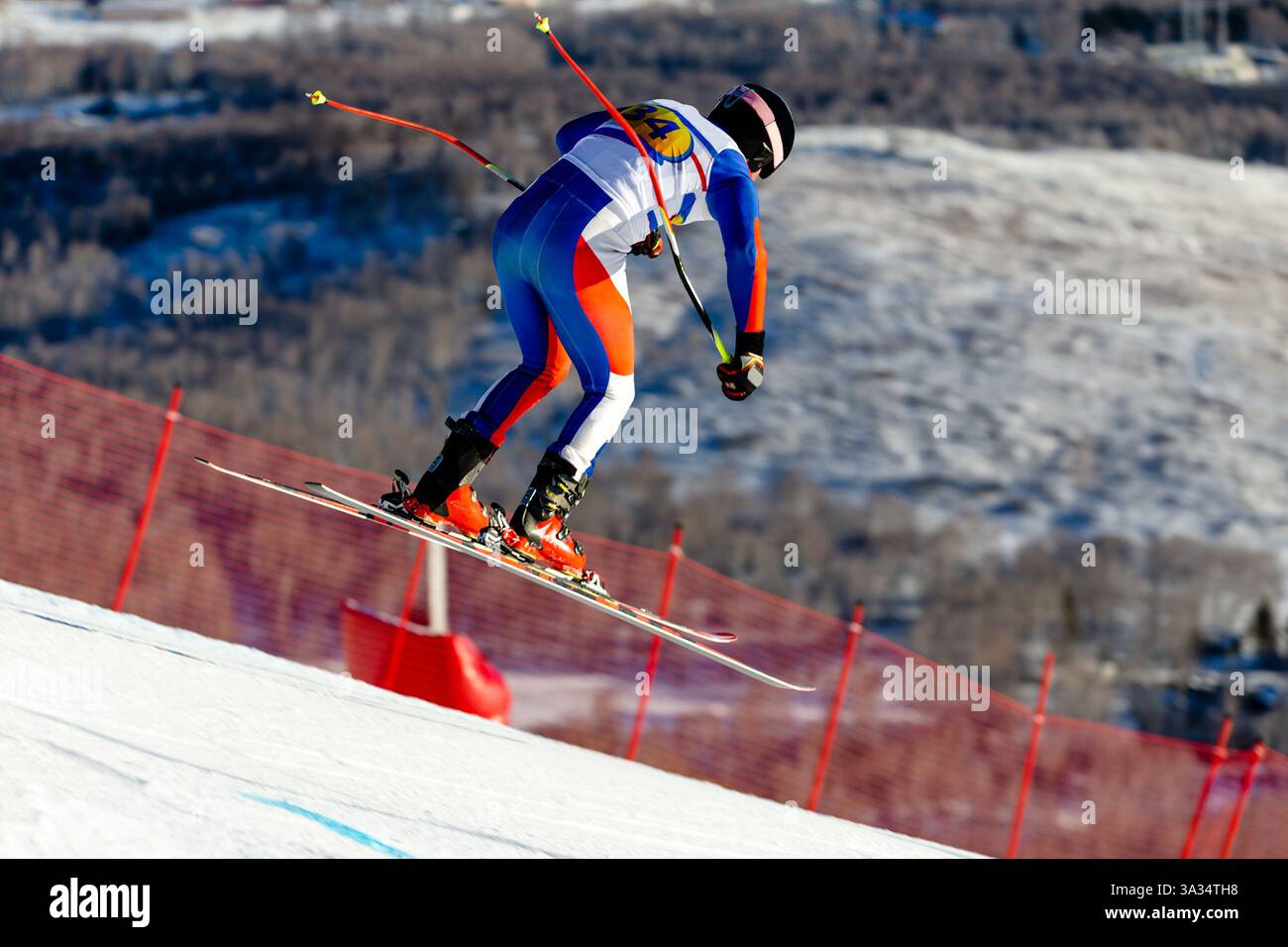
Allaura Shanes is a distinguished American alpine skier celebrated for her competitive career within the Eastern Intercollegiate Ski Association (EISA) and the University of New Hampshire (UNH) Wildcats. Her path is characterized by a steady ascent from Maine’s junior circuits to the elite collegiate level, highlighted by multiple NCAA Championship qualifications and consistent top-tier finishes in technical disciplines.
The Foundation of a Competitive Career in Maine
The trajectory of Allaura Shanes’ skiing career is deeply rooted in the rugged terrain and demanding climate of Maine. Growing up in Mesardis, Shanes was immersed in a regional culture that prizes technical proficiency and resilience. For many elite skiers in the Northeastern United States, the journey begins on icy slopes that require a specific type of "edge feel" and tactical patience.
Shanes attended Gould Academy in Bethel, Maine, a preparatory institution renowned for its robust winter sports program. Gould Academy serves as a critical pipeline for athletes aspiring to reach the International Ski Federation (FIS) level. During her time there, Shanes benefited from a structured environment that balanced rigorous academics with elite-level coaching. This period was essential for her development, as it allowed her to transition from United States Ski & Snowboard (USSA) regional events to the highly competitive FIS circuit.
In the junior ranks, Shanes established herself as a technical specialist. While some athletes gravitate toward the high speeds of Downhill or Super-G, Shanes focused on Slalom (SL) and Giant Slalom (GS). These disciplines require a high degree of "fast twitch" muscle response and the ability to maintain a precise line through rapidly changing gate configurations. Her early success in Maine provided the FIS point profile necessary to attract the attention of Division I collegiate scouts.
Navigating the EISA and Collegiate Recruitment
The transition from junior racing to collegiate skiing is one of the most difficult hurdles in the sport. In the United States, the Eastern Intercollegiate Ski Association (EISA) represents the pinnacle of East Coast competition. For an athlete like Allaura Shanes, joining a program like the University of New Hampshire (UNH) Wildcats was a strategic move that placed her in the heart of the "Carnival" circuit.
Collegiate skiing in the EISA is unique because of its team-based scoring system, which adds a layer of pressure not typically found in individual FIS racing. At UNH, Shanes became part of a legacy program known for producing national-caliber talent. The recruitment process for such programs looks beyond raw speed; coaches seek athletes who can consistently finish both runs of a race to secure team points. Shanes’ reliability in both Slalom and Giant Slalom made her an invaluable asset to the Wildcats’ roster from her freshman year onward.
By the time she reached the collegiate level, Shanes had already mastered the "Eastern" style of racing—characterized by aggressive turns on injected (iced) hills. This technical foundation allowed her to compete effectively against international athletes who often populate the top seeds of NCAA skiing.
Technical Analysis: Slalom vs. Giant Slalom Proficiency
To understand the path Allaura Shanes took through competitive skiing, one must analyze the specific technical demands of her preferred disciplines. Throughout her career, Shanes demonstrated a versatile skill set that allowed her to flip between the rapid-fire rhythm of Slalom and the high-G forces of Giant Slalom.
Slalom: Precision and Rhythm
In Slalom, the gates are spaced closely together, requiring the skier to make extremely quick turns. Shanes’ technique often showcased a quiet upper body and an explosive lower body. At the elite level, Slalom is won in the "transitions"—the split second between the end of one turn and the start of the next. Shanes utilized a modern cross-over technique, allowing her to move her center of mass across the skis efficiently to minimize time spent in the "neutral" phase.
Giant Slalom: Power and Line Choice
Giant Slalom requires a different tactical approach. The turns are wider, and the speeds are higher. Here, Shanes’ ability to "carve" rather than "skid" was paramount. In the EISA circuit, where courses often become rutted after the first thirty racers, her ability to maintain a clean edge through the "apex" of the turn allowed her to carry speed onto the flatter sections of the course. Her performance in GS was frequently a key factor in her qualifying for national-level events.
| Feature | Slalom (SL) | Giant Slalom (GS) |
|---|---|---|
| Average Speed | 25–35 mph | 40–50 mph |
| Gate Spacing | 6–13 meters | 20+ meters |
| Technical Focus | Rapid rhythm and clearing gates | Line choice and edge pressure |
| Shanes' Strength | Recovery and technical agility | Sustained power through turns |
| Equipment | Shorter skis (approx. 155cm) | Longer skis (approx. 188cm) |
The Road to the NCAA Championships
The ultimate goal for any collegiate skier in the United States is the NCAA Skiing Championships. This event brings together the best skiers from the EISA (East), RMISA (West), and Central regions. Qualifying for this event is an objective measure of an athlete’s standing among the top 1% of skiers in the nation.
Allaura Shanes’ path included multiple qualifications for the NCAA Championships, representing UNH on the national stage. For instance, her performance during the 2021 and 2022 seasons underscored her consistency. In 2021, despite the logistical challenges facing collegiate sports at the time, Shanes earned her spot at the championships held at Cannon Mountain. Competing at "home" in the East provided a slight advantage, as the icy conditions favored her technical background.
During these national events, Shanes competed against future Olympians and World Cup racers. Her ability to finish in the top half of the field in these high-stakes environments solidified her reputation as one of the premier technical skiers in the EISA. These championships are not just about individual glory; they are the culmination of a grueling "Carnival" season where every gate cleared contributes to the university’s national ranking.
The Physical and Mental Rigors of the Path
The "path" through competitive skiing is not merely a series of race results; it is a lifestyle of extreme physical and mental demands. For Allaura Shanes, this involved a year-round commitment to training that extended far beyond the winter months.
Dryland Training
During the summer and fall, Shanes and her UNH teammates engaged in "dryland" training. This includes heavy Olympic lifting to build explosive leg power, core stability work to protect the spine during high-impact turns, and cardiovascular conditioning. Alpine skiing is anaerobic in nature, requiring a skier to perform at 100% intensity for 50 to 90 seconds.
Mental Resilience
Skiing is a sport of high attrition. Injuries, equipment failure, and weather-related cancellations are frequent. Shanes’ path was marked by the mental toughness required to "reset" after a DNF (Did Not Finish). In the two-run format of alpine racing, a single mistake in the first run can end the day. Maintaining focus and confidence throughout a four-month season of traveling across New England is what separates elite competitors from the rest of the field.
The UNH Wildcats Legacy
As of 2026, Allaura Shanes’ impact on the University of New Hampshire skiing program is viewed through the lens of leadership and consistency. During her tenure, the Wildcats remained a perennial powerhouse in the EISA, often challenging larger programs like the University of Vermont (UVM) and Dartmouth College.
Shanes was not just a point-scorer; she was a veteran presence who helped bridge the gap between incoming freshmen and the graduating seniors. Her path demonstrates the importance of the "scholar-athlete" model. Excelling in a Tier-1 research university while maintaining a FIS profile requires exceptional time management. Her success served as a blueprint for younger Maine skiers looking to make the jump to Division I athletics.
The legacy of an athlete like Shanes is often found in the "points" she left on the board and the standards she set in the training room. By consistently qualifying for the NCAAs, she helped ensure that UNH remained a destination for high-level alpine talent.
Navigating Equipment and Technical Specs
A significant part of Shanes’ path involved the technical management of her gear. At the NCAA level, equipment is highly specialized. Skiers typically travel with multiple pairs of skis for different snow conditions (e.g., "hard snow" vs. "soft snow" setups).
- Ski Preparation: Professional-grade waxing and edge sharpening are done daily. For an EISA racer, the edges must be "razor sharp" to hold on the injected ice typical of mountains like Whiteface or Burke.
- Boot Fitting: Ski boots are the primary interface between the athlete and the ski. Shanes, like most elite racers, likely used custom-molded plugs and stiff shells (often 130-150 flex) to ensure every movement of the foot was instantly translated to the ski edge.
- Protection: Modern Slalom racing involves "clearing" gates with the shins and hands. Shanes utilized high-impact plastic shin guards and pole guards, along with a chin guard on her helmet, to navigate the tight Slalom corridors safely.
Frequently Asked Questions
Where did Allaura Shanes begin her skiing career?
Allaura Shanes began her competitive journey in Maine, primarily training at Gould Academy in Bethel. This region is known for its challenging, icy conditions, which helped her develop the technical "edge" necessary for high-level Slalom and Giant Slalom racing.
Which university did Allaura Shanes represent?
Shanes was a prominent member of the University of New Hampshire (UNH) Wildcats ski team. She competed in the EISA (Eastern Intercollegiate Ski Association) circuit, which is one of the most competitive collegiate skiing conferences in the United States.
Did Allaura Shanes compete in the NCAA Championships?
Yes, Allaura Shanes qualified for and competed in the NCAA Skiing Championships multiple times. Her qualifications were based on her consistent performance in the EISA Carnival circuit, where she frequently placed among the top technical skiers in the region.
What are Allaura Shanes' primary skiing disciplines?
Shanes specialized in the technical disciplines of Alpine skiing: Slalom (SL) and Giant Slalom (GS). While she participated in both, her Slalom results frequently stood out due to her agility and ability to maintain rhythm on difficult course sets.
What is the EISA circuit mentioned in her career?
The EISA stands for the Eastern Intercollegiate Ski Association. it is the governing body for collegiate ski racing in the Northeastern U.S. It organizes a series of "Carnivals" where universities compete against each other for both individual and team honors.
How did Shanes influence Maine's skiing community?
By successfully transitioning from a Maine junior program to a Division I NCAA program, Shanes became a role model for local athletes. Her career proved that skiers from smaller Maine communities can compete at the highest national collegiate levels through technical discipline and rigorous training.
Final Recommendations for Aspiring Skiers
For those looking to follow in the footsteps of Allaura Shanes, the most critical takeaway is the value of technical foundation over raw speed. Shanes’ success was built on her ability to handle the "Eastern Ice" of Maine and New Hampshire. Aspiring racers should focus on mastering Slalom and Giant Slalom fundamentals at a young age, as these provide the points needed to move up the FIS rankings.
Furthermore, seeking out a program that balances athletics with academics—much like Shanes did at Gould Academy and UNH—is essential for a sustainable career in the sport. The path to the NCAA is competitive, but as Allaura Shanes demonstrated, it is achievable through consistency, physical preparation, and a deep-seated resilience in the face of the elements.