Michigan currently utilizes 13 active area codes to manage telecommunications across its two peninsulas: 231, 248, 269, 313, 517, 586, 616, 679, 734, 810, 906, 947, and 989. These codes facilitate connections for over 10 million residents, serving major hubs like Detroit and Grand Rapids as well as the expansive, rural Upper Peninsula.
The Evolution of Michigan’s Telecommunications Landscape
The history of Michigan's area codes is a reflection of the state's industrial growth, suburban expansion, and the digital explosion of the late 20th and early 21st centuries. When the North American Numbering Plan (NANP) was first established in 1947, Michigan was assigned only three area codes: 313 for the southeast (including Detroit), 616 for the west and the Upper Peninsula, and 517 for the central region and the "thumb."
As the population surged and the demand for fax machines, pagers, and eventually mobile phones skyrocketed, these original boundaries could no longer sustain the volume of required numbers. This led to a series of "splits" and "overlays." A split occurs when a geographic area is divided, and one half receives a new code. An overlay, which has become the modern standard, occurs when a new area code is added to the exact same geographic region as an existing one, requiring 10-digit dialing for all local calls.
As of 2026, the Michigan Public Service Commission (MPSC) continues to monitor "number exhaustion" to ensure that businesses and residents have uninterrupted access to new lines. Understanding which code belongs to which region is essential for logistics, local marketing, and identifying incoming calls in an era where geographic context remains a vital trust signal.
Southeast Michigan: The Industrial and Cultural Hub
Southeast Michigan is the most densely populated part of the state and, consequently, has the highest concentration of area codes. This region is home to the "Big Three" automakers and a complex network of suburbs that have required frequent numbering updates.
313 and 679: Detroit and Wayne County
The 313 area code is perhaps the most famous in Michigan, often used as a cultural shorthand for the city of Detroit itself. Originally covering the entire southeastern quadrant of the state, it is now restricted primarily to the city of Detroit and immediate enclaves like Dearborn and the Grosse Pointes.
Due to the depletion of available 313 numbers, the 679 overlay was implemented. In 2026, this overlay is fully integrated, meaning new residents or businesses in Detroit are frequently assigned 679 numbers. While the digits are different, the geographic service area is identical, and calls between 313 and 679 are considered local.
248 and 947: Oakland County
Oakland County, located just north of Detroit, is served by the 248 area code and its overlay, 947. This area includes major business hubs like Troy, Southfield, and Pontiac, as well as affluent residential communities like Bloomfield Hills and Royal Oak. The 947 overlay was one of the first in the state, introduced in 2002 to address the massive growth of corporate offices and high-tech corridors in the region.
586: Macomb County
To the east of Oakland County lies Macomb County, which uses the 586 area code. This code was split from 810 in 2002. It serves cities such as Warren, Sterling Heights, and Mount Clemens. As Macomb continues to grow as a manufacturing and defense industry center, the 586 code remains a distinct identifier for the "Eastside" suburbs.
734: Washtenaw and Monroe Counties
The 734 area code covers the area southwest of Detroit, including Ann Arbor (home to the University of Michigan), Ypsilanti, Livonia, and Monroe. Established in 1997 as a split from 313, it serves a diverse demographic ranging from college students and researchers to industrial workers near the Ohio border.
West Michigan and the Lake Michigan Shoreline
West Michigan has seen significant economic growth over the last two decades, particularly in the healthcare, furniture manufacturing, and craft beverage sectors.
616: Grand Rapids and the Metro West
The 616 area code is centered on Grand Rapids, the state's second-largest city. It also covers Holland and Grand Haven. Once covering the entire western half of the state, 616 is now focused on the Kent, Ottawa, and Ionia county regions. It is a vital code for the "Medical Mile" in Grand Rapids and the surrounding agricultural communities.
231: Northwestern Michigan
Serving the "Tip of the Mitt," the 231 area code includes Muskegon, Ludington, Petoskey, and the popular tourist destination of Traverse City. Split from 616 in 1999, this code serves a vast geographic area characterized by shoreline tourism, cherry orchards, and wine production.
269: Southwestern Michigan
The 269 area code was created in 2002 when the southern portion of the 616 area was split. It serves Kalamazoo, Battle Creek (famed as "Cereal City"), and Benton Harbor. This region acts as a bridge between the Michigan interior and the Chicago metropolitan influence, housing major institutions like Western Michigan University and Stryker Corporation.
Central Michigan and the "Thumb"
The central part of the state contains the seat of government and significant agricultural and educational institutions.
517: Lansing and South Central Michigan
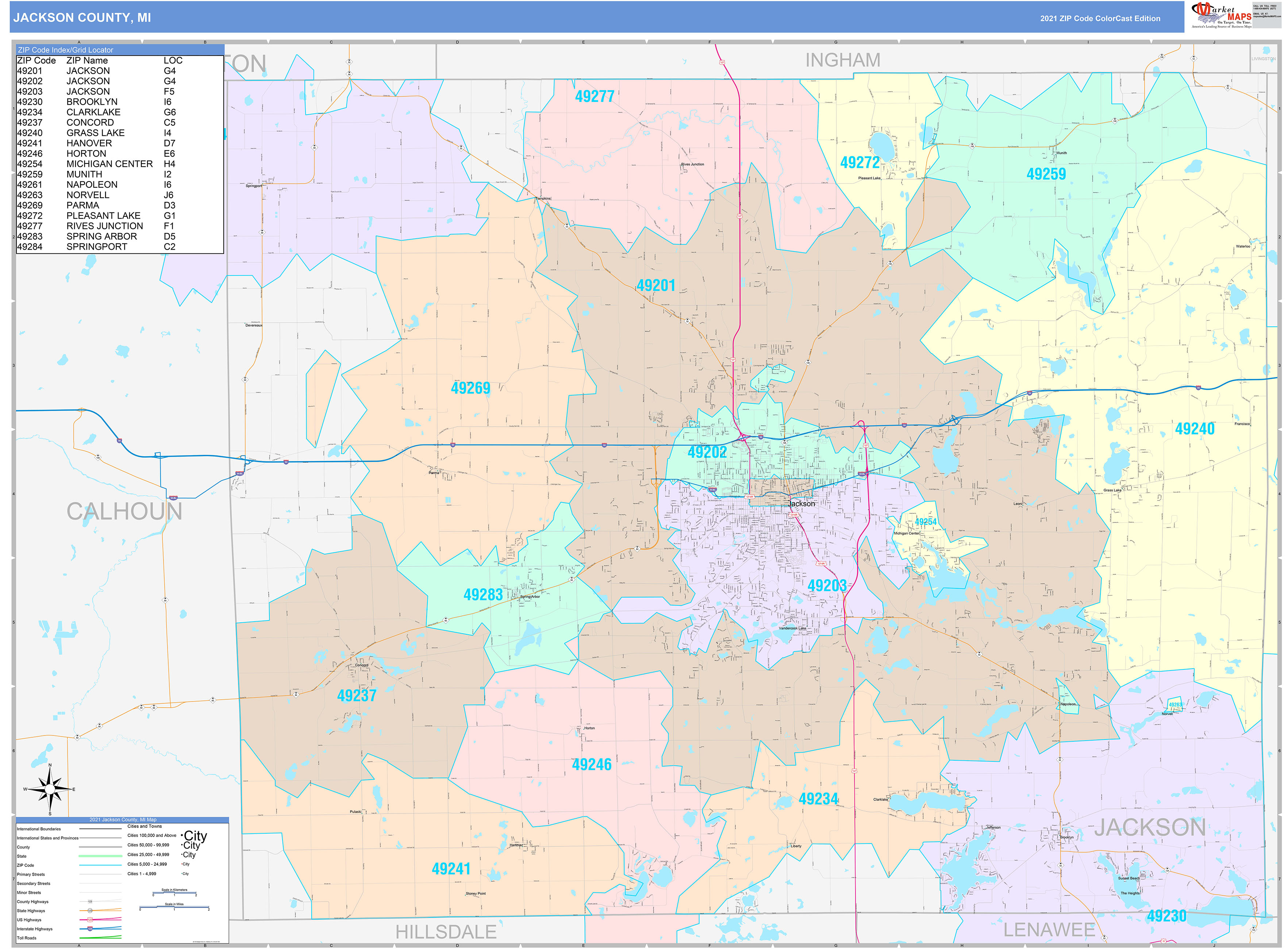
As one of the original 1947 codes, 517 remains the identifier for the state capital, Lansing, and neighboring East Lansing (home to Michigan State University). It also covers Jackson and Adrian. Despite the growth of the state government and the university, 517 has resisted an overlay as of early 2026, though long-term projections suggest it may eventually require one.
810: Flint and the Genesee Region
The 810 area code serves Flint, Port Huron, and the surrounding areas. When it was created in 1993, it was a massive relief code for 313. Today, it remains a symbol of the "Vehicle City" and the industrial corridor leading toward the Blue Water Bridge into Canada.
989: Central and Northeastern Michigan
The 989 area code is the largest by land mass in the Lower Peninsula. It serves Saginaw, Bay City, Midland (headquarters of Dow Inc.), and Mount Pleasant. It extends all the way north to Alpena and the shores of Lake Huron. Established in 2001, it provides the necessary numbering capacity for the vast rural and mid-sized urban centers of the central and northern Lower Peninsula.
The Upper Peninsula: The 906 Identity
The Upper Peninsula (UP) is served entirely by the 906 area code. Covering roughly 29% of Michigan's land area but containing only about 3% of its population, 906 is more than just a telephone prefix; it is a cultural badge of honor for "Yoopers."
From Marquette and Sault Ste. Marie to Iron Mountain and Houghton, 906 provides a singular telephonic identity for the region. Because of the relatively low population density, there is little risk of number exhaustion in the 906 area code, meaning it is likely to remain the UP’s sole code for the foreseeable future.
Michigan Area Code Summary Table
| Area Code | Primary Region | Major Cities Served | Established / Split Year |
|---|---|---|---|
| 231 | Northwestern | Traverse City, Muskegon, Petoskey | 1999 (from 616) |
| 248 | Oakland County | Troy, Pontiac, Royal Oak | 1997 (from 810) |
| 269 | Southwestern | Kalamazoo, Battle Creek | 2002 (from 616) |
| 313 | Detroit Metro | Detroit, Dearborn, Hamtramck | 1947 (Original) |
| 517 | South Central | Lansing, Jackson, East Lansing | 1947 (Original) |
| 586 | Macomb County | Warren, Sterling Heights | 2002 (from 810) |
| 616 | West Michigan | Grand Rapids, Holland | 1947 (Original) |
| 679 | Detroit Metro | Overlay for 313 area | 2025 (Overlay) |
| 734 | Washtenaw/Monroe | Ann Arbor, Livonia, Monroe | 1997 (from 313) |
| 810 | Flint/The Thumb | Flint, Port Huron, Lapeer | 1993 (from 313) |
| 906 | Upper Peninsula | Marquette, Sault Ste. Marie | 1961 (from 616) |
| 947 | Oakland County | Overlay for 248 area | 2002 (Overlay) |
| 989 | Central/NE | Saginaw, Midland, Bay City | 2001 (from 517) |
The Technical Reality of Overlays and 10-Digit Dialing
For decades, Michigan residents were accustomed to dialing only seven digits for local calls. However, as of 2026, 10-digit dialing is mandatory in most of the state's high-population centers. This change was necessitated by the introduction of overlays (like 947 and 679) and the national implementation of the 988 Suicide & Crisis Lifeline.
An overlay requires 10-digit dialing because two different area codes serve the same physical location. If a user in Detroit only dialed seven digits, the switching system would not know whether to route the call to a 313 or a 679 number. Consequently, residents must include the area code even when calling a neighbor across the street.
For businesses, this has meant a significant shift in marketing and infrastructure. Physical signage, business cards, and digital directories must all feature the full 10-digit number to ensure accessibility. Furthermore, automated systems such as fire alarms, security gates, and medical monitoring devices have all been transitioned to support 10-digit formats to avoid service interruptions.
Impact on Business and Local SEO
In the modern digital economy, area codes function as a vital component of local SEO (Search Engine Optimization). For a business operating in Grand Rapids, having a 616 number provides immediate "local "trust" to potential customers searching online.
While Voice over IP (VoIP) technology allows businesses to choose numbers from virtually any area code, savvy Michigan companies often prioritize acquiring a number that aligns with their physical service area. For example:
- A law firm in Ann Arbor benefits from the academic and professional associations of a 734 number.
- A tech startup in Troy uses 248 to signal its presence in the Oakland County tech corridor.
- A logistics company in the UP uses 906 to demonstrate its familiarity with the unique geographical challenges of the northern terrain.
As mobile number portability allows individuals to keep their phone numbers even when moving across the country, the "geographic" accuracy of a personal phone number has slightly diminished. However, for fixed business lines and local service providers (plumbers, electricians, and contractors), the area code remains a primary indicator of locality.
Managing Your Numbers in 2026
If you are a new resident or a business owner moving to Michigan, you will likely be assigned the most recently introduced code in your region. In Detroit, this means you are more likely to receive a 679 number than a 313 number. It is important to note that there is no difference in cost or service quality between an original code and an overlay code.
When setting up services:
- Verify your location: Ensure you know the exact county and city to determine which codes are available.
- Update your contacts: Ensure all saved numbers in your devices include the area code.
- Check your hardware: If you use older PBX (Private Branch Exchange) systems in an office, ensure they are programmed to handle 10-digit dialing and the latest overlay prefixes.
Frequently Asked Questions
What is the newest area code in Michigan?
The newest area code currently in use is 679, which serves as an overlay for the 313 region (Detroit and surrounding areas). It was officially integrated into the system in 2025 to provide additional numbering capacity as 313 reached exhaustion.
Do I have to change my number if a new area code is introduced?
No. One of the primary benefits of an overlay system is that existing residents and businesses keep their current phone numbers and area codes. Only new lines or secondary services are assigned the new overlay code.
Why does the Upper Peninsula only have one area code?
The 906 area code serves the Upper Peninsula. Despite its massive size, the UP has a relatively small population and a lower density of businesses compared to the Lower Peninsula. Current estimates from the NANPA (North American Numbering Plan Administrator) suggest that 906 will not run out of numbers for many decades.
Is long-distance charging based on the area code?
In 2026, most mobile and residential VoIP plans offer nationwide calling, making traditional "long-distance" charges obsolete for the average user. However, for some landline services, a call may still be considered "local" or "toll" based on the geographic distance and the specific rate centers involved, regardless of whether the area codes are the same or different (as in the case of overlays).
Can I request a specific area code?
When signing up for a new phone service, many providers allow you to choose from a list of available numbers. If you specifically want a "legacy" code like 313 or 616, you may have to wait for a number to be recycled or use a third-party service that specializes in "vanity" or specific regional numbers.
Practical Recommendation for Residents and Businesses
For anyone operating within the state of Michigan, the most critical action is to embrace a "10-digit mindset." Whether you are in a legacy area like 517 or a high-growth overlay area like 248/947, always provide your full 10-digit number in all communications. For businesses, this ensures that your digital presence is optimized for local search and that your customers can reach you without dialing errors. To stay updated on any future changes, you can monitor the Michigan Public Service Commission for announcements regarding numbering plan reliefs or new overlay schedules.