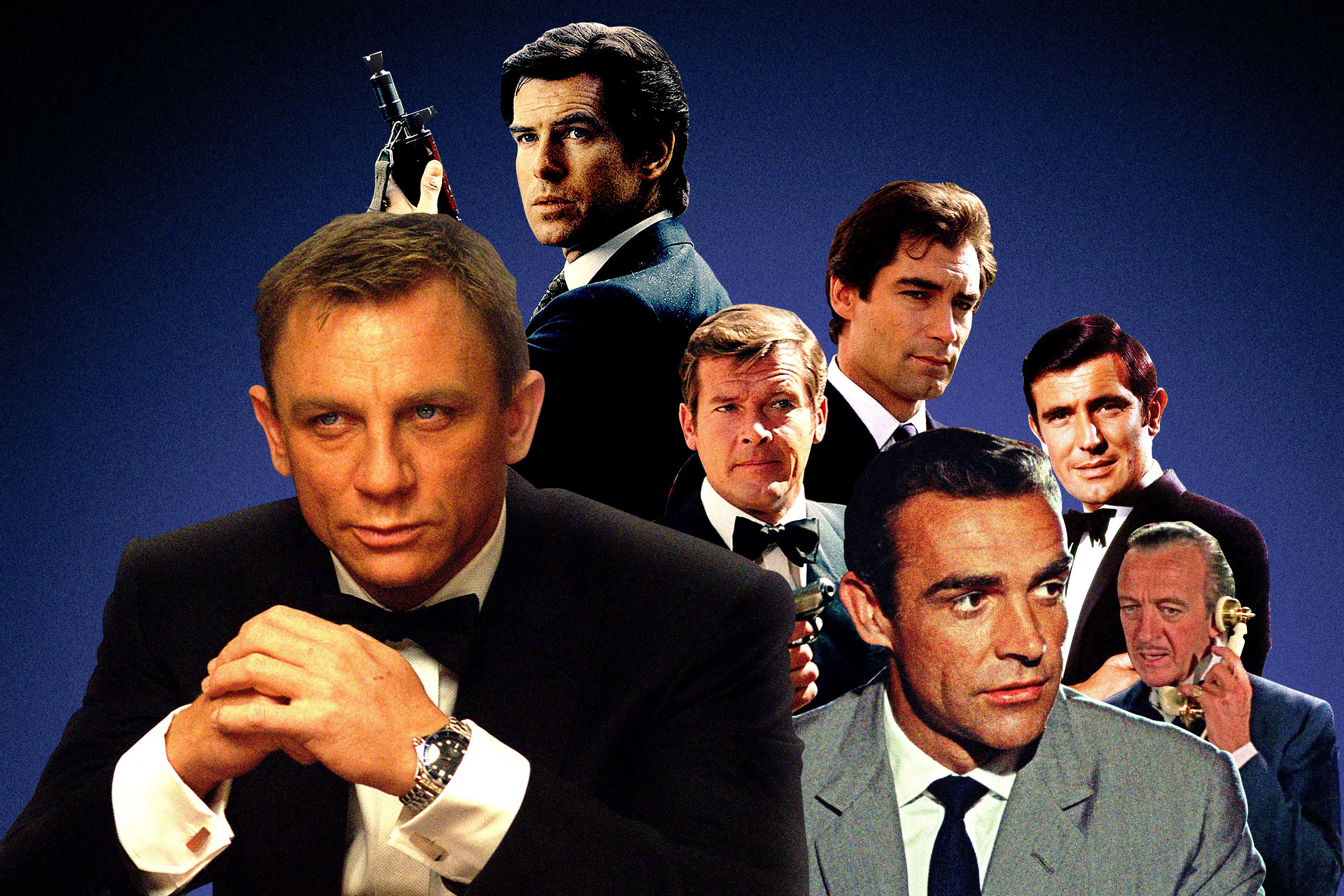
To watch all the James Bond films in order, you should follow the Eon Productions release sequence, starting with Sean Connery in Dr. No (1962) and concluding with Daniel Craig in No Time to Die (2021). This chronological progression covers 25 official films and six legendary lead actors.
James Bond remains one of the most enduring figures in cinematic history. Since his debut on the silver screen in 1962, the character created by novelist Ian Fleming has transitioned through various cultural eras, reflecting the geopolitical tensions, technological advancements, and shifting social norms of the decades. As of 2026, the franchise stands at a fascinating crossroads, following the conclusion of Daniel Craig’s five-film arc and the ongoing search for the next actor to don the tuxedo.
Understanding the order of the James Bond films is not merely about listing titles; it is about tracing the evolution of a global icon. While most of the films function as standalone adventures, the franchise is broadly divided by the actors who portrayed 007, each bringing a unique flavor to the role. From the rugged charisma of Sean Connery to the gritty realism of Daniel Craig, the series offers a diverse range of cinematic styles.
The Sean Connery Era (1962–1967, 1971)
Sean Connery is widely considered the definitive James Bond. He established the cinematic blueprint for the character: sophisticated yet lethal, charming yet ruthless. His tenure began with Dr. No, a relatively low-budget spy thriller that set the world on fire and birthed "Bond-mania."
Under Connery, the series developed its most iconic tropes. Goldfinger (1964) introduced the gadget-laden Aston Martin DB5 and the "Bond Girl" archetype in its most heightened form, while Thunderball (1965) took the spectacle underwater. After a brief hiatus and the temporary casting of George Lazenby, Connery returned for one final Eon-produced film, Diamonds Are Forever (1971), which shifted the tone toward the campier style that would define the 1970s.
- Dr. No (1962): Bond travels to Jamaica to investigate the disappearance of a British agent, leading him to the mysterious Dr. No and the criminal organization SPECTRE.
- From Russia with Love (1963): A classic Cold War thriller involving a Soviet decoding machine and a deadly train journey.
- Goldfinger (1964): Bond investigates a gold smuggling magnate with a plan to irradiate the US gold supply at Fort Knox.
- Thunderball (1965): A high-stakes mission to recover two hijacked nuclear bombs held for ransom by SPECTRE.
- You Only Live Twice (1967): Bond heads to Japan to stop a plot that is pitting the US and USSR against each other in a space race conflict.
- Diamonds Are Forever (1971): Connery’s final official Eon film sees Bond investigating a global diamond smuggling ring centered in Las Vegas.
The George Lazenby Interlude (1969)
When Connery first stepped away from the role, the producers took a massive gamble on George Lazenby, an Australian model with no prior acting experience. His sole outing, On Her Majesty’s Secret Service (1969), was initially polarizing but has since been reclaimed by critics and fans as one of the best entries in the franchise.
Lazenby’s Bond was more vulnerable. The film featured a genuine romance with Tracy di Vicenzo (played by Diana Rigg) and ended on a tragic note that wouldn't be mirrored in the series until the Daniel Craig era. Despite the film's success, Lazenby chose not to return, leading to Connery’s brief comeback and the eventual search for a long-term successor.
- On Her Majesty’s Secret Service (1969): Bond tracks Blofeld to a clinical research institute in the Swiss Alps, falling in love and marrying along the way.
The Roger Moore Era (1973–1985)
Roger Moore brought a distinct shift in tone to the franchise. If Connery was a blunt instrument, Moore was a polished raconteur. His era is characterized by a heavy emphasis on humor, gadgets, and increasingly extravagant stunts. Moore holds the record for the most official Bond films (seven), and his tenure spanned more than a decade of shifting global trends, including the rise of blaxploitation films (Live and Let Die) and the "Star Wars" space craze (Moonraker).
Moore’s Bond was less likely to get his suit dirty and more likely to disarm an opponent with a witty quip. While some critics argue his later films leaned too far into parody, his era maintained the franchise’s status as a premier global blockbuster series.
- Live and Let Die (1973): Bond takes on a Harlem drug lord and a voodoo-obsessed Caribbean dictator.
- The Man with the Golden Gun (1974): A duel of wits between 007 and the world’s most expensive assassin, Francisco Scaramanga.
- The Spy Who Loved Me (1977): Often cited as Moore’s best, featuring a massive submarine-swallowing tanker and the debut of the villain Jaws.
- Moonraker (1979): Bond goes to space to stop a billionaire from wiping out the human race to start a master race.
- For Your Eyes Only (1981): A grounded, more realistic return to espionage involving a sunken British spy ship.
- Octopussy (1983): A complex plot involving a rogue Soviet general and a circus-based jewel smuggling ring.
- A View to a Kill (1985): Moore’s final film, featuring Christopher Walken as a microchip mogul planning to destroy Silicon Valley.
The Timothy Dalton Era (1987–1989)
As the 1980s drew to a close, the producers sought to move away from the lightheartedness of the Moore era. Timothy Dalton, a classically trained Shakespearean actor, was cast to bring the character back to Ian Fleming’s original vision. Dalton’s Bond was brooding, cynical, and far more lethal—a precursor to the modern interpretation of the character.
While Dalton only appeared in two films, his influence is significant. He portrayed a Bond who was weary of the "great game" of espionage and who operated with a darker edge. Legal disputes between the studio and the producers led to a long hiatus after 1989, effectively ending Dalton's run prematurely.
- The Living Daylights (1987): Bond assists a Soviet defector and uncovers a plot involving arms dealing and the war in Afghanistan.
- Licence to Kill (1989): A personal vendetta film where Bond goes rogue to hunt down the drug lord who mutilated his friend, Felix Leiter.
The Pierce Brosnan Era (1995–2002)
Following a six-year absence, James Bond returned in 1995 with Pierce Brosnan in GoldenEye. Brosnan was seen as the "Goldilocks" Bond, successfully blending Connery’s toughness with Moore’s charm and Dalton’s intensity. His era modernized the franchise for a post-Cold War world, introducing Judi Dench as the first female "M" and exploring Bond’s relevance in a world of cyber-terrorism and globalized media.
Brosnan’s films were high-octane spectacles that embraced the emerging CGI technology of the late 90s. While his final film, Die Another Day, was criticized for its excessive use of digital effects and invisible cars, his tenure revitalized the brand for a new generation.
- GoldenEye (1995): Bond hunts down a stolen EMP satellite weapon and faces a former ally turned enemy.
- Tomorrow Never Dies (1997): 007 takes on a media mogul attempting to provoke a war between the UK and China for news coverage.
- The World Is Not Enough (1999): Bond protects an oil heiress from an assassin who cannot feel pain, leading to a nuclear submarine showdown.
- Die Another Day (2002): A mission in North Korea leads to Bond being captured and eventually tracking a traitor through an ice palace in Iceland.
The Daniel Craig Era (2006–2021)
The franchise underwent a complete "hard reboot" with 2006’s Casino Royale. Daniel Craig’s casting was initially controversial, but his debut silenced critics. This era abandoned the episodic nature of previous films in favor of a serialized narrative arc that followed Bond from his very first mission as a "00" to his eventual death in No Time to Die.
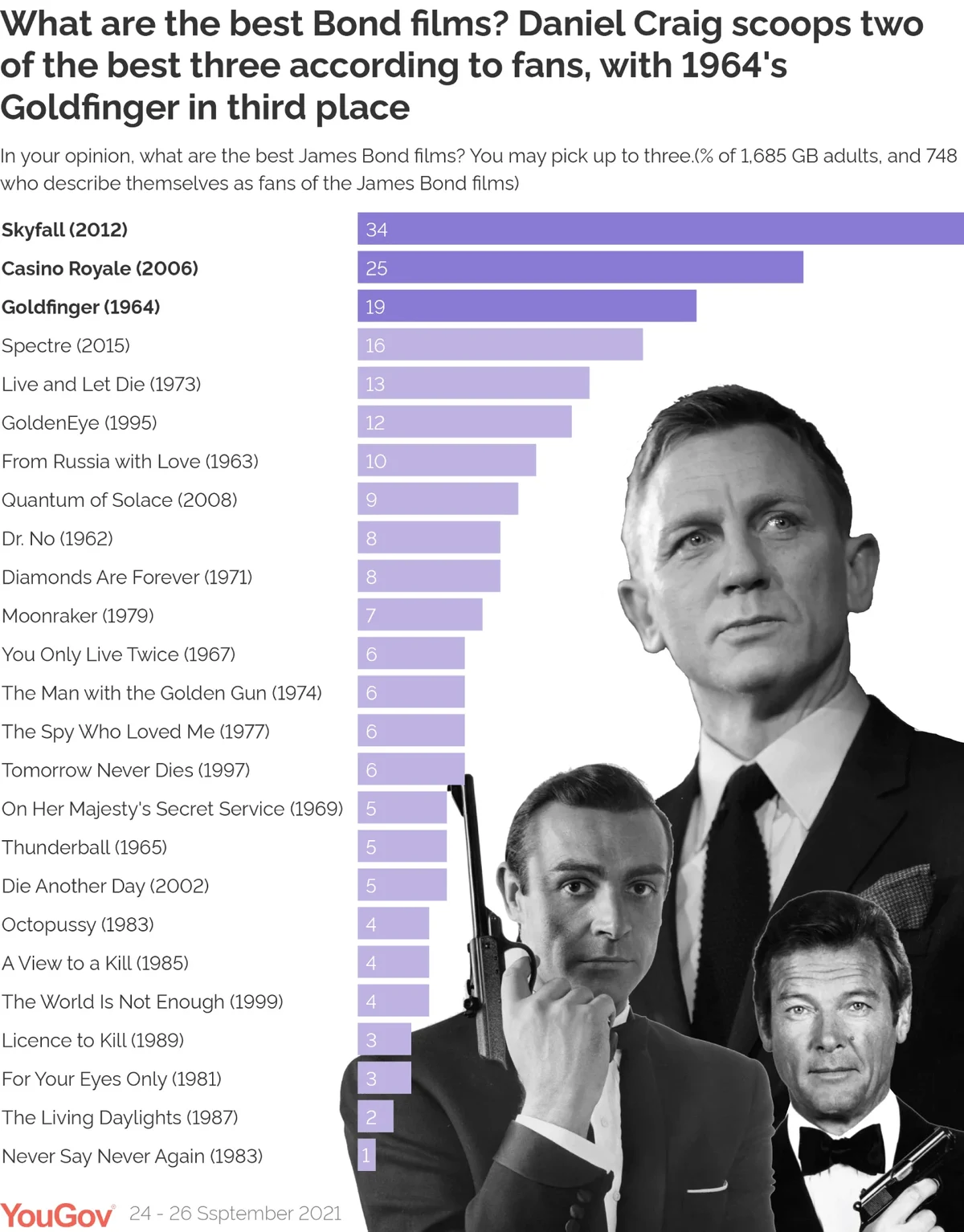
Craig’s Bond was the most emotionally complex version of the character. The films explored his origins, his trauma, and his aging. This era also saw the highest critical and commercial success for the franchise, with Skyfall (2012) becoming the first Bond film to earn over $1 billion at the global box office.
- Casino Royale (2006): A gritty origin story where Bond wins a high-stakes poker game against a terrorist financier.
- Quantum of Solace (2008): A direct sequel focused on Bond’s quest for revenge following the events of Casino Royale.
- Skyfall (2012): A personal attack on MI6 forces Bond to confront his past at his childhood home in Scotland.
- Spectre (2015): Bond discovers the hidden organization behind the events of his previous missions, led by his adoptive brother, Ernst Stavro Blofeld.
- No Time to Die (2021): Bond comes out of retirement to face a biological threat, culminating in a definitive conclusion for this iteration of the character.
The Non-Eon Bond Films
Beyond the official 25 films produced by Eon Productions, there are three notable "unofficial" appearances of James Bond. These exist due to licensing quirks or television adaptations and are generally not considered part of the main cinematic canon.
- Casino Royale (1954 - Television): An episode of the anthology series Climax! featuring Barry Nelson as an American "Jimmy Bond."
- Casino Royale (1967 - Film): A satirical comedy featuring David Niven as an aging Sir James Bond. It is a spoof of the spy genre and bears little resemblance to the Fleming source material.
- Never Say Never Again (1983): Produced by Kevin McClory (who held certain rights to the Thunderball story), this film featured the return of Sean Connery as an older Bond. It was released the same year as Roger Moore’s Octopussy, creating a "Battle of the Bonds."
Summary Table: All Official James Bond Films in Order
| Release Year | Movie Title | James Bond Actor | Director |
|---|---|---|---|
| 1962 | Dr. No | Sean Connery | Terence Young |
| 1963 | From Russia with Love | Sean Connery | Terence Young |
| 1964 | Goldfinger | Sean Connery | Guy Hamilton |
| 1965 | Thunderball | Sean Connery | Terence Young |
| 1967 | You Only Live Twice | Sean Connery | Lewis Gilbert |
| 1969 | On Her Majesty's Secret Service | George Lazenby | Peter R. Hunt |
| 1971 | Diamonds Are Forever | Sean Connery | Guy Hamilton |
| 1973 | Live and Let Die | Roger Moore | Guy Hamilton |
| 1974 | The Man with the Golden Gun | Roger Moore | Guy Hamilton |
| 1977 | The Spy Who Loved Me | Roger Moore | Lewis Gilbert |
| 1979 | Moonraker | Roger Moore | Lewis Gilbert |
| 1981 | For Your Eyes Only | Roger Moore | John Glen |
| 1983 | Octopussy | Roger Moore | John Glen |
| 1985 | A View to a Kill | Roger Moore | John Glen |
| 1987 | The Living Daylights | Timothy Dalton | John Glen |
| 1989 | Licence to Kill | Timothy Dalton | John Glen |
| 1995 | GoldenEye | Pierce Brosnan | Martin Campbell |
| 1997 | Tomorrow Never Dies | Pierce Brosnan | Roger Spottiswoode |
| 1999 | The World Is Not Enough | Pierce Brosnan | Michael Apted |
| 2002 | Die Another Day | Pierce Brosnan | Lee Tamahori |
| 2006 | Casino Royale | Daniel Craig | Martin Campbell |
| 2008 | Quantum of Solace | Daniel Craig | Marc Forster |
| 2012 | Skyfall | Daniel Craig | Sam Mendes |
| 2015 | Spectre | Daniel Craig | Sam Mendes |
| 2021 | No Time to Die | Daniel Craig | Cary Joji Fukunaga |
Common Questions About the James Bond Order
Which James Bond movie should I watch first?
For those new to the series, there are two primary starting points. If you want to experience the classic cinematic history, start with Dr. No (1962) and watch in release order. If you prefer modern filmmaking and a continuous narrative, start with Casino Royale (2006). The Daniel Craig era functions as its own contained story, making it very accessible for contemporary viewers.
Is there a chronological order different from the release order?
In the case of the first 20 films (Connery through Brosnan), there is no strict chronological continuity; they are largely episodic. However, the Daniel Craig films (21–25) follow a specific timeline. Interestingly, Casino Royale acts as a prequel to the entire concept of 007, showing him earning his license to kill, even though it was released 44 years after the first movie. For the best experience, release order is still recommended to appreciate the technical and cultural evolution of the series.
Who played James Bond the most times?
Roger Moore played the role in seven official Eon films. Sean Connery also played the role seven times in total, but only six of those were in the official Eon series (Never Say Never Again was independent). Daniel Craig follows with five films, while Pierce Brosnan had four.
Are the Bond movies based on books?
Yes, the character was created by Ian Fleming, who wrote 12 novels and two short-story collections. While the early films like Dr. No and From Russia with Love were relatively faithful to the source material, later films often used only the titles or basic concepts of the books. By the time of the Pierce Brosnan era, the films were mostly original screenplays, though the Daniel Craig era returned to Fleming’s work for thematic inspiration.
The Future of James Bond in 2026
As of 2026, the world is waiting for the announcement of the seventh official actor to play James Bond. Following the definitive ending of the Daniel Craig arc in No Time to Die, producers Barbara Broccoli and Michael G. Wilson have indicated that the next phase will be a "reinvention" of the character.
The search for a new Bond typically involves finding an actor who can commit to the role for at least a decade. In the current cinematic landscape, this means finding someone who can handle both the physical demands of high-budget action and the emotional depth required for modern storytelling. Until the next film is released, the 25-film canon remains a comprehensive library of espionage cinema that continues to influence the genre.