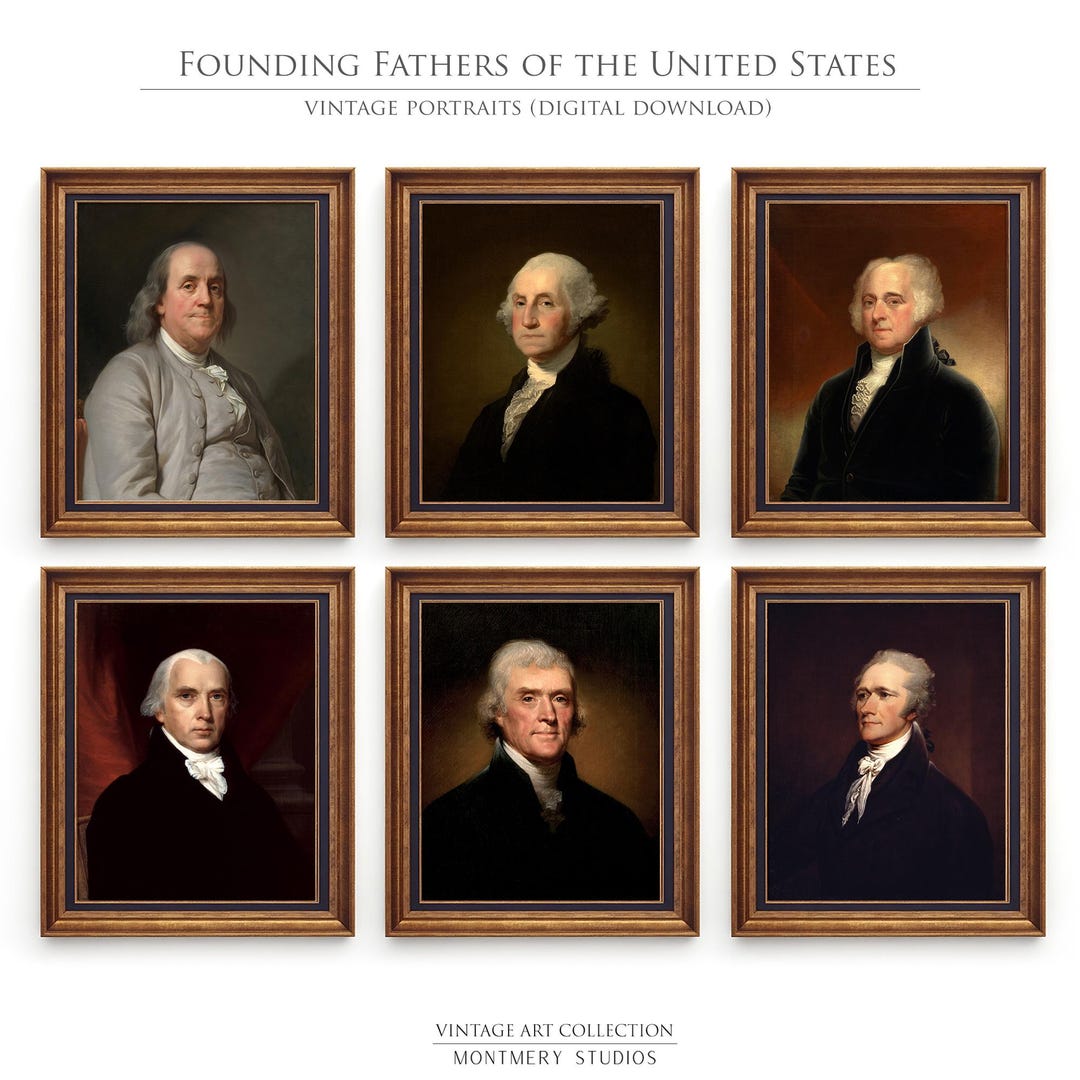
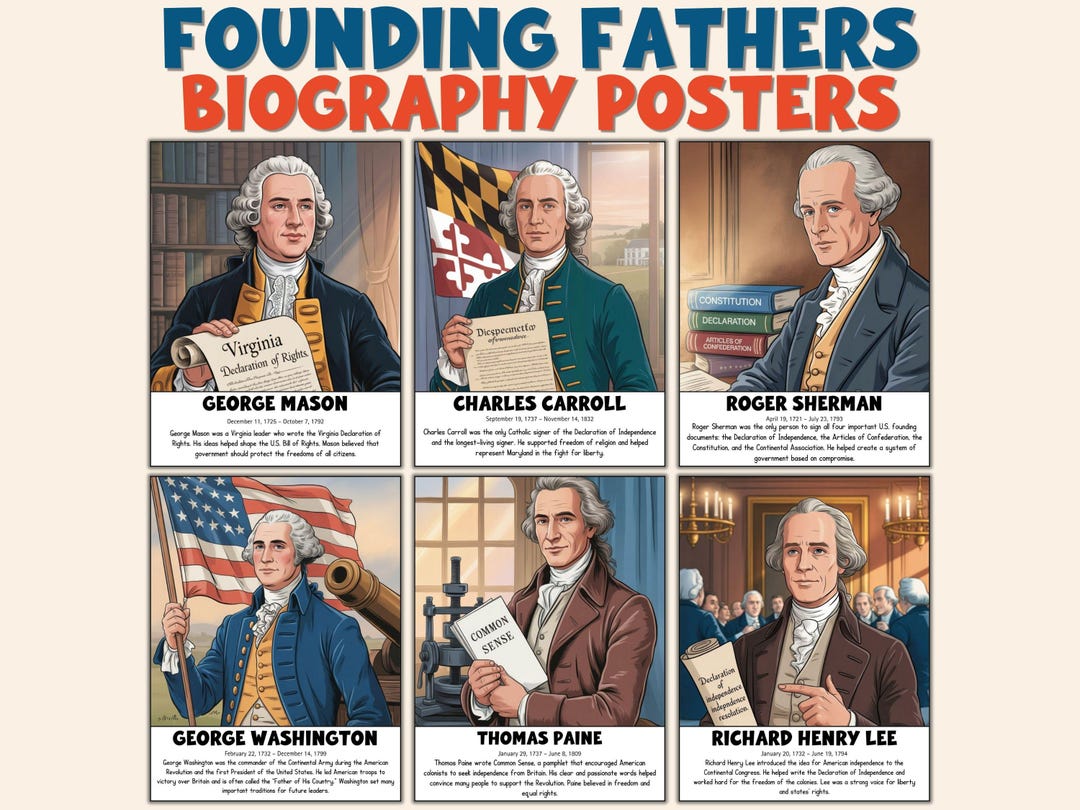
The Founding Fathers of America refers to the diverse group of 18th-century revolutionary leaders who united the Thirteen Colonies, led the war for independence from Great Britain, and established the United States government. This group includes the 56 signers of the Declaration of Independence, the delegates to the Constitutional Convention, and other key military and civic leaders.
The term "Founding Fathers" is not a formal legal designation but a historical collective used to describe the men who laid the political and philosophical foundations of the United States. While dozens of individuals contributed to the nation's birth, historians generally categorize them into three main groups: the signers of the 1776 Declaration of Independence, the framers of the 1787 Constitution, and the delegates who attended the Continental Congresses. In a more restricted sense, the term often highlights the "Big Seven" leaders whose influence was most pervasive across all stages of the founding.
Defining the Layers of the Founding Fathers
To understand who the Founding Fathers were, it is necessary to distinguish between their specific roles and the documents they produced. The founding was not a single event but a process spanning from the early 1760s through the ratification of the Bill of Rights in 1791.
The Signers of the Declaration of Independence
In July 1776, 56 men risked their lives and property by signing the Declaration of Independence. By doing so, they committed an act of high treason against the British Crown. This group included well-known figures like Thomas Jefferson and John Adams, as well as lesser-known but vital figures like George Wythe and Roger Sherman. They represented a cross-section of colonial society, including lawyers, merchants, physicians, and plantation owners.
The Framers of the Constitution
Eleven years after the Declaration, a different group of leaders met in Philadelphia to address the failures of the Articles of Confederation. Of the 55 delegates who attended the Constitutional Convention, 39 signed the final document. These "Framers" were responsible for the intricate system of checks and balances, federalism, and the separation of powers that define American governance. While some individuals, like Benjamin Franklin, were involved in both the Declaration and the Constitution, many Framers were a younger generation of leaders, such as Alexander Hamilton and James Madison.
The Continental Congress Delegates
The First and Second Continental Congresses served as the de facto government of the colonies during the Revolution. Many men who served in these bodies never signed the Declaration or the Constitution but were essential in managing the war effort, securing foreign loans, and drafting the Articles of Confederation. Figures like John Dickinson, who famously refused to sign the Declaration but later fought in the war and helped draft the Constitution, fall into this broader category.
The "Big Seven" Founding Fathers
While the total number of individuals considered "Founding Fathers" can exceed 100 depending on the criteria, seven specific men are consistently cited by historians as the primary architects of the United States. Their combined efforts covered the military, diplomatic, legal, and executive requirements of the new nation.
1. George Washington (1732–1799)
Often called the "Indispensable Man," George Washington’s role was unique because he provided the physical and moral authority required to hold the colonies together. As Commander-in-Chief of the Continental Army, he managed a fragile military force against the world’s most powerful empire. Beyond the battlefield, his willingness to resign his commission in 1783 established the precedent of civilian control over the military. As the first President, he defined the executive office, emphasizing stability and national unity over partisan interests.
2. John Adams (1735–1826)
John Adams was the "Atlas of Independence," providing the intellectual and rhetorical drive in the Continental Congress. A brilliant lawyer from Massachusetts, Adams was one of the earliest and most vocal advocates for a complete break from Britain. He served as a key diplomat in Europe during the war and later became the first Vice President and second President of the United States. His writing, particularly Thoughts on Government, influenced the structure of many state constitutions and the federal system.
3. Thomas Jefferson (1743–1826)
As the primary author of the Declaration of Independence, Thomas Jefferson gave the American Revolution its philosophical soul. His words—"all men are created equal"—became the benchmark for American democracy, even as his own life as a slaveholder highlighted the nation's foundational contradictions. Jefferson’s vision of a decentralized, agrarian republic stood in sharp contrast to the urban, industrial vision of Hamilton, sparking the first American party system. He served as the third President and founded the University of Virginia.
4. James Madison (1751–1836)
Known as the "Father of the Constitution," James Madison was the primary architect of the Virginia Plan, which served as the blueprint for the U.S. Constitution. He was a meticulous researcher who studied historical confederacies to avoid their pitfalls. Madison was also the principal author of the Bill of Rights and a key contributor to the Federalist Papers. His ability to navigate the complex compromises of the 1787 convention ensured the creation of a durable federal government.
5. Benjamin Franklin (1706–1790)
Franklin was the elder statesman of the Revolution. Already world-famous as a scientist and author, he used his international prestige to secure the French alliance in 1778, which provided the military and financial support necessary to win the war. Franklin was the only person to sign all four of the nation's key founding documents: the Declaration of Independence, the Treaty of Alliance with France, the Treaty of Paris, and the U.S. Constitution.
6. Alexander Hamilton (1755–1804)
Unlike most other founders, Hamilton was an immigrant (born in the West Indies). He rose to prominence as Washington’s chief aide-de-camp during the war. Hamilton was the most aggressive advocate for a strong central government and the creator of the nation’s financial system. As the first Secretary of the Treasury, he established the National Bank, assumed state debts, and promoted an industrial economy. He was also the primary author of the Federalist Papers, which are still cited by the Supreme Court today.
7. John Jay (1745–1829)
John Jay was a crucial diplomat and jurist whose contributions are often overshadowed by the others. He served as the President of the Continental Congress and later collaborated with Hamilton and Madison on the Federalist Papers. Jay was instrumental in negotiating the Treaty of Paris (1783), which ended the war and secured favorable borders for the new nation. He served as the first Chief Justice of the Supreme Court and later as the Governor of New York, where he signed legislation for the gradual abolition of slavery.
Comparison of Major Founding Documents and Authorship
The following table identifies which of the "Big Seven" participated in the three most critical milestones of the American founding.
| Founding Father | Signed Declaration (1776) | Signed Constitution (1787) | Key Contribution/Role |
|---|---|---|---|
| George Washington | No | Yes | Commander-in-Chief; 1st President |
| John Adams | Yes | No | Diplomat; 2nd President |
| Thomas Jefferson | Yes | No | Lead Author of Declaration; 3rd President |
| James Madison | No | Yes | Lead Architect of Constitution; 4th President |
| Benjamin Franklin | Yes | Yes | Diplomat to France; Scientist; Polymath |
| Alexander Hamilton | No | Yes | 1st Treasury Secretary; Federalist Papers |
| John Jay | No | No | 1st Chief Justice; Treaty of Paris Negotiator |
Note: While Jay and Adams did not sign the Constitution, they were in Europe on diplomatic missions at the time of the convention but were staunch supporters of its ratification.
Significant But Lesser-Known Founders
Beyond the primary seven, several other individuals played roles that were essential to the success of the American experiment. Without these figures, the Revolution might have failed due to internal dissent or lack of legal structure.
- Samuel Adams: A cousin of John Adams, he was a master of political organization and propaganda. He led the Sons of Liberty and was instrumental in orchestrating the Boston Tea Party and the early resistance in Massachusetts.
- Patrick Henry: Famous for his "Give me liberty, or give me death!" speech, Henry was a radical voice for independence. However, he later became a leading Anti-Federalist, fearing that the Constitution gave too much power to the federal government. His opposition was a primary reason the Bill of Rights was added.
- George Mason: Known as the "Father of the Bill of Rights," Mason authored the Virginia Declaration of Rights. He attended the Constitutional Convention but refused to sign the final document because it lacked a specific list of individual protections, a deficiency that was corrected in 1791.
- Richard Henry Lee: He was the man who officially introduced the resolution in the Continental Congress calling for independence from Britain. He also served as a President of the Continental Congress under the Articles of Confederation.
- Gouverneur Morris: Often overlooked, Morris was a delegate from Pennsylvania who was responsible for the actual wording of the Constitution, including the famous preamble: "We the People of the United States."
The Philosophical Foundations of the Founders
The Founding Fathers did not create their ideas in a vacuum. They were deeply influenced by the European Enlightenment, particularly the works of John Locke, Montesquieu, and Jean-Jacques Rousseau.
Natural Rights and Social Contract
John Locke’s theory of "natural rights"—life, liberty, and property—was the bedrock of Jefferson's Declaration of Independence. The founders believed that government derived its "just powers from the consent of the governed." When a government violated that social contract, the people had a right, and a duty, to overthrow it.
Separation of Powers
Montesquieu’s The Spirit of the Laws provided the framework for the three branches of government: legislative, executive, and judicial. The founders were deeply skeptical of concentrated power, having lived under what they perceived as British tyranny. By pitting power against power, they hoped to prevent any one individual or faction from dominating the state.
Republicanism vs. Democracy
It is important to note that the Founding Fathers were generally wary of "pure democracy," which they equated with mob rule. Instead, they favored a Republic—a representative government where "refined" individuals would deliberate on behalf of the public good. This is why they created the Electoral College and originally had state legislatures, rather than the people, elect U.S. Senators.
Modern Perspectives and Legacy in 2026
As of 2026, the study of the Founding Fathers has evolved to include a more nuanced understanding of their lives and the era they inhabited. Contemporary historians emphasize that the "Founding" was not just the work of a few great men, but a massive social movement involving thousands of soldiers, women, enslaved people, and indigenous groups.
For instance, the role of "Founding Mothers" like Abigail Adams and Mercy Otis Warren is now more widely recognized. Abigail Adams famously urged her husband to "Remember the Ladies" during the drafting of new laws, highlighting the early stirrings of the women's rights movement.
Furthermore, the paradox of liberty and slavery remains a central theme in modern analysis. Many of the founders, including Washington, Jefferson, and Madison, held enslaved people even as they wrote about universal freedom. This tension between the high ideals of the founding documents and the lived reality of many Americans in the 18th century continues to shape American political discourse and the ongoing pursuit of a "more perfect union."
Frequently Asked Questions
Who is considered the most important Founding Father?
Most historians cite George Washington as the most important because he was the only figure whose leadership was essential to both the military victory and the political stability of the new nation. Without his personal prestige and restraint, the new government might have collapsed into a military dictatorship.
How many Founding Fathers were there?
There is no single number, but the most common groupings include the 56 signers of the Declaration of Independence and the 39 signers of the U.S. Constitution. When including other key figures who did not sign these documents, the total is often cited between 70 and 140 individuals.
Did all the Founding Fathers agree on the Constitution?
No. There was significant disagreement. A group known as the Anti-Federalists, including Patrick Henry and George Mason, argued that the Constitution created a central government that was too powerful. Their opposition directly led to the creation of the Bill of Rights, the first ten amendments to the Constitution.
Were the Founding Fathers all wealthy?
While many were wealthy landowners, lawyers, or merchants, others came from more modest backgrounds. Alexander Hamilton was born into poverty in the Caribbean, and Benjamin Franklin was a self-made man who started as a printer's apprentice. However, they were almost all highly educated by the standards of the 18th century.
Why is the term "Founding Fathers" used instead of "Founders"?
While "Founding Fathers" is the traditional term popularized in the early 20th century (specifically by Warren G. Harding in 1916), many modern historians prefer "Founders" to be more inclusive of the wide range of people—including women and non-delegates—who contributed to the nation’s creation.
Practical Next Steps for Further Study
To gain a deeper understanding of the Founding Fathers, readers should examine the primary sources they produced. Start by reading the Declaration of Independence and the U.S. Constitution at the National Archives. For insight into the debates surrounding the nation's creation, the Federalist Papers provide a comprehensive look at the logic behind the American system of government. Visiting historical sites such as Mount Vernon, Monticello, and Independence Hall can also provide a tangible connection to the environment in which these leaders operated.