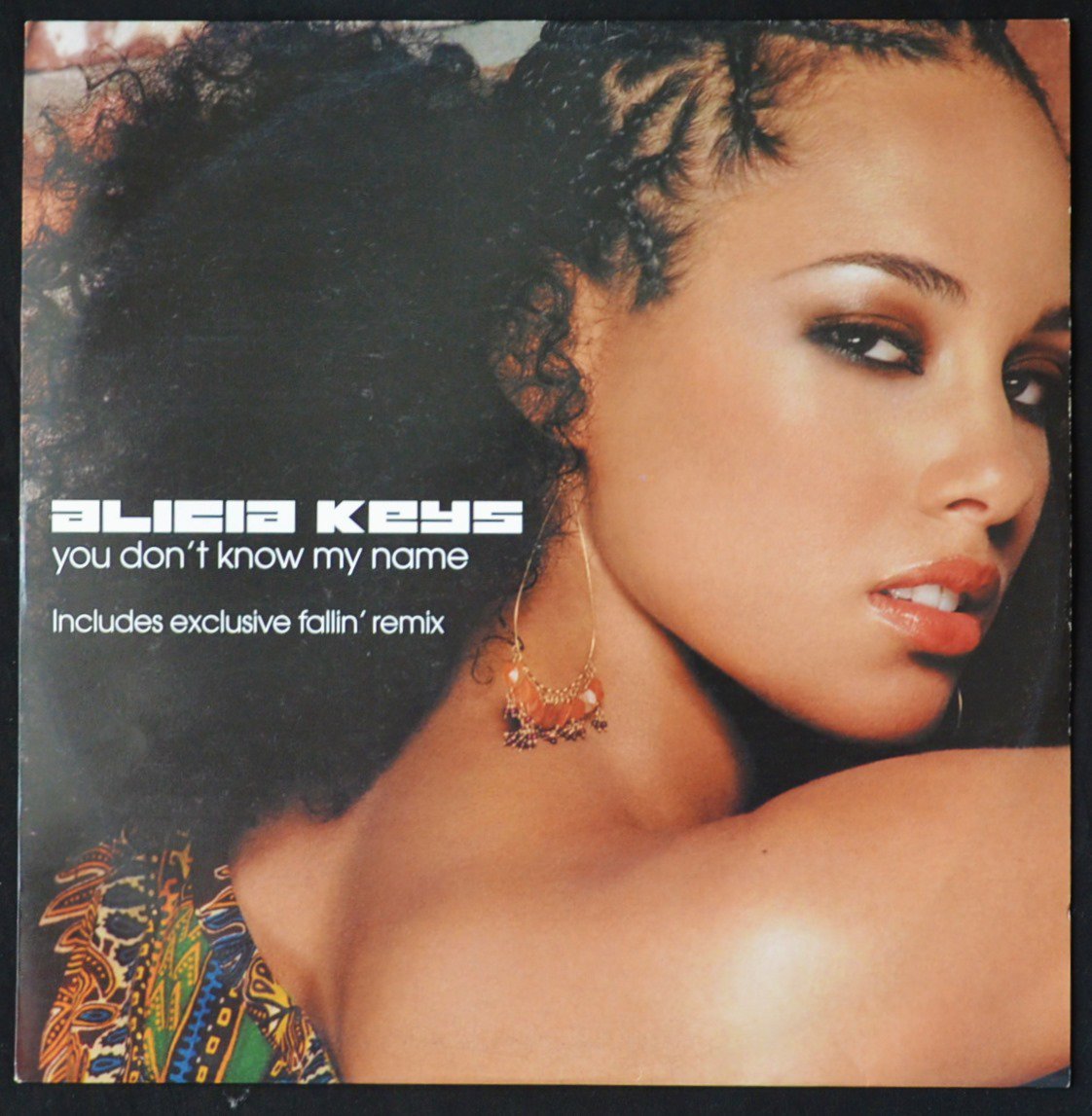
Alicia Keys was born Alicia Augello Cook. While "Cook" is her legal paternal surname and "Augello" reflects her Italian-American maternal heritage, she adopted the stage name "Keys" prior to releasing her 2001 debut album. The name represents both the physical keys of her signature instrument, the piano, and metaphorical keys unlocking life’s possibilities.
Understanding the origin of a celebrity's professional moniker often reveals pivotal moments in their artistic development. For Alicia Keys, discarding her birth surname in favor of a globally recognized stage name was not an attempt to conceal her roots. Instead, it was a deliberate creative choice that bridged her personal history, her classical music discipline, and her broader philosophy on life and art.
What Is Alicia Keys' Real Name?
Alicia Keys' full legal name at birth was Alicia Augello Cook. Born on January 25, 1981, in the Hell's Kitchen neighborhood of Manhattan, New York, she carries a combination of family names that reflects her multicultural background.
Her biological father, Craig Cook, was an African American flight attendant. Her mother, Teresa Augello, is of Italian, Sicilian, and Scottish-Irish descent and worked as a paralegal and part-time actress. When her parents separated when she was just two years old, Alicia was raised primarily by her mother in a single-parent household.
Because Teresa Augello was the primary caregiver and anchor throughout her formative years, the maternal name "Augello" has always carried profound personal significance for the singer. Throughout her childhood and teenage years, she was known in school, at classical piano recitals, and in the Professional Performing Arts School in Manhattan simply as Alicia Cook.
When she entered the recording industry, maintaining her birth name became a subject of discussion between her and her management team, ultimately leading to one of the most natural rebrandings in contemporary music history.
Why Alicia Cook Changed Her Name to Alicia Keys
The transition from Alicia Cook to Alicia Keys was driven by artistic positioning rather than familial estrangement. In the late 1990s, as she developed demos with her longtime manager, Jeff Robinson, and navigated recording contracts—first with Columbia Records, then with Clive Davis at Arista Records and J Records—the subject of stage presence and branding arose.
Robinson felt that "Alicia Cook" sounded somewhat ordinary for an artist possessing a rare blend of classical piano prowess, gritty New York hip-hop sensibilities, and vintage soul vocals. In hip-hop and contemporary R&B culture, distinct monikers serve as extensions of an artist's persona.
The Near-Miss Moniker: "Alicia Wild"
Before landing on the surname that would define her career, the young singer considered a completely different direction. During an early brainstorming session, she leaned toward the pseudonym Alicia Wild.
The concept behind "Wild" was rooted in the raw, energetic, and unpredictable nature of her youth and performances. However, when she presented the idea to her mother, Teresa Augello immediately pushed back. Augello felt that "Alicia Wild" carried connotations that sounded more like an exotic dancer or an exaggerated caricature than a serious, classically trained musician and lyricist. Her mother advised her to reconsider and find something that felt grounded, enduring, and representative of who she truly was.
Heeding her mother’s counsel, Alicia discarded the idea of "Alicia Wild" and sought a name with genuine substance.
The Dictionary Search
Rather than hiring an agency or relying purely on executive suggestions, Alicia took an old-school approach: she sat down with a physical dictionary and flipped through the pages.
She methodically browsed words, looking for terms that resonated visually, sonically, and conceptually. When she reached the letter "K," she landed on the word key.
The word resonated immediately on multiple levels:
- The Piano Connection: She had studied classical piano intensely since the age of seven, mastering compositions by Ludwig van Beethoven, Frédéric Chopin, and Wolfgang Amadeus Mozart before merging those disciplines with modern soul. The physical keys of an acoustic piano were central to her identity.
- The Metaphor of Unlocking: In English, a key is an instrument designed to open doors, unlock potential, and reveal mysteries. Alicia saw the name as symbolic of unlocking access to the world, human emotion, and artistic freedom.
- Phonetic Simplicity: The pairing of "Alicia" and "Keys" created a rhythmic, memorable cadence that rolled off the tongue while remaining easy to spell and internationalize.
When she proposed "Alicia Keys" to Jeff Robinson, the reaction was immediate approval. It captured her musical foundation without feeling contrived.
The Cultural and Familial Heritage Behind "Augello Cook"
To fully appreciate the change, it is helpful to understand the heritage Alicia Augello Cook brought into her career. Throughout her life, Keys has openly discussed the complexities of growing up biracial in New York City during the 1980s and 1990s.
Family Lineage of Alicia Augello Cook:
- Craig Cook (African American)
- Teresa Augello (Italian / Scottish-Irish)
- Alicia Augello Cook (Born Jan 25, 1981)
- Stage Moniker: Alicia Keys (1998–Present)
- Alicia Augello Cook (Born Jan 25, 1981)
Maternal Line: The Italian-American Augello Roots
Teresa Augello's family roots trace back to Sciacca, a coastal town in the province of Agrigento, Sicily. Growing up in a one-bedroom apartment in Hell's Kitchen, Alicia was surrounded by her mother's strong Italian-American cultural influences alongside the eclectic urban culture of Manhattan.
Her mother worked long hours to pay for Alicia’s classical piano lessons, providing the discipline and support necessary to nurture a prodigy. Because her mother was her sole provider, Alicia often identified closely with the Augello name. When Keys later named her first son Egypt Daoud Dean in 2010 and her second son Genesis Ali Dean in 2014, she continued the tradition of assigning deeply meaningful names that reflected cultural and personal history.
Paternal Line: The Cook Roots
Craig Cook's relationship with Alicia was distant during her early childhood. Keys has shared in various interviews and in her 2020 memoir, More Myself: A Journey, that she carried feelings of abandonment for years regarding her father’s absence.
In her late teens and early twenties, when identity formation was paramount, carrying the surname Cook felt disconnected from her daily emotional reality, as her father had not been present in her daily upbringing. While she did not legally erase the name, setting it aside professionally was a natural psychological step.
In later years, following the illness of her paternal grandmother, Keys and her father reconciled. Their mature relationship allowed her to make peace with the Cook lineage without needing to alter her globally recognized public identity.
Comparing Alicia Keys' Legal, Stage, and Family Names
Understanding an artist's naming structure clarifies how their public persona interacts with their private, legal reality.
| Name Variant | Category | Origin / Source | Functional Role |
|---|---|---|---|
| Alicia Augello Cook | Birth / Legal Name | Craig Cook (Father) & Teresa Augello (Mother) | Official government identification, early copyrights, personal contracts |
| Alicia Keys | Professional Stage Name | Chosen by Alicia from a dictionary search (c. 1998) | Global brand, album releases, performance credits, public persona |
| Alicia Wild | Discarded Concept | Early brainstorm by artist | Abandoned after Teresa Augello raised concerns regarding its tone |
| Alicia Cook Dean | Married Name / Informal Legal | Marriage to Kasseem Daoud Dean (Swizz Beatz) in 2010 | Personal family life; legal hyphenate/addition in private matters |
Legal Status: Did Alicia Keys Legally Change Her Name?
A common question regarding celebrity monikers is whether the artist went through a statutory name change in court or simply registered a doing-business-as (DBA) or trademark.
Alicia Keys operates under a standard entertainment industry framework:
- Professional Identity: For performance contracts, royalty disbursements through organizations like ASCAP/BMI, and public branding, she functions as Alicia Keys, owned and managed via her production and publishing entities (such as Lellow Productions, Inc.).
- Official Records: Historical corporate filings, earlier publishing registrations, and personal real estate transactions have frequently utilized her legal name, Alicia Augello Cook (and subsequently incorporating her married name, Dean).
In the United States, an individual is not legally required to petition a court for an official name change simply to use an artistic pseudonym, provided there is no intent to defraud creditors or law enforcement. By establishing trademark rights in the name "Alicia Keys," she secured federal protection for the moniker across entertainment services, cosmetics (such as Keys Soulcare), and lifestyle merchandise without needing to extinguish her birth certificate name.
How Names Influence Artist Branding in Modern Music
The transition from Alicia Cook to Alicia Keys highlights an essential principle of music industry branding: semantic alignment.
When an artist adopts a name that directly mirrors their creative medium, the marketing impact is amplified:
- Immediate Association: The piano is not merely an accompaniment for Keys; it is the center of her songwriting and staging. Naming herself after the instrument creates an immediate subconscious connection for the listener.
- Timelessness: A name like "Alicia Wild" ties an artist to an era, age bracket, or transient attitude. In contrast, "Keys" is classic, grounded, and matures alongside the artist.
- Versatility Across Mediums: As Keys expanded her career into authorship, Broadway production (with the musical Hell's Kitchen), television hosting (the Grammy Awards), and holistic skincare, the surname "Keys" seamlessly shifted from musical keys to figurative keys unlocking broader human potential.
Artists throughout history have made similar choices to clarify their identity. Stevland Hardaway Judkins became Stevie Wonder; Reginald Kenneth Dwight became Elton John; Peter Gene Hernandez became Bruno Mars. In each case, the stage name served not to hide reality, but to present an unencumbered artistic concept to the world.
Key Milestones Under the Alicia Keys Moniker
The name Alicia Keys debuted officially to the mainstream public in the late 1990s and early 2000s, rapidly becoming synonymous with excellence in contemporary music:
- 1998: Keys signs with Clive Davis at Arista Records, officially solidifying her professional identity during demo sessions.
- 2001: Releases her landmark debut album, Songs in A Minor, under J Records. The album sells over 12 million copies worldwide and earns her five Grammy Awards in a single night.
- 2003: Releases The Diary of Alicia Keys, solidifying her as a generational soul artist and multi-instrumentalist.
- 2010: Marries producer Kasseem "Swizz Beatz" Dean, integrating the Dean family name into her private life while maintaining the Keys brand globally.
- 2020: Publishes her official memoir, More Myself: A Journey, explicitly breaking down her lineage, her relationship with Craig Cook and Teresa Augello, and the process of adopting the Keys surname.
- 2023–2024: Debuts the semi-autobiographical musical Hell's Kitchen on Broadway, reflecting the very neighborhood, maternal dynamics, and early musical experiences that shaped Alicia Augello Cook into Alicia Keys.
Frequently Asked Questions
What is Alicia Keys' full real name?
Alicia Keys was born Alicia Augello Cook. "Cook" is her paternal surname, while "Augello" represents her mother's Italian ancestry. Following her marriage to Kasseem Dean (Swizz Beatz) in 2010, she has also been known in her personal life as Alicia Cook Dean.
Is "Keys" her actual birth name?
No. "Keys" is an artistic stage name chosen around 1998. She selected it by flipping through a dictionary, choosing the term because it represented both her beloved instrument—the piano—and the idea of opening doors to new opportunities.
Why did she not use her father's last name publicly?
Her manager, Jeff Robinson, suggested that "Alicia Cook" did not have the distinct, memorable ring needed for a global soul and R&B star. Additionally, because she was raised almost entirely by her mother after her parents split when she was two, Keys felt less emotionally connected to the surname Cook during the early stages of her career.
What was the alternative stage name she almost chose?
She initially wanted to go by Alicia Wild. However, her mother, Teresa Augello, strongly opposed the idea, arguing that "Wild" sounded unrefined and did not reflect Alicia’s classical piano training, sophistication, or deep musicality.
What nationality and ethnicity is Alicia Keys?
Alicia Keys is an American citizen born in New York City. Ethnically, she is biracial: her father, Craig Cook, is African American, and her mother, Teresa Augello, is of Italian (Sicilian) and Scottish-Irish heritage.
Does Alicia Keys still use her real name anywhere?
Yes. She uses her real name on official legal documents, personal financial filings, property deeds, and certain songwriting and publishing administration records. Professionally and commercially, however, all creative works, businesses, and public appearances remain under the name Alicia Keys.
Summary and Key Takeaway
The story behind Alicia Keys' real name is a case study in deliberate, authentic branding. Born Alicia Augello Cook, she chose not to adopt an artificial, trend-driven persona like "Alicia Wild." Instead, she selected a stage surname that directly honored her musical roots—the keys of the piano that provided solace during her childhood in Hell's Kitchen—while leaving room for metaphorical growth.
For music enthusiasts, historians, and aspiring creators, her naming journey illustrates that the most enduring stage names are not those designed to disguise an artist's background, but those that distill their deepest talents and truths into a single, resonant word.