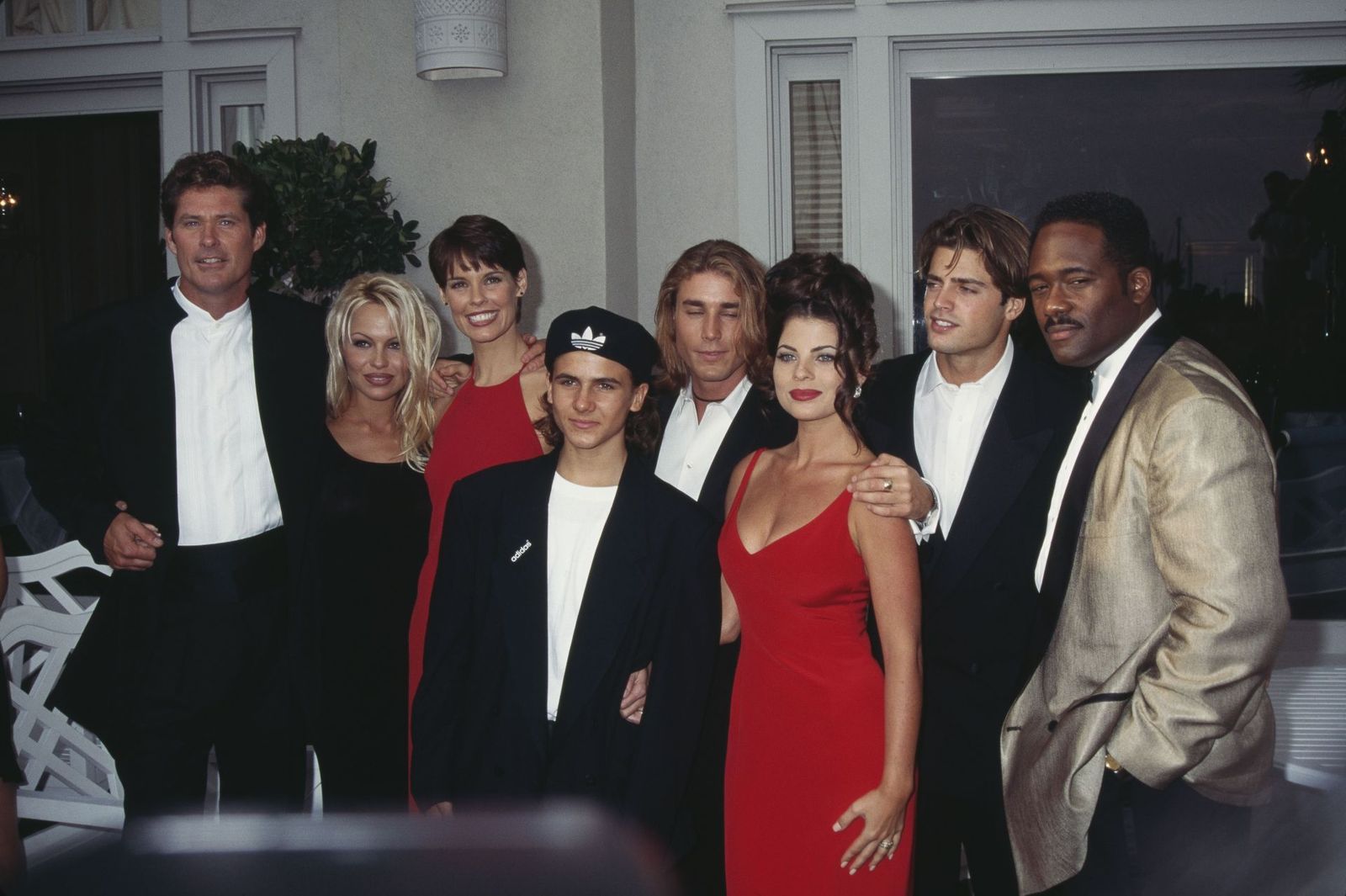
Alexandra Paul, best known for her iconic role as Lieutenant Stephanie Holden on the global television phenomenon Baywatch, serves as the primary link between 1990s pop culture and the modern electric vehicle (EV) revolution. Her real-world activism and defense of the GM EV1 redefined "car culture" from a fascination with internal combustion to a commitment to sustainable, high-tech transportation.
In the early 1990s, the sun-drenched beaches of Malibu provided the backdrop for Baywatch, a show that exported an idealized version of Californian lifestyle to billions of viewers. While the series featured the quintessential automotive symbols of the era—rugged lifeguard trucks and sleek convertibles—one of its lead actresses, Alexandra Paul, was quietly fostering a different kind of automotive movement. As we look back from the perspective of 2026, where electric propulsion has become the global standard, Paul’s contribution to car culture is recognized not just as celebrity endorsement, but as foundational advocacy that challenged the status quo of the American automotive industry.
The Baywatch Era: Contrast Between Screen and Reality
Alexandra Paul joined the cast of Baywatch in 1992, during the show’s third season. Her character, Stephanie Holden, was portrayed as a disciplined, capable, and serious lifeguard, often serving as the pragmatic foil to the more relaxed characters on the beach. During her tenure on the show, which lasted until 1997, Baywatch was more than just a TV series; it was a cultural juggernaut that dictated trends in fitness, fashion, and leisure.
The car culture presented on Baywatch was typical of 1990s Southern California. The show prominently featured the Ford Ranger and later the Chevrolet S-10 as the "official" lifeguard vehicles. These trucks represented a specific kind of utility and rugged individualism. However, Paul’s personal life stood in stark contrast to the gas-guzzling imagery of the show. While the world watched her save lives in the Pacific Ocean, she was beginning her journey as one of the most vocal proponents of the "clean car" movement.
Paul’s involvement in Baywatch gave her a global platform. By the time her character was written out of the show in a dramatic lightning-strike accident, Paul had already begun pivoting her public persona toward environmentalism. She understood that her visibility could be used to highlight the environmental impact of the very lifestyle Baywatch promoted.
The GM EV1: The Catalyst for Change
To understand the connection between Alexandra Paul and car culture, one must look at the General Motors EV1. Released in 1996, the EV1 was the first mass-produced, purpose-built electric vehicle from a major modern automaker. It was a sleek, futuristic two-seater that looked like a spacecraft compared to the boxy sedans and SUVs of the mid-90s.
Paul was one of the first people to lease an EV1. At the time, car culture was dominated by displacement, horsepower, and the "no replacement for displacement" mentality. The EV1 challenged this by offering instant torque and silent operation. Paul didn’t just drive the car; she became its unofficial ambassador. She participated in the first "electric" rallies and used her celebrity status to prove that electric cars were not "golf carts," but viable, sophisticated machines.
The "Who Killed the Electric Car?" Connection
The narrative of the EV1 ended in controversy when GM decided to cancel the program and reclaim the leased vehicles. Most of the cars were taken to remote locations and crushed, a move that sparked outrage among enthusiasts and environmentalists. This period marked a shift in car culture—the birth of "automotive activism."
Alexandra Paul was at the center of this movement. She was featured prominently in the 2006 documentary Who Killed the Electric Car?, which detailed the rise and fall of the EV1. In a famous act of civil disobedience in 2005, Paul was arrested alongside fellow activist Colette Divine for blocking a transport truck that was carrying EV1s to be destroyed at a GM facility in Burbank, California. This moment is a landmark in the history of the electric car; it was the point where a Hollywood star literally put her body on the line to save a vehicle, signaling that cars were no longer just transport, but symbols of a necessary technological evolution.
Redefining "Car Culture" for the 21st Century
Traditionally, car culture was defined by the "gearhead"—someone who understood carburetors, exhaust notes, and manual transmissions. Alexandra Paul helped usher in the "tech-head" or "eco-enthusiast" culture. This new branch of car culture valued efficiency, software integration, and the reduction of carbon footprints.
By 2026, the values Paul championed have become the industry standard. The "connection" she forged between her Baywatch fame and her automotive advocacy served as a bridge. She made the idea of an electric car accessible to a mainstream audience that previously associated environmentalism with sacrifice. Through her, people saw that you could be a global superstar on the world’s most popular TV show and still prioritize driving a car that produced zero emissions.
Comparing the Pioneer to the Modern Era
The technology Paul defended in the late 90s was primitive compared to the solid-state batteries and ultra-fast charging networks available in 2026. However, the EV1’s engineering was remarkably advanced for its time. Below is a comparison of the vehicle Paul fought for and the standards we see in the 2026 automotive market.
| Feature | GM EV1 (Gen II - 1999) | Average 2026 Electric Sedan |
|---|---|---|
| Battery Type | Nickel-Metal Hydride (NiMH) | Solid-State or High-Density Lithium |
| EPA Range | Approx. 100-140 miles | 400-520 miles |
| 0-60 mph Time | 8.0 Seconds | 3.2 - 4.5 Seconds |
| Charging Speed | Inductive Paddle (Slow) | 350kW+ DC Fast Charging |
| Ownership Model | Closed-end Lease Only | Purchase, Subscription, or Lease |
| Aerodynamics | 0.19 Cd (World Class) | 0.20 - 0.22 Cd |
The EV1’s drag coefficient (Cd) of 0.19 remains one of the best in history, showing that the "car culture" Paul was part of was one of extreme engineering efficiency, a precursor to the aero-efficient designs of modern 2026 vehicles like the latest Lucid or Tesla models.
The Intersection of Celebrity and Sustainable Living
Paul’s connection to car culture extends beyond just driving EVs. She has maintained a lifestyle consistent with the message of her advocacy. In the 2020s, she continued to influence the conversation around urban planning, car-sharing, and the transition away from personal vehicle ownership in densely populated areas.
For many Baywatch fans, the image of Paul is frozen in the 90s—running down the beach in a red swimsuit. Yet, for the automotive community, she is a revolutionary figure. She was one of the few voices in the late 90s who correctly predicted that the internal combustion engine was a sunset technology. Her ability to navigate the high-glitz world of Hollywood while maintaining a rigorous commitment to environmental ethics made her a unique figure in both the entertainment and automotive sectors.
The Impact on Modern EV Marketing
Automakers in 2026 often use celebrity influencers to sell their latest electric models. However, these partnerships are often criticized as being purely transactional. Paul’s connection to the EV world is viewed as more authentic because it predated the trend and involved personal risk (legal and professional).
Her advocacy influenced a generation of engineers and entrepreneurs. Many founders of the "second wave" of EV companies cite the documentary Who Killed the Electric Car?—and Paul’s role in it—as a primary motivation for their work. By standing up for the EV1, she helped ensure that the dream of the electric car didn't die in the desert of Arizona where the cars were crushed; instead, it became a rallying cry for a new type of enthusiast.
Navigating the Technical Challenges of the 90s EV
Being an EV enthusiast in the 1990s was not as simple as it is in 2026. Paul and her contemporaries faced significant technical hurdles that the modern driver rarely considers.
- Infrastructure Scarcity: There were no standardized public charging networks. Early adopters often had to rely on home-installed inductive chargers, which were bulky and expensive.
- Public Perception: The "car culture" of the time was often hostile to EVs, viewing them as a threat to the traditional American V8 lifestyle.
- Regulatory Hurdles: The California Air Resources Board (CARB) was embroiled in legal battles with automakers over Zero Emission Vehicle (ZEV) mandates. Paul was a frequent attendee at these hearings, bridging the gap between celebrity presence and technical policy debate.
Her persistence through these challenges helped normalize the presence of EVs on California roads, eventually leading to the state’s 2035 ban on new internal combustion engine sales—a policy that, in 2026, is now being adopted by several other jurisdictions worldwide.
Frequently Asked Questions
Why was Alexandra Paul arrested for an electric car?
In 2005, Alexandra Paul was arrested for civil disobedience. She and several other activists blocked a transport truck at a General Motors facility in Burbank, California. The truck was carrying several GM EV1s that were slated to be crushed. Paul argued that the cars were viable technology that should be sold to the lessees rather than destroyed. This event was a pivotal moment in the "Who Killed the Electric Car?" narrative.
What is the specific car Alexandra Paul is associated with?
She is most closely associated with the GM EV1. She was one of the original lessees of the vehicle in the late 1990s and became its most prominent defender when the program was cancelled. She has also been a long-time driver of the Toyota RAV4 EV and various modern Tesla models, consistently staying at the forefront of electric propulsion technology.
Did Alexandra Paul’s role in Baywatch help her activism?
Yes, but indirectly. Her role as Stephanie Holden gave her international fame, which she used as a "megaphone" for her environmental causes. While Baywatch itself was not focused on environmentalism, Paul used her press junkets and public appearances to speak about the benefits of electric cars and sustainable living, reaching an audience that might not have otherwise engaged with green technology.
Is Alexandra Paul still involved in car culture in 2026?
Alexandra Paul remains a respected figure in the automotive world, though her focus has shifted toward broader sustainability. In 2026, she is often invited to speak at international auto shows and sustainability summits as a pioneer of the EV movement. She continues to advocate for "car-light" lifestyles and the integration of renewable energy with the transport grid.
How did the EV1 differ from the cars used on the set of Baywatch?
The lifeguard trucks on Baywatch were traditional internal combustion engine (ICE) vehicles, specifically designed for off-road durability and power. The EV1 was a street-only, highly aerodynamic vehicle designed for efficiency. While the lifeguard trucks represented 20th-century utility, the EV1 represented 21st-century sustainability. Ironically, by 2026, even the "lifeguard trucks" in Malibu have transitioned to fully electric platforms with high-torque electric motors suited for sand recovery.
Final Recommendation for Enthusiasts and Historians
For those interested in the intersection of pop culture and automotive history, studying Alexandra Paul’s career provides a clear roadmap of how niche activism can become mainstream reality. To truly understand the "car culture connection," one should watch the documentary Who Killed the Electric Car? and its sequel, Revenge of the Electric Car. These films offer the best evidence of how Paul transitioned from a TV star to a central figure in the most significant automotive shift in a century.
In 2026, as we drive vehicles that are quieter, cleaner, and faster than those of the Baywatch era, it is important to remember the early adopters who risked their reputations to advocate for a technology that the world wasn't yet ready to embrace.