Choosing between Air India First Class and Business Class in 2026 depends on your requirement for total privacy versus high-end functional comfort. First Class offers an exclusive, four-to-eight-seat sanctuary with ultra-premium dining, while the newly retrofitted Business Class provides private suites with sliding doors, offering a competitive luxury experience at a significantly lower price point.
The landscape of Indian aviation has shifted dramatically following the integration of Vistara into Air India and the multi-billion dollar "Vihaan.AI" transformation spearheaded by the Tata Group. As of 2026, the airline has successfully overhauled its long-haul product, moving away from the "legacy" cabins that once hampered its reputation. Today, Air India competes directly with Middle Eastern and Southeast Asian carriers. For travelers navigating the choice between the two highest tiers of service, understanding the nuances in seat architecture, ground services, and the "soft product" is essential for maximizing the value of your ticket or miles.
The Evolution of the Air India Cabin: Context for 2026
To understand the difference between First and Business Class today, one must look at the fleet modernization. By 2026, Air India has largely standardized its long-haul experience across the Boeing 777-300ER and the flagship Airbus A350-900. While First Class remains an exclusive feature of the Boeing 777-300ER (specifically on ultra-long-haul routes to the United States and select London flights), Business Class is the backbone of the international fleet.
The distinction between the two is no longer just about a reclining seat versus a bed. It is about the "Maharajah" service philosophy. In First Class, the ratio of crew to passengers is nearly one-to-one, ensuring a level of anticipatory service that Business Class—while professional—cannot match due to higher cabin density. For the high-net-worth individual or the executive seeking absolute silence, First Class remains the benchmark, but for most corporate travelers, the "New Air India" Business Class suites have narrowed the gap significantly.
Cabin Layout and Seat Architecture
First Class: The Private Sanctuary
In 2026, Air India’s First Class on the Boeing 777-300ER is designed as an intimate cabin. Most configurations feature just 4 to 8 seats in a 1-2-1 layout. These are not merely seats; they are "suites," though many retain an open-suite feel compared to the fully enclosed Business Class doors on the A350.
The First Class seat is significantly wider—often 30 to 35 inches—allowing for a more comfortable sleep surface when converted into a 180-degree flatbed. The padding is reinforced with a dedicated mattress topper, a heavy-duty duvet, and a choice of pillows from the "Pillow Menu." The primary advantage here is the "Ottoman," which allows for buddy dining. A traveling companion or colleague from another cabin can sit across from you for a meal, a feature strictly unavailable in Business Class.
Business Class: The Modern Suite
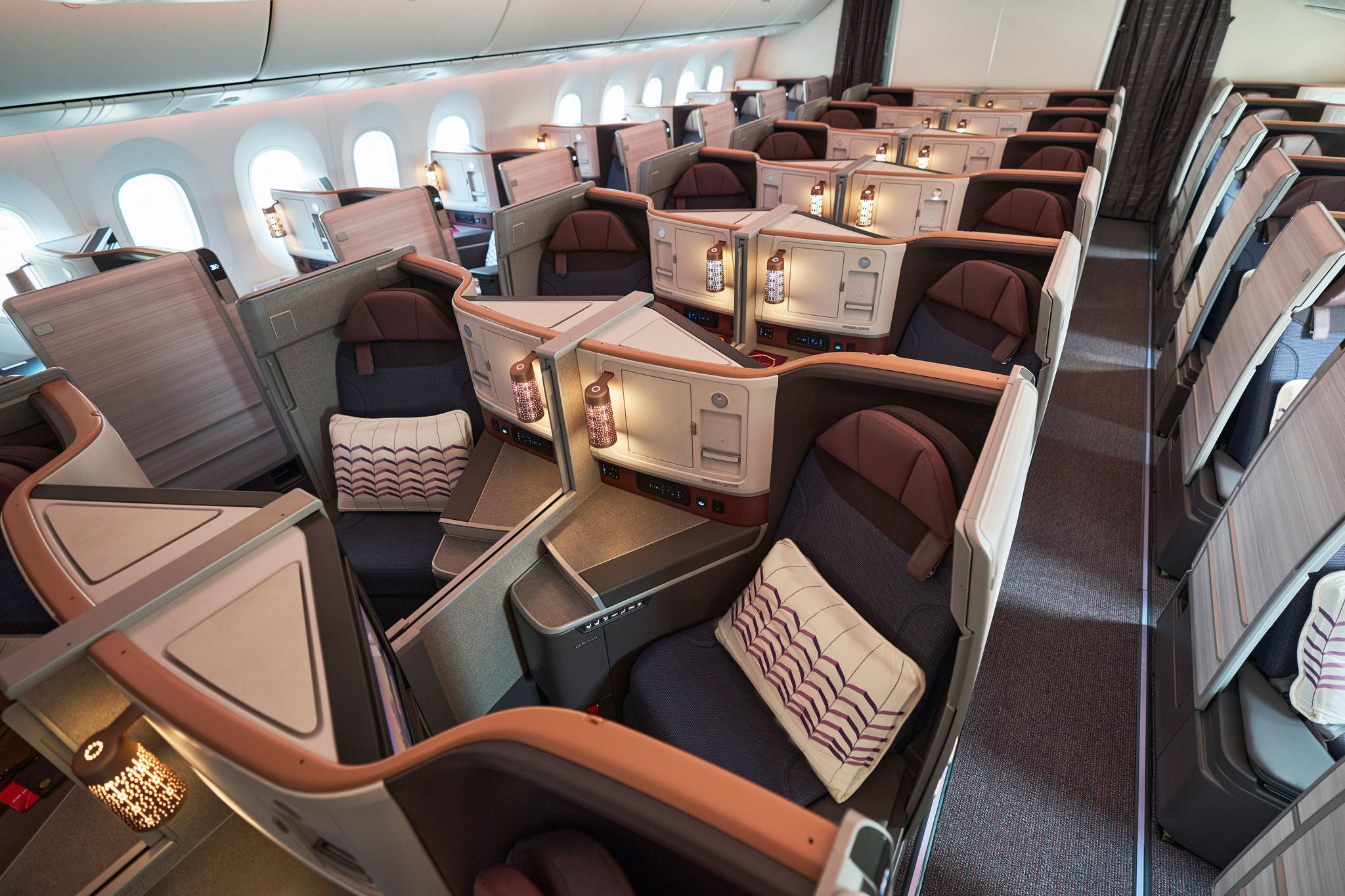
The "New Era" Business Class, particularly on the Airbus A350-900 and retrofitted 777s, has moved to a 1-2-1 staggered or herringbone configuration. The standout feature in 2026 is the sliding privacy door. Even though Business Class has more passengers (usually between 28 and 40), the door provides a level of isolation that was previously the sole domain of First Class.
The seat width in Business Class is typically 20 to 22 inches. While it also converts into a fully flat bed, the footwell is often more constrained than in First Class. If you are a side sleeper or have a larger frame, the First Class bed’s extra width is a material upgrade. However, for most passengers, the Business Class suite provides ample space for work and rest, including multiple storage compartments for laptops and personal items that the older First Class designs sometimes lack.
The Ground Experience: Beyond the Jetbridge
The journey begins long before boarding, and this is where Air India has focused much of its 2026 investment. The ground experience in major hubs like Delhi (DEL), Mumbai (BOM), and London (LHR) or New York (JFK) serves as a major differentiator.
Check-in and Fast Track
First Class passengers benefit from a "Home to Gate" philosophy. This includes a dedicated concierge service at major Indian airports. Upon arrival at the terminal, a porter handles luggage, and the passenger is escorted to a dedicated First Class check-in island. Immigration and security are handled through priority lanes that, in 2026, are highly streamlined compared to previous years.
Business Class passengers also have dedicated check-in counters and priority security access. While the "escort" service is generally reserved for First Class or top-tier Flying Returns members, the Business Class process is efficient and significantly faster than the Premium Economy or Economy queues.
Lounge Access
The lounge experience is perhaps the most visible area of separation:
- First Class Lounge: In Delhi’s Terminal 3, First Class passengers have access to an exclusive wing of the Air India lounge. This area features a full-service à la carte restaurant, private sleeping pods, and high-end shower suites with luxury toiletries. The environment is one of hushed elegance, away from the bustle of the general Business Class population.
- Business Class Lounge: The Business Class lounge (often the Encalm Privé or the new Air India flagship lounges) offers high-quality buffet and live cooking stations, comfortable seating, and bar service. While excellent, these lounges can become crowded during the midnight "peak hour" for international departures from India.
In-Flight Gastronomy and Dining
Air India has leveraged its Indian heritage to create a world-class dining program in 2026, curated by celebrity chefs and focusing on regional Indian flavors alongside international favorites.
The First Class "Dine on Demand"
In First Class, there is no fixed meal time. Passengers can order anything from the menu at any point during the flight. The table setting is more elaborate, involving bone china, lead crystal glassware, and heavy linen. The menu features higher-cost ingredients—think lobster, premium lamb cuts, and specialized regional "Thalis" that are prepared with more intricate techniques. The wine list in First Class is also significantly more expensive, often featuring vintage Champagnes (such as Dom Pérignon or Krug) and Bordeaux First Growths.
Business Class Structured Dining
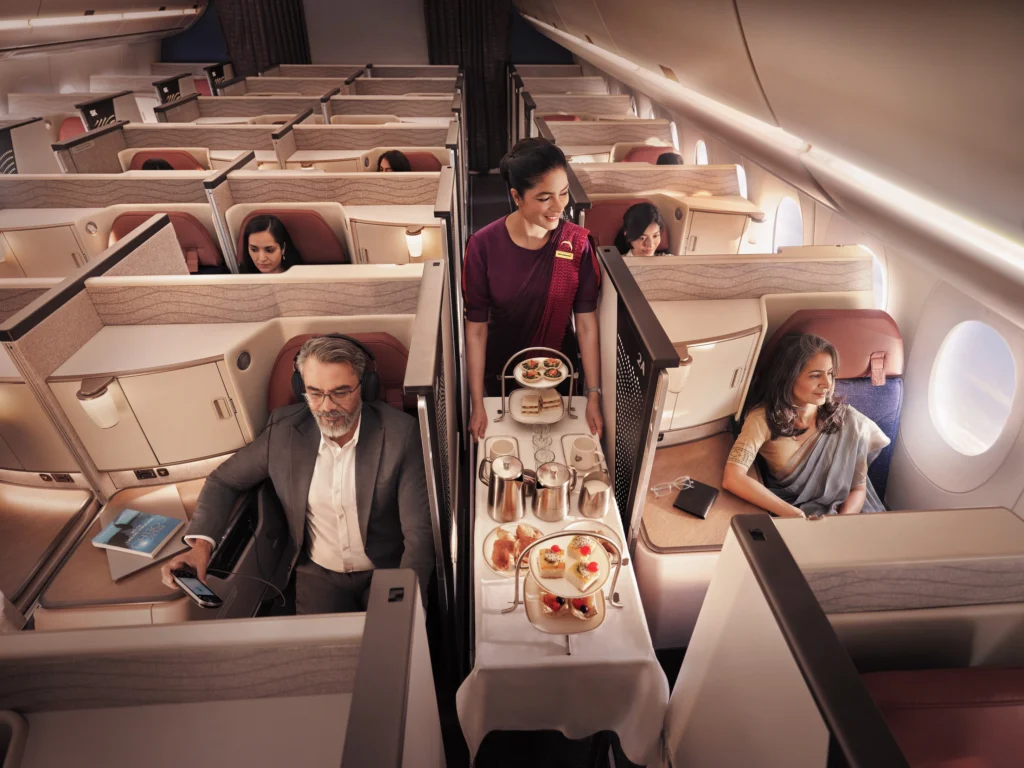
Business Class follows a more structured service, usually consisting of a primary meal service after takeoff and a second service before landing. While the food quality is high and includes a multi-course menu with Indian and Western options, it is more "plated" and less "bespoke" than First Class. The wine selection is commendable—typically featuring high-quality French and New World wines—but does not reach the "vintage" prestige of the First Class cellar.
Amenities and Soft Product
The "soft product" refers to the non-seat elements that define luxury. By 2026, Air India has partnered with global luxury brands to elevate these touches.
- Amenity Kits: First Class passengers receive premium kits (often in partnership with brands like Ferragamo or Tumi) containing high-end skincare, dental kits, and eye masks. Business Class kits are also high-quality but contain fewer items and slightly less "prestige" branding.
- Sleepwear: First Class passengers are provided with high-quality cotton pajamas and slippers, a vital component for ultra-long-haul flights. In Business Class, pajamas are generally provided only on the longest flights (e.g., India to the US West Coast), whereas First Class provides them on almost all medium-to-long-haul sectors.
- Bedding: While both cabins feature flatbeds, First Class bedding includes a thicker mattress pad and a higher thread-count duvet. The "turn-down service" in First Class is proactive; the crew will prepare your bed while you change or visit the restroom. In Business Class, while the crew is happy to help, many passengers find themselves doing the basic setup.
Technology and In-Flight Entertainment (IFE)
In 2026, Air India's fleet features the latest IFE systems, including high-definition touchscreens and Bluetooth audio connectivity, allowing passengers to use their own noise-canceling headphones.
| Feature | First Class (B777-300ER) | Business Class (A350/B777 Retrofit) |
|---|---|---|
| Screen Size | 24 - 32 inches | 17 - 21 inches |
| Privacy | Open or Semi-Closed Suite | Fully Enclosed Suite (Sliding Door) |
| Wi-Fi | Complimentary Unlimited | Complimentary (Messaging) / Paid (Data) |
| Seat Configuration | 1-2-1 (Very Spacious) | 1-2-1 (Standard Premium) |
| Buddy Dining | Yes (Large Ottoman) | No |
| Bed Length | 80+ inches | 76 - 78 inches |
| Storage | Ample Wardrobe/Stowage | Moderate Cubby/Side Table |
The technology gap between the two is minimal in 2026. In fact, because the A350s (mostly Business Class-focused) are newer, the Business Class IFE interface can sometimes feel more responsive than the systems in the older Boeing 777 First Class cabins, despite the smaller screen size. However, First Class passengers are increasingly given complimentary high-speed Wi-Fi vouchers for the duration of the flight, a perk that remains a paid add-on for Business Class.
Is First Class Worth the Premium Over Business Class?
The price difference between Business and First Class can be substantial, often 2x to 3x the cost. In the current 2026 market, the decision rests on "The 3 Ps": Privacy, Pacing, and Prestige.
- Privacy: If you are a public figure or a high-level executive who needs absolute seclusion, the First Class cabin—with its low passenger count—is superior. Even though Business Class has doors, you are still sharing a cabin with 30+ other people.
- Pacing: The "Dine on Demand" feature in First Class is a game-changer for those crossing multiple time zones. If you want to sleep for the first six hours and eat a full dinner "at midnight," only First Class accommodates this seamlessly.
- Prestige and Service: The "Maharajah" service is at its peak in First Class. If you value being known by name and having your preferences remembered throughout the flight, the First Class crew provides a level of personalized hospitality that the more "industrial" (though excellent) Business Class cannot match.
For the majority of travelers, the New Business Class Suite is the "sweet spot." It provides a flat bed, a private door, direct aisle access, and high-quality food at a price point that is much easier to justify for corporate budgets or personal wealth management.
Frequently Asked Questions
Which Air India routes offer First Class in 2026?
First Class is primarily available on ultra-long-haul routes connecting Delhi (DEL) and Mumbai (BOM) to major US gateways such as New York (JFK), Newark (EWR), San Francisco (SFO), and Chicago (ORD). It is also frequently offered on the London (LHR) route. Most other European, Australian, and Southeast Asian routes utilize the A350 or 787, which typically feature Business Class as the highest tier.
Do Business Class seats have doors on Air India?
Yes, as of 2026, the majority of Air India’s long-haul fleet—including all Airbus A350-900s and the retrofitted Boeing 777s—feature Business Class suites with sliding privacy doors. This has been a central part of the airline's "Vihaan.AI" cabin refresh.
Is the food different between First and Business Class?
While the culinary team is the same, First Class offers higher-quality ingredients (such as caviar service on select routes), a more extensive wine and spirit list, and the "Dine on Demand" service. Business Class offers a high-quality but more standardized multi-course menu.
Can I upgrade from Business Class to First Class at the airport?
Upgrades are possible depending on seat availability. Passengers can use Air India "Flying Returns" points or pay a cash upgrade fee at the check-in counter. However, because First Class cabins are small (4-8 seats), they often sell out or are occupied by top-tier elite members, so it is recommended to check availability via the mobile app 24 hours before departure.
Does Air India provide pajamas in Business Class?
In 2026, Air India provides luxury sleepwear (pajamas) to Business Class passengers on ultra-long-haul flights (typically those over 10-12 hours). In First Class, pajamas are provided regardless of the flight duration on all long-haul sectors.
Final Recommendation
For travelers prioritizing a modern, private, and cost-effective luxury experience, Air India Business Class on the A350 or retrofitted 777 is the recommended choice. The inclusion of sliding doors and direct aisle access brings it to par with the world's best airlines.
However, if you are traveling for a landmark occasion, require the utmost discretion, or desire a bed that rivals a luxury hotel in width and comfort, Air India First Class remains the ultimate expression of Indian hospitality. The ability to dine with a companion and the bespoke nature of the service make it a distinct step above, provided the route is served by the flagship Boeing 777-300ER fleet.