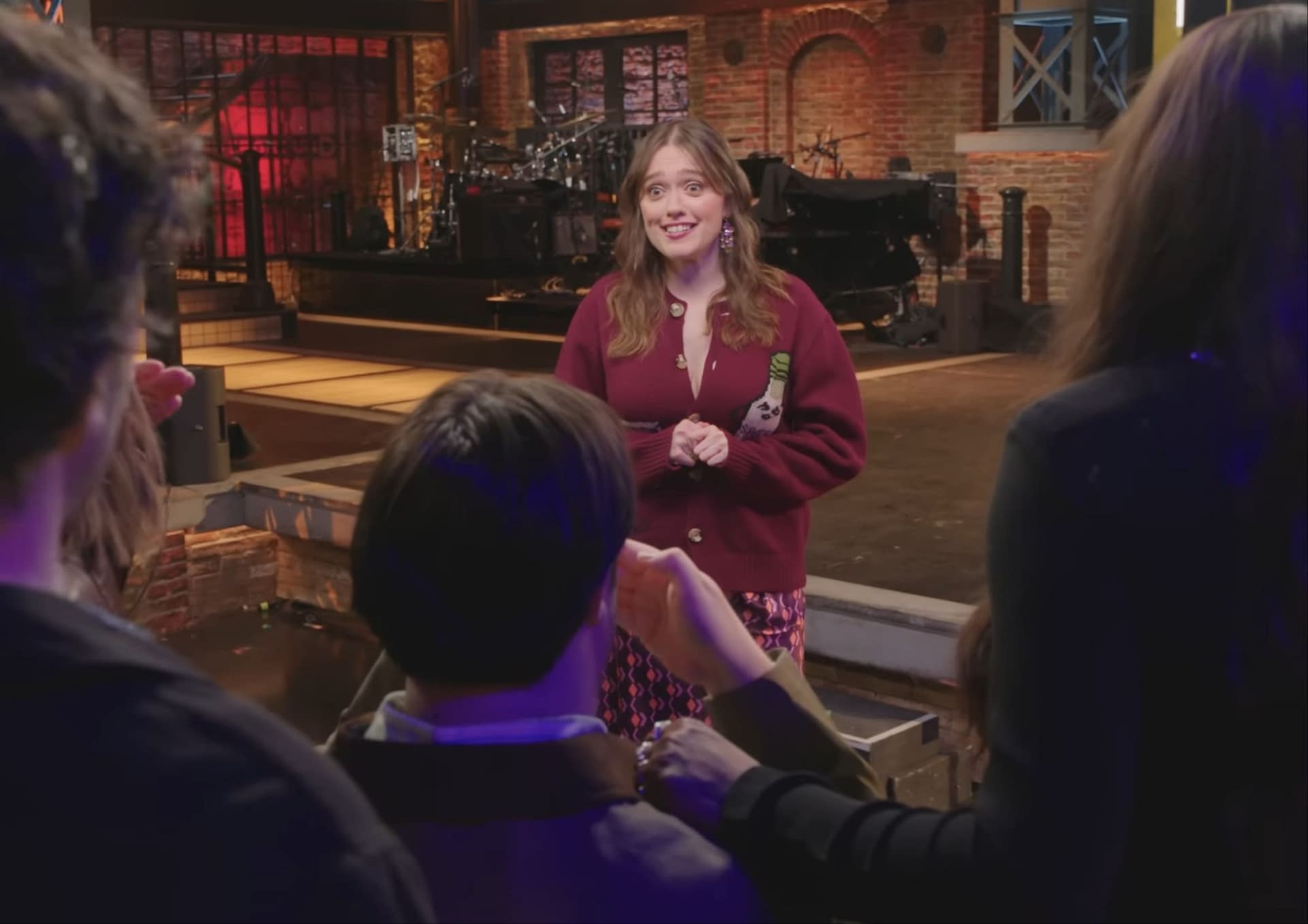
Aimee Lou Wood’s appearance in the Saturday Night Live (SNL) sketch featuring her Sex Education co-star Ncuti Gatwa remains a notable crossover moment for fans of British television and American sketch comedy. The appearance, which highlights Wood’s distinct comedic timing and improvisational capabilities, serves as a bridge between the nuanced character work seen in streaming dramas and the high-energy, live-broadcast environment of late-night television.
The curiosity surrounding "Aimee Lou Wood in the SNL skit video" often stems from viewers seeking to understand the context of her appearance, the specific sketch in which she starred, and how her performance style adapted to the American variety format. This article explores the mechanics of her guest appearance, the production context of SNL cameos, and the specific impact of this performance on her broader professional trajectory.
Contextualizing the Appearance: The Crossover Effect
Aimee Lou Wood rose to international prominence primarily through her role as Aimee Gibbs in the hit Netflix series Sex Education. Her performance—characterized by a blend of vulnerability, physical comedy, and an endearing, somewhat naive sincerity—garnered critical acclaim and a dedicated global fanbase. When such actors cross over into American institutional comedy like Saturday Night Live, it often signals a shift in their industry perception, moving from dramatic or ensemble-based television toward the broader, more versatile landscape of mainstream entertainment.
The skit in question leverages the existing professional chemistry between Wood and Gatwa. For viewers unfamiliar with the logistical reality of SNL, it is important to note that guest appearances by non-cast members are highly choreographed events. Unlike the improvisational nature of many comedy workshops, SNL operates on a strictly regimented schedule. The inclusion of Wood was not merely a spontaneous event but a curated moment designed to capitalize on the public’s existing affinity for the Sex Education ensemble.
Analyzing the Performance: Style and Delivery
Wood’s performance in the SNL sketch is marked by a deliberate choice to maintain the "energy" she is known for while adapting it to the peculiar pacing of sketch comedy. One of the primary differences between working on a filmed narrative series like Sex Education and an live sketch show is the reliance on "live" audience feedback.
In her SNL appearance, Wood demonstrated a high degree of adaptability. Her performance relied on:
- Heightened Physicality: Sketch comedy often requires actors to scale their movements for a studio audience that is physically removed from the camera. Wood leaned into this, using broader gestures than she might typically use in a multi-camera setup.
- Dialectal Flexibility: Much of Wood’s success in the UK is tied to her mastery of character-specific dialects. In the SNL context, she navigated the requirements of the American sketch format while maintaining the rhythmic speech patterns that audiences associate with her, creating a seamless integration into the show's ensemble.
- Reactionary Timing: Much of the humor in the sketch derived from Wood’s facial reactions. Because the camera frequently cuts to reactions during live comedy, her ability to hold a "character state" in silence—an essential skill for sketch performers—was on full display.
Behind the Scenes: The Mechanics of an SNL Sketch
To appreciate the "Aimee Lou Wood in the SNL skit video," one must understand the production cycle of a typical Saturday night. The process generally spans a single, highly compressed week, beginning with the table read on Wednesday and culminating in the live broadcast on Saturday.
For a guest like Wood, the requirements are:
- Script Integration: Learning the lines and blocking in under 48 hours.
- Blocking and Rehearsals: Understanding camera positions to ensure that even in a chaotic live set, the performer remains in frame.
- Live Adjustments: Making real-time changes based on the reaction of the audience during the dress rehearsal, which takes place earlier on Saturday evening.
The efficiency required to perform live under these conditions is a testament to Wood’s training in theater. Unlike film, where takes can be repeated, live sketch comedy requires the performer to commit fully to the first "take." Any errors—such as missed cues or broken character—become part of the final, broadcasted performance. This adds a layer of risk that heightens the viewer’s engagement, as there is a palpable sense of "anything can happen."
Comparative Performance Table: Film vs. Sketch Comedy
The following table highlights the differences between Aimee Lou Wood’s typical television work and her guest performance on the SNL stage.
| Feature | Sex Education (Series) | Saturday Night Live (Sketch) |
|---|---|---|
| Duration | Multiple episodes/seasons | Single, short-form sketch |
| Pacing | Controlled, character-driven | Fast, punchline-driven |
| Audience | Remote, post-production | Live studio audience |
| Retakes | Allowed/Planned | None; "One-shot" environment |
| Character Depth | Long-arc development | Archetypal/Immediate impact |
| Production Cycle | Months of shooting | Days of rehearsal |
The Impact on Career Trajectory
The appearance of a prominent UK actor in a high-profile US sketch show is rarely accidental. In the entertainment industry, these guest spots serve several strategic purposes. First, they expand the performer's brand awareness within the American market. By interacting with the SNL cast, a performer signals their comfort in a broad, mainstream comedy environment, which can lead to casting opportunities in feature films or larger network projects.
Second, the sketch format allows for a "rebranding" of sorts. For Wood, whose character in Sex Education is deeply embedded in the public consciousness, the SNL appearance allows audiences to see her as an independent creative force rather than solely as her character, Aimee Gibbs. This versatility is the hallmark of a long-term acting career, as it prevents typecasting and demonstrates range to casting directors who may not have seen her in comedic roles previously.
Frequently Asked Questions
1. Was Aimee Lou Wood a cast member on Saturday Night Live?
No, Aimee Lou Wood was not a permanent cast member. Her appearance was a guest spot. In the history of SNL, guest appearances are often arranged to promote a specific project or to capitalize on the current popularity of a performer.
2. Is there a specific "official" video of the skit?
Most official SNL clips are distributed via the show's verified social media channels and their official YouTube channel. When searching for the video, it is recommended to use these official sources to ensure the highest visual quality and to support the copyright holders of the performance.
3. What skills are most vital for an actor transitioning from drama to SNL sketches?
The most vital skill is "timing." While drama requires emotional internalizing, sketch comedy requires the ability to externalize comedy and deliver punchlines on specific beats. Physical awareness and the ability to work comfortably with live camera blocking are also essential.
4. How did Aimee Lou Wood’s background help her in this performance?
Wood’s background in classical theater and training provided her with the vocal control and presence necessary to project for a live audience. Her experience with ensemble work in television also made her comfortable sharing the stage with established SNL cast members, which is critical for the flow of a group sketch.
5. Why do popular actors do these types of SNL cameos?
These cameos serve as a form of cultural validation and audience expansion. By participating in a show that is a pillar of American pop culture, actors can reach demographics that might not typically consume their streaming-only work, effectively broadening their global reach.
Practical Recommendations for Viewers and Aspiring Actors
If you are a fan of Aimee Lou Wood’s work and are looking to analyze her performance further, consider viewing the sketch alongside her interviews or behind-the-scenes content from Sex Education. This allows for a comparison between her natural speaking voice and her character work.
For aspiring actors interested in the crossover between British drama and American comedy, the primary takeaway is the importance of "character mobility." The ability to step into a high-pressure, short-form environment and immediately establish a distinct personality is a skill that can be practiced through improvisational theater and sketch writing groups. Regardless of the medium, the foundational work—understanding the comedic beat, listening to one's scene partners, and maintaining focus under technical pressure—remains constant.
To view the specific performance, navigate to the official SNL YouTube channel or the NBC streaming portal. Searching by the title of the episode or the names of the cast members involved will yield the most accurate results. Focus on the nuances of her reactions in the background of the shot, as this often reveals the true skill level of a performer who is not currently the focus of the dialogue.