AgentWise is a comprehensive digital ecosystem designed to facilitate end-to-end remote real estate transactions by connecting buyers, sellers, and licensed professionals through an integrated technology stack. By leveraging secure data rooms, high-fidelity virtual tours, and AI-driven valuation models, AgentWise allows users to manage property acquisitions and sales entirely from a distance, ensuring legal compliance and financial transparency without the requirement for physical presence.
The landscape of property transactions has undergone a radical transformation. As we navigate 2026, the reliance on physical office visits and manual paperwork has largely been superseded by "remote-first" methodologies. AgentWise stands at the forefront of this shift, providing a structured framework for what is now known as the "Agent-Wise" service model—a granular, data-centric approach where every phase of the real estate journey is documented, verified, and executed through a centralized digital interface.
The Evolution of Remote Real Estate Services in 2026
The concept of remote real estate services evolved from simple video walkthroughs in the early 2020s to the sophisticated, legally-binding digital frameworks we use today. In 2026, "remote" no longer implies a compromise in quality or security. Instead, it represents a more efficient, audited process that reduces the "friction of distance."
AgentWise functions as a specialized intermediary that synchronizes the efforts of various stakeholders. Unlike traditional listing sites, which merely display data, AgentWise facilitates the actual execution of the trade. This includes the integration of Remote Online Notarization (RON), digital escrow services, and localized "feet-on-the-ground" inspections that are fed directly into a cloud-based dashboard.
For the modern investor or homeowner, this means the ability to diversify a portfolio across different geographic regions without the overhead of travel. For agents, it provides a scalable way to manage clients using automated workflows and verified data points, ensuring that the "agent-wise" reporting—the specific tracking of performance and task completion—remains transparent to all parties.
Core Components of the AgentWise Ecosystem
To understand how remote real estate services function effectively, one must look at the technical and operational pillars that support the AgentWise platform. These components work in unison to replace the traditional physical touchpoints of a real estate deal.
1. Immersive Virtual Exploration
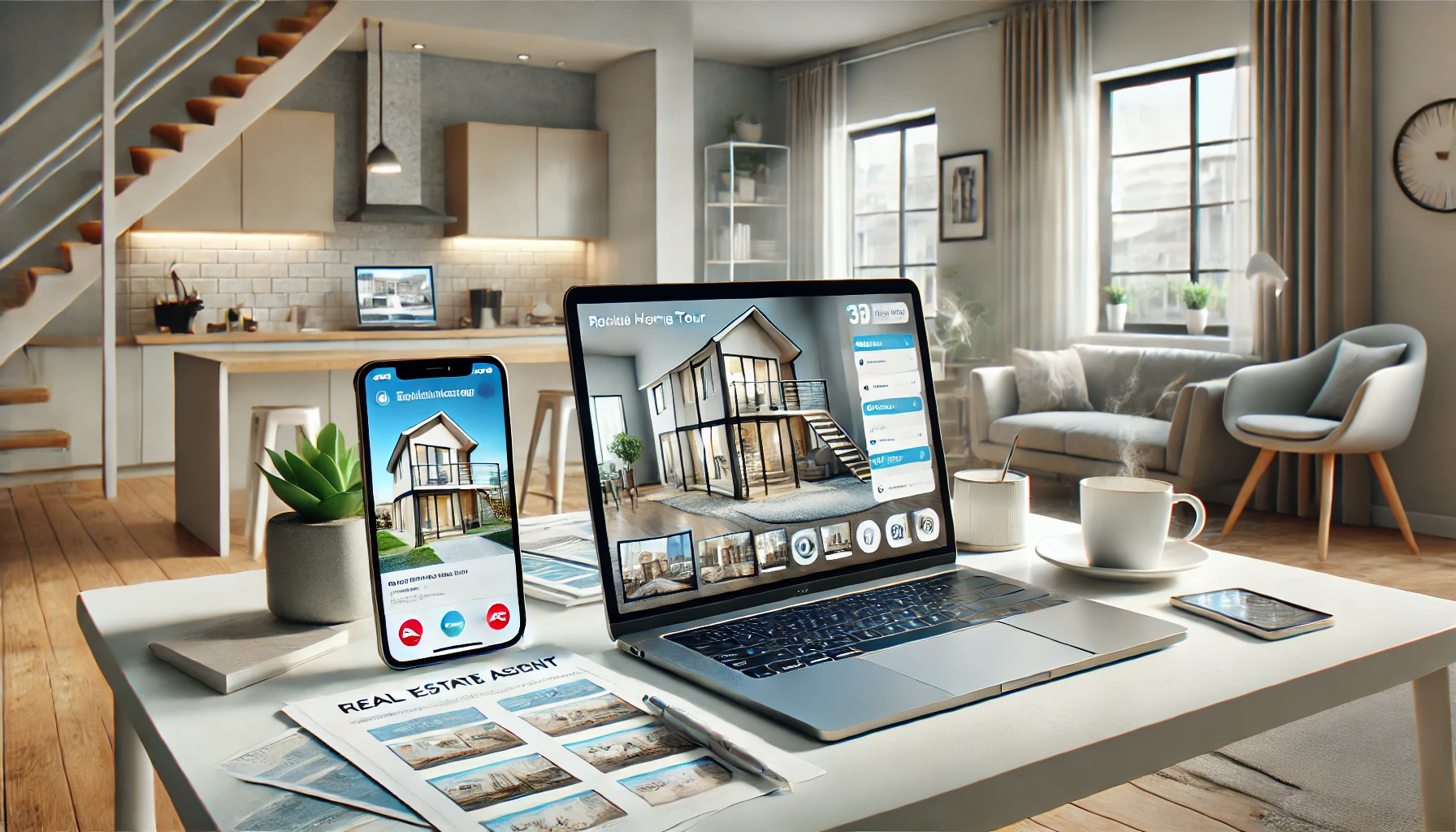
Remote services rely heavily on the quality of visual data. AgentWise integrates 8K-resolution 3D spatial mapping and digital twin technology. This allows potential buyers to navigate a property with millimeter-level accuracy. In 2026, these are not just static images; they are interactive environments where users can measure walls for furniture, simulate different lighting conditions based on the time of year, and even view "under-the-skin" structural data provided by infrared scanning during the inspection phase.
2. The Integrated Secure Data Room
In any real estate transaction, the "paper trail" is the most critical element. AgentWise provides a secure, encrypted environment where all disclosures, title documents, tax records, and inspection reports are housed. This environment uses a permission-based access system, ensuring that sensitive financial data is only visible to verified parties, such as mortgage lenders and escrow officers.
3. AI-Enhanced Valuation and Market Analytics
One of the primary risks of remote buying is the "valuation gap"—the difference between the perceived value and the actual market worth. AgentWise utilizes real-time API feeds from local municipal records and recent neighborhood sales (comps) to provide an AI-driven valuation. This model factors in localized trends, such as upcoming infrastructure projects or changes in zoning laws, giving the remote user a level of insight that previously required months of local residency to acquire.
Eligibility and Prerequisites for Using Remote Services
While AgentWise simplifies the process, certain prerequisites must be met to ensure a smooth remote transaction. These requirements protect both the buyer and the seller from fraud and procedural errors.
- Verified Digital Identity: Users must possess a verified digital ID that complies with the latest 2026 cybersecurity standards. This often involves multi-factor authentication (MFA) and biometric verification to facilitate legally binding digital signatures.
- Financial Pre-Approval: For buyers, a digital "Proof of Funds" or a pre-approval letter from a recognized financial institution must be uploaded to the AgentWise portal before making an offer.
- Jurisdictional Compliance: Real estate laws vary by region. Users must ensure that the specific state or country where the property is located recognizes Remote Online Notarization (RON). Most US states and many international hubs have fully adopted these standards by 2026, but some local counties may still require specific physical filings.
- Connectivity Requirements: Because the platform utilizes high-bandwidth 3D tours and live video consultations with local inspectors, a stable, high-speed internet connection is essential for the "walkthrough" phase of the service.
Step-by-Step Guide to a Remote Real Estate Transaction
Navigating a remote sale through AgentWise follows a structured sequence designed to minimize risk and maximize transparency.
Phase 1: Onboarding and Agent Matching
The process begins with the "Agent-Wise" matching algorithm. Users are paired with a local specialist who serves as their physical representative. This agent is not just a salesperson but a "field technician" who facilitates physical access for inspectors and captures additional on-site data that automated systems might miss.
Phase 2: Virtual Due Diligence
Once a property is identified, the virtual due diligence begins. This involves reviewing the 3D digital twin and accessing the secure data room. Users should pay close attention to the "Property Health Report," a standard document in 2026 that aggregates data from smart home sensors, historical repair records, and environmental risk assessments.
Phase 3: The Digital Offer and Negotiation
Negotiations are conducted through the AgentWise messaging and offer management system. This ensures a time-stamped, unalterable record of all bids and counter-offers. The platform automatically calculates the "net sheet" for sellers and the "total cost of acquisition" for buyers, including taxes, fees, and projected closing costs in real-time.
Phase 4: Remote Inspection and Appraisal
A local professional performs the physical inspection, but the remote buyer "attends" via a live-streamed 360-degree camera feed. The buyer can direct the inspector to look at specific areas of concern, such as the attic or the foundation. The resulting report is instantly digitized and uploaded to the platform.
Phase 5: Digital Closing and Escrow
The final step involves the execution of closing documents via a secure video session with a digital notary. Funds are transferred through integrated escrow services—often utilizing instant payment rails—to ensure that the deed is transferred only when the financial obligations are satisfied.
Comparison of Service Models: Remote vs. Traditional
| Feature | AgentWise Remote Services | Traditional Real Estate |
|---|---|---|
| Physical Presence | Not required; managed via portal | Required for tours and closing |
| Time to Close | Average 14–21 days | Average 30–45 days |
| Documentation | Centralized digital data room | Physical folders and email chains |
| Inspection | Live-streamed with 3D mapping | In-person attendance preferred |
| Notarization | Remote Online Notarization (RON) | In-person signing |
| Geographic Reach | Global/Unlimited | Limited to local vicinity |
| Transparency | Real-time audit trails | Dependent on agent updates |
Cost Structures and Investment Considerations
Remote real estate services typically operate on a different fee structure than traditional brick-and-mortar brokerages. Because AgentWise reduces the need for physical office space and manual administrative labor, some of these savings are passed on to the consumer, though there are specialized costs associated with the technology.
- Platform Access Fees: Users may pay a flat platform fee that covers the 3D mapping, data room hosting, and secure identity verification.
- Service Commissions: While traditional 5-6% commissions still exist in some markets, many remote-first agencies in 2026 have moved toward a tiered flat-fee model or a reduced commission (e.g., 3-4%) because the agent's time is spent more efficiently.
- Technology Surcharges: Specific high-end services, such as drone-based boundary surveys or infrared structural analysis, may be billed as add-ons.
- Remote Closing Fees: Digital notary services and secure wire transfer fees are typically standard, though often lower than the "courier fees" associated with physical closings.
Managing Risks and Troubleshooting Common Issues
Despite the technological advancements of 2026, remote transactions are not without challenges. Understanding these risks is crucial for any user of the AgentWise system.
Wire Fraud and Cybersecurity
The most significant risk in any digital transaction is wire fraud. AgentWise mitigates this by using "closed-loop" financial systems where banking details are never sent via email. Users should never follow wiring instructions received outside of the secure AgentWise portal. If a discrepancy arises, the transaction should be paused immediately until voice-and-visual verification is performed with the escrow officer.
Hidden Physical Defects
While 3D tours are comprehensive, they cannot convey smells (e.g., mold, pet odors) or subtle environmental noises (e.g., a nearby highway). To troubleshoot this, AgentWise includes a "Sensory Audit" in its premium inspection package, where local agents use calibrated sensors to detect air quality and decibel levels, providing a quantitative report on the home's "sensory environment."
Connectivity and Software Lag
In some rural areas, uploading high-resolution 3D data can be slow. If the virtual tour is lagging, users are advised to switch to the "low-bandwidth" 2D photo mode or request a recorded video walkthrough from their local representative.
The Future of Remote Agency: Beyond 2026
As we look past 2026, the integration of blockchain for title deeds is expected to become the universal standard, further simplifying the AgentWise workflow. The "Agent-Wise" philosophy—prioritizing transparency, data, and remote accessibility—is set to expand into commercial real estate and long-term property management, creating a seamless lifecycle for property ownership that begins and ends in the digital realm.
For those looking to enter the market, the transition to remote services is no longer a futuristic option but a current necessity. By following the protocols established in this guide, buyers and sellers can navigate the complexities of the 2026 real estate market with confidence, security, and unprecedented efficiency.
Frequently Asked Questions
Can I legally close on a house without ever visiting the property?
Yes, in most jurisdictions in 2026, Remote Online Notarization (RON) laws allow for the legal transfer of property without physical presence. AgentWise facilitates this by connecting you with a certified digital notary and ensuring all documents meet local statutory requirements. However, you should always confirm that the specific county or municipality where the property is located accepts electronic deed recordings.
How does AgentWise verify the accuracy of the 3D virtual tours?
AgentWise uses a "Timestamp and Verifier" protocol. Every 3D scan is time-stamped and cross-referenced with the property’s current condition by a third-party field agent. If a seller attempts to use old scans to hide recent damage, the discrepancy is flagged during the mandatory physical inspection phase, protecting the buyer from "digital staging" fraud.
What happens if the technology fails during the closing process?
The AgentWise platform includes a "Fail-Safe Protocol." If a secure video link or digital signature platform experiences an outage during closing, the transaction is "frozen" in its current state. No funds are moved until the connection is re-established and a fresh biometric verification is performed. In extreme cases, a local backup notary can be dispatched to complete the signing manually.
Are remote real estate services more expensive than traditional ones?
Generally, no. While there are costs associated with the digital infrastructure (such as 3D mapping and secure data hosting), the overall cost is often lower due to the reduction in travel, physical document shipping, and administrative overhead. Many remote-first brokerages offer more competitive commission rates or flat-fee structures compared to traditional firms.
How do I handle the keys and physical possession of a remote property?
AgentWise integrates with smart-lock technology. Upon the successful recording of the deed and release of funds, the seller’s access is revoked, and a unique digital key code is generated for the buyer. For properties without smart locks, the local "field agent" or a secure courier service manages the delivery of physical keys to the buyer’s current location or a designated local representative.
Recommended Next Actions
To begin your journey with remote real estate services, start by creating a verified profile on the AgentWise platform. Ensure your digital ID is updated to the current 2026 standards and consult with a financial advisor to secure your digital "Proof of Funds." Once onboarded, schedule a consultation with an "Agent-Wise" specialist to define your geographic search parameters and begin viewing properties through the immersive 3D interface.