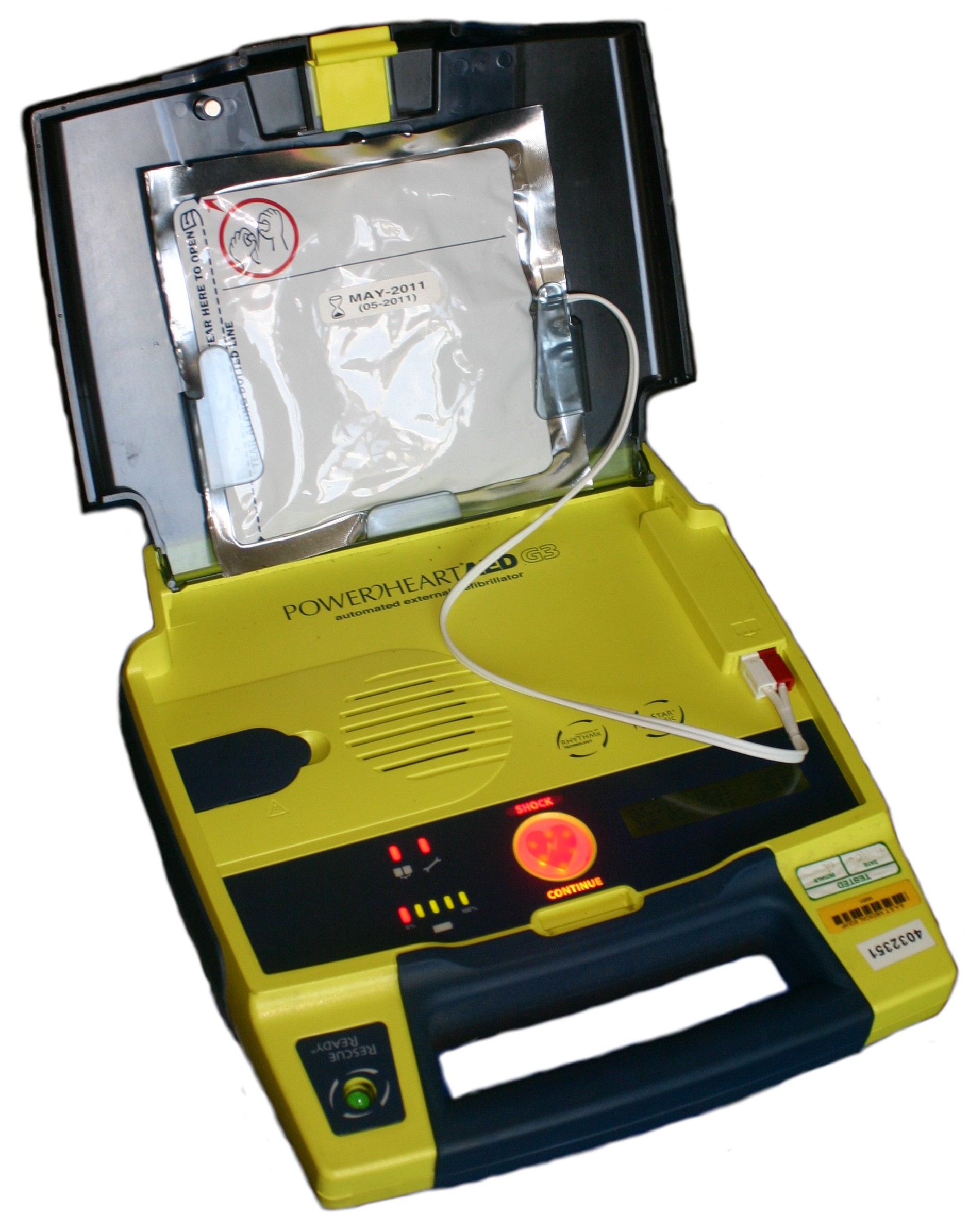
The HeartSine Samaritan PAD 500P (commonly referred to as the AED 500) is a sophisticated semi-automatic external defibrillator designed to provide both life-saving shocks and real-time clinical feedback during a cardiac emergency. Its primary innovation is the CPR Advisor technology, which uses an Impedance Cardiogram (ICG) to measure the effectiveness of chest compressions, ensuring that responders provide high-quality CPR alongside defibrillation.
As of 2026, the HeartSine Samaritan PAD 500P remains a cornerstone in the public access defibrillation (PAD) market. While many basic AEDs focus solely on delivering an electrical charge to stop an arrhythmia, the 500P addresses the critical reality that even the most effective shock often requires high-quality cardiopulmonary resuscitation (CPR) to ensure patient survival. This device is engineered for use by individuals with varying levels of training, from workplace safety officers to the general public, and even professional medical responders.
Understanding the HeartSine Samaritan PAD 500P
The HeartSine Samaritan PAD 500P is manufactured by HeartSine Technologies, a division of Stryker. The "500" designation within the Samaritan line indicates its advanced feedback capabilities. Unlike its siblings, the 350P (manual shock) and the 360P (fully automatic shock), the 500P is specifically designed to solve the "quality of CPR" problem.
Studies by the American Heart Association (AHA) and the International Liaison Committee on Resuscitation (ILCOR) consistently show that the quality of chest compressions is a leading determinant of survival in out-of-hospital cardiac arrest (OHCA). The 500P uses advanced sensors to tell the rescuer if their compressions are deep enough and fast enough, effectively coaching them through the most physically demanding part of a rescue.
Core Value Proposition
The central challenge in a cardiac emergency is the "panic factor." Rescuers often fail to push hard enough or fast enough due to stress. The 500P mitigates this by providing verbal and visual cues such as "Push harder," "Push faster," or "Good compressions." This real-time guidance transforms a passive device into an active coaching tool.
Technical Specifications and Performance Metrics
The 500P is built on a platform of portability and ruggedness. In 2026, it continues to be one of the lightest and smallest devices available, making it ideal for environments where space is a premium, such as corporate offices, airplanes, or light commercial vehicles.
| Feature | Specification Details |
|---|---|
| Weight | 1.1 kg (2.4 lbs) including battery and pads |
| Dimensions | 20 cm x 18.4 cm x 4.8 cm |
| Waveform | Self-Compensating Output Pulse Envelope (SCOPE) Biphasic |
| Energy Sequence | Adult: 150J, 150J, 200J; Pediatric: 50J (fixed) |
| IP Rating | IP56 (Highest industry rating for dust and water protection) |
| CPR Feedback | ICG-based real-time force and rate feedback |
| Operating Temp | 0°C to 50°C (32°F to 122°F) |
| Data Storage | 90 minutes of ECG and event recording |
SCOPE Waveform Technology
The 500P utilizes the proprietary SCOPE (Self-Compensating Output Pulse Envelope) biphasic waveform. This technology automatically optimizes the shock pulse based on the patient's specific impedance. Because every human body has a different electrical resistance (based on weight, chest size, and skin moisture), a one-size-fits-all shock is often less effective. SCOPE assesses this resistance in milliseconds and adjusts the energy envelope to ensure the heart receives the optimal therapeutic dose.
The CPR Advisor Technology: A Critical Differentiator
The standout feature of the AED 500 series is the Impedance Cardiogram (ICG). To understand why this matters, one must compare it to other AEDs on the market. Most AEDs that offer CPR feedback use an accelerometer—a small puck or sensor placed on the patient's chest that measures how far the chest is moving down.
How ICG Works
The HeartSine 500P does not use an external puck. Instead, it measures the electrical impedance of the chest via the defibrillation pads themselves. When a rescuer pushes on the chest, the volume of blood in the heart and the distance between the pads change. The 500P analyzes these minute changes in electrical conductivity to determine if the heart is being physically compressed enough to circulate blood.
This approach offers two major advantages:
- Surface Independence: Accelerometers can be fooled if the patient is on a soft surface, such as a mattress or a stretcher. The accelerometer measures the movement of the sensor, but if the mattress is absorbing the force, the chest isn't actually being compressed. The ICG in the 500P measures the actual change in the chest cavity, providing more accurate feedback regardless of the surface.
- Simplified Workflow: Rescuers do not need to worry about an extra sensor or "puck." They simply place the two standard pads, and the device begins its analysis.
Design, Durability, and Environmental Resilience
The 500P is designed for harsh environments. Its IP56 rating is among the highest in the industry. The "5" indicates protection against dust ingress that could interfere with operation, while the "6" indicates protection against high-pressure water jets from any direction.
This level of durability makes the device suitable for:
- Construction Sites: Where dust and debris are constant.
- Marine Environments: Such as yachts, ferries, or coastal lifeguarding stations where salt spray is a risk.
- Public Parks and Stadiums: Where the device may be exposed to rain or high humidity.
The physical design is also highly intuitive. It features a simple two-button interface: a green On/Off button and an orange Shock button. By minimizing the number of buttons, HeartSine reduces the cognitive load on a rescuer who may be experiencing a high-stress "fight or flight" response.
The Pad-Pak System: Integrated Maintenance Strategy
One of the most praised features of the Samaritan PAD series is the Pad-Pak. In most AEDs, the battery and the electrode pads are separate components with different expiration dates. This often leads to situations where an AED is non-functional because the battery is expired even though the pads are new, or vice versa.
Benefits of the Integrated Cartridge
HeartSine solved this by combining the battery and the pads into a single, user-replaceable cartridge called the Pad-Pak.
- Single Expiration Date: Owners only need to track one date for maintenance.
- Four-Year Life: Both the battery and the pads are rated for a four-year shelf life from the date of manufacture.
- Reduced Total Cost of Ownership (TCO): Because you are only replacing one item every four years, the administrative burden and long-term costs are often lower than competing models.
- Pediatric Consideration: For patients under 8 years of age or 25kg (55 lbs), a specific Pediatric Pad-Pak is available. This cartridge automatically signals the AED to reduce the energy output to 50 Joules, ensuring safety for smaller children.
Comparative Analysis: 500P vs. Other Samaritan Models
Choosing the right model within the HeartSine ecosystem depends on the intended user and environment.
| Model | Operation | CPR Feedback | Best For |
|---|---|---|---|
| Samaritan 350P | Semi-Automatic | Metronome only (rate) | Budget-conscious locations with trained staff. |
| Samaritan 360P | Fully Automatic | Metronome only (rate) | Public areas where rescuers may hesitate to press a button. |
| Samaritan 500P | Semi-Automatic | ICG-based Force/Rate | High-risk areas where CPR quality is paramount. |
The 500P is typically considered the "Gold Standard" of the line because it provides the most comprehensive coaching. While the 350P and 360P provide a metronome to help with the speed of compressions, only the 500P can tell the rescuer if they are pushing hard enough.
Compliance, Training, and Regulatory Considerations in 2026
By 2026, regulations regarding AED placement in commercial and public spaces have become more stringent. Many jurisdictions now mandate that AEDs used in public access programs must include some form of "CPR coaching" to meet modern safety standards.
Legal Protections
In most regions, "Good Samaritan" laws protect lay rescuers who use an AED in good faith. Because the 500P provides explicit instructions and will only deliver a shock if it detects a shockable rhythm (Ventricular Fibrillation or Pulseless Ventricular Tachycardia), the risk of user error leading to liability is extremely low.
Data Management
For organizations that must report clinical data following an event, the 500P stores up to 90 minutes of ECG data. This data can be downloaded using a custom USB data cable and the HeartSine Saver EVO software. This is crucial for medical directors and emergency services to review the quality of the resuscitation attempt and the patient’s cardiac response.
Troubleshooting and Long-Term Ownership
Maintaining an AED is a legal requirement in many areas. The 500P makes this process relatively simple through its status indicator light.
- The Green Blinking Light: A green light indicates the device has passed its weekly self-test and is ready for use.
- The Red Light or Chirping: If the device detects an issue (such as an expired Pad-Pak or a low battery), it will flash red and emit an audible chirp. This signals that the cartridge needs immediate replacement.
- Electrode Care: The pads are coated with a conductive gel that can dry out over time. It is vital to never open the Pad-Pak until a rescue is actually occurring, as exposing the pads to air will accelerate the drying process and render them useless.
Common Ownership Mistakes
- Neglecting the Expiration Date: Even though the Pad-Pak lasts four years, it is common for facility managers to forget to check the date. Implementing an AED management program or digital tracking system is highly recommended.
- Improper Placement: AEDs should be placed in highly visible, unobstructed locations, ideally near fire extinguishers or in main hallways. They should never be kept in locked offices or drawers.
- Training Gaps: While the device is designed for lay users, hands-on training with an AED trainer (a non-shocking version of the 500P) significantly improves response times and confidence during a real emergency.
Frequently Asked Questions
Can the 500P be used on a wet surface?
Yes. While you should never submerge the device, the 500P is designed to function even if the patient is lying on a damp surface or in the rain. Its IP56 rating ensures that water ingress will not stop the device from delivering a shock. However, the patient's chest should be wiped dry before applying the electrode pads to ensure proper adhesion and conductivity.
Does the 500P work on infants?
The 500P can be used on infants and children under 8 years old, but it requires the Pediatric Pad-Pak (pink cartridge). This cartridge reduces the energy level to 50 Joules. If a Pediatric Pad-Pak is unavailable, some clinical guidelines suggest using adult pads if it is the only option, but the manufacturer's official stance is to use the pediatric-specific cartridge for patients under 25kg.
How often does the battery need to be replaced?
The battery is part of the Pad-Pak cartridge and must be replaced every four years, or after every clinical use. Even if the device was only turned on for a few minutes and no shock was delivered, the pads have been compromised by being opened, and the battery may have been depleted. The entire Pad-Pak should be replaced after any emergency event.
Does the device require professional calibration?
No. The HeartSine 500P performs comprehensive self-tests every week. These tests check the battery levels, the integrity of the pads, and the internal circuitry. As long as the status indicator is blinking green, the device does not require manual calibration or professional servicing.
Can I travel with the AED 500P on an airplane?
Yes. The 500P uses a Lithium Manganese Dioxide battery which is generally permitted for air travel under FAA and IATA regulations for portable electronic medical devices. However, it should be carried as a carry-on item rather than checked luggage to ensure it remains in a climate-controlled environment and is accessible if needed during the flight.
Final Recommendation for 2026
For any organization or individual looking to invest in a defibrillator in 2026, the HeartSine Samaritan PAD 500P represents a high-value balance of durability, size, and clinical intelligence. Its unique ICG-based CPR feedback remains one of the most reliable methods for ensuring that a rescuer—regardless of their experience level—is providing the life-sustaining chest compressions necessary to make defibrillation successful. If your environment is one where rescuers might be untrained or where high-stress conditions are likely, the coaching provided by the 500P is a vital safety net that can significantly improve survival outcomes.