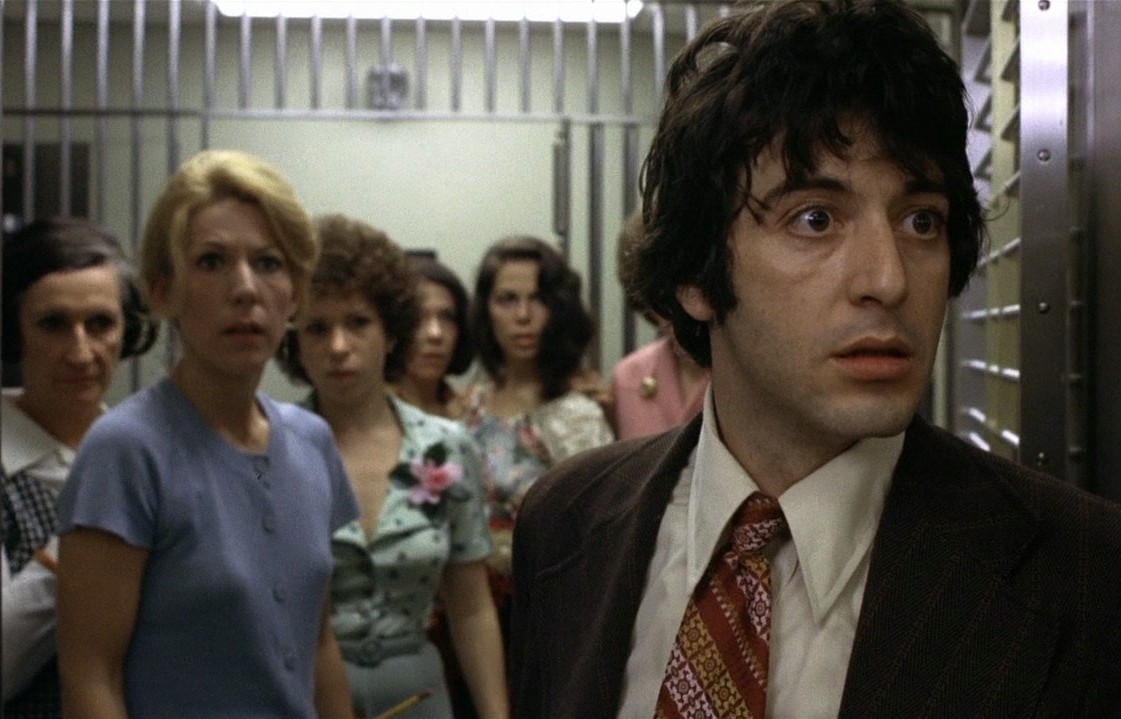
Sidney Lumet’s 1975 masterpiece Dog Day Afternoon relies heavily on its gritty, lived-in realism, a quality anchored entirely by its legendary ensemble cast. Led by Al Pacino and John Cazale, the film features a meticulously chosen group of character actors who brought authenticity to the chaotic Brooklyn bank robbery inspired by a true story.
Introduction to the Ensemble of Dog Day Afternoon
Released in 1975 and directed by Sidney Lumet, Dog Day Afternoon stands as a high-water mark of 1970s American cinema. The film dramatizes the botched 1972 robbery of a Chase Manhattan branch in Brooklyn by John Wojtowicz and Salvatore Naturile. Screenwriter Frank Pierson and Lumet understood that the picture’s success depended on more than just its two leads; it required a living, breathing ecosystem of frightened bank tellers, volatile hostages, weary police officers, and an unpredictable crowd.
The casting process blended rising stars of the New Hollywood movement with seasoned theatrical veterans and real-life personalities. This deliberate mix erased the boundary between fiction and documentary-style observation. Examining the actors in Dog Day Afternoon reveals how brilliant casting elevates a tense hostage thriller into a profound social commentary on media consumption, marginalization, and human desperation.
The Masterminds: Al Pacino and John Cazale
At the core of the narrative are the two deeply flawed, desperate bank robbers whose amateurish plan quickly unravels into a media circus.
Al Pacino as Sonny Wortzik
Fresh off his iconic performances in The Godfather and The Godfather Part II, Al Pacino delivered one of the defining performances of his career as Sonny Wortzik (modeled after John Wojtowicz). Sonny is high-strung, sweating profusely under the blistering New York heat, yet surprisingly empathetic. He commands the bank with a mix of erratic authority and unexpected charm, famously whipping the gathered crowd into a frenzy with chants of "Attica!"
Pacino’s performance relies on constant physical movement and emotional volatility. He manages to make a desperate criminal into a deeply sympathetic figure driven by a desire to pay for gender-affirming surgery for his partner, Leon.
John Cazale as Sal Naturile
John Cazale reunites with his Godfather co-star Pacino to play Salvatore "Sal" Naturile, the younger, quieter, and far more lethal co-conspirator. Cazale, one of the most uniquely gifted character actors in film history, brings a haunting vulnerability to Sal.
Unlike Sonny, who tries to negotiate and manage the media, Sal is silent, brooding, and terrifyingly unpredictable, clutching his rifle with a dead-eyed stare. Sal's famous line—stating that if he wants to go on a trip, he wants to fly to "Wyoming"—adds a tragicomic innocence to a young man utterly unequipped for the violent reality he has stepped into.
Inside the Vault: The Hostages and Bank Tellers
The tension of Dog Day Afternoon is largely contained within the claustrophobic walls of the First Brooklyn Savings Bank. The interactions between the robbers and their captives create a psychological pressure cooker.
Chris Sarandon as Leon Shermer
Chris Sarandon earned an Academy Award nomination for Best Supporting Actor for his breakout role as Leon Shermer, Sonny’s suicidal partner. Leon’s introduction late in the film shifts the entire dramatic weight of the story.
Sarandon plays Leon with a fragile, heartbreaking exhaustion. The extended telephone conversation between Sonny and Leon inside the bank is a masterclass in screenwriting and acting, laying bare the societal pressures, family rejection, and emotional agony of the characters.
Penelope Allen as Sylvia
Penelope Allen plays Sylvia, the head teller who maintains a steely, protective composure over her staff despite having a shotgun barrel pointed at her. Allen grounds the hostage scenes with quiet dignity. Her interactions with Sonny show a strange evolution from absolute terror to a complex Stockholm-syndrome-adjacent pragmatism.
Supporting Bank Staff
- Carol Kane as Jenny: Playing the young, terrified teller who suffers an asthma attack, Kane brings an authentic panic to the early scenes of the heist.
- Judith Malina as Mrs. Wortzik: The legendary co-founder of The Living Theatre portrays Sonny’s overbearing, emotionally complex mother, whose confrontation with her son adds deep psychological context to his life choices.
- Susan Peretz as Angie: Playing Sonny’s legal wife, Peretz provides a raw, loud, and heartbreaking look at the collateral damage left behind by Sonny's chaotic existence.
Law Enforcement and Authority Figures
While the bank is filled with emotional chaos, the police perimeter outside is managed by professionals struggling to maintain order in a public relations nightmare.
Charles Durning as Detective Eugene Moretti
Charles Durning plays Detective Moretti, the primary negotiator who sweatingly attempts to reason with Sonny. Durning plays Moretti not as a cardboard villain, but as a weary civil servant trying to keep everyone alive. His rapport with Pacino feels authentic, built on mutual exhaustion and a strange, grudging respect.
James Broderick as Agent Sheldon
James Broderick portrays FBI Agent Sheldon, who arrives to take tactical command from the local police. Broderick brings a chilling, bureaucratic coldness to the role. Unlike Moretti, who treats Sonny like a human being with grievances, Sheldon views the situation strictly as a tactical problem to be neutralized, representing the impersonal machinery of the state.
Cast Comparison Matrix
To understand how the ensemble cast functions across different spheres of the film, examine the breakdown of key roles, their character motivations, and their narrative functions below:
| Actor | Character Name | Role / Faction | Key Narrative Function |
|---|---|---|---|
| Al Pacino | Sonny Wortzik | Bank Robber (Leader) | Drives the narrative momentum, balances erratic crime with human vulnerability. |
| John Cazale | Sal Naturile | Bank Robber (Accomplice) | Provides the quiet, unpredictable physical danger that escalates the tension. |
| Chris Sarandon | Leon Shermer | Partner to Sonny | Exposes the emotional and social stakes driving Sonny's desperate actions. |
| Charles Durning | Detective Moretti | Police Negotiator | Acts as the human bridge and sounding board for Sonny's demands. |
| Penelope Allen | Sylvia | Head Bank Teller | Grounds the hostage perspective with realism and quiet resilience. |
| James Broderick | Agent Sheldon | FBI Commander | Introduces cold bureaucratic authority and shifts the stakes toward tragedy. |
Cultural Impact and Method Acting Roots
The actors in Dog Day Afternoon were heavily influenced by the Method acting techniques championed by the Actors Studio in New York. Sidney Lumet allowed his cast significant room for improvisation, particularly in the chaotic crowd scenes and the early moments of the robbery.
Many background actors and minor characters were cast from New York’s deep pool of theatrical talent, lending an unmistakable authenticity to the street scenes. The crowds gathered outside the bank chanting "Sonny! Sonny!" were often real bystanders reacting to the film crew, blurring the line between fiction and reality in a way that presaged modern reality media.
Frequently Asked Questions
Who are the main actors in Dog Day Afternoon?
The primary stars of Dog Day Afternoon are Al Pacino, who plays the charismatic bank robber Sonny Wortzik, and John Cazale, who plays his volatile partner, Sal Naturile. They are supported by an acclaimed ensemble including Chris Sarandon, Charles Durning, and Penelope Allen.
Did Al Pacino and John Cazale appear in other films together?
Yes. Al Pacino and John Cazale shared a remarkably brief but iconic filmography together before Cazale's untimely death in 1978. They both appeared in The Godfather (1972), The Godfather Part II (1974), and Dog Day Afternoon (1975). Every feature film Cazale completed during his lifetime was nominated for the Academy Award for Best Picture.
Who played Sonny's partner in Dog Day Afternoon?
Chris Sarandon played Leon Shermer, Sonny Wortzik’s partner. Sarandon received an Academy Award nomination for Best Supporting Actor for his powerful, emotionally resonant performance.
Is Dog Day Afternoon based on a true story?
Yes. The film is based on the August 22, 1972, attempted robbery of a Chase Manhattan branch in Brooklyn by John Wojtowicz and Salvatore Naturile. The real-life events were originally detailed in a Life magazine article titled "The Boys in the Bank" by P.F. Kluge and Thomas Moore.
Why is the acting in Dog Day Afternoon praised so highly?
The performances are celebrated for their raw naturalism, intense psychological depth, and theatrical precision. Director Sidney Lumet rehearsed with the cast for weeks before filming, allowing the actors to build genuine chemistry and inhabit their working-class New York characters completely.
Final Recommendation
For cinephiles and aspiring filmmakers studying 1970s character work, watching Dog Day Afternoon with a focus on the ensemble performances is essential. Observe how actors like John Cazale convey immense tension through complete stillness, contrasting sharply with Al Pacino's kinetic, hyper-verbal energy. Pay close attention to how minor characters react in the background; every extra and supporting player maintains total commitment to the scene, establishing a masterclass in environmental world-building.