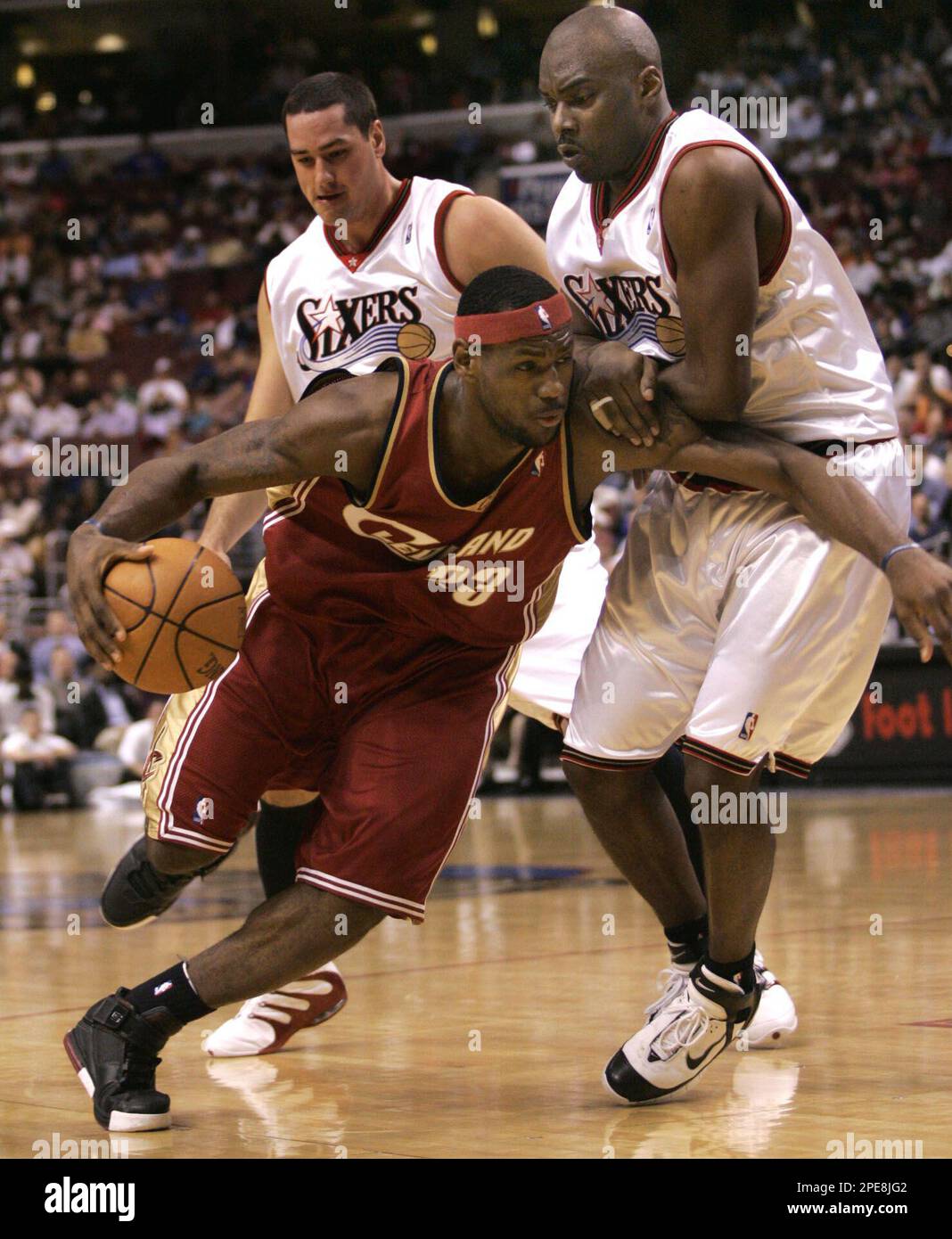
Aaron McKie’s tenure with the Philadelphia 76ers represents a pivotal era of transition, characterized by the grit of the 2001 Eastern Conference champions and the tactical shift toward team-oriented play. McKie served as the essential connective tissue between the superstar dominance of Allen Iverson and the necessary, selfless role-playing that defined the franchise’s most competitive years at the turn of the millennium. His influence transcended his statistics, manifesting in the locker room culture and his eventual role as a bridge to future organizational leadership.
Defining the Era: The 76ers at the Turn of the Millennium
To understand Aaron McKie’s role in the Philadelphia 76ers’ transition, one must first recognize the tactical landscape of the NBA in the late 1990s and early 2000s. The 76ers were a franchise in the midst of a cultural identity shift. They had moved away from the post-Charles Barkley era and were fully embracing the high-volume, perimeter-centric style spearheaded by Allen Iverson. However, a singular superstar approach often leads to predictable offensive limitations.
This is where the concept of "transition" becomes multifaceted. In basketball terms, the Sixers were undergoing a transition from an individual-focused team to a collective defensive unit that could sustain the rigors of a deep playoff run. McKie, acquired in 1997, became the prototypical "glue guy." He possessed the basketball IQ to understand exactly where the team needed to pivot, whether that meant initiating the offense when Iverson was trapped or locking down the opponent’s primary perimeter scoring option on the other end of the floor.
The Tactical Shift: More Than Just a Sixth Man
McKie’s impact was cemented during the 2000-2001 NBA season, a year in which he was awarded the NBA Sixth Man of the Year. This accolade was not merely a recognition of his scoring output—though he averaged a career-high 11.6 points per game that season—but a validation of his ability to stabilize the team. When McKie entered the game, the rhythm of the 76ers shifted from the frenetic pace favored by Iverson to a more disciplined, cerebral approach.
His role was to be the "on-court coach." Transitioning from a starter-level talent to a high-impact reserve requires a specific psychological makeup, one that prioritizes team success over personal accolades. McKie excelled in this capacity, acting as a secondary playmaker who could manipulate defenses with high-post passing and disciplined ball movement.
Bridging Generations: McKie’s Influence on and off the Court
The transition within the 76ers organization was also generational. Throughout his playing career, McKie witnessed the changing tides of NBA roster construction. As the league moved toward larger, more athletic wing players, McKie’s versatility allowed him to remain effective. He was never the fastest player on the court, yet his anticipation and defensive positioning allowed him to negate the advantages of younger, more physically imposing opponents.
Transitioning to Coaching and Mentorship
Following his playing retirement, McKie’s transition from the court to the bench mirrored his playing style: measured, educational, and focused on development. His tenure as an assistant coach and eventually head coach at the collegiate level—specifically his time at Temple University—saw him imparting the same philosophies he utilized during his Sixers days. He emphasized accountability, the necessity of the "extra pass," and the foundational importance of defensive pride.
For the Philadelphia 76ers, having a figure like McKie remain in the orbit of the city’s basketball culture provided a sense of continuity. He represented an era of hard-nosed, blue-collar basketball that remains the standard by which Philadelphia fans measure the success of their teams.
Comparative Impact: Then vs. Now
When evaluating the role of the modern utility player compared to the archetype McKie inhabited, several technical shifts become apparent. The following table contrasts the expectations of the 2000-era sixth man with the modern rotation player of 2026.
| Attribute | 2000-2005 Era (McKie Style) | 2026 Modern Era |
|---|---|---|
| Primary Skill | Mid-range IQ & Perimeter Defense | Three-point gravity & Spacing |
| Playmaking Role | Secondary ball-handler/Initiator | Floor spacer/DHO trigger |
| Defensive Focus | Man-to-man/Post-help | Switchability/Perimeter contain |
| Usage Rate | Moderate | Low (system-dependent) |
| Statistical Focus | Steals, Rebounds, Plus-Minus | Effective Field Goal %, Deflection rate |
The shift is undeniable. While McKie flourished in a system that valued his ability to manage the game, modern players are often asked to fit into highly specialized "3-and-D" roles. However, the value McKie brought—the ability to act as a shock absorber during a game’s momentum shifts—remains a highly sought-after commodity in the 2026 NBA landscape.
Managing the "Transition" Period: Challenges and Successes
The 76ers of the early 2000s faced the classic "contender's paradox": how to surround a singular, high-usage force with enough talent to remain viable without hindering that force’s effectiveness. The transition required delicate roster management.
- Roster Equilibrium: Ensuring that role players like McKie were not marginalized by the star’s gravity.
- Coaching Philosophy: Larry Brown’s demanding, perfectionist approach required players who could absorb criticism and adjust on the fly—a trait McKie possessed in abundance.
- External Pressure: The intense, often unforgiving nature of the Philadelphia media and fanbase necessitated players who could maintain emotional stability.
McKie was the perfect personality to bridge this gap. He was rarely rattled by the bright lights, nor was he intimidated by the high expectations placed upon the 2001 squad. His contribution was a stabilization mechanism; when the team hit a wall, he provided the structural integrity to prevent a collapse.
Common Misconceptions About the 2001-2003 Period
A frequent error in historical analysis of this era is the assumption that the 76ers’ success was purely the result of Iverson’s individual dominance. While Iverson was the engine, McKie was the transmission. Without his ability to distribute the basketball and mitigate defensive mismatches, the team’s offensive ceiling would have been significantly lower.
Another misconception involves the perception of the "transition" itself. It is often viewed as a singular event, but it was a multi-year process. The 76ers had to constantly reconfigure their frontcourt and backcourt to compensate for injuries and aging players. McKie’s consistency during these years allowed the coaching staff to focus their strategic efforts on newer additions, knowing that the bench production and secondary playmaking were secure.
Practical Lessons for Team Building
From a front-office perspective, the Aaron McKie tenure offers several evergreen lessons for modern team building:
- Invest in "High-IQ" Depth: Talent is essential, but basketball intelligence that understands system constraints is what wins tight playoff series.
- Value Chemistry over Raw Talent: The best teams are not necessarily those with the most points, but those that can best adapt to the opponent’s defensive adjustments.
- Cultivate Internal Continuity: Players like McKie, who understand the "culture of the house," are vital when integrating high-profile free agents or rookies.
Frequently Asked Questions
What was the defining characteristic of Aaron McKie’s playing style?
McKie was defined by his high basketball IQ and versatility. He acted as a "point-forward" when necessary, capable of reading defensive rotations and making the correct pass. His defense was characterized by anticipation and discipline rather than raw athleticism.
Why is the 2001 season considered the peak of this transition era?
The 2001 season marked the only time the Sixers reached the NBA Finals during that window. It was the culmination of a roster construction strategy that balanced Iverson’s scoring with a rugged, defensive-oriented supporting cast, perfectly personified by McKie winning Sixth Man of the Year.
How did McKie contribute to the team’s defensive identity?
He was a perimeter stopper. Because the team relied on Iverson to carry the offensive load, the perimeter players were expected to compensate by guarding the opposition's most dangerous wing players, a responsibility McKie shouldered regularly.
Did McKie’s role change significantly as his career progressed?
Yes, as he entered his later years with the 76ers, he shifted more into a veteran mentor role. He provided steady leadership while his physical ability to play heavy minutes diminished, yet his utility remained high due to his deep understanding of Larry Brown’s system.
What is the primary takeaway for fans looking back at this era?
The main lesson is the importance of team cohesion. The 2001 run demonstrated that when role players maximize their potential and accept their specific duties, a team can outperform the sum of its individual parts, regardless of the star power on the roster.
Moving Forward: The Enduring Legacy
The transition years of the Philadelphia 76ers, with Aaron McKie at the helm of the reserve unit, remain a masterclass in team construction. For fans and analysts looking back from 2026, the era serves as a reminder that the "stars and scrubs" model of roster building only works if the "scrubs"—or, more accurately, the role players—possess the tactical intelligence and self-awareness to make the system function.
As the league continues to evolve toward higher efficiency and greater perimeter versatility, the archetype of the steady, intelligent, and selfless veteran remains just as crucial as it was in 2001. Aaron McKie’s legacy is not measured by highlight-reel plays, but by the quiet, consistent excellence that turned a good team into an Eastern Conference champion. When building a contender today, the search for that "McKie-type" player remains a priority for every championship-caliber organization.