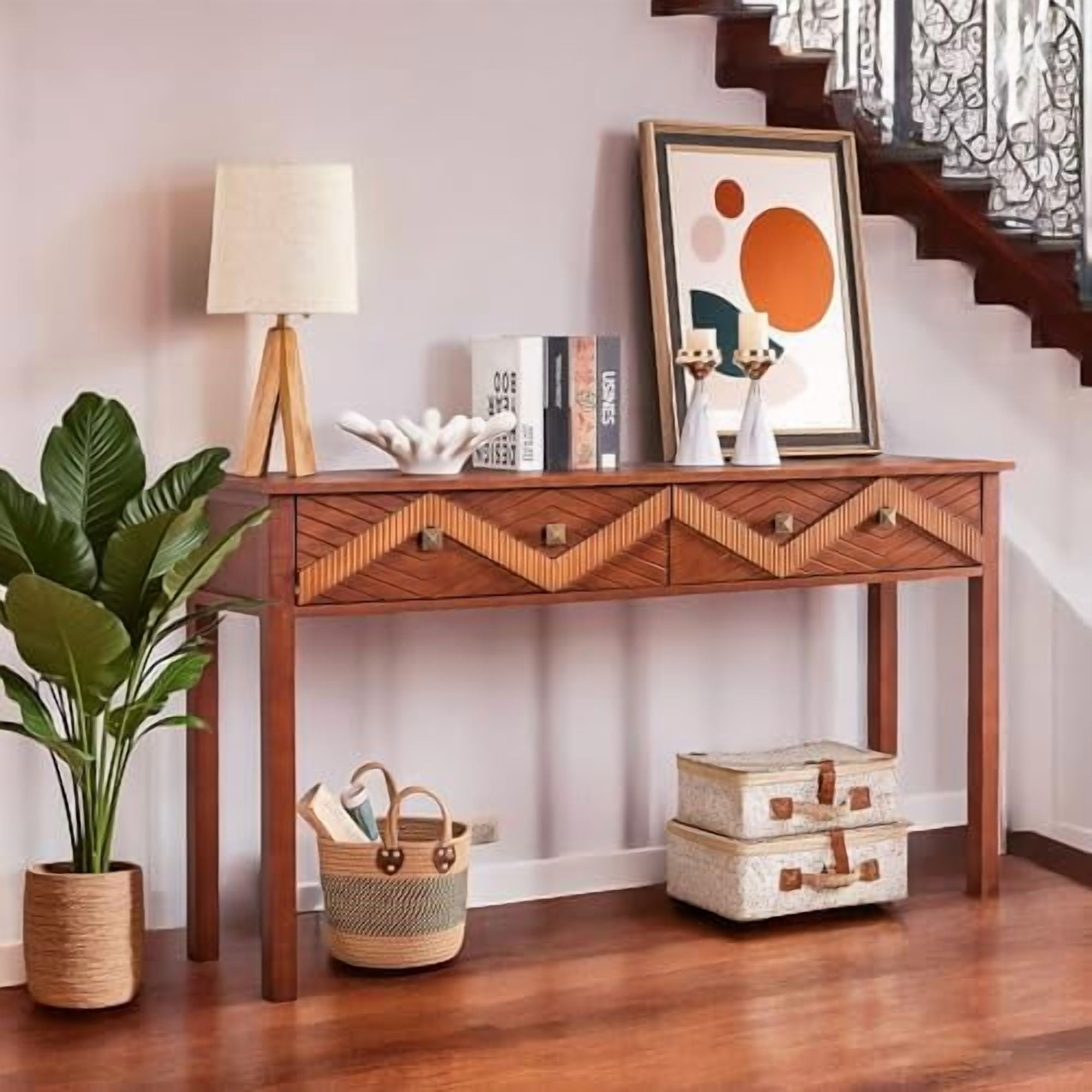
An 85-inch console table is a specialized oversized furniture piece designed to anchor large walls, support 75-to-85-inch televisions, or frame open-concept living areas. In 2026, these units prioritize sleek proportions, sustainable materials, and integrated technology to complement contemporary interior architecture and expansive floor plans while providing essential structural stability for their significant length.
The Role of the Extra-Long Console in Modern Architecture
Modern residential design in 2026 continues to favor open-concept floor plans and expansive "great rooms." As wall segments grow larger and home entertainment screens push past the 80-inch mark, standard 60-inch furniture often looks undersized and visually disconnected. The 85-inch console table serves as a critical "anchor" in these environments.
When a piece of furniture spans over seven feet, it stops being a mere accessory and becomes a foundational element of the room's layout. In a modern living context, the 85-inch length is specifically engineered to create a 1:1 or slightly wider ratio with the largest consumer televisions. This prevents the "top-heavy" look that occurs when a massive screen overhangs a shorter stand. Beyond the media room, these tables are utilized in long corridors or as "sofa backs" for extra-long sectional seating, providing a functional bridge between different living zones.
Technical Considerations: Structural Integrity and Sag Prevention
The primary technical challenge with an 85-inch console is managing the physical span. Gravity is the enemy of long furniture. Without proper engineering, a table of this length will experience "deflection"—a visible sagging in the center that can ruin the aesthetic and eventually lead to structural failure.
Load-Bearing Support Systems
For a modern aesthetic, many homeowners prefer a minimalist look with only four legs at the corners. However, a 7-foot span in wood or light metal generally requires a fifth or sixth support leg positioned in the center. In 2026, high-end manufacturers use internal steel sub-frames hidden within the wood or stone cabinetry to maintain a "floating" appearance without the need for center legs. When shopping, it is vital to check if the unit uses kiln-dried hardwoods or reinforced steel, as composite materials like standard MDF are highly prone to warping over such a long distance.
Weight Distribution
Modern living often involves heavy décor, such as large-format art books, stone sculptures, or high-end audio equipment. An 85-inch console must be rated for a static load of at least 150 to 200 pounds to be considered high-quality. This is especially true if the table is used as a media console. Even though modern TVs are lighter than their predecessors, the concentrated weight on the center of the span requires a tabletop thickness of at least 1.5 to 2 inches if unsupported by a frame.
Design Styles for 2026 Modern Living
"Modern" is a broad category, but for an 85-inch piece, three distinct sub-styles dominate the current market. Because of the sheer size of the table, the style must be chosen carefully to avoid overwhelming the room.
Mid-Century Modern (MCM) Influence
The MCM style remains popular in 2026 for its use of "tapered legs" and warm wood tones like walnut and teak. An 85-inch MCM console typically features sliding "tambour" doors or slatted fronts. This allows for infrared signals from remote controls to pass through while keeping electronics hidden. The horizontal emphasis of MCM design perfectly complements the length of an 85-inch unit.
Industrial Minimalism
This style focuses on the marriage of raw metal and reclaimed wood. In an 85-inch format, industrial consoles often feature blackened steel frames with a "live edge" wood top. These are particularly favored in urban lofts or homes with high ceilings, as the visual weight of the metal balances the expansive length of the table.
Scandi-Coastal
Characterized by light oaks, bleached woods, and clean white lines, this style aims to make a large piece of furniture feel "light." For an 85-inch console, this often involves "floating" designs that are wall-mounted (floating consoles). Wall-mounting a 7-foot table requires professional installation and heavy-duty French cleat systems to ensure the weight of the table and its contents do not pull the drywall away from the studs.
Comparison of Materials for Long-Span Consoles
| Material Type | Pros for 85-Inch Span | Cons for 85-Inch Span | Best Use Case |
|---|---|---|---|
| Solid Walnut/Oak | Exceptional natural strength; can be refinished; high resale value. | Very heavy; prone to expansion/contraction; most expensive. | High-end media rooms or formal entries. |
| Powder-Coated Steel | Zero risk of sagging; extremely durable; slim profiles possible. | Can feel "cold" or clinical; may resonate with speakers. | Industrial lofts or minimalist tech setups. |
| Natural Stone (Marble/Travertine) | Incredible visual impact; heat resistant for electronics. | Extremely heavy; requires reinforced flooring; brittle. | Showpiece entryways or luxury foyers. |
| Engineered Wood (High-Grade) | More affordable; resistant to warping; uniform finish. | Lower weight capacity; cannot be easily repaired if chipped. | Budget-conscious modern upgrades. |
Proportions and Styling: The Rule of Thirds
A common mistake when decorating an 85-inch console table is treating it like a standard-sized table. Because the surface area is so vast, a "less is more" approach is required to maintain a modern aesthetic.
- Vertical Balance: Use the "Rule of Thirds." One third of the table should feature a tall element (like a lamp or a tall vase), the middle third should be lower-profile (books or a tray), and the final third should have a medium-height object. This creates a rhythmic "wave" that leads the eye across the 7-foot span.
- Negative Space: Do not feel the need to cover every inch. In modern design, "negative space" (empty areas) is a deliberate choice that makes the items you do display look more intentional and curated.
- The TV Relationship: If the console is placed under a TV, ensure the table is at least 4 to 10 inches wider than the TV screen. An 85-inch console is the ideal partner for a 75-inch TV, providing about 5 inches of breathing room on either side.
Functional Integration: Cables and Connectivity
In 2026, a "modern" console is more than just a table; it is a hub for connectivity. An 85-inch span offers a unique opportunity to hide the clutter associated with modern living.
- Integrated Power Strips: Look for consoles that feature built-in USB-C ports and standard outlets. This is especially useful in entryways where the table serves as a "drop zone" for charging phones and tablets.
- Cable Channels: High-quality 85-inch units include "raceways" or hollow legs that allow cables to be routed from the tabletop down to the floor without being visible.
- Ventilation: If the console has cabinets to house gaming consoles or media servers, ensure there are perforated back panels or active cooling fans. The internal volume of an 85-inch cabinet can trap significant heat, which degrades electronics over time.
Placement Strategies in Different Room Types
The Open-Concept Room Divider
If your living room and dining room are one continuous space, placing an 85-inch console table behind a floating sofa is a professional-level design move. It creates a "boundary" without the need for a wall. In this scenario, the height of the console should be approximately 1 inch lower than the back of the sofa cushions.
The Grand Entryway
In a wide foyer, an 85-inch table provides a sense of scale that matches the architecture. Here, the focus is on "symmetry." Large-scale artwork or a massive mirror should be centered above the table to anchor the space.
The Home Office Sidebar
With the rise of hybrid work, many living rooms now incorporate office elements. An 85-inch console can double as a secondary "standing desk" or a wide storage unit for printers and office supplies, keeping the workspace integrated into the living environment rather than isolated.
Common Mistakes to Avoid
- Ignoring the Baseboard: Many 85-inch tables have straight legs that prevent them from sitting flush against the wall due to baseboard molding. Look for units with "baseboard notches" or "inset legs" to avoid a 1-inch gap behind the table.
- Overlooking Delivery Access: An 85-inch table is over 7 feet long. Before purchasing, measure your hallways, elevator depth, and door frames. Many modern apartment elevators cannot accommodate a fully assembled 85-inch unit.
- Incorrect Height for Usage: If you plan to use the console as a media stand, keep the height between 22 and 26 inches. If it is for an entryway or sofa back, 30 to 34 inches is the standard. Using a 34-inch "entryway" table for a large TV will result in a viewing angle that causes neck strain.
Frequently Asked Questions
Can an 85-inch console table hold an 85-inch TV?
Technically, yes, but it may not look aesthetically balanced. An 85-inch TV is typically about 74 to 75 inches wide. Placing it on an 85-inch console leaves roughly 5 inches of space on each side, which is the minimum recommended for a balanced look. If the TV's legs are at the very edges of the screen, ensure the console is deep enough to accommodate them safely.
How do I prevent a 7-foot wood console from sagging?
To prevent sagging, ensure the table has a center support leg or a hidden steel reinforcement frame. If you are building or commissioning a custom piece, use the Sagulator (a common woodworking tool) to calculate the "deflection" based on the wood species and thickness. Generally, a span over 60 inches requires structural support in the middle.
Is an 85-inch console too big for a small living room?
It depends on the "visual weight." A chunky, dark wood 85-inch sideboard might overwhelm a small room. However, a "leggy" mid-century design or a glass-topped console with a slim metal frame can actually make a small room feel larger by drawing the eye along a long, horizontal line, creating the illusion of more space.
What is the best height for an 85-inch console behind a sofa?
The gold standard for a sofa-back console is for the table to be 1 to 2 inches lower than the top of the sofa back. You should never see the back of the table from the front of the sofa, and the table should never be taller than the sofa, as this creates a clunky, disjointed silhouette.
Are wall-mounted (floating) 85-inch consoles safe?
They are safe only if installed into wall studs using heavy-duty hardware. Because an 85-inch table is heavy on its own, and will likely hold more weight, it must be anchored into at least 3 or 4 studs. Toggle bolts into drywall alone are insufficient for a piece of this magnitude and will eventually fail.
Final Recommendation
When selecting an 85-inch console table for a modern living space in 2026, prioritize structural engineering over pure aesthetics. Ensure the piece utilizes center support or steel reinforcement to handle the long span. For the most timeless look, choose a "leggy" silhouette in a natural hardwood like walnut or oak, which offers the durability required for such a large piece of furniture. Before finalizing your purchase, verify your delivery path and ensure the height aligns with your specific use case—whether it be media support, entryway décor, or a sofa-back anchor.