Securing the right agricultural loan requires partnering with a financial institution that understands the cyclical nature of farming, land values, and equipment depreciation. Whether you are purchasing acreage, upgrading heavy machinery, or managing seasonal cash flow, choosing the right lender can mean the difference between long-term operational stability and financial distress.
Choosing the right financial partner for an agricultural operation depends heavily on the scale of your farming business, whether you operate a small family farm or a massive commercial enterprise, and the specific type of financing you require. Agricultural lending is a specialized field that differs significantly from traditional commercial or consumer banking. Farmers and ranchers face unique variables—ranging from commodity price volatility and weather-dependent yields to long land-development cycles—that require flexible repayment schedules and deeply knowledgeable loan officers.
Navigating the landscape of agricultural lenders involves looking past standard interest rates to evaluate a bank’s understanding of rural economies, government-backed loan programs, and long-term asset management. This guide breaks down the essential criteria for evaluating agricultural lenders and examines top financial institutions known for supporting the farming community.
Understanding Agricultural Loans and Lender Types
Before evaluating specific institutions, it is vital to understand the primary categories of agricultural lenders and the financial products they offer. Agricultural loans generally fall into three distinct buckets: real estate loans for purchasing land and building infrastructure, operating loans for covering annual seed, fertilizer, and labor costs, and equipment loans for tractors, combines, and irrigation systems.
The agricultural lending market is served by three primary types of institutions:
- The Farm Credit System (FCS): A federally chartered network of borrower-owned lending institutions specifically created to serve agriculture and rural America.
- National and Regional Commercial Banks: Traditional banks with dedicated agricultural divisions that offer comprehensive commercial banking alongside specialized farm loans.
- Community Banks and Credit Unions: Local institutions deeply rooted in rural economies that often provide personalized service and flexible underwriting based on local relationships.
Understanding these categories helps producers identify which type of institution aligns best with their operational size, capital requirements, and need for localized expertise.
Key Criteria for Evaluating Agricultural Lenders
When comparing the best banks for agriculture loans, borrowers should look beyond headline interest rates. Agricultural financing involves long-term commitments and complex regulatory frameworks, making several qualitative and quantitative factors critical to the decision-making process.
1. Expertise in Government-Backed Programs
A premier agricultural lender should have deep proficiency in programs administered by the U.S. Department of Agriculture (USDA), specifically the Farm Service Agency (FSA). FSA guarantees and direct loans provide critical access to capital for beginning farmers, socially disadvantaged producers, and operations recovering from natural disasters. Lenders with Preferred Lender Program (PLP) or Certified Lender Program (CLP) status can process these applications significantly faster than banks with less federal program experience.
2. Flexible Repayment Structures
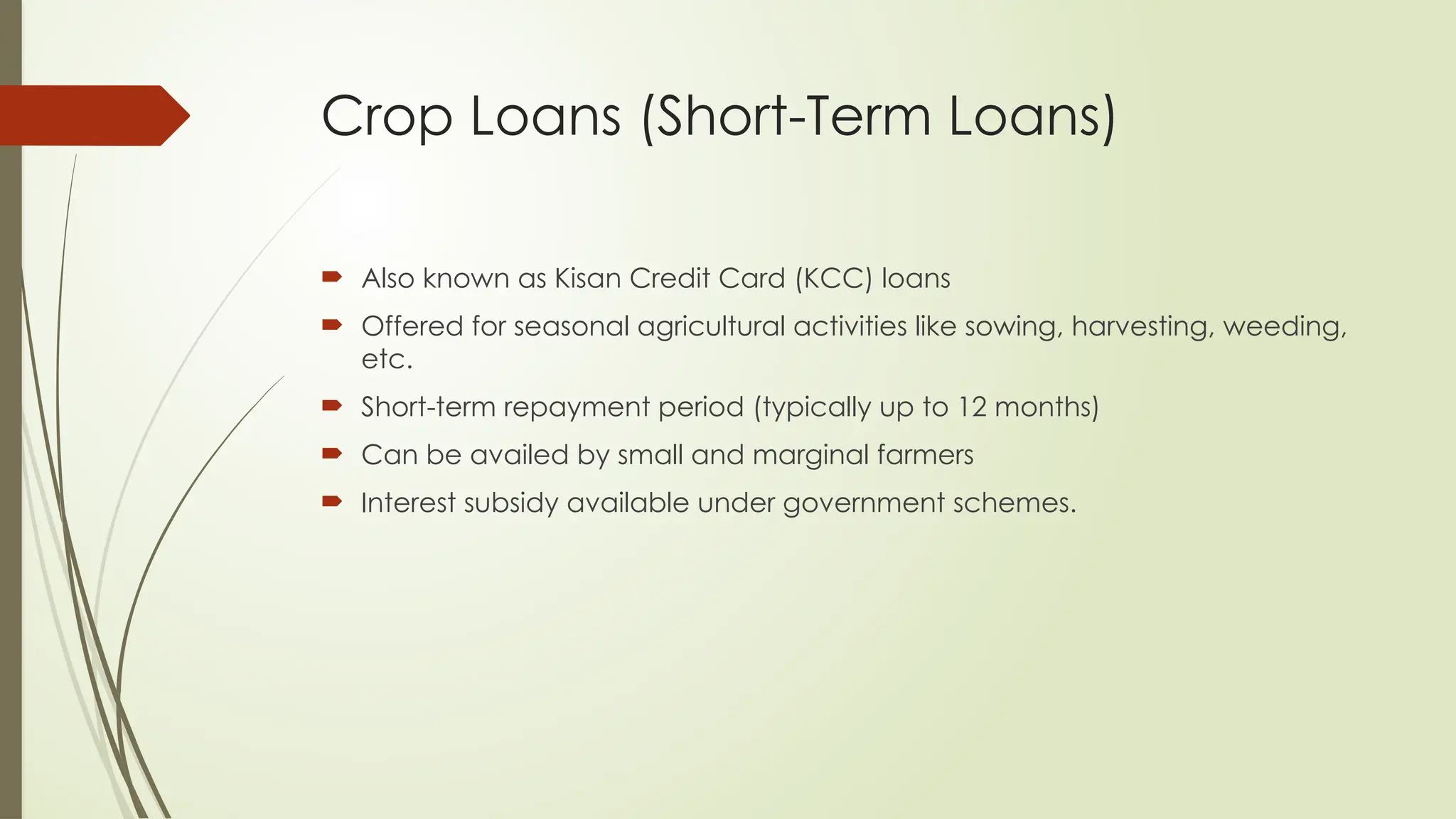
Farming is inherently seasonal. Unlike a retail business with steady monthly revenue, a crop farmer may only receive major income once or twice a year after harvest, while livestock producers face distinct market cycles. The best agricultural banks offer customized repayment schedules—such as annual or semi-annual installments rather than rigid monthly payments—to match cash flow realities.
3. Comprehensive Product Offerings
A strong agricultural banking partner should scale with your business. Look for institutions that provide a full suite of services, including real estate financing, operating lines of credit, equipment leasing, crop insurance partnerships, and treasury management tools designed for modern agribusinesses.
Overview of Top Institutions Supporting Agriculture
While hundreds of local banks and credit unions serve rural areas, several national networks and specialized systems stand out for their comprehensive agricultural lending portfolios. Below is an examination of leading institutions and systems recognized for supporting farm and ranch operations.
| Institution Type / Lender | Primary Strengths | Best Suited For | Key Loan Types Offered |
|---|---|---|---|
| Farm Credit System (AgFirst, CoBank, FCS America, etc.) | Deep rural focus, borrower-owned cooperative structure, specialized agricultural expertise. | All scales of farming, long-term land purchases, large commercial operations. | Real estate, operating lines, equipment loans, rural housing. |
| CoBank (Part of Farm Credit System) | Large-scale financing, agricultural cooperatives, rural infrastructure, and agribusinesses. | Large cooperatives, rural utilities, and major agribusiness supply chains. | Syndicated loans, capital expenditure financing, export credit. |
| Wells Fargo Agricultural Banking | Robust financial technology, large lending capacity, extensive economic research and commodity insights. | Mid-to-large commercial farms and complex agribusiness enterprises. | Working capital, equipment finance, real estate term loans. |
| MetLife Investment Management (Agricultural Finance) | Long-term institutional capital, deep expertise in permanent plantings (orchards, vineyards). | Large-scale permanent crop producers, major land-holding operations. | Long-term fixed-rate farm mortgages. |
| Rabobank / North American Partners | Global food and agribusiness focus, specialized industry research, supply chain finance. | Commercial producers, food processors, and international trade-oriented operations. | Agribusiness corporate finance, trade finance, real estate. |
| Local Community Banks | Highly personalized service, flexibility, deep ties to local rural economies. | Small-to-medium family farms, beginning farmers, local livestock operations. | Operating lines, local equipment loans, FSA-guaranteed loans. |
| Bank of America / Regional Commercial Banks | Broad commercial banking integration, treasury management, structured finance. | Diversified agricultural corporations and commercial agribusinesses. | Commercial credit lines, equipment leasing, asset-based lending. |
Detailed Breakdown of Leading Agricultural Lenders
The Farm Credit System
The Farm Credit System is not a single bank, but a nationwide network of customer-owned financial institutions. Because they are cooperatives, profits are often returned to borrowers through patronage dividends, effectively lowering the cost of borrowing over time.
- Advantages: Unmatched expertise in agricultural economics; flexible terms designed explicitly for agriculture; long-term commitment to rural communities even during economic downturns.
- Considerations: Membership requirements apply, and options for non-agricultural consumer banking may be limited compared to commercial megabanks.
Specialized Commercial Lenders (e.g., MetLife Agricultural Finance)
For large-scale operations, particularly those involving permanent plantings like orchards, vineyards, and timberland, institutional lenders like MetLife offer specialized long-term debt solutions.
- Advantages: Ability to structure very large, long-term fixed-rate loans; deep asset valuation expertise regarding specialty crops and high-value acreage.
- Considerations: Typically target larger commercial operations with substantial equity and established track records.
Regional and National Commercial Banks
Banks with dedicated agribusiness divisions bridge the gap between traditional commercial banking and specialized farming needs. Institutions that maintain specialized agricultural desks understand regional production challenges, such as water rights in the Western United States or Midwest corn and soybean market dynamics.
- Advantages: Comprehensive suite of financial tools, including sophisticated treasury management, merchant services, and wealth planning alongside farm loans.
- Considerations: Underwriting criteria can sometimes be rigid, relying heavily on strict corporate metrics rather than agricultural-specific benchmarks.
Preparing for Your Agricultural Loan Application
Securing financing requires rigorous preparation. Agricultural lenders evaluate risk through detailed historical data and forward-looking projections. To streamline the application process, producers should gather and prepare the following documentation:
- Financial Statements: Balance sheets (showing assets like land, livestock, and machinery against liabilities), income statements, and cash flow projections for the upcoming production cycle.
- Production Records: Historical yield data, livestock inventory records, and proof of past sales to demonstrate operational efficiency and management capability.
- Tax Returns: Usually three years of federal and state tax returns for the farming entity and all primary owners or partners.
- Business Plan: A clear outline of how the borrowed funds will be utilized, expected return on investment, and risk mitigation strategies (such as crop insurance or enterprise diversification).
- Environmental and Legal Documents: Deeds, leases, water rights documentation, and environmental compliance records (especially for livestock operations subject to waste management regulations).
Frequently Asked Questions
What is the difference between an operating loan and an agricultural real estate loan?
An agricultural operating loan is a short-term line of credit designed to cover annual production expenses, such as seed, fertilizer, fuel, feed, and labor, and is typically repaid when the harvest is sold or livestock is marketed. A real estate loan is a long-term mortgage used to purchase land, construct permanent buildings, or make major capital improvements, amortized over 10 to 30 years.
How do I qualify for a USDA Farm Service Agency (FSA) loan?
FSA loans target farmers who may not qualify for commercial credit alone, including beginning farmers and socially disadvantaged producers. Qualification generally requires a minimum of three years of farming or managerial experience, compliance with conservation regulations, and a sound business plan demonstrating repayment capacity.
Why should I choose a Farm Credit System institution over a traditional bank?
Farm Credit institutions are cooperatives owned by the borrowers themselves. Their sole legislative and operational mandate is to serve agriculture and rural communities. Consequently, their loan officers specialize exclusively in farm economics, and many institutions return a portion of their net earnings to borrowers through annual patronage dividends.
Can I get an agriculture loan if I am a beginning or part-time farmer?
Yes. Many lenders, particularly through FSA guaranteed programs and local community banks, offer specialized beginning farmer loan programs featuring lower down payment requirements and educational support. However, part-time farmers must usually demonstrate off-farm income or sufficient projected farm revenue to service the debt.
What factors do agricultural lenders look at when determining interest rates?
Lenders evaluate your debt-to-asset ratio, liquidity, credit score, historical profitability, collateral value, and overall economic conditions within your specific commodity sector. Fixed versus variable rate preferences and loan duration also directly influence the final interest rate.
Conclusion and Next Actions
Selecting the right bank for an agricultural loan requires balancing your specific operational scale, capital needs, and cash flow cycles with a lender's expertise. Begin by auditing your immediate and long-term financial goals—whether that means acquiring adjacent acreage, upgrading to precision-farming equipment, or securing predictable operating credit. Reach out to both a local Farm Credit association and a regional commercial bank with a dedicated agricultural desk to compare loan structures, interest rates, and repayment terms before committing to a multi-year financial partnership.