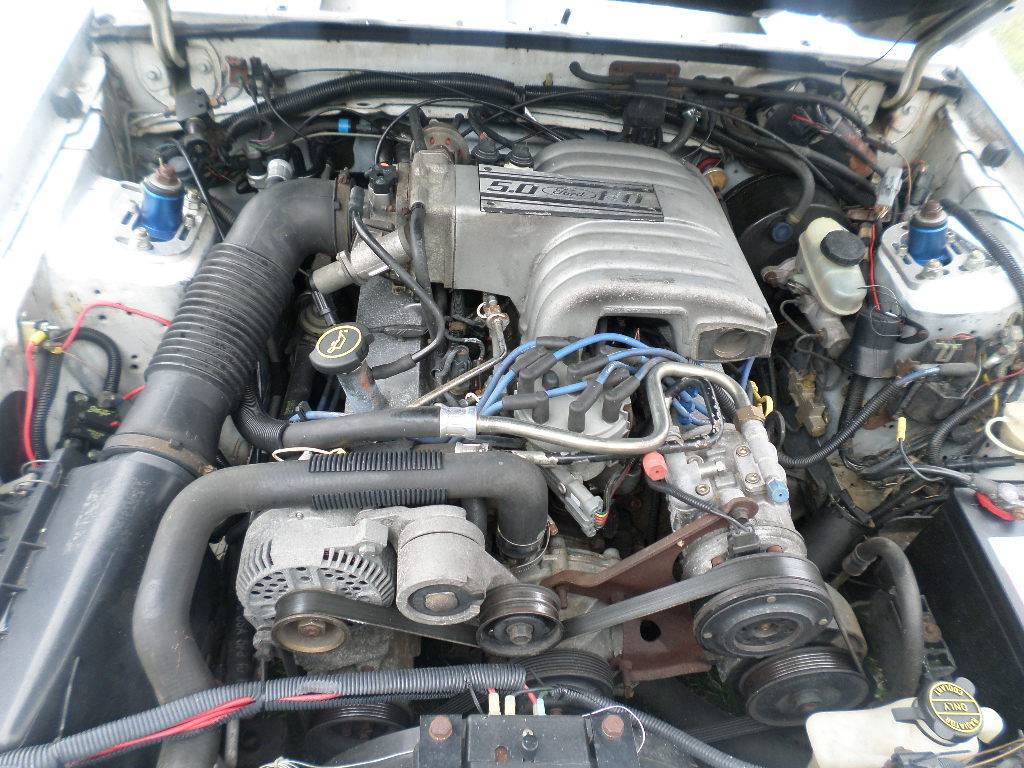
The Ford 5.0L V8 engine represents the performance heart of the Mustang, evolving from the 302 cubic-inch "Windsor" pushrod design of the 20th century to the sophisticated, dual-overhead-cam (DOHC) "Coyote" modular engine found in 2026 models. Modern iterations produce up to 500 horsepower and 418 lb-ft of torque, utilizing advanced technologies like dual-fuel injection and twin independent variable cam timing.
The Evolution of the 5.0 Mustang Engine
The "5.0" badge is more than a displacement marker; it is a cultural icon within the automotive world. However, the technical reality of the engine has shifted dramatically across two distinct architectures. To understand the specifications of a 5.0 Mustang engine, one must distinguish between the classic Small Block Ford (SBF) Windsor family and the modern Modular Coyote family.
Historically, the first 5.0 appeared in 1968, though it gained its legendary status during the Fox Body era (1979–1993). In 2011, Ford revived the 5.0 designation with the Coyote engine, a clean-sheet design that shared only the 100mm bore spacing with previous modular engines. As of 2026, the Coyote remains the primary naturally aspirated V8 for the Mustang, now in its fourth generation of refinement.
The Pushrod Era: 302 Windsor (1968–1995)
The original 5.0L V8 was a 302 cubic-inch engine. Technically, 302 cubic inches translates to roughly 4.94 liters, but Ford’s marketing department famously rounded up to "5.0" to differentiate it from the 4.9L inline-six.
Mechanical Configuration
The Windsor 5.0 is an overhead valve (OHV) V8 with two valves per cylinder. It features a cast-iron block and, in most production Mustangs, cast-iron cylinder heads. The 1987–1993 High Output (HO) version is the most sought-after by enthusiasts. It utilized a roller camshaft, which reduced internal friction compared to flat-tappet designs, and forged aluminum pistons (until 1992, when they switched to hypereutectic).
Performance and Output
By the early 1990s, the 5.0 HO produced 225 horsepower and 300 lb-ft of torque. While these numbers seem modest by 2026 standards, the engine’s lightweight nature and massive aftermarket support made it a powerhouse for the era. The firing order for the 5.0 HO is 1-3-7-2-6-5-4-8, which differs from the standard 302 to reduce main bearing stress and improve harmonics.
The Coyote Revolution: Modern 5.0 Performance (2011–Present)
The introduction of the 5.0L "Coyote" V8 in 2011 marked a paradigm shift. Moving from a pushrod design to a 32-valve DOHC configuration allowed Ford to compete with high-revving European sports cars while maintaining American muscle torque.
Generation 1 (2011–2014)
The Gen 1 Coyote was designed to fit into the same physical footprint as the 4.6L Three-Valve it replaced. It featured Twin Independent Variable Cam Timing (Ti-VCT), which allows the ECU to advance or retard intake and exhaust cam timing independently.
- Horsepower: 412–420 hp
- Torque: 390 lb-ft
- Compression Ratio: 11.0:1
Generation 2 (2015–2017)
For the S550 Mustang launch, Ford updated the Coyote with larger intake and exhaust valves and revised camshafts. The most significant internal change was the addition of Sinter-forged connecting rods, which were stronger than the Gen 1 units, allowing for a higher 7,000 RPM redline.
- Horsepower: 435 hp
- Torque: 400 lb-ft
- Compression Ratio: 11.0:1
Generation 3 (2018–2023)
The Gen 3 Coyote introduced Dual-Fuel Injection, combining high-pressure direct injection (DI) with low-pressure port fuel injection (PI). This allowed for better fuel atomization, improved efficiency, and a significant bump in compression. This generation also saw the move to a "Spray-In" Plasma Transferred Wire Arc (PTWA) cylinder liner, which eliminated traditional iron sleeves and slightly increased displacement to 5.04 liters (still marketed as 5.0).
- Horsepower: 460–480 hp (depending on trim/Bullitt/Mach 1)
- Torque: 420 lb-ft
- Compression Ratio: 12.0:1
Generation 4 (2024–2026)
The current 5.0L engine powering the S650 Mustang features a Dual Air Intake system with twin throttle bodies. This design reduces induction loss and allows the engine to breathe more freely at high RPMs. In the 2026 Dark Horse trim, the engine utilizes connecting rods from the previous GT500 to handle increased cylinder pressures.
- Horsepower: 480–500 hp
- Torque: 415–418 lb-ft
- Compression Ratio: 12.0:1
Detailed Technical Specifications Comparison
The following table compares the fundamental engineering specifications across the primary eras of the 5.0 Mustang engine.
| Feature | 302 Windsor (HO) | Coyote Gen 1 | Coyote Gen 3 | Coyote Gen 4 (2026) |
|---|---|---|---|---|
| Valve Train | OHV, 2-Valves/Cyl | DOHC, 4-Valves/Cyl | DOHC, 4-Valves/Cyl | DOHC, 4-Valves/Cyl |
| Block Material | Cast Iron | Aluminum | Aluminum (PTWA) | Aluminum (PTWA) |
| Bore x Stroke | 4.00 x 3.00 in | 3.63 x 3.65 in | 3.66 x 3.65 in | 3.66 x 3.65 in |
| Displacement | 4,942 cc | 4,951 cc | 5,038 cc | 5,038 cc |
| Fuel Delivery | Port EFI | Port EFI | DI + Port EFI | DI + Port EFI |
| Throttle Body | 60mm (Single) | 80mm (Single) | 80mm (Single) | 80mm (Dual) |
| Oil Capacity | 5.0 Quarts | 8.0 Quarts | 10.0 Quarts | 10.0 Quarts |
| Redline (RPM) | 5,500 | 7,000 | 7,500 | 7,500 |
Metallurgy and Block Design
One of the most critical aspects of the 5.0's longevity is its construction. The Windsor engine relied on "thin-wall" casting techniques that made it remarkably light for an iron-block V8, weighing approximately 460 lbs. However, the block's structural limit is generally considered to be around 500 horsepower before the "splitting" of the main webs becomes a risk.
In contrast, the Coyote uses a high-pressure die-cast aluminum block with structural webbing designed for much higher loads. The Gen 3 and Gen 4 blocks use Plasma Transferred Wire Arc (PTWA) technology. This process applies a 150-micron thick coating of iron onto the aluminum cylinder bores. This eliminates the need for heavy iron sleeves, improving heat transfer and allowing for a larger bore diameter within the same block dimensions.
Oil and Cooling Requirements
The modern Coyote 5.0 is a high-revving, high-heat engine that requires a sophisticated lubrication system. Unlike the classic 5.0, which typically ran 5W-30 or 10W-30 oil, the modern 5.0 requires specific synthetic blends to satisfy the Ti-VCT solenoids and actuators.
- Oil Grade: Most 2026 Mustang GTs require 5W-30, while the Dark Horse variant specifies 5W-50 full synthetic for track durability.
- Capacity: The move from a 5-quart system in the 1990s to a 10-quart system in the 2020s was necessary to manage oil temperatures during extended high-RPM use.
- Cooling: The Gen 4 Coyote utilizes a cross-flow cooling system and a high-flow water pump to ensure that cylinder head temperatures remain stable, even under the 12.0:1 compression ratio.
Common Maintenance and Reliability Considerations
While the 5.0 is generally regarded as one of Ford's most reliable performance engines, there are specific areas owners should monitor.
- The "Coyote Tick": Many Gen 3 and Gen 4 owners report a faint ticking sound at idle. Ford has frequently categorized this as a normal characteristic of the high-pressure fuel injectors and the DI system, though it remains a point of discussion in enthusiast circles.
- Timing Chain Tensioners: On early Gen 1 Coyote engines, the timing chain tensioners could show wear over 100,000 miles. By the Gen 3 and 2026 Gen 4 models, these components have been significantly beefed up.
- Oil Consumption: High-compression engines with PTWA liners may consume a small amount of oil during the initial break-in period. It is vital to check the 10-quart sump regularly during the first 5,000 miles of ownership.
Modification Potential: Naturally Aspirated vs. Forced Induction
The 5.0 Mustang engine is a favorite for tuners because of its modularity.
- N/A Tuning: On Gen 4 engines, simple modifications like high-flow filters and ECU recalibrations (where available) can optimize the dual throttle body setup.
- Forced Induction: The Coyote block is famously robust. With the forged internals found in the Dark Horse and previous Mach 1 versions, the engine can often handle 700+ horsepower with a bolt-on supercharger kit without requiring a bottom-end rebuild.
- The Windsor Legacy: For the classic 302, the "recipe" for power usually involves replacing the restrictive E7TE cylinder heads with aftermarket aluminum units and upgrading to a more aggressive intake manifold like the GT40 or Edelbrock Performer series.
Frequently Asked Questions
Is the Mustang 5.0 actually a 5.0 liter?
The original 302 Windsor was technically 4.94 liters, which rounds to 4.9L, but was marketed as a 5.0L. The early Coyote engines (2011–2017) were 4.95 liters. The Gen 3 and Gen 4 Coyote engines (2018–2026) are 5.04 liters due to the slightly larger bore afforded by the PTWA liners. Thus, the modern engine is a true 5.0.
What is the difference between the GT and Dark Horse 5.0 engines?
While both use the Gen 4 Coyote architecture, the 2026 Dark Horse 5.0L engine includes several upgrades from the Ford Performance catalog. This includes strengthened connecting rods, a uniquely tuned ECU, and enhanced cooling systems (auxiliary engine oil cooler and radiator) to support a sustained 500 horsepower output.
Does the 2026 Mustang 5.0 require premium fuel?
To achieve the advertised 480 or 500 horsepower figures, Ford recommends 93 octane premium fuel. The engine's knock sensors and Ti-VCT system can adjust for 87 octane, but the ECU will retard timing to prevent detonation, resulting in a noticeable loss of power and slightly reduced fuel efficiency.
What is Ti-VCT and why does it matter?
Ti-VCT stands for Twin Independent Variable Cam Timing. It allows the engine to adjust the opening and closing of both intake and exhaust valves independently and "on the fly." This is why the 5.0 Coyote can have a smooth, fuel-efficient idle and still produce massive power at 7,500 RPM.
Why did Ford move to a dual throttle body design in 2024?
The dual throttle body and dual air intake system on the Gen 4 Coyote were implemented to maximize airflow. By splitting the intake path, Ford engineers reduced the "choke point" found in single-intake systems, allowing the engine to pull in more cold air more quickly, which is essential for hitting the 500-horsepower mark without a turbo or supercharger.
Practical Recommendations for Owners
If you are operating a modern 2024–2026 5.0 Mustang, prioritize the use of high-quality full synthetic oil and original equipment (OE) filters to protect the complex Ti-VCT system. For those looking to maximize the lifespan of the engine, an oil catch can is a highly recommended addition; it prevents oil vapors from the PCV system from re-entering the intake tract, which helps keep the intake valves clean on these dual-injection motors. Always allow the engine to reach full operating temperature before engaging in high-RPM spirited driving to ensure the 10 quarts of oil are properly flowing through the overhead cams.