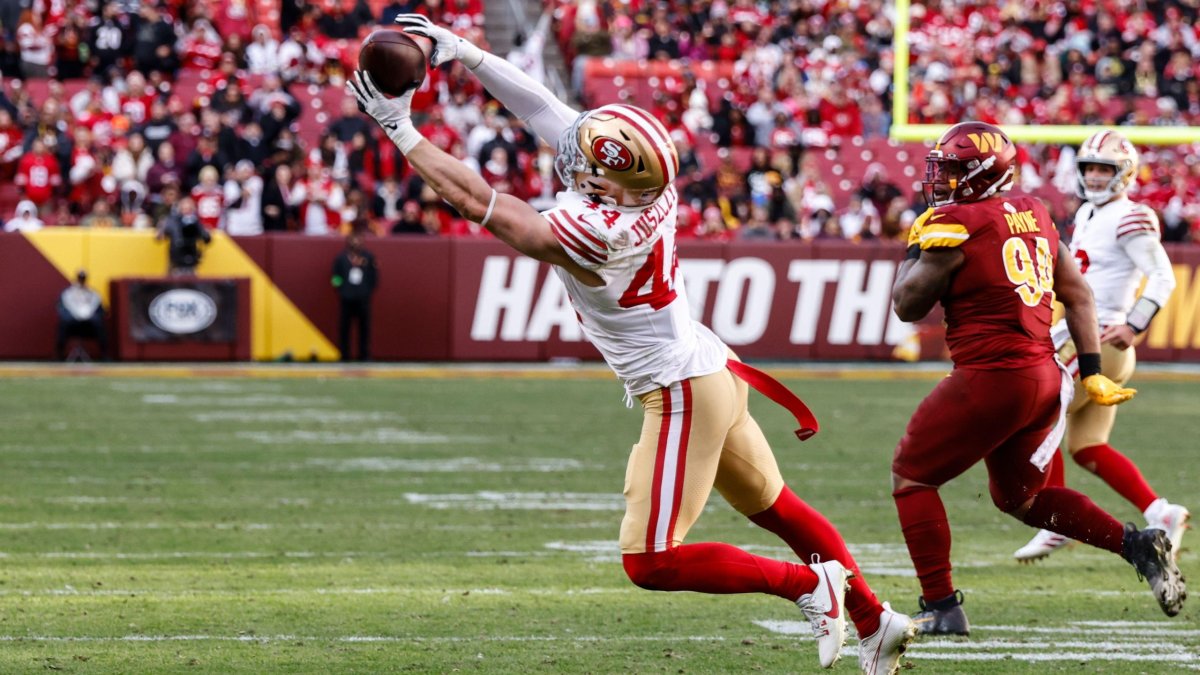
The San Francisco 49ers secured a commanding 32-19 victory over the New York Jets on Monday, September 9, 2024, at Levi’s Stadium. Despite the late-hour scratch of star running back Christian McCaffrey, the 49ers utilized a breakout performance from Jordan Mason and six field goals from Jake Moody to dismantle the Jets’ defense, spoiling Aaron Rodgers' return to Northern California.
The Historical Significance of the 2024 Season Opener
As we look back from 2026, the 2024 season opener between the San Francisco 49ers and the New York Jets remains a defining moment in the modern NFL era. It was more than just a Week 1 matchup; it was a collision of narrative arcs that had been building for over a year. On one side, the 49ers were the defending NFC Champions, seeking to prove that their Super Bowl LVIII loss was a stepping stone rather than a peak. On the other side, the Jets were re-introducing Aaron Rodgers to the world after his 2023 season ended after just four plays due to a torn Achilles.
The atmosphere at Levi’s Stadium in Santa Clara was electric. The "Monday Night Football" stage provided the perfect backdrop for a clash between Kyle Shanahan’s offensive wizardry and Robert Saleh’s formidable defense—a mentor-versus-protege storyline that added layers of tactical intrigue to the broadcast.
The Christian McCaffrey Plot Twist
Perhaps the most significant development of the night occurred before the kickoff. Christian McCaffrey, the reigning Offensive Player of the Year, was ruled out with calf and Achilles tendonitis. This news sent shockwaves through the fantasy football community and betting markets. However, it also set the stage for one of the most impressive "next man up" performances in recent 49ers history. Jordan Mason, an undrafted free agent who had spent years as a rotational piece, was thrust into the starting role, a move that would fundamentally alter the game's trajectory.
Tactical Breakdown: How the 49ers Controlled the Trenches
The story of the 49ers' victory was written at the line of scrimmage. While the Jets boasted a defensive front featuring Quinnen Williams, the San Francisco offensive line, led by veteran Trent Williams (who had recently signed a massive contract extension), consistently created lanes for the ground game.
The Emergence of Jordan Mason
Jordan Mason’s performance was a masterclass in the Shanahan outside-zone blocking scheme. Mason finished the night with 28 carries for 147 yards and a touchdown. His ability to press the hole, force the Jets’ linebackers to overcommit, and then cut back into open space neutralized New York’s speed on the edges.
Mason’s success was not merely a product of the system; his physical running style—averaging 5.3 yards per carry—wore down the Jets' defense by the third quarter. This sustained pressure allowed the 49ers to dominate time of possession, keeping Aaron Rodgers on the sideline for extended periods.
Brock Purdy’s Efficient Distribution
Brock Purdy’s role on opening night was that of a surgical distributor. While he didn’t put up eye-popping touchdown numbers, his efficiency was vital. Purdy finished 19-of-29 for 231 yards. More importantly, he showed exceptional poise under pressure, particularly on third downs.
The 49ers converted 6 of 13 third downs, often through short to intermediate routes to Deebo Samuel and Jauan Jennings. By targeting the "middle of the field" (MOFC) against the Jets' Cover 3 looks, Purdy forced the New York safeties to play closer to the line of scrimmage, which eventually opened up the running game even further.
The Jets' Offensive Struggles and the Rodgers Return
The New York Jets entered the game with high expectations, but they quickly realized that integrating a 40-year-old quarterback coming off a major injury into a new system is a difficult task against an elite defense.
Aaron Rodgers’ Performance
Aaron Rodgers showed flashes of his Hall of Fame talent. His touchdown pass to Allen Lazard—a vintage free-play strike following a 49ers offside penalty—reminded spectators of his MVP years. However, the consistency was lacking. Rodgers finished 13-of-21 for 167 yards, one touchdown, and one interception.
The 49ers' defensive coordinator, Nick Sorensen, employed a strategy of "controlled aggression." Rather than sending exotic blitzes that Rodgers could easily diagnose, the 49ers relied on a four-man rush to generate pressure. Leonard Floyd and Nick Bosa were instrumental in collapsing the pocket, preventing Rodgers from stepping into his throws and finding Garrett Wilson on deep vertical routes.
Lack of Rushing Support
For the Jets to succeed, Breece Hall needed to provide balance. While Hall found the end zone on a 3-yard run, he was largely neutralized by the 49ers' interior defensive line. San Francisco held Hall to just 54 yards on 16 carries. Without a credible threat on the ground, the Jets' offense became one-dimensional, allowing the 49ers' secondary to sit on routes and eliminate big-play opportunities.
Key Game Statistics: 49ers vs. Jets (Sept 9, 2024)
The following table summarizes the statistical disparity that defined the game.
| Statistic | New York Jets | San Francisco 49ers |
|---|---|---|
| Final Score | 19 | 32 |
| Total First Downs | 14 | 24 |
| Total Net Yards | 266 | 401 |
| Rushing Yards | 68 | 180 |
| Passing Yards | 198 | 221 |
| Turnovers | 2 | 0 |
| Time of Possession | 21:20 | 38:40 |
| Third Down Conv. | 3/10 (30%) | 6/13 (46%) |
The Special Teams Factor: Jake Moody’s Historic Night
In many NFL games, special teams are an afterthought. On this opening night, however, Jake Moody was a primary protagonist. The sophomore kicker accounted for 20 of the 49ers' 32 points, tying a franchise record with six made field goals.
Moody’s performance was critical because the 49ers struggled to finish drives in the red zone during the first half. His consistency from various distances—including a 53-yarder—ensured that the 49ers built a lead even when the offense stalled. In the context of the 2024 season, this game solidified Moody’s reputation as a reliable weapon, a stark contrast to the kicking woes the team had faced in previous postseason runs.
Defensive Strategy: Neutralizing Garrett Wilson
One of the key subplots of the matchup was the battle between 49ers cornerback Charvarius Ward and Jets wideout Garrett Wilson. The 49ers frequently bracketed Wilson, using a safety over the top to prevent the explosive plays that Rodgers favors.
Wilson was held to 60 yards on 6 receptions. By limiting the Jets' primary playmaker, the 49ers forced Rodgers to look toward secondary options like Tyler Conklin and Mike Williams. Williams, who was also returning from an ACL injury, saw limited snaps and had a negligible impact on the game's outcome.
Logistics and Broadcast Details
The 2024 opener was a flagship event for the NFL’s broadcast partners. As the first Monday Night Football game of the year, it was simulcast on ESPN and ABC, with the "ManningCast" on ESPN2 providing alternative commentary.
Stadium and Attendance
Levi’s Stadium reached its full capacity of approximately 68,500 fans. The game also marked one of the first major tests for the stadium’s upgraded Wi-Fi 6E infrastructure, designed to handle the massive data demands of modern sports fans.
Season Implications
For the 49ers, the win set a tone of resilience. Winning decisively without McCaffrey proved the depth of the roster. For the Jets, the loss served as a reality check, highlighting the need for better offensive line protection and a more synchronized passing attack.
Frequently Asked Questions
Who won the 49ers vs. Jets game on opening night in 2024?
The San Francisco 49ers won the game with a final score of 32-19. They dominated both the ground game and time of possession, leading for most of the second half.
Why didn't Christian McCaffrey play against the Jets?
Christian McCaffrey was a late scratch due to lingering calf tightness and Achilles tendonitis. The team decided to hold him out as a precautionary measure to prevent a long-term injury early in the season, leading to Jordan Mason’s start.
How did Aaron Rodgers perform in his return game?
Aaron Rodgers had a mixed performance. He completed 13 of 21 passes for 167 yards, with one touchdown and one interception. While he showed flashes of accuracy, the Jets' offense struggled to sustain drives against the 49ers' defense.
How many field goals did Jake Moody kick in the game?
Jake Moody kicked six field goals, tying a 49ers franchise record for the most field goals in a single game. His scoring was pivotal in the first half when the offense failed to convert red-zone opportunities into touchdowns.
What was Jordan Mason's rushing total for the game?
Jordan Mason rushed for 147 yards on 28 carries, averaging 5.3 yards per attempt. He also scored one rushing touchdown, effectively filling the void left by Christian McCaffrey.
Where was the 49ers vs. Jets 2024 opening night game played?
The game was held at Levi’s Stadium in Santa Clara, California. As the home opener for the 49ers, it featured a sell-out crowd and was the featured Monday Night Football matchup for Week 1 of the 2024 NFL season.
Final Recommendation for Fans and Analysts
When reviewing the "Opening Night" clash between the 49ers and the Jets, it is essential to view it as a case study in roster depth and defensive discipline. For those analyzing NFL team construction in 2026, this game remains the gold standard for how a well-coached team can overcome the loss of a superstar player like Christian McCaffrey.
The primary takeaway for coaches and enthusiasts is the value of a "system" that does not rely on a single individual. The 49ers' ability to pivot to Jordan Mason and rely on a stout defensive front and elite kicking game provides a blueprint for sustained success in the NFL. To truly understand the 2024 season's trajectory, one must start with the tape from this specific Monday night in Santa Clara.