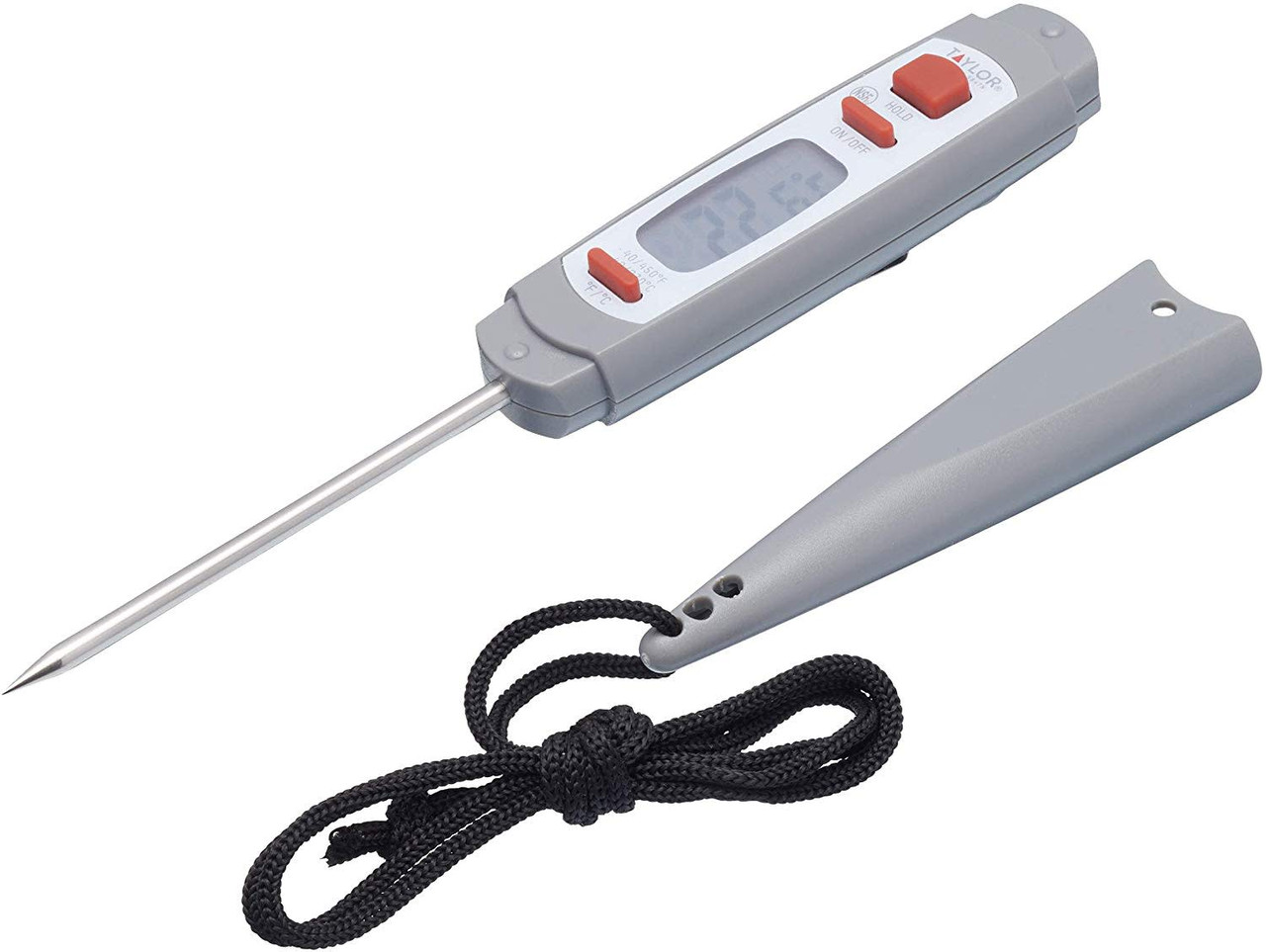
In 2026, the thermometer market is dominated by four brands that define excellence in their respective niches: ThermoWorks for culinary precision, Braun for medical reliability, Kinsa for smart health data, and Fluke for industrial durability. These brands matter because they prioritize sensor accuracy and long-term calibration over generic, low-cost alternatives.
Why Brand Selection Defines Accuracy in Thermometry
Choosing a thermometer is no longer just about getting a number on a screen; it is about the technology behind the sensor and the reliability of the calibration. In 2026, as precision becomes a requirement in everything from sous-vide cooking to pediatric healthcare, the distinction between a "consumer-grade" tool and a "metrology-grade" instrument has narrowed. However, the engineering required to maintain accuracy within ±0.1 or ±0.5 degrees remains complex.
Thermometers generally fall into three technical categories: thermocouples, thermistors, and infrared (IR) sensors. Each technology has its strengths and limitations. For instance, while infrared sensors offer speed and convenience, they are often susceptible to "emissivity" errors, where the material of the surface being measured reflects heat differently. Brands that "really matter" are those that have solved these technical hurdles through superior hardware and software algorithms.
The Role of NIST Traceability
When discussing brands that matter, we must address the National Institute of Standards and Technology (NIST). For a brand to be taken seriously in a professional or medical context, its products must often be NIST-traceable. This means the manufacturer can prove that their device’s accuracy has been verified against a chain of standards leading back to the official national measurement. The four brands highlighted in this guide are recognized for their commitment to these rigorous standards.
1. ThermoWorks: The Gold Standard for Culinary and Laboratory Precision
ThermoWorks has solidified its position as the undisputed leader in professional-grade temperature tools for the kitchen and the lab. Based in Utah, this brand does not manufacture "gadgets"; they manufacture precision instruments. In 2026, their flagship product, the Thermapen ONE, remains the benchmark by which all other instant-read thermometers are measured.
The Thermocouple Advantage
The reason ThermoWorks matters is their use of high-end thermocouple technology. Unlike the cheaper thermistors found in $15 grocery store thermometers—which can take 10 to 15 seconds to stabilize—a Type K thermocouple uses two different metal wires to create a voltage proportional to a temperature difference. This allows the Thermapen ONE to deliver a full-accuracy reading in one second or less.
Key Features and Build Quality
- Speed: 1-second readings are vital in high-stakes cooking, such as searing a steak or tempering chocolate, where a few seconds can be the difference between perfection and failure.
- Accuracy: Guaranteed to within ±0.5°F (±0.3°C), a level of precision that professional chefs and food safety inspectors require.
- Durability: Most ThermoWorks products feature IP67 ratings, meaning they are waterproof and can survive being dropped into a sink or a vat of soup.
- The Display: Their 2026 models feature 360-degree rotating displays with intelligent backlighting that adjusts based on ambient light, ensuring readability in dark ovens or bright outdoor grilling sessions.
Why It Matters in 2026
ThermoWorks matters because they have refused to compromise on sensor quality for the sake of "smart" features. While other brands have added unnecessary Bluetooth connectivity to every probe, ThermoWorks focuses on the speed of the physical sensor. For anyone serious about food safety or culinary consistency, this brand is the primary choice.
2. Braun: The Clinical Benchmark for Home Health
In the realm of medical thermometry, Braun (specifically their healthcare division managed by Helen of Troy) remains the brand that clinicians and parents trust most. As of 2026, their ThermoScan series is the most widely used ear thermometer in doctor's offices across the globe.
The Science of Tympanic Thermometry
Braun’s dominance is built on the science of the tympanic membrane (the eardrum). Because the eardrum shares the same blood supply as the brain’s temperature control center (the hypothalamus), it is one of the most accurate sites for measuring core body temperature. Braun's "ExacTemp" stability system ensures that the user has positioned the probe correctly before taking a reading.
Technical Innovations: Age Precision and Pre-Warmed Tips
One of the most significant challenges with infrared ear thermometers is the "cooling effect." A cold probe tip can actually cool the ear canal, leading to a falsely low reading. Braun solved this with Pre-warmed Tip Technology. By warming the probe to near-body temperature before it enters the ear, the device ensures clinical accuracy.
Furthermore, Braun’s Age Precision technology acknowledges a medical fact often overlooked by consumers: a "fever" for a newborn is different from a "fever" for a four-year-old or an adult. Their 2026 models allow users to toggle the age of the patient, providing a color-coded result (green, yellow, red) based on age-specific medical guidelines.
Clinical Trust and Verification
Braun is backed by extensive clinical research. Their devices are frequently used in pediatric studies to validate the efficacy of home-based fever management. In 2026, their "Connect" series allows this clinical data to be synced directly with telehealth portals, bridging the gap between home care and professional medical intervention.
3. Kinsa: The Pioneer of Smart Health and Predictive Analytics
While Braun dominates the clinical hardware space, Kinsa has redefined what a thermometer brand can be by focusing on the power of data. Kinsa is not just a hardware manufacturer; it is a public health company.
The "Smart" Ecosystem
Kinsa thermometers (the QuickCare and Smart Ear models) connect via Bluetooth to a smartphone app. In 2026, this app does much more than just log temperature. It uses the patient’s age, symptoms, and temperature to provide "Next Steps" guidance based on medical protocols.
Why Kinsa Matters: The Health Map
Kinsa's real value proposition lies in its Health Weather map. By aggregating anonymous data from millions of smart thermometers, Kinsa can predict the spread of illness (like influenza or RSV) in real-time, often weeks before official government health agencies. This makes the brand indispensable for:
- Parents: Who want to know if "something is going around" at school.
- Public Health Officials: Who use the data for early warning systems.
- Vulnerable Populations: Who need to take extra precautions when local illness levels spike.
Technical Precision
Despite the focus on software, Kinsa has not neglected the hardware. Their 2026 QuickCare thermometer offers an 8-second reading, which is significantly faster than traditional digital sticks. It is also "app-optional," meaning it functions perfectly as a standard thermometer even if the user chooses not to sync their data.
4. Fluke: The Authority in Industrial and HVAC Reliability
In industrial, electrical, and mechanical environments, a medical or kitchen thermometer will fail instantly. This is where Fluke Corporation matters. Fluke is the world leader in professional electronic test tools and software.
Infrared (IR) Precision for Extreme Environments
Fluke thermometers, such as the 62 MAX+, are designed to measure temperatures in environments that are too dangerous or inaccessible for a probe. Whether it's a high-voltage electrical panel, a moving motor, or an HVAC duct, Fluke’s IR thermometers provide non-contact precision.
The Physics of Emissivity and Distance-to-Spot
What sets Fluke apart is their handling of the "Distance-to-Spot" (D:S) ratio. Many cheap IR thermometers have a 6:1 or 8:1 ratio, meaning if you are 12 inches away, you are measuring a 2-inch circle. Fluke’s professional units often offer 12:1 or higher, allowing for much more surgical precision at a distance.
Additionally, Fluke devices allow for adjustable emissivity. Different materials (like shiny copper vs. matte black rubber) emit infrared energy differently. A brand like Fluke "matters" because it gives the technician the ability to calibrate the tool to the specific material being measured, preventing dangerous errors in industrial settings.
Ruggedness and Reliability
In 2026, Fluke remains the gold standard for "Jobsite Toughness." Their thermometers are:
- Drop-tested: Rated to survive a 3-meter (approx. 10-foot) drop onto concrete.
- IP54 Rated: Protected against dust and splashing water.
- NIST Traceable: Most Fluke tools come with or can be ordered with a certificate of calibration, essential for industrial compliance and safety audits.
Comparison of Top Thermometer Brands (2026 Data)
| Brand | Primary Niche | Sensor Technology | Key Advantage | Best For |
|---|---|---|---|---|
| ThermoWorks | Culinary / Lab | Type K Thermocouple | 1-second response time | Professional Chefs, BBQ, Labs |
| Braun | Medical | Tympanic Infrared | Pre-warmed tip technology | Families, Pediatricians |
| Kinsa | Smart Health | Thermistor / IR | Real-time illness tracking | Tech-savvy parents, Public Health |
| Fluke | Industrial | Non-contact IR | Ruggedness & Emissivity control | Electricians, HVAC, Mechanics |
Critical Considerations for Thermometer Accuracy
Even when using the best brands, accuracy is dependent on proper usage. In 2026, several factors remain constant in the science of thermometry that users must understand to get the most out of their high-end tools.
Calibration Drift
Every thermometer, regardless of the brand, is subject to "drift" over time. This is a phenomenon where the internal components age, causing the readings to shift slightly. For ThermoWorks and Fluke users, "re-calibration services" are a key reason these brands matter. These companies offer professional calibration to ensure the device remains accurate year after year. For home users, the "Ice Bath Test" remains the standard way to verify if a thermometer is still accurate at 32°F (0°C).
Environmental Interference
Infrared thermometers (Braun, Fluke, and some Kinsa models) are highly sensitive to environmental conditions. If a Fluke thermometer is moved from a cold truck to a hot factory floor, it needs at least 20-30 minutes to reach "thermal equilibrium" with its surroundings before it can provide an accurate reading. Similarly, a Braun ear thermometer will give a false reading if the patient has been lying on their ear or has just come in from the cold.
The "Price vs. Value" Equation
In 2026, the market is flooded with $10 thermometers that look identical to professional models. However, the internal components—the Analog-to-Digital Converters (ADCs) and the quality of the sensor probe—are where these brands justify their cost. A Fluke or ThermoWorks device is designed to last a decade; a generic alternative often fails within a year or loses its calibration without the user realizing it.
Frequently Asked Questions
Which thermometer is the most accurate for home medical use?
For home use, a tympanic (ear) thermometer from a brand like Braun is generally considered the most accurate for people over 6 months of age. For infants, a rectal reading using a high-quality digital stick (like Kinsa) remains the clinical gold standard, though temporal (forehead) scans have improved significantly in reliability by 2026.
Why should I buy a ThermoWorks Thermapen instead of a cheap digital thermometer?
The primary difference is the sensor type. Cheap thermometers use "thermistors" which are slow and can be off by several degrees. The ThermoWorks Thermapen ONE uses a professional thermocouple that is calibrated at the factory. This provides a reading in 1 second with near-perfect accuracy, which is essential for food safety and preventing overcooking.
Can I use a Fluke industrial IR thermometer for a fever check?
No. Industrial infrared thermometers like those from Fluke are calibrated for much wider temperature ranges and different surface types. They often have an accuracy variance of ±2°C (±4°F), which is acceptable for a motor but dangerous for a human fever. Medical thermometers are specifically calibrated for the narrow range of human body temperature with much higher precision (±0.1°C).
Does the Kinsa app require a subscription in 2026?
As of 2026, the core features of the Kinsa app—including temperature logging, symptom tracking, and illness alerts—remain free for users. They have introduced premium "Family Health" tiers for advanced historical archiving and telemedicine integration, but the thermometer remains fully functional for all basic health tracking without a paid plan.
How often should a professional thermometer be calibrated?
For industrial (Fluke) or culinary (ThermoWorks) use, it is recommended to have a professional calibration performed annually. For home medical thermometers (Braun/Kinsa), users should perform an accuracy check (like an ice bath test for probes) once a year or if the device has been dropped.
Practical Recommendation: Selecting the Right Brand for Your Needs
To ensure you are using the right tool for the job, follow this selection logic:
- If you are a home cook or BBQ enthusiast: Invest in ThermoWorks. The speed of the Thermapen ONE or the reliability of the ChefAlarm will significantly improve the quality and safety of your food.
- If you have young children or care for the elderly: Choose Braun. Their tympanic thermometers are the least invasive while providing the high level of accuracy needed to make medical decisions.
- If you want to stay ahead of the flu season and track family health trends: Go with Kinsa. The data integration is a powerful tool for modern health management.
- If you are a professional technician or DIY enthusiast working on home systems: Stick with Fluke. The durability and advanced features like adjustable emissivity make it the only safe choice for industrial applications.
In 2026, "brands that matter" are those that provide not just a device, but a commitment to the science of measurement. By choosing one of these four leaders, you ensure that the numbers on your screen are facts, not guesses.