A standard 4-inch PVC pipe features a consistent outside diameter (OD) of 4.500 inches, regardless of the pipe's schedule or wall thickness. However, the internal diameter (ID) varies: Schedule 40 pipe typically has an ID of 4.026 inches, while the thicker-walled Schedule 80 has an ID of 3.826 inches.
Understanding the precise dimensions of 4-inch PVC (Polyvinyl Chloride) pipe is critical for plumbing, irrigation, industrial applications, and DIY construction projects. While the name "4-inch" suggests a simple measurement, the reality of pipe sizing involves a complex interaction between nominal pipe size (NPS), wall thickness, and pressure ratings. In 2026, PVC remains a primary material in North American infrastructure due to its chemical resistance, low cost, and durability. This guide provides the technical specifications, variations, and practical measurement data required for professional and residential applications.
The Difference Between Nominal Size and Actual Dimensions
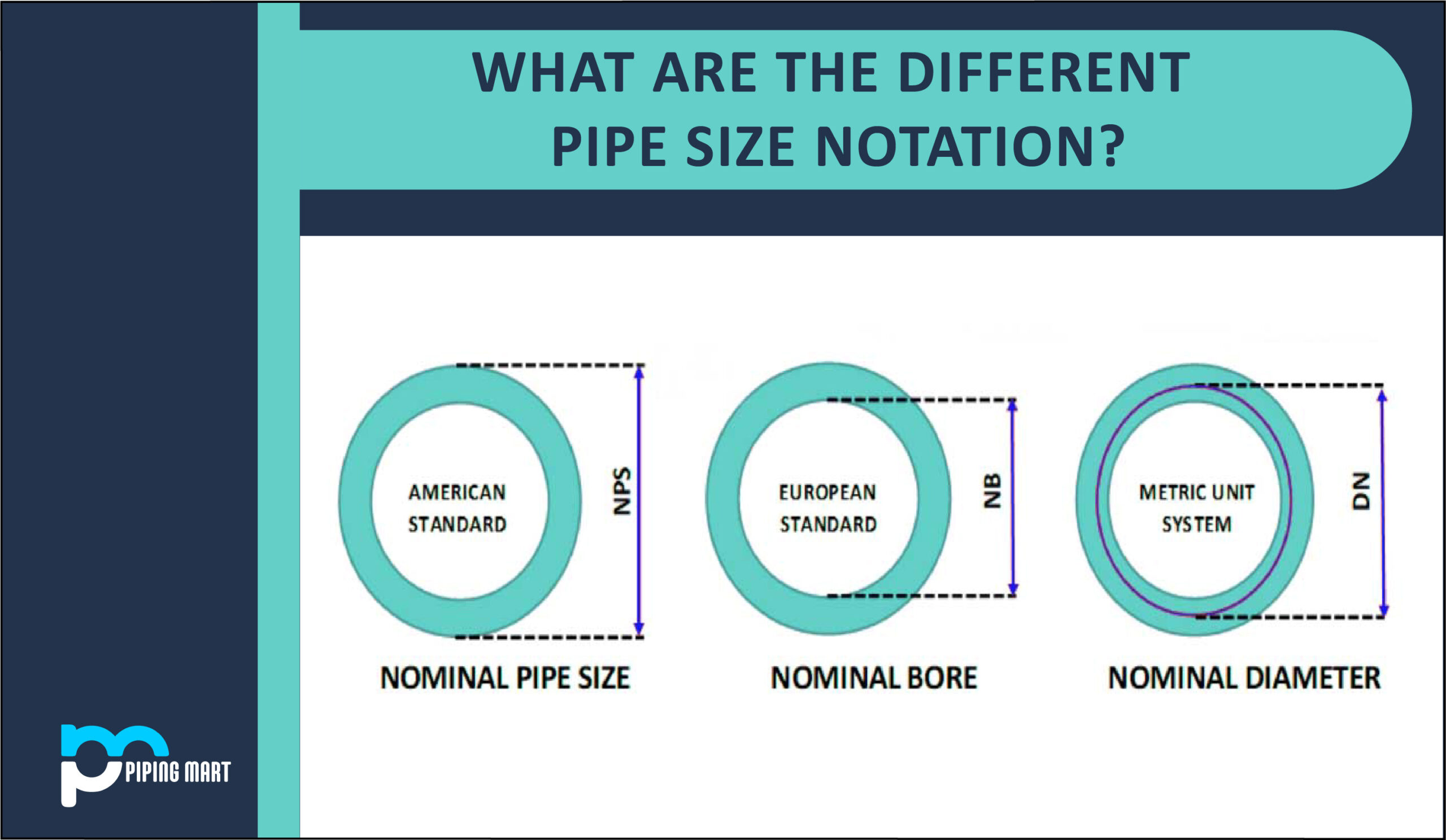
In the world of piping, the term "4-inch" is a Nominal Pipe Size (NPS). This is a North American set of standard sizes for pipes used for high or low pressures and temperatures. It is important to understand that the nominal size does not strictly represent any single physical measurement of the pipe.
Historically, the nominal size was intended to represent the approximate internal diameter of the pipe. However, as manufacturing techniques evolved and different "Schedules" (wall thicknesses) were introduced to handle varying pressure loads, the outside diameter (OD) had to remain constant. This constancy ensures that a 4-inch fitting will fit any 4-inch pipe, regardless of how thick the pipe wall is.
For a 4-inch PVC pipe, the Outside Diameter is always 4.500 inches. This is the most important measurement for selecting couplings, elbows, and tees. If you measure the exterior of a pipe and find it is exactly 4.5 inches, you are looking at a 4-inch nominal pipe.
4-Inch PVC Schedule 40 vs. Schedule 80 Dimensions
The "Schedule" of a pipe refers to its wall thickness. Schedule 40 and Schedule 80 are the two most common types found in residential and industrial settings.
4-Inch Schedule 40 PVC
Schedule 40 is the standard "white" PVC pipe most commonly used for residential drainage, waste, and vent (DWV) systems, as well as cold-water irrigation. It provides a balance between strength and weight.
- Outside Diameter (OD): 4.500 inches (114.30 mm)
- Average Internal Diameter (ID): 4.026 inches (102.26 mm)
- Minimum Wall Thickness: 0.237 inches (6.02 mm)
- Weight per Foot: Approximately 2.01 lbs
The 4.026-inch internal diameter allows for high-volume flow, making it ideal for main sewer lines in residential structures where solids must be transported without snagging.
4-Inch Schedule 80 PVC
Schedule 80 is typically dark gray and is designed for high-pressure industrial applications or areas where the pipe may be subject to physical impact. Because it must withstand higher PSI (pounds per square inch), the walls are significantly thicker.
- Outside Diameter (OD): 4.500 inches (114.30 mm)
- Average Internal Diameter (ID): 3.826 inches (97.18 mm)
- Minimum Wall Thickness: 0.337 inches (8.56 mm)
- Weight per Foot: Approximately 2.73 lbs
Note that the Schedule 80 pipe has a smaller internal diameter than Schedule 40. This is because the extra thickness is added to the inside of the pipe to keep the outside diameter compatible with standard 4-inch fittings.
Comparison Table: 4-Inch PVC Specifications
The following table compares the dimensions and physical properties of the most common 4-inch PVC pipe types available in 2026.
| Pipe Type | Outside Diameter (OD) | Average Inside Diameter (ID) | Min. Wall Thickness | Max PSI (at 73°F) |
|---|---|---|---|---|
| Schedule 40 | 4.500" | 4.026" | 0.237" | 220 PSI |
| Schedule 80 | 4.500" | 3.826" | 0.337" | 320 PSI |
| SDR 21 (Class 200) | 4.500" | 4.286" | 0.214" | 200 PSI |
| SDR 26 (Class 160) | 4.500" | 4.326" | 0.173" | 160 PSI |
| DWV (Cellular Core) | 4.500" | 4.026" | 0.237" | Not for Pressure |
SDR and Thin-Wall 4-Inch PVC Dimensions
Beyond Schedule 40 and 80, you may encounter SDR (Standard Dimension Ratio) pipe. SDR pipe is unique because the wall thickness is a direct ratio of the outside diameter. This means the pressure rating remains constant across all pipe sizes within that SDR class.
In 4-inch configurations:
- SDR 21 (Class 200): This pipe has a wall thickness of 0.214 inches. It is thinner than Schedule 40 but still rated for 200 PSI. It is often used for long-distance water transmission where Schedule 40 might be over-engineered.
- SDR 26 (Class 160): This is even thinner, with a wall of 0.173 inches. It is common in gravity-fed irrigation and septic leach fields.
- SDR 35 (Sewer Pipe): This is a specific type of thin-walled pipe used almost exclusively for underground sewer laterals. It often has a different OD than standard Schedule 40 pipe (usually 4.215 inches), meaning it requires specialized "Green" fittings or adapters to connect to standard 4-inch PVC.
4-Inch PVC Fittings and Clearances
When planning an installation, the dimensions of the pipe are only half the equation. You must also account for the dimensions of the fittings (elbows, couplings, and tees) and the clearances required for the pipe to pass through structural members.
Fitting Dimensions
A 4-inch Schedule 40 coupling has an outside diameter of approximately 5.0 inches. This is a vital detail if you are running pipe through a wall or a floor joist. While the pipe itself is 4.5 inches wide, the "hub" or socket of the fitting is larger.
Drilling and Notching
In 2026, building codes (such as the IPC and UPC) remain strict regarding how much of a structural member can be removed to accommodate a 4-inch pipe.
- Holes in Joists: To fit a 4-inch PVC pipe (4.5" OD), you generally need a 5-inch hole to allow for minor adjustments and expansion. In a standard 2x10 joist, a 5-inch hole may exceed code limits depending on its location (usually limited to the middle third of the span).
- Stud Walls: A 4-inch PVC pipe will not fit inside a standard 2x4 stud wall (which has a depth of 3.5 inches). Plumbers must use 2x6 construction (5.5-inch depth) or "fur out" the wall to accommodate the 4.5-inch diameter of the pipe.
Pressure and Temperature Considerations
The dimensions of 4-inch PVC pipe are structurally stable under normal conditions, but they are affected by temperature. PVC is a thermoplastic, meaning its physical properties change as it heats or cools.
Thermal Expansion
For every 100-foot run of 4-inch PVC, the pipe will expand or contract approximately 3.6 inches for every 100°F change in temperature. In large-scale industrial layouts, expansion loops or offsets must be calculated using the 4.5-inch OD to ensure the pipe does not buckle or pull out of fittings.
Pressure De-rating
The maximum pressure for 4-inch Schedule 40 pipe is 220 PSI at 73°F (23°C). As the temperature rises, the safe working pressure drops. By 140°F (the maximum recommended service temperature for PVC), the pressure rating is reduced to only 22% of its original value (approximately 48 PSI). 4-inch Schedule 80 pipe, with its 0.337-inch wall, is much better suited for higher temperature/pressure combinations, though it still follows the same de-rating curve.
Common Measurement Mistakes
One of the most frequent errors in construction is misidentifying 4-inch pipe. Here is how to verify your dimensions correctly:
- Do Not Measure the Circumference without a Conversion: If you wrap a tape measure around the pipe and get roughly 14.14 inches, you are holding a 4-inch nominal pipe. (Circumference / 3.14 = 4.5 inches).
- Internal vs. External: If you measure the inside hole and it is exactly 4 inches, it is 4-inch Schedule 40. If the inside hole is roughly 3.8 inches, it is 4-inch Schedule 80.
- Confusion with 3-inch Pipe: A 3-inch nominal PVC pipe has an outside diameter of 3.5 inches. Beginners often confuse 3-inch and 4-inch pipe because a 3.5-inch OD "feels" like it should be called a 4-inch pipe. Always look for the print string on the side of the pipe, which identifies the nominal size.
Practical Applications for 4-Inch PVC
4-inch PVC is the "workhorse" diameter for specific infrastructure tasks. Its dimensions are optimized for:
- Residential Main Drains: It is the standard size for the main sewer line leaving a single-family home to the city tap or septic tank.
- Roof Drains: Large commercial buildings use 4-inch vertical leaders to move rainwater from roofs to storm sewers.
- Dust Collection: Woodworking shops often use 4-inch Schedule 40 PVC for vacuum ducting because the 4.026-inch internal diameter matches many standard tool ports.
- Conduit: In 2026, 4-inch PVC is a preferred conduit for underground electrical service entrances, protecting high-voltage cables with its 0.237-inch thick walls.
Frequently Asked Questions
Will a 4-inch PVC pipe fit inside a 4-inch hole?
No. Because a 4-inch nominal PVC pipe has an actual outside diameter (OD) of 4.500 inches, it will not fit through a 4-inch hole. You will need a hole saw or core bit with at least a 4.5-inch diameter, though a 5-inch hole is standard to allow for ease of installation and thermal expansion.
Is the outside diameter of 4-inch Schedule 40 and Schedule 80 the same?
Yes. Both Schedule 40 and Schedule 80 4-inch PVC pipes have an outside diameter of exactly 4.500 inches. This allows them to use the same fittings. The difference lies in the wall thickness; Schedule 80 is thicker on the inside, which reduces its flow capacity but increases its pressure rating.
What is the actual ID of 4-inch SDR 35 sewer pipe?
4-inch SDR 35 pipe typically has an ID of approximately 3.975 inches and an OD of 4.215 inches. It is important to note that SDR 35 dimensions are different from Schedule 40/80 dimensions. You cannot glue a standard Schedule 40 coupling onto an SDR 35 pipe without a specific adapter.
How much does a 20-foot stick of 4-inch Schedule 40 PVC weigh?
A standard 20-foot length of 4-inch Schedule 40 PVC weighs approximately 40.2 lbs (2.01 lbs per foot). In comparison, a 20-foot stick of Schedule 80 weighs about 54.6 lbs. This weight difference is a significant factor in logistics and installation labor.
Can 4-inch PVC be used for hot water?
Standard PVC (Schedule 40 or 80) is not rated for hot water distribution (above 140°F). For hot water applications, CPVC (Chlorinated Polyvinyl Chloride) is required. 4-inch CPVC has the same outside diameter (4.500") as regular PVC but is chemically treated to withstand temperatures up to 200°F.
Summary and Recommendation
When working with 4-inch PVC pipe dimensions, the most critical figure to remember is the 4.500-inch outside diameter. Whether you are using Schedule 40 for a home drainage project or Schedule 80 for an industrial pressure line, the fittings will be standardized to this 4.5-inch measurement.
For most residential drainage and irrigation tasks, Schedule 40 is the recommended choice due to its higher internal flow area (4.026") and lighter weight. However, if your project involves high-pressure fluids, chemical transport, or exposure to physical damage, the thicker Schedule 80 wall (0.337") is necessary. Always verify the "Schedule" or "SDR" printed on the pipe before purchasing fittings to ensure system compatibility and safety.