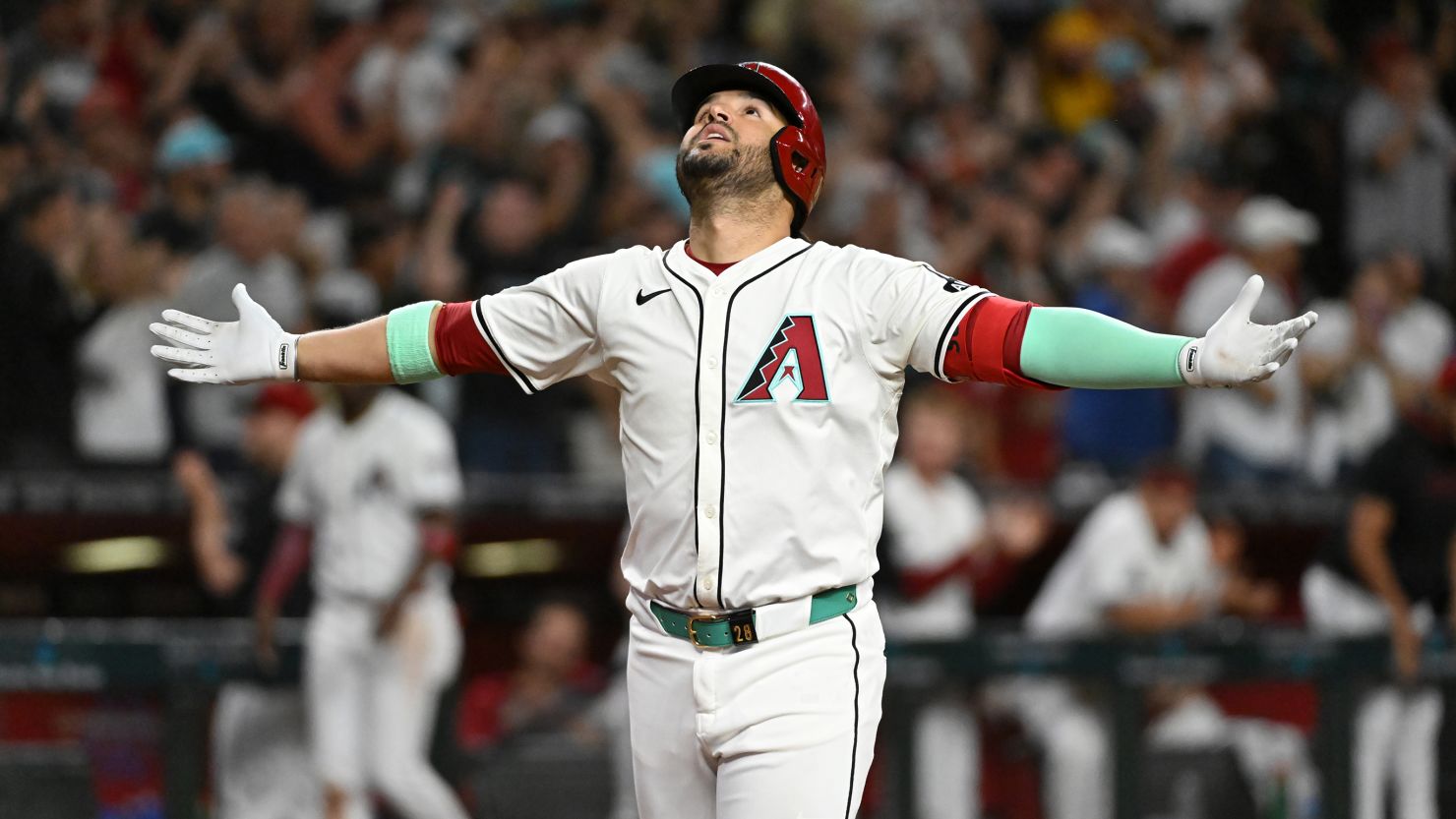
Hitting 4 home runs in a single Major League Baseball game is a statistical anomaly rarer than a perfect game. Only 18 players in history have achieved this feat, which requires a perfect confluence of power, plate discipline, and pitching cooperation. It remains the ultimate measurement of single-game offensive dominance in professional baseball.
The Pinnacle of Single-Game Power
In the long and storied history of Major League Baseball, certain milestones stand as the gold standard for individual excellence. While a no-hitter or a cycle captures the imagination, the four-home-run game exists in a stratosphere of its own. As we look at the landscape of the sport in 2026, the achievement remains the most elusive single-game hitting record. To put it in perspective, there have been over 235,000 games played in MLB history, yet the list of men who have cleared the fences four times in a nine-inning span remains shorter than a standard dugout roster.
Measuring this baseball feat requires an understanding of the immense physical and psychological hurdles involved. A player must not only possess the raw power to drive the ball out of the park but must also maintain a level of focus that prevents "pressing" after the second or third home run. Furthermore, the feat is often at the mercy of the opposing manager. In the modern era, a player who has already hit three home runs is frequently walked—intentionally or "unintentionally-intentionally"—to avoid further damage, making the fourth trip to the plate a battle against strategy as much as the pitcher.
Comparing the Rarity to Pitching Milestones
When fans discuss the most difficult accomplishments in sports, the perfect game—where a pitcher retires 27 consecutive batters without a single runner reaching base—is usually the first mentioned. However, the numbers tell a different story. As of 2026, there have been 24 official perfect games in MLB history. In contrast, only 18 players have hit four home runs in a single game.
This discrepancy highlights the unique nature of the four-home-run feat. A pitcher in the midst of a perfect game has the advantage of momentum and the defensive support of eight other players. A hitter, conversely, is entirely isolated during each at-bat. He must wait for his turn in the rotation, hope that his teammates extend the innings so he receives enough plate appearances, and then find a pitch to hit in an environment where the opposition is increasingly wary of his presence.
A Chronological Journey of the 18 Immortals
The history of the four-home-run game is a timeline of the sport’s evolution. It spans from the "dead-ball" era of the 19th century to the high-velocity, data-driven environment of the 21st century. Each entry on this list represents a day where a human being found a "flaw in the matrix" of professional pitching.
Bobby Lowe and the 19th Century Origins
The first player to achieve the feat was Bobby Lowe of the Boston Beaneaters on May 30, 1894. At the time, the game was played differently, with smaller ballparks and a ball that was often soft and discolored by the middle innings. Lowe’s achievement was so shocking that fans reportedly threw $160 in silver coins onto the field to celebrate his performance. Just two years later, in 1896, Ed Delahanty of the Philadelphia Phillies joined him, proving that while rare, the "four-bagger quartet" was possible.
The Modern Era Pioneers: Lou Gehrig and Willie Mays
It would take 36 years for another player to match Lowe and Delahanty. On June 3, 1932, the legendary Lou Gehrig became the first player in the 20th century to hit four home runs in a game. Gehrig’s feat was particularly notable because he did it while playing for the New York Yankees, a team already defined by power. Gehrig nearly hit a fifth home run in that game, a deep fly ball that was caught at the center-field fence.
Decades later, in 1961, Willie Mays of the San Francisco Giants added his name to the ledger. Mays’ performance is often cited by historians as the "purest" display of the feat, as he did it against a formidable Milwaukee Braves pitching staff. These legendary names solidified the four-home-run game as a hallmark of the all-time greats, though the list would eventually grow to include unexpected "one-day wonders" as well.
Statistical Breakdown of the Four-Home-Run Game
To truly measure this baseball feat, one must look at the specific circumstances of each occurrence. Some players achieved the feat in consecutive at-bats, while others needed extra innings to find their fourth blast.
| Player | Team | Date | Opponent | Notes |
|---|---|---|---|---|
| Bobby Lowe | Boston Beaneaters | May 30, 1894 | Cincinnati Reds | First in history; consecutive HRs. |
| Ed Delahanty | Philadelphia Phillies | July 13, 1896 | Chicago Colts | Inside-the-park HR included. |
| Lou Gehrig | New York Yankees | June 3, 1932 | Philadelphia Athletics | First in 20th century. |
| Chuck Klein | Philadelphia Phillies | July 10, 1936 | Pittsburgh Pirates | Achieved in 10 innings. |
| Pat Seerey | Chicago White Sox | July 18, 1948 | Philadelphia Athletics | Achieved in 11 innings. |
| Gil Hodges | Brooklyn Dodgers | August 31, 1950 | Boston Braves | 9 RBIs in the game. |
| Joe Adcock | Milwaukee Braves | July 31, 1954 | Brooklyn Dodgers | 18 total bases (then a record). |
| Rocky Colavito | Cleveland Indians | June 10, 1959 | Baltimore Orioles | Four consecutive home runs. |
| Willie Mays | San Francisco Giants | April 30, 1961 | Milwaukee Braves | Only 3 at-bats in previous game. |
| Mike Schmidt | Philadelphia Phillies | April 17, 1976 | Chicago Cubs | Overcame a 12-1 deficit. |
| Bob Horner | Atlanta Braves | July 6, 1986 | Montreal Expos | Only player to lose the game. |
| Mark Whiten | St. Louis Cardinals | Sept 7, 1993 | Cincinnati Reds | 12 RBIs (tied MLB record). |
| Mike Cameron | Seattle Mariners | May 2, 2002 | Chicago White Sox | All 4 in first 5 innings. |
| Shawn Green | L.A. Dodgers | May 23, 2002 | Milwaukee Brewers | 19 total bases (MLB Record). |
| Carlos Delgado | Toronto Blue Jays | Sept 25, 2003 | Tampa Bay Devil Rays | 4 HRs on just 10 pitches. |
| Josh Hamilton | Texas Rangers | May 8, 2012 | Baltimore Orioles | 18 total bases; all 2-run HRs. |
| Scooter Gennett | Cincinnati Reds | June 6, 2017 | St. Louis Cardinals | First to have 5+ hits and 4 HRs. |
| J.D. Martinez | Arizona Diamondbacks | Sept 4, 2017 | L.A. Dodgers | 4 HRs against 4 different pitchers. |
The Mechanics of the Feat: Power, Precision, and Pitching
When we measure the 4-home-run feat, we are looking at a masterclass in hitting mechanics. In the modern era, analysts use tools like Statcast to break down these performances. For example, J.D. Martinez's 2017 performance was a display of launch angle consistency that was almost robotic. To hit four home runs, a player’s "swing plane" must be perfectly calibrated to the specific velocity and break of that day’s opposing pitchers.
The Pitcher’s Perspective
One must also consider the "Why" behind the pitching. In most of these 18 instances, the hitter faced multiple pitchers. This is a crucial detail. Hitting four home runs against a single pitcher is almost unheard of in the modern era because a starter would be pulled long before the fourth blast.
Instead, the feat usually involves a player seeing a starter twice, a middle reliever once, and a closer or "mop-up" reliever for the final at-bat. This requires the hitter to adjust their timing to different release points and velocities over the course of three hours. The mental agility required to reset after each home run—to treat the next at-bat as a fresh start—is perhaps the most difficult technical skill involved.
Total Bases: The Shawn Green Standard
While hitting four home runs is the primary metric, the measurement of "total bases" provides deeper context. In 2002, Shawn Green of the Los Angeles Dodgers put together what is statistically the greatest single-game offensive performance in history. Along with his four home runs, Green also hit a double and a single, going 6-for-6.
His 19 total bases remains the MLB record. This illustrates that a 4-home-run game isn't just about the home runs; it's about a player being in a "zone" so profound that the ball appears to be the size of a grapefruit. For that one day, the physics of the game simply do not apply to that individual.
Why This Feat Remains Elusive in 2026
As we observe the game in 2026, one might assume that the "Three True Outcomes" era (home runs, walks, or strikeouts) would lead to more four-home-run games. However, several factors continue to suppress this milestone.
- Specialized Bullpens: In the early days of Gehrig or Mays, a pitcher might stay in the game even after giving up two home runs to the same player. Today, managers use high-leverage relievers specifically designed to neutralize a hot hitter. If a player has hit two home runs by the 5th inning, he is likely to face a specialist with a 100-mph fastball or a "disappearing" sweeper in his next plate appearance.
- Intentional Walks and Strategy: Defensive efficiency has reached its peak. Data-driven shifts and "pitching around" a hitter are more common than ever. In 2026, the risk-reward calculation for a pitcher is clear: walking a man who has already hit three home runs is almost always the "correct" statistical play, even if it frustrates the fans.
- Physical Fatigue: Swinging with the intent to drive a ball out of a major league park requires maximum effort. By the fourth or fifth plate appearance, the subtle breakdown in mechanics due to fatigue often results in a pop-up or a routine fly ball rather than a home run.
The "Almost" Club: Legends Who Fell Short
Measuring this baseball feat also involves looking at those who came agonizingly close. Hundreds of players have hit three home runs in a game, only to be denied in their final at-bat.
Take the case of Mike Cameron in 2002. He hit four home runs in his first four at-bats. In his fifth at-bat, he hit a ball to the deepest part of the park—only for it to be caught on the warning track. Had that ball traveled another five feet, he would have become the only player in history with five home runs in a game. These "near misses" emphasize that while talent gets you to three home runs, luck and timing are required to reach the fourth.
Frequently Asked Questions
What is the rarest feat in baseball: a perfect game or 4 home runs?
Statistically, hitting 4 home runs is rarer. There have been 18 four-home-run games compared to 24 perfect games. While both are incredible achievements, the offensive milestone requires a higher degree of "opportunity" (getting enough at-bats) and the willingness of the opposing team to continue pitching to a dangerous hitter.
Has anyone ever hit 5 home runs in a single MLB game?
No player has ever hit five home runs in a single Major League Baseball game. Several players have come close by hitting four and then reaching the warning track or hitting a double in their final at-bat. The record for most home runs in a professional game (including minor and international leagues) is higher, but at the MLB level, four remains the ceiling.
Who was the most recent player to hit 4 home runs?
As of current historical records leading into 2026, the most recent players to achieve the feat were J.D. Martinez and Scooter Gennett, who both accomplished it during the 2017 season. This was a unique year for the feat, as it had not happened twice in the same season since 2002.
Does hitting 4 home runs in a game guarantee a win?
Almost always, but not exclusively. Of the 18 instances, 17 resulted in a win for the player's team. The only exception was Bob Horner in 1986. Despite Horner hitting four home runs for the Atlanta Braves, his team lost to the Montreal Expos 11-8. This remains one of the most bittersweet statistical anomalies in sports history.
Which player had the most RBIs in a 4-home-run game?
Mark Whiten of the St. Louis Cardinals holds this specific honor. On September 7, 1993, Whiten drove in 12 runs during his four-home-run performance against the Cincinnati Reds. This effort tied the all-time MLB record for RBIs in a single game, a record originally set by Jim Bottomley in 1924.
Recommendations for Fans and Students of the Game
To truly appreciate the measurement of this baseball feat, fans should look beyond the box score. If you are tracking a game where a player hits two home runs in the first four innings, pay close attention to the third and fourth at-bats. Observe how the pitcher changes their sequence and how the manager positions the outfield.
For those interested in the history of the sport, researching the specific "pitch-by-pitch" data of the J.D. Martinez or Scooter Gennett games provides a modern look at how a hitter can exploit even the most elite pitching. The 4-home-run game is more than just a power display; it is a rare moment where a single athlete overcomes the collective strategy of an entire opposing organization.