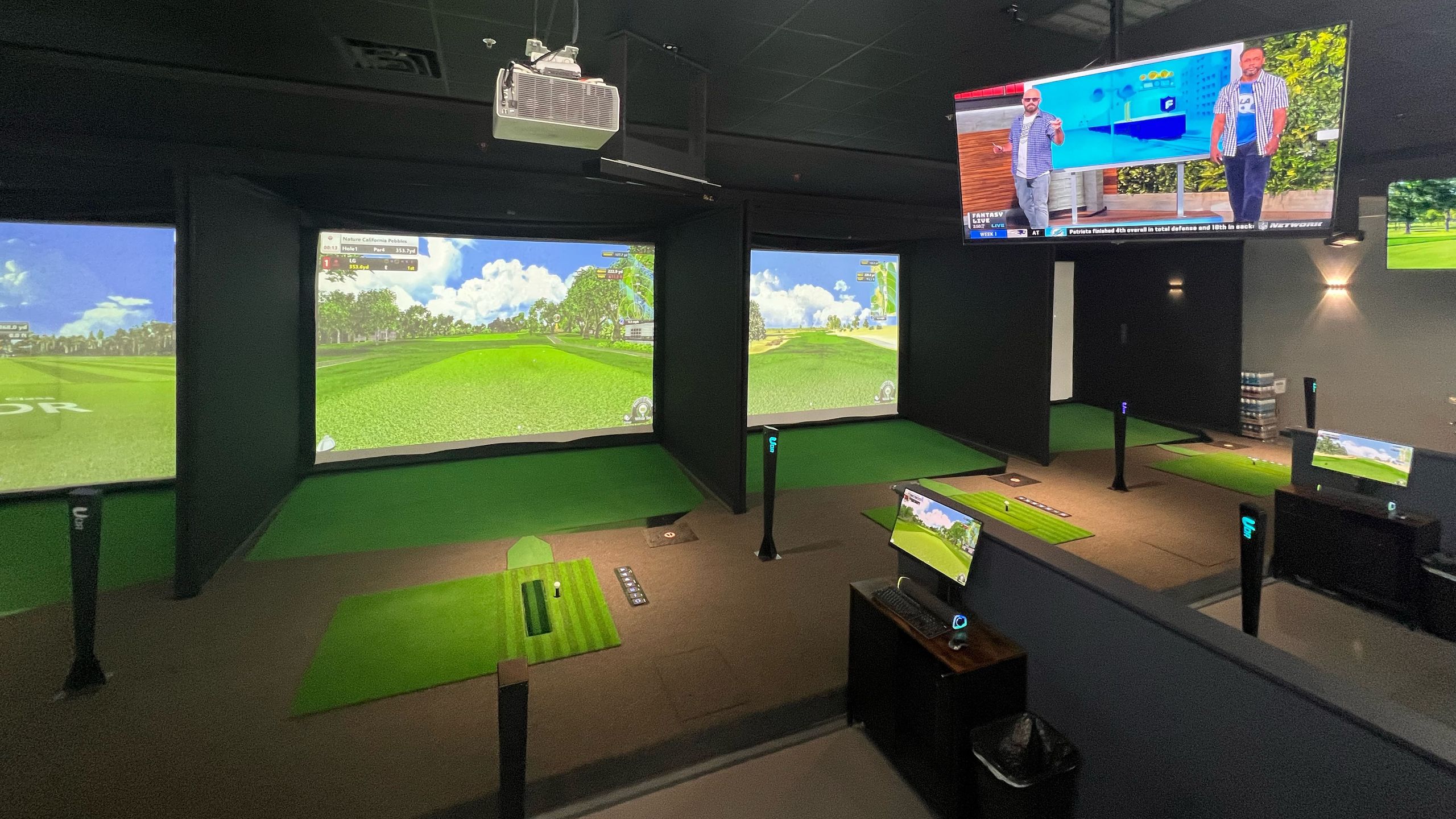
The PlayStation 5 virtual reality golf experience often falls short of enthusiast expectations due to hardware limitations in tactile feedback, tracking volume constraints inherent to inside-out camera arrays, and a limited software ecosystem that struggles to balance arcade accessibility with authentic sports simulation.
Virtual reality golf has captured the imagination of sports fans and simulation enthusiasts alike, promising the ability to play legendary courses from a living room. With the arrival of hardware like the PlayStation VR2 (PSVR2) headset for the PlayStation 5, players anticipated a generational leap in immersion, graphics, and physics fidelity. While the hardware boasts impressive technical specifications on paper—such as 4K OLED HDR displays and advanced headset feedback—the actual execution of playing golf within this ecosystem leaves many players wanting more.
Analyzing why this specific virtual reality sports medium struggles requires looking past surface-level marketing to examine the intricate relationship between physical controllers, tracking architectures, and sports physics. Golf is a discipline defined by millimeter precision, nuanced weight transfer, and subtle tactile feedback. When digital platforms attempt to replicate these physical realities, even minor compromises in hardware and software design become glaring bottlenecks.
1. Controller Ergonomics and Tactile Feedback Limitations
The foundation of any golf simulation rests on how the player interacts with the club. In traditional sports gaming, analog sticks and specialized peripherals translate movement into screen actions. In virtual reality, the hand controllers must mimic the grip, weight, and impact resistance of a real golf club shaft. This is where the PS5 virtual reality golf experience encounters its first major hurdle.
The Grip and Weight Distribution Challenge
The standard PSVR2 Sense controllers feature an orb-like tracking ring design that wraps around the user's hand. While engineered for ergonomic comfort across a wide variety of genres—from first-person shooters to rhythm games—this design fundamentally conflicts with the ergonomics of a two-handed golf grip.
When addressing a golf ball, a player typically overlaps or interlocks their hands, bringing their palms close together. The bulky circular tracking rings of the PSVR2 controllers frequently collide with one another during a standard overlapping grip. This forces players to adopt awkward, unnatural hand placements that undermine muscle memory built on actual golf courses.
Furthermore, the controllers lack the natural heft of a steel or graphite golf shaft. Without a weighted extension accessory—often sold separately by third-party manufacturers—the swing lacks centrifugal feedback. The brain struggles to gauge clubhead speed and face angle when swinging a lightweight plastic wand that weighs mere ounces compared to a real driver or iron.
Haptic Feedback vs. True Impact Resistance
Sony integrated impressive haptic motors into the PSVR2 Sense controllers and subtle haptic feedback within the headset itself. While these features excel at rumbling during explosions or simulating environmental textures, they fail to replicate the complex physics of a golf club meeting a turf surface or a golf ball at 100 miles per hour.
In real-world golf, striking a ball "fat" (hitting the ground before the ball) sends a distinct, jarring shockwave up the arms, accompanied by a sudden deceleration of the clubhead. Haptic controllers can pulse or vibrate, but they cannot physically halt the forward momentum of a player's hands or simulate true resistance. Consequently, players can slice through virtual turf or shank a ball without experiencing realistic mechanical feedback, reducing the discipline of swing correction to visual guesswork.
2. Tracking Volumetrics and Dead Zones
Precision tracking is non-negotiable in sports simulations. A golfer adjusting their stance by a fraction of an inch expects the virtual environment to reflect that adjustment instantly. The PlayStation 5 handles VR tracking through inside-out technology, utilizing four integrated cameras on the headset to monitor the positions of the controllers. While this system eliminates the need for external base stations or room sensors, it introduces specific blind spots that heavily impact golf titles.
The Backswing Blind Spot
During a standard golf swing, the player initiates a takeaway, rotates their torso, and brings the club up and behind their shoulders during the top of the backswing. In this position, the dominant hand and controller move outside the field of view of the headset's forward-facing tracking cameras.
- [Address Position] (Full Visibility)
- [Takeaway] (Visible)
- [Top of Backswing] (Potential Blind Spot)
- [Impact] (Visible)
When the controllers enter this peripheral or rear blind spot, the system must rely on internal Inertial Measurement Units (IMUs)—accelerometers and gyroscopes—to predict the controller's position and trajectory. While IMUs are remarkably fast, they drift over extended movements. This tracking handoff can result in sudden stutter, jitter, or erratic club behavior at the exact moment of the backswing transition, destroying the fluid motion required for an accurate shot.
Lower Body and Stance Isolation
Golf is fundamentally a kinetic chain starting from the ground up: feet, knees, hips, torso, arms, and finally the clubhead. Because the PSVR2 system tracks only the headset and the two handheld controllers out of the box, it possesses no native data regarding the player's foot placement, weight shift, or knee bend.
Without full-body tracking or external sensor integration, software must algorithmically guess the lower body's posture based entirely on headset and hand positions. If a player dips their knees or shifts weight incorrectly, the virtual avatar may still project a stable swing plane, disconnecting physical reality from digital feedback. This limitation prevents the platform from serving as a genuine training aid for real-world golfers looking to refine their form.
3. Software Ecosystem and Simulation Depth Compromises
Hardware constraints are only half of the equation. The software ecosystem available for the PS5 virtual reality platform dictates how deeply players can engage with the sport. Developers building titles for the ecosystem often face difficult compromises between mainstream accessibility and hardcore simulation depth.
The Arcade vs. Simulation Pendulum
To appeal to the broad demographic of the PlayStation user base, developers frequently tune physics engines to be forgiving. Wind vectors, lie angles, green slopes, and aerodynamic drag are often simplified to ensure casual players can hit straight shots without extensive practice.
For dedicated golf enthusiasts, this simplification turns competitive rounds into high-scoring arcade experiences. Putting physics, in particular, suffer from exaggerated rollout speeds and inconsistent read mechanics on sloping greens. Without robust customization options to toggle realistic wind turbulence, clubface twisting on off-center hits, and true-to-life ball compression, the software fails to capture the grueling mental and technical challenge that defines the sport.
Course Variety and Content Longevity
Licensing world-class golf courses—such as Augusta National, Pebble Beach, or St. Andrews—requires significant financial investment and legal negotiation. Consequently, many virtual reality golf titles rely on fictional, generic courses that lack the architectural nuance, historical prestige, and strategic shot-shaping requirements of real venues.
Once a player has navigated the limited selection of available courses, replayability plummets. Unlike multiplayer shooters or racing titles where every match or lap is dynamically unpredictable due to human opponents or split-second tactical decisions, a static virtual golf course offers finite tactical puzzles that quickly lose their appeal once memorized.
Comparative Analysis of Golf Gaming Mediums
To understand where the PS5 virtual reality golf experience sits within the broader gaming landscape, it is helpful to compare it against traditional flat-screen simulations and PC-based VR setups.
| Feature / Metric | PS5 VR Golf Experience | Traditional Flat-Screen Golf Sims (e.g., PGA Tour) | PC VR Golf (e.g., via SteamVR with Base Stations) |
|---|---|---|---|
| Visual Fidelity | High (OLED HDR, crisp resolution) | Ultra-High (4K native, complex ray tracing) | Variable (depends on PC hardware and headset) |
| Tracking Accuracy | Moderate (Inside-out cameras, prone to backswing occlusion) | N/A (Controller button inputs or mouse sweeps) | High (External lighthouse tracking, zero occlusion) |
| Tactile Feedback | Moderate (Controller rumble, headset feedback) | Low (Standard gamepad rumble) | High (Supports weighted third-party club attachments and advanced peripherals) |
| Setup Complexity | Low (Plug-and-play via USB-C cable) | Low (Standard console operation) | High (Requires powerful PC, calibrated sensors, cable management) |
Frequently Asked Questions
Can you use a real golf club accessory with the PS5 VR controllers?
Yes, several third-party manufacturers produce physical club attachments designed to snap onto the PSVR2 Sense controllers. While these accessories add much-needed weight and two-handed stability, they do not resolve the underlying inside-out tracking limitations or add lower-body tracking.
Does the PS5 support full-body tracking for golf?
Out of the box, the PS5 and PSVR2 do not support native full-body tracking peripherals. The system relies entirely on headset cameras and controller IMUs, meaning footwork and weight transfer are estimated algorithmically rather than tracked directly.
Are there realistic simulation golf games available on the PS5 VR platform?
The software library leans more toward arcade-style accessibility rather than hardcore physics simulation. While updates and new titles periodically release, developers often balance physics engines to accommodate casual players using standard controllers.
Why does my virtual club jump or stutter during my backswing?
Backswing stutter is typically caused by the controller moving outside the field of view of the headset's inside-out tracking cameras. When the controllers pass behind the player's shoulders, the system relies on internal gyroscopes, which can occasionally misjudge rapid movements.
Is the PS5 VR golf experience suitable for real-world golf training?
Due to the lack of lower-body tracking, simplified ball-striking physics, and the absence of true impact resistance, the platform is better suited for casual entertainment than serious athletic training or swing correction.
Final Recommendation
For players seeking a casual, visually striking arcade sports experience from the comfort of a living room, the PS5 virtual reality golf setup offers immediate entertainment value without requiring complex configuration. However, real-world golfers and hardcore simulation purists seeking granular physics, precise tracking through the entire swing plane, and authentic resistance feedback will likely find the current iteration falls short of expectations. Prospective buyers should weigh these hardware and software constraints carefully before investing in the ecosystem solely for golf simulations.