To accurately code a left quadriceps strain using the ICD-10-CM system in 2026, you must prioritize three essential components: selecting the site-specific code S76.112, applying the correct 7th character (A, D, or S) to define the episode of care, and documenting the clinical severity (strain vs. laceration) alongside laterality. Precise coding is mandatory to ensure reimbursement and avoid audit triggers in an increasingly automated billing environment.
Medical coding for musculoskeletal injuries requires a deep understanding of both anatomical structures and the hierarchical nature of the International Classification of Diseases, 10th Revision, Clinical Modification (ICD-10-CM). When a patient presents with an injury to the quadriceps femoris—a group of four muscles on the anterior thigh—the coding professional must translate clinical notes into a highly specific alphanumeric sequence. As of 2026, payers have tightened requirements for specificity, making "unspecified" codes a primary cause for claim rejections.
Essential 1: Mastering Laterality and Anatomical Specificity
The first and most fundamental essential for left quad strain coding is the absolute requirement for laterality. ICD-10-CM utilizes specific digits to identify which side of the body is affected. In the context of thigh injuries, failing to specify "left" or "right" results in a generic code that often lacks the medical necessity required for high-level reimbursement.
The Breakdown of S76.112
The core code for a left quadriceps strain is S76.112. To understand why this specific sequence is used, one must look at the hierarchy of the S76 category:
- S76: Covers injuries of muscle, fascia, and tendon at the hip and thigh level.
- S76.1: Specifically targets the quadriceps muscle, fascia, and tendon. This excludes the adductor muscles (S76.2) and the posterior muscle group/hamstrings (S76.3).
- S76.11: Defines the injury type as a "strain."
- S76.112: The "2" in the sixth position confirms the injury is located on the left side.
Why "Left" Matters in 2026
In the current 2026 healthcare landscape, insurance carriers utilize advanced AI auditing tools to scan for "unspecified" codes (such as S76.119). If a physical therapist or orthopedic surgeon documents a "left quad strain" but the biller submits an unspecified code, the discrepancy triggers an immediate "request for information" (RFI) or an outright denial. Clinical documentation must clearly state the side of the body, and the coder must ensure the sixth character reflects that documentation perfectly. This specificity is also vital for longitudinal patient records, where tracking the recovery of a specific limb is necessary for determining future disability ratings or surgical interventions.
Essential 2: Differentiating Injury Types and Severity
The second essential involves distinguishing a strain from other similar injuries of the thigh. The quadriceps can suffer from various traumas, and the ICD-10-CM provides distinct paths for each. A "strain" specifically refers to a stretching or tearing of muscle fibers or tendons.
Strain vs. Laceration vs. Contusion
Coders must carefully review the provider's notes to ensure the term "strain" is the most accurate description of the pathology.
- Strain (S76.112): Often occurring during eccentric contraction or overstretching.
- Laceration (S76.122): A physical cut or tear through the muscle tissue, often requiring surgical repair.
- Contusion (S70.12): A bruise resulting from direct impact. While a contusion may occur alongside a strain, they are distinct clinical entities with different ICD-10 categories.
Coding for Severity and Muscle Tiers
The quadriceps group consists of the rectus femoris, vastus lateralis, vastus medialis, and vastus intermedius. While the ICD-10-CM does not currently have separate sub-codes for the individual vastus muscles, clinical documentation often identifies which specific muscle is involved. In 2026, the trend in high-acuity sports medicine is to include the grade of the strain (Grade I, II, or III) in the narrative. While the ICD code itself may not change based on the grade, the "Medical Decision Making" (MDM) complexity in the associated Evaluation and Management (E/M) code often depends on this severity.
Furthermore, if the strain results in a complete rupture of the muscle-tendon junction, the coder must verify if the provider considers it a "strain" or a "non-traumatic rupture." Traumatic injuries use the "S" prefix, while chronic or non-traumatic issues may fall under "M" codes (Musculoskeletal system). For an acute sports injury, the "S" code remains the standard.
Essential 3: The 7th Character Extension (Episode of Care)
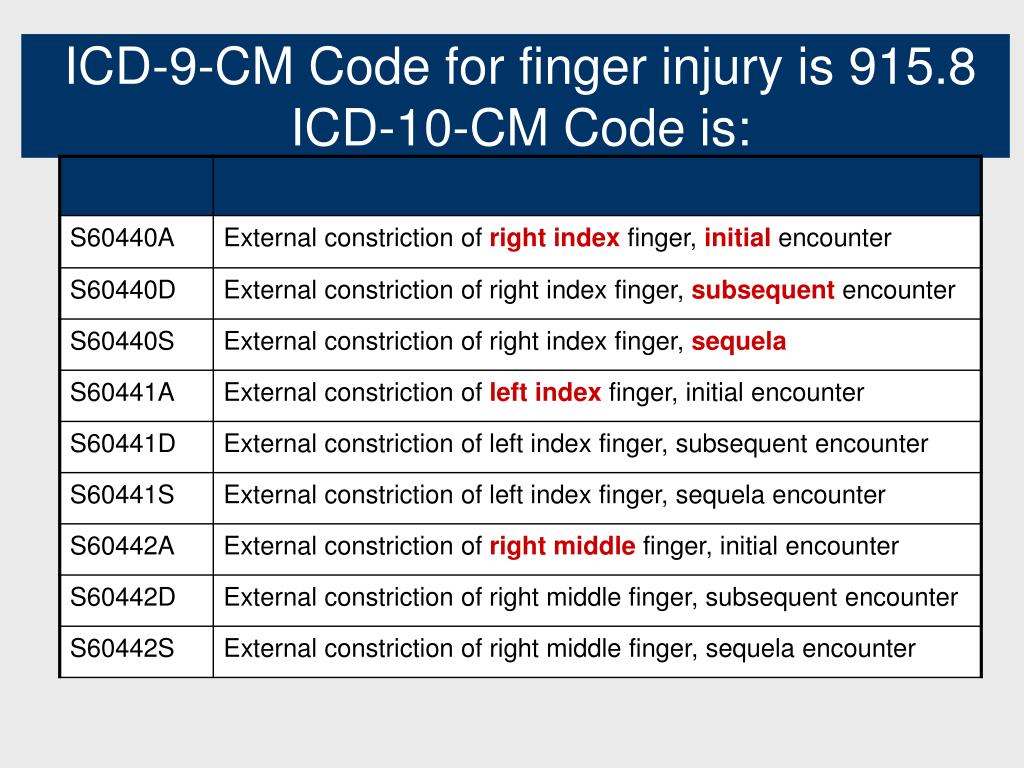
The third and perhaps most complex essential is the application of the 7th character. An ICD-10 code for a left quad strain is incomplete and "unbillable" without this final character, which defines the stage of treatment.
The Initial Encounter (A)
The 7th character "A" is used for the initial encounter. This does not necessarily mean the first time the patient sees any doctor; rather, it refers to the entire period when the patient is receiving active treatment for the injury. This includes emergency department visits, initial surgical consultations, and evaluation by a new specialist, provided they are still in the "active" phase of care. For example, S76.112A would be used for the first day of treatment.
The Subsequent Encounter (D)
The 7th character "D" is used for subsequent encounters. This applies to visits after the patient has completed active treatment and is now receiving routine care during the recovery phase. This is most common in physical therapy (PT) and follow-up orthopedic checks where the goal is monitoring healing or providing rehabilitation. A common mistake is continuing to use "A" throughout a three-month PT stint; once the acute phase is over, "D" must be utilized to reflect the transition in care.
The Sequela (S)
The 7th character "S" is used for sequela, or late effects. This is used when the injury has caused a secondary condition after the original injury has "healed." For example, if a patient develops permanent muscle fibrosis or a gait abnormality due to an old left quad strain, the "S" extension is used to link the new problem back to the original trauma. When using the "S" extension, it is often necessary to code both the current problem (e.g., muscle scar tissue) and the original injury code with the "S" character.
Comparative Coding for Thigh Injuries
The following table compares the ICD-10-CM codes related to quadriceps and thigh injuries to help differentiate the "S76.112" code from its neighbors.
| Injury Type | Left Thigh Code | Right Thigh Code | Notes |
|---|---|---|---|
| Quadriceps Strain | S76.112_ | S76.111_ | Requires 7th character (A, D, S) |
| Quadriceps Laceration | S76.122_ | S76.121_ | Specific to tears/cuts |
| Quadriceps Contusion | S70.12 | S70.11 | No 7th character required for contusion |
| Iliopsoas Strain | S76.012_ | S76.011_ | Often confused with high quad strains |
| Hamstring Strain | S76.312_ | S76.311_ | Posterior thigh muscle group |
| Adductor Strain | S76.212_ | S76.211_ | Inner thigh muscle group |
The Role of External Cause Codes (V00-Y99)
In 2026, payers often require supplemental "External Cause" codes to provide context for how the left quad strain occurred. While these codes are generally not the primary diagnosis, they are essential for data collection and for determining secondary insurance responsibility (such as Workers' Compensation or auto insurance).
Common external cause codes associated with quad strains include:
- W51.xxx_: Accidental striking against or caused by another person (common in contact sports).
- Y92.310: Basketball court as the place of occurrence.
- Y93.66: Activity, soccer.
Including these codes adds a layer of professionalism and "claim-readiness" that prevents payers from delaying payment while they investigate whether the injury occurred at work or during a third-party-liable accident.
Documentation Requirements for Clinical Accuracy
To support the use of S76.112, clinical documentation must be robust. A senior technical SEO editor and medical writer would emphasize that "if it wasn't documented, it didn't happen." For a left quad strain, the medical record should include:
- Mechanism of Injury: How did it happen? Was it a sudden sprint, a fall, or a direct blow?
- Physical Exam Findings: Palpable gaps in the muscle, localized edema (swelling), ecchymosis (bruising), and range of motion limitations in the knee and hip.
- Laterality: Consistent mention of the "left" leg throughout the note.
- Diagnostic Results: If an MRI or ultrasound was performed, the findings should confirm the strain and specify whether it involves the tendon or the muscle belly.
In 2026, many healthcare systems utilize electronic health records (EHR) that auto-suggest codes based on keywords. However, the coder must manually verify that the auto-suggestion has correctly applied the 7th character and laterality digits, as these are the most frequent points of error in automated systems.
Common Pitfalls in Left Quad Strain Coding
One frequent error is the confusion between "Strain" and "Sprain." In common parlance, people use them interchangeably, but in ICD-10-CM, they are distinct. A sprain (S73 category) involves ligaments—the tissues connecting bone to bone (e.g., the ACL or MCL in the knee). A strain involves muscles and tendons. If a coder uses a knee sprain code for a quadriceps muscle injury, the claim will likely be denied because the anatomical location (joint vs. muscle) does not match the procedure (e.g., therapeutic exercise for muscle strengthening).
Another pitfall is failing to account for "Multiple Injuries." If the patient strained their left quad and also sustained a knee abrasion, both must be coded. According to official ICD-10 guidelines, the most severe injury should be listed as the primary diagnosis.
FAQ
1. Can I use S76.112A for a physical therapy visit if it is the patient's first time at the PT clinic?
No. In 2026, the 7th character "A" is for the period of active treatment provided by the primary or surgical team. Physical therapy is generally considered "subsequent care" because it occurs after the initial diagnosis and stabilization phase. Therefore, most PT visits for a left quad strain should use S76.112D.
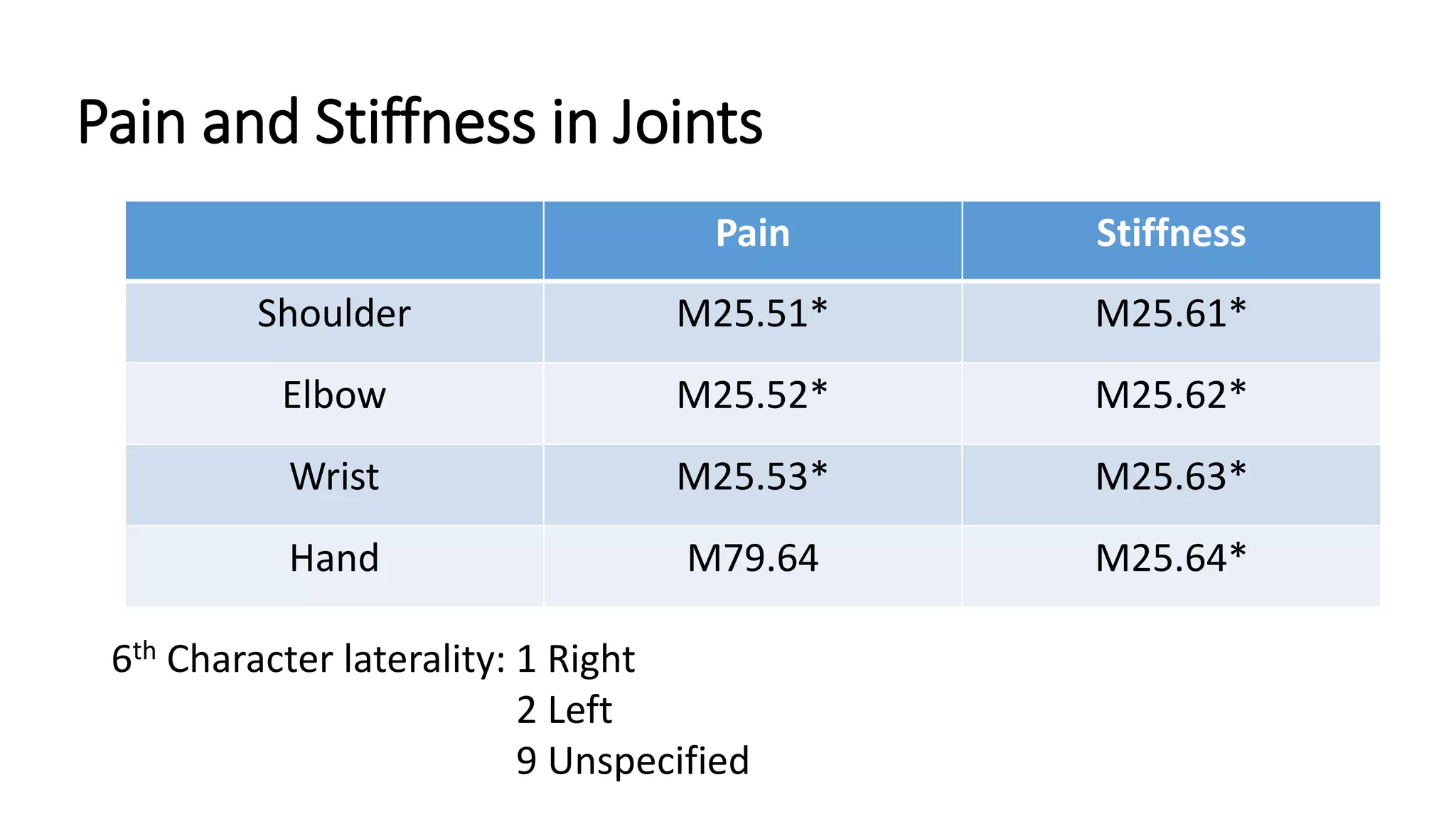
2. What is the difference between S76.112 and M62.662?
S76.112 is an "S" code, which is used for acute, traumatic injuries (e.g., the patient felt a "pop" while running). M62.662 is an "M" code for a muscle strain that is non-traumatic or chronic in nature. If the injury occurred during a specific event or accident, the "S" code is more appropriate and generally required by payers.
3. How do I code a left quad strain that has resulted in permanent muscle weakness?
You would use the code for the current condition (e.g., M62.81, Muscle weakness) and then list S76.112S as a secondary code. The "S" identifies that the current weakness is a sequela of the original left quad strain.
4. Is an MRI required to bill for a Grade III left quad strain?
No, an MRI is not a prerequisite for billing the ICD-10 code, but it is highly recommended for supporting the "medical necessity" of more intensive treatments, such as surgery or prolonged physical therapy. The code S76.112 remains the same regardless of whether the diagnosis was made via physical exam or imaging.
5. Does the code S76.112 cover injuries to the rectus femoris specifically?
Yes. The ICD-10-CM groups all four muscles of the quadriceps (rectus femoris, vastus lateralis, vastus medialis, and vastus intermedius) under the S76.1 subcategory. While you can specify the muscle in the clinical notes, the alphanumeric code remains the same for any of the four.
Final Recommendations for Coding Success
For healthcare providers and billing departments in 2026, the key to successful reimbursement for a left quad strain lies in the details. Always verify that the 2 is present in the sixth position to denote the left side, and carefully select between the A and D 7th characters based on the clinical stage of the patient's journey.
To stay compliant, regularly consult the CMS ICD-10 Resources and the AAPC's latest coding updates. By maintaining high standards for documentation and specificity, you can minimize the risk of audits and ensure that patients receive the uninterrupted care they need for a full recovery.