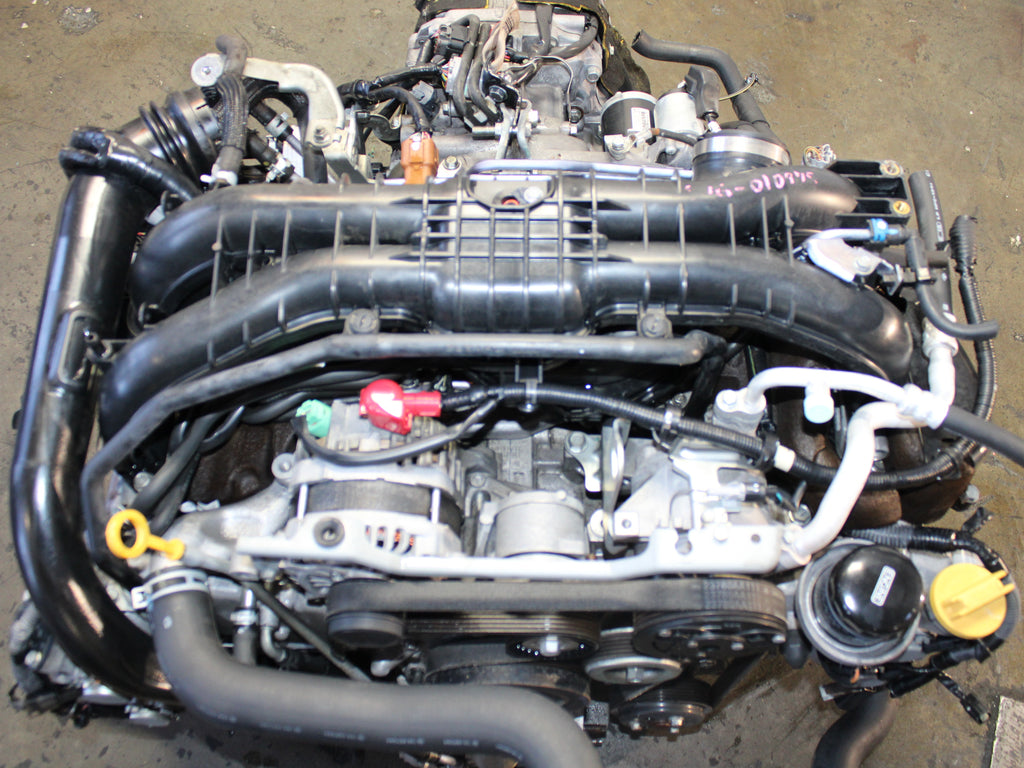
The 2018 Subaru Forester offers two distinct engine configurations: a 2.5-liter four-cylinder engine producing 170 horsepower for standard trims, and a 2.0-liter turbocharged four-cylinder engine generating 250 horsepower for the XT performance trims. These outputs define the vehicle’s driving characteristics, towing capabilities, and overall fuel efficiency, catering to different driver needs ranging from daily commuting to more spirited driving.
Understanding the powertrain dynamics of the 2018 Subaru Forester requires looking beyond simple horsepower numbers. By 2026, as these vehicles have aged into the used market, owners and prospective buyers frequently revisit these specifications to understand performance expectations, maintenance implications, and how these engines age over time.
The Standard Powertrain: 2.5-Liter Naturally Aspirated Boxer Engine
The most common engine found in the 2018 Subaru Forester lineup is the FB25, a 2.5-liter horizontally opposed, or "boxer," four-cylinder engine. This engine was designed to emphasize reliability, fuel economy, and smooth power delivery rather than high-performance thrills.
Engineering Fundamentals
The "boxer" configuration is central to the Forester’s identity. By placing the pistons horizontally, the engine sits lower in the chassis, which lowers the vehicle’s center of gravity. This layout contributes to the Forester’s handling stability. In the 2018 model, this engine produces 170 horsepower at 5,800 RPM and 174 lb-ft of torque at 4,100 RPM.
Driving Dynamics and Utility
With 170 horsepower, the 2018 Forester is adequately powered for urban environments and highway cruising. However, drivers often notice that the engine requires higher revolutions to access its peak power, which is typical for naturally aspirated engines of this displacement. When paired with the Lineartronic Continuously Variable Transmission (CVT), the delivery is linear. While this combination is excellent for fuel efficiency, drivers merging onto fast-moving highways or climbing steep mountain passes may find the engine laboring under full load, resulting in increased cabin noise.
The Performance Option: 2.0-Liter Turbocharged Boxer Engine
For drivers seeking more significant power, the 2018 Subaru Forester offered the 2.0-liter turbocharged FA20 engine, exclusively available in the 2.0XT trims. This engine represents a significant departure from the standard configuration in terms of technical complexity and output.
Turbocharged Power Output
The 2.0-liter turbo engine produces 250 horsepower at 5,600 RPM and a robust 258 lb-ft of torque between 2,000 and 4,800 RPM. The presence of a turbocharger changes the power curve entirely compared to the 2.5-liter engine. Because the torque peaks much lower in the RPM range, the XT trim feels significantly more responsive during everyday tasks like passing or accelerating from a stop.
Considerations for the Turbocharged Model
While the performance gains are substantial, they come with trade-offs. The turbocharged engine requires higher maintenance vigilance, particularly regarding oil change intervals and the quality of fuel. Subaru mandated premium unleaded gasoline (91 octane or higher) for the 2.0XT to prevent engine knocking and ensure the turbocharger performs within its designed parameters. Over the vehicle's lifespan, owners of these turbocharged models must be more diligent about cooling system maintenance and ensuring the turbocharger’s oil feed lines remain free of sludge.
Comparative Overview of 2018 Engine Options
To better understand how these two engines compare, it is helpful to view their specifications side-by-side. The following table outlines the mechanical differences that dictate the driving experience.
| Feature | 2.5i (Base/Premium/Limited/Touring) | 2.0XT (Premium/Touring) |
|---|---|---|
| Engine Type | 2.5L Naturally Aspirated Boxer | 2.0L Turbocharged Boxer |
| Horsepower | 170 hp @ 5,800 RPM | 250 hp @ 5,600 RPM |
| Torque | 174 lb-ft @ 4,100 RPM | 258 lb-ft @ 2,000–4,800 RPM |
| Transmission | Lineartronic CVT | High-Torque Lineartronic CVT |
| Fuel Requirement | Regular Unleaded (87 Octane) | Premium Unleaded (91+ Octane) |
| Drive Type | Symmetrical All-Wheel Drive | Symmetrical All-Wheel Drive |
The Role of Transmission in Power Delivery
The transmission serves as the bridge between engine output and the wheels. Both the 2.5i and the 2.0XT utilize Subaru’s Lineartronic CVT. However, they use different versions of this technology to handle the varying levels of torque produced by the engines.
The CVT Experience
Unlike a traditional automatic transmission with fixed gears, a CVT uses a belt-and-pulley system to provide an infinite range of ratios. This allows the engine to operate at its most efficient speed regardless of the vehicle's velocity. For the 2.5i, the standard CVT is optimized for efficiency. In the 2.0XT, Subaru employed a "High-Torque" version of the CVT designed to handle the significantly higher twisting force of the turbo engine without slipping or premature wear.
Impact on Real-World Performance
Many drivers who are accustomed to traditional step-gear transmissions find the CVT’s "rubber band" feeling—where the engine RPM increases before the vehicle speed fully catches up—to be a point of friction. In the 2018 Forester, Subaru programmed "steps" into the CVT to mimic traditional gear shifts under heavy acceleration, which helps mitigate the disconnect between engine noise and actual vehicle speed.
Factors Influencing Longevity and Output
As we approach 2026, the age of a 2018 Forester suggests that engine output can no longer be assumed to match factory-new ratings. Several factors influence how well these engines maintain their performance:
- Maintenance Consistency: The "Boxer" engine is sensitive to oil levels. Given their horizontal layout, these engines can consume oil as they age. Consistent checking and the use of the correct viscosity (usually 0W-20 synthetic) are critical for preventing internal wear that leads to power loss.
- Air Intake and Fuel Systems: Carbon buildup on intake valves—particularly in the direct-injected 2.0XT engine—can restrict airflow over time. Periodic induction services or the use of top-tier detergents in fuel can help preserve the engine's original performance characteristics.
- Sensor Accuracy: The engine control unit (ECU) relies on a variety of sensors, including the Mass Air Flow (MAF) sensor and Oxygen (O2) sensors, to adjust the air-fuel mixture. If these sensors are degraded or dirty, the engine may operate in a "limp" or inefficient mode, resulting in a noticeable loss of horsepower.
Frequently Asked Questions
Does the 2018 Subaru Forester 2.5i have enough power for towing?
The 2018 Forester 2.5i is rated for a maximum towing capacity of 1,500 pounds. While the 170 horsepower is sufficient for small trailers or camping gear, it is not designed for heavy-duty towing. Always ensure the total weight does not exceed the manufacturer’s specified limit, as exceeding this can put excessive strain on the CVT and the engine cooling system.
Why does the 2.0XT require premium fuel?
The 2.0XT uses higher compression and forced induction (turbocharging) to achieve its 250-horsepower output. Premium fuel (91 octane or higher) has a higher resistance to "knocking" or "pinging," which occurs when the air-fuel mixture ignites prematurely under high pressure. Using lower-octane fuel can force the engine's computer to retard the ignition timing, which protects the engine but results in a significant reduction in power.
Is the 2018 Forester engine output affected by high altitude?
Yes. Naturally aspirated engines, like the 2.5i, lose power as altitude increases due to thinner air. Generally, you can expect a loss of approximately 3% of horsepower for every 1,000 feet of elevation gain. The turbocharged 2.0XT is less affected by altitude because the turbocharger can compensate for the thin air by forcing more oxygen into the engine, though it may still experience minor performance variations.
Can I increase the horsepower of my 2018 Forester?
While some enthusiasts use aftermarket "tunes" or performance air intakes, modifying the powertrain of a 2018 Forester often complicates the long-term reliability of the transmission and emissions components. Because the CVT is calibrated specifically for the factory torque curves, altering the engine's output significantly can lead to premature failure of the transmission chain or pulleys. It is generally recommended to keep the engine in its factory-specified state for maximum longevity.
Final Recommendation
For most buyers in 2026, the 2018 Subaru Forester’s 2.5-liter engine offers the best balance of reliability and fuel economy. If your primary goal is daily transportation, family utility, and occasional light outdoor use, the 170-horsepower base engine is sufficient and easier to maintain. If you prioritize acceleration and highway passing power, the 2.0XT is the superior choice, provided you are prepared for the increased fuel costs and the heightened maintenance requirements of a turbocharged vehicle. Before purchasing any used 2018 Forester, ensure you have access to service records that verify regular oil changes, as this is the single most important factor in preserving the performance output of these engines.