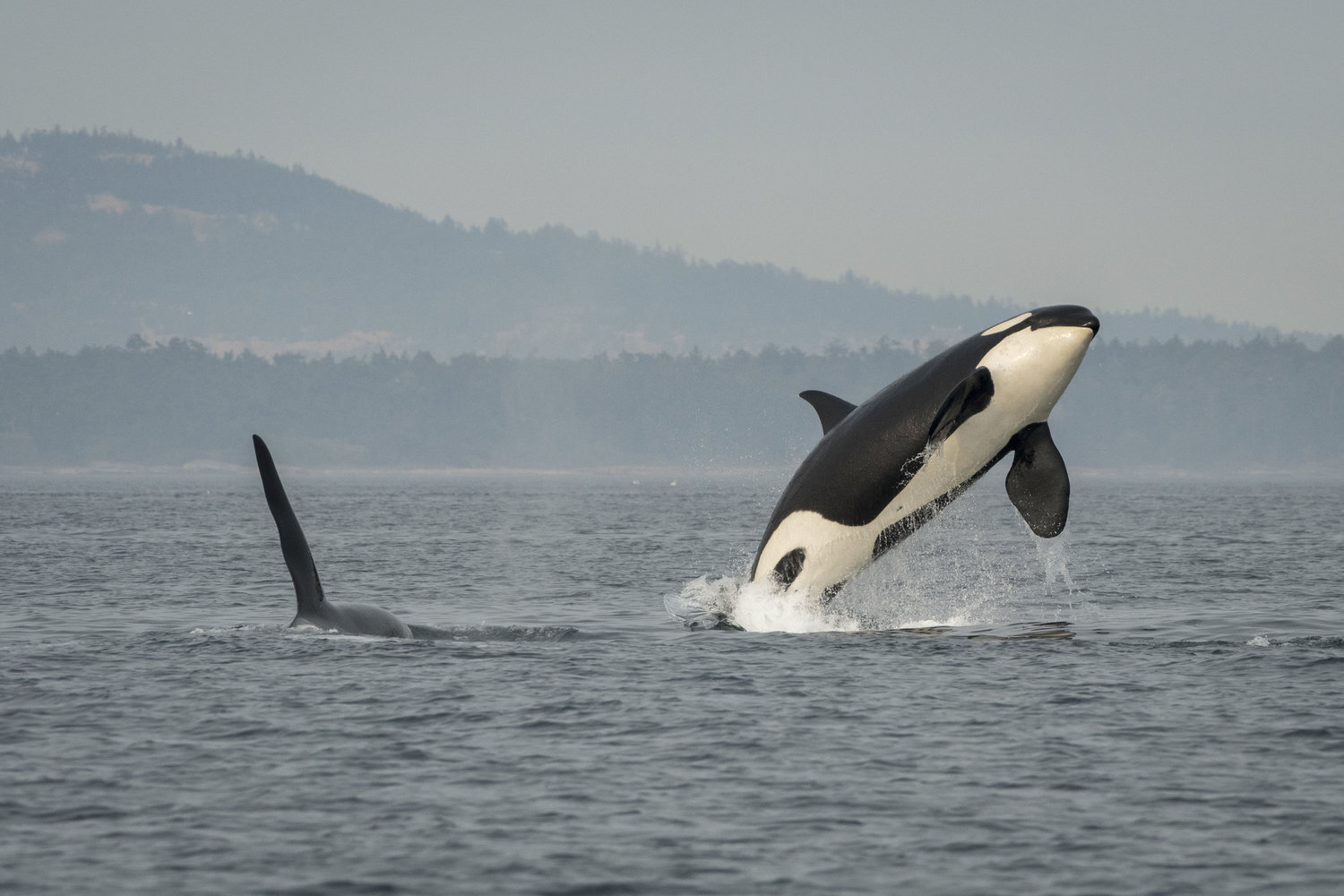
Killer whales, or orcas (Orcinus orca), are the world’s largest members of the dolphin family and serve as apex predators across all the world's oceans. Scientifically recognized for their complex social structures and diverse hunting strategies, these marine mammals exhibit significant behavioral variation between distinct populations, reflecting a highly specialized mastery of their specific ecological niches.
1. Complex Social Structures and Matriarchy
The fundamental unit of killer whale society is the matriline, a group consisting of a female, her offspring, and the offspring of her daughters. These social structures are remarkably stable, often lasting for decades. Orcas are matriarchal, meaning the oldest female typically leads the group, providing essential knowledge regarding food sources, migratory routes, and social cohesion. This multi-generational wisdom is critical for the survival of the pod, particularly when environmental conditions change or prey becomes scarce. Unlike many other social animals, both male and female offspring often remain with their mothers for their entire lives, fostering deep familial bonds that are rarely seen in other mammalian species.
2. Echolocation and Communication
Killer whales utilize a sophisticated biological sonar system known as echolocation to navigate, locate prey, and communicate in the vast, often murky depths of the ocean. By emitting high-frequency sound pulses that bounce off objects, orcas create a mental map of their surroundings, allowing them to detect fish as small as a salmon or as large as a whale from significant distances. Beyond navigation, their communication is highly nuanced. Research indicates that different pods possess unique "dialects," consisting of specific calls and whistles that are learned rather than innate. These vocalizations serve to maintain group identity and coordinate complex hunting maneuvers.
3. Global Distribution and Habitat Versatility
While they are often associated with the frigid waters of the Arctic and Antarctic, killer whales are the most widely distributed cetaceans on the planet. They inhabit every major ocean, from the icy Southern Ocean to the warm, tropical waters near the equator. This extreme habitat versatility is attributed to their status as generalist predators that have adapted to diverse climate zones. However, individual populations are often highly localized, remaining within specific ranges where they have developed specialized feeding habits and social behaviors tailored to the geography and available biomass of their home waters.
4. Specialized Hunting Tactics
The hunting strategies of orcas are among the most calculated in the animal kingdom. These tactics are culturally transmitted, meaning older individuals teach younger ones how to execute complex maneuvers. For example, some populations in the Antarctic have been observed working in teams to create waves that wash seals off ice floes. In other regions, orcas may beach themselves intentionally to snatch prey from the shoreline or coordinate "herding" behaviors to concentrate schools of fish. Because these tactics are passed down through generations, different populations essentially possess distinct "technologies" for survival.
5. Categorization into Ecotypes
Scientists categorize killer whales into distinct "ecotypes" based on their genetic makeup, physical appearance, and diet. For instance, in the North Pacific, there are "Resident" whales that eat primarily fish, "Transient" (or Bigg’s) whales that specialize in hunting marine mammals, and "Offshore" whales that consume sharks and other large fish. These ecotypes rarely interact and, in some cases, have been shown to avoid one another entirely. This level of specialization highlights the evolutionary divergence occurring within the species, as each ecotype is uniquely optimized for its chosen diet.
6. Sexual Dimorphism and Physical Growth
Killer whales exhibit clear sexual dimorphism, with adult males being significantly larger than females. A mature male can reach lengths of up to 30 feet and weigh over 11,000 pounds, while females are generally smaller and more streamlined. One of the most recognizable features of the male orca is the dorsal fin, which can grow to be six feet tall and stand perfectly straight. In contrast, the female’s dorsal fin is typically shorter and more curved. These physical traits are not merely ornamental; the size and shape of their bodies are evolved to support the high-energy demands of their specific lifestyles and reproductive roles.
7. The Role of Menopause
Orcas are one of the few species on Earth—along with humans and a few other whale species—that undergo menopause. After a female reaches reproductive age (usually in her teens or early twenties), she will eventually stop reproducing, often in her thirties or forties. This is an evolutionary advantage known as the "grandmother hypothesis." Post-reproductive females continue to lead their pods, sharing their extensive knowledge of where to find salmon runs or how to handle difficult hunting conditions. This contribution to the survival of their grandchildren significantly increases the overall fitness of the matriline.
8. Apex Predation and Ecological Impact
As apex predators, killer whales play a vital role in maintaining the health and balance of marine ecosystems. By regulating the populations of species lower in the food chain—such as seals, sea lions, and various fish stocks—they prevent overgrazing of resources. Their presence also influences the behavior of prey species, a phenomenon known as a "landscape of fear," where prey animals change their movement patterns to avoid areas frequently patrolled by orcas. This top-down regulation is essential for preventing ecological collapse and maintaining biodiversity within oceanic habitats.
9. Lifespan and Reproductive Biology
The longevity of a killer whale in the wild is often comparable to that of humans. While there is variability between populations, female orcas can live for 50 to 90 years, while males generally have shorter lifespans, averaging 30 to 50 years. They possess a slow reproductive rate, with females typically giving birth to a single calf every three to five years after a gestation period of approximately 17 months. Because the survival of the calf depends heavily on the support of the matriline, this slow reproductive cycle is a strategy that prioritizes the high investment and success of each individual offspring.
10. Cultural Transmission of Knowledge
The survival of an orca is entirely dependent on the knowledge it inherits from its pod. This "culture" encompasses more than just hunting tactics; it includes knowledge of seasonal migrations, identification of safe versus dangerous waters, and the complex social etiquette required to navigate the pod hierarchy. When an older orca dies, a wealth of information—often spanning decades of environmental data—is lost. This reliance on cultural transmission makes orca populations particularly vulnerable to environmental disruptions that might break the chain of learning between generations.
Comparative Overview of Orca Ecotypes
| Feature | Resident Orcas | Transient (Bigg's) Orcas | Offshore Orcas |
|---|---|---|---|
| Primary Diet | Fish (primarily salmon) | Marine mammals | Sharks, fish |
| Social Structure | Large, stable pods | Small groups | Large, fluid groups |
| Vocalization | Highly vocal | Quiet (to avoid detection) | Variable |
| Range | Coastal | Coastal and open water | Open water |
Frequently Asked Questions (FAQ)
How do scientists identify individual killer whales in the wild? Researchers use photo-identification, focusing on the unique shape and markings of the dorsal fin and the "saddle patch"—the grey area behind the fin. Over time, these markings develop nicks and scars that act as a natural "fingerprint," allowing scientists to track individuals across decades.
Do wild killer whales pose a threat to humans? There are no documented cases of wild killer whales attacking or killing humans. While they are powerful apex predators, they do not view humans as prey and generally avoid interaction with our species.
Why are some orcas found in the tropics if they prefer cold water? Killer whales are highly adaptable. While they are most famous in polar regions, they exist globally. Populations in warmer climates have adapted to different environmental conditions and local food sources, demonstrating that temperature is not the primary limiting factor for their distribution.
How does climate change affect wild orca populations? Climate change impacts orcas primarily through the loss of prey. For example, changes in ocean temperature can shift the migration patterns of salmon or reduce the availability of ice for pinnipeds. Since many orca populations are highly specialized, they struggle to adapt when their primary food source declines.
Are all killer whales the same species? Currently, they are classified as one species (Orcinus orca), but scientific consensus is shifting. Given the deep genetic and behavioral differences between ecotypes—which have been separated for hundreds of thousands of years—many researchers believe they may eventually be reclassified into multiple species or subspecies.
Next Steps for Research and Observation
If you are interested in learning more about killer whales in the wild, the best approach is to consult data from established marine research organizations such as the National Oceanic and Atmospheric Administration (NOAA) or the Center for Whale Research. These entities provide longitudinal studies that are vital for understanding the population dynamics and conservation status of specific ecotypes. For those planning to observe orcas, always prioritize responsible whale-watching guidelines; maintaining a respectful distance ensures you do not disrupt the critical social and hunting behaviors discussed here.