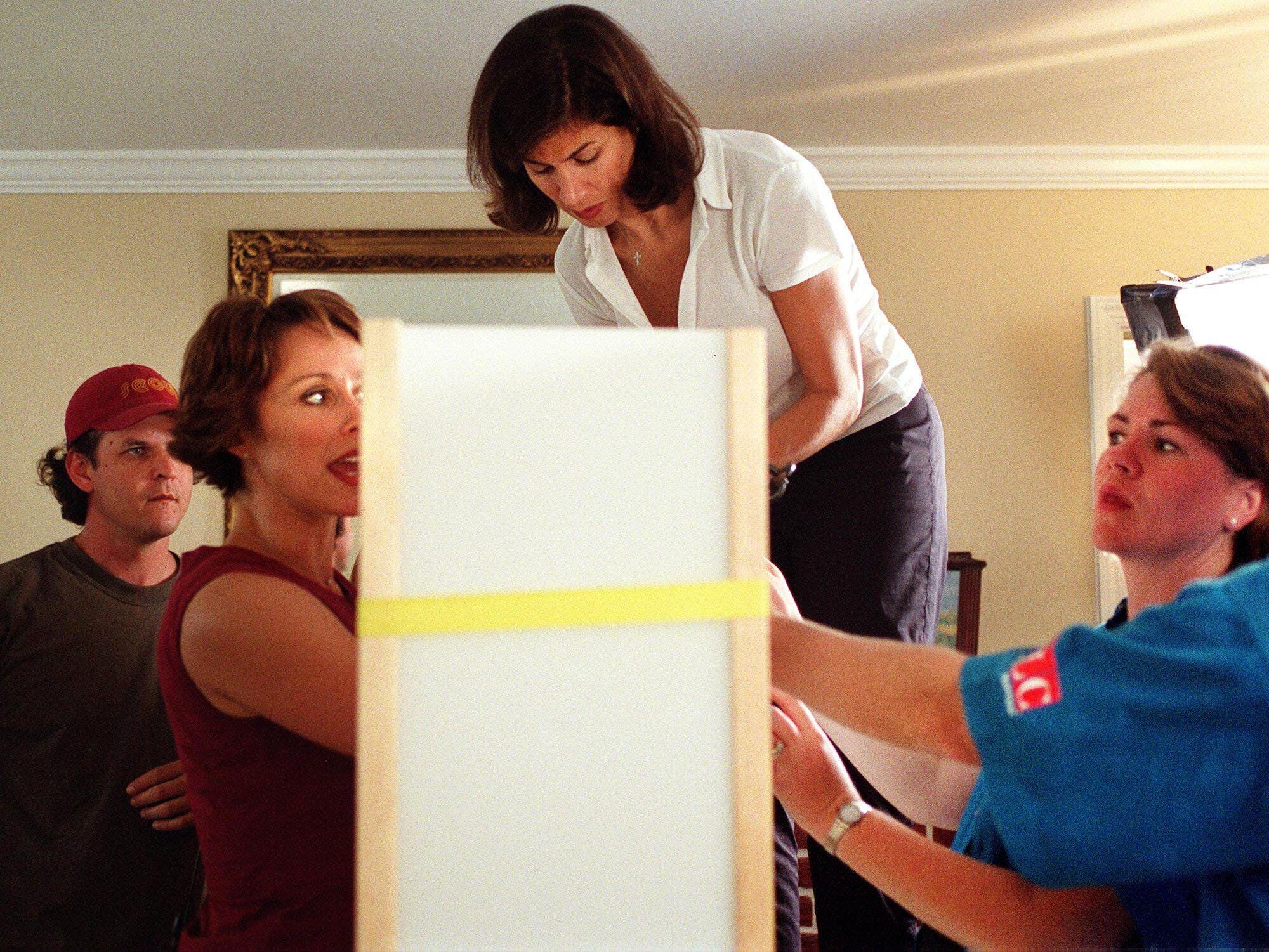
The 2018 revival of Trading Spaces failed primarily because it struggled to reconcile its campy, low-budget DIY roots with a modernized home renovation market that prioritized professional aesthetics, high production values, and "Pinterest-perfect" results. While nostalgia fueled high initial viewership, the show's format—characterized by $2,000 budgets and experimental, often polarizing designs—clashed with the contemporary "Fixer Upper" era of interior design.
The Cultural Landscape of 2018 vs. 2000
To understand why the 2018 reboot of Trading Spaces on TLC ultimately lost its momentum, one must first look at the massive shift in the television landscape between the show’s original run (2000–2008) and its return. When the show first premiered at the turn of the millennium, it was a revolutionary concept. It pioneered the "neighbor-swapping" format and introduced the world to "designers as celebrities."
By 2018, however, the "home renovation" genre had been completely transformed by the HGTV juggernaut. Viewers were no longer satisfied with watching neighbors glue hay to a wall or paint a room bright orange for shock value. The rise of social media platforms like Pinterest and Instagram created a more design-literate audience that valued resale value and cohesive aesthetics over the whimsical, often amateurish "craftiness" that defined the original series. As we look back from 2026, the 2018 reboot serves as a textbook example of "nostalgia bait" that failed to evolve alongside its audience's tastes.
The "Joanna Gaines Effect" and the Death of DIY Whimsy
The most significant hurdle for the 2018 reboot was what industry analysts call the "Joanna Gaines Effect." Throughout the 2010s, shows like Fixer Upper and Property Brothers shifted the focus of home improvement from "do-it-yourself" projects to full-scale professional renovations. These shows emphasized high-end finishes, structural changes, and a specific, aspirational "modern farmhouse" or "industrial chic" look.
Trading Spaces, by contrast, was built on the premise of "decorating on a dime." In the early 2000s, using a $1,000 budget to transform a room was impressive. By 2018, even after TLC doubled the budget to $2,000, that amount was insufficient to produce the high-caliber results viewers had become accustomed to seeing on other networks. The results often looked "cheap" compared to the sleek, staging-heavy reveals of contemporary competitors. When a designer like Hildi Santo-Tomas or Doug Wilson focused on a quirky concept rather than a functional, beautiful living space, it felt out of touch with a public that viewed their homes as their most significant financial assets.
The Pitfalls of Casting and Character Archetypes
TLC made a strategic decision to bring back almost the entire original cast for the 2018 reboot, including host Paige Davis and designers like Vern Yip, Genevieve Gorder, and Ty Pennington. While this move was designed to trigger nostalgia, it created a narrative vacuum. In the original series, the conflict often arose from the "villainous" designers making radical choices that horrified the homeowners.
In 2018, this "villain" trope felt forced. Viewers in the late 2010s were more interested in authentic transformation and expert guidance than in manufactured drama or "gotcha" moments. The designers, now a decade older and more established in their careers, sometimes seemed to be playing "characters" of their younger selves. The tension that felt organic in 2002 felt scripted in 2018. Furthermore, the newer designers introduced in the reboot struggled to find their footing alongside the "legendary" original cast, leading to a disjointed chemical balance on screen.
Technical Specifications: The Budget vs. Inflation Gap
One of the most criticized aspects of the reboot was the financial feasibility of the projects. The original show's hook was the $1,000 budget. For the 2018 revival, this was increased to $2,000. However, when adjusted for the rising costs of materials, labor, and furniture over nearly two decades, $2,000 in 2018 did not go nearly as far as $1,000 did in 2000.
| Feature | Original Series (2000-2008) | Reboot Series (2018-2019) | Modern Renovation Standard (2026 Context) |
|---|---|---|---|
| Budget per Room | $1,000 | $2,000 | $10,000 - $50,000+ |
| Timeframe | 48 Hours | 48 Hours | 4 - 8 Weeks (Narrative time) |
| Design Focus | Surface-level DIY / Shock Value | Nostalgia / Cosmetic DIY | Functional / Structural / Resale |
| Primary Material | MDF, Fabric, Paint | MDF, Basic Lumber, Paint | Stone, Custom Cabinetry, Smart Tech |
| Viewer Sentiment | Curiosity / Excitement | Nostalgia / Skepticism | Professional Inspiration |
The table above illustrates the disconnect. While Trading Spaces stayed true to its "48-hour, low-budget" formula, the rest of the industry moved toward "narrative renovations" where viewers saw the process of a house being gutted and rebuilt. The reboot felt like a "room makeover" show in a "whole house renovation" world.
The Shift in Production and Pacing
The 2018 reboot also suffered from pacing issues that are common in modern cable television. To satisfy the demands of 21st-century production, the episodes felt more padded and repetitive. The "reveal," which was once a tight, five-minute segment of pure emotion, was often dragged out with cliffhangers and commercial breaks that tested the audience's patience.
Moreover, the editing style of 2018 attempted to mimic the high-energy "shaky cam" and fast cuts of modern reality TV, which clashed with the cozy, procedural nature of the original show. Fans who wanted a trip down memory lane were met with a hyper-stylized version of their childhood favorite, while new viewers found the "neighbor-swapping" gimmick to be a dated relic of the pre-social media era.
The Loss of "Shock Value" in the Social Media Era
In the early 2000s, when Hildi Santo-Tomas famously covered a wall in hay or glued thousands of silk flowers to a bathroom wall, it was a "water cooler" moment. People talked about it at work the next day. By 2018, "shocking" content was everywhere. Between YouTube pranksters and viral TikTok home hacks, the relatively mild "disasters" on Trading Spaces no longer had the same cultural impact.
When the reboot tried to recreate these moments, they often felt like parodies. The homeowners' reactions also felt less authentic; by 2018, everyone knew the "rules" of reality TV. Participants were often more concerned with how they would look on camera or how their social media followers would react than they were with the actual color of their walls. This performative nature stripped the show of the raw, unpredictable energy that made the original run a phenomenon.
Why the Show Didn't Last Beyond 2019
After a massive premiere that drew nearly 3 million viewers, the ratings for the 2018 reboot began a steady decline. While it was renewed for a second season in 2019, the buzz had largely evaporated. By the time the world entered the 2020s, the "home" became a sanctuary due to global events, and the desire to watch neighbors "ruin" each other's houses for entertainment seemed increasingly out of step with the cultural mood.
The show essentially "failed" not because it was poorly made, but because it was a 20th-century idea trying to survive in a 21st-century ecosystem. It proved that while you can bring back the people and the theme song, you cannot easily recreate the specific cultural moment that made a show a hit in the first place.
Common Questions About the Trading Spaces Reboot
Why did TLC bring back Trading Spaces in 2018?
TLC brought the show back to capitalize on the massive trend of "reboot culture" and nostalgia that was sweeping the entertainment industry in the late 2010s. With the original cast still active in the design world, it seemed like a low-risk way to capture both older fans and a new generation of DIY enthusiasts.
Was the $2,000 budget realistic for 2018?
Most professional designers argued that it was not. While it was possible to paint a room and add minor decor for $2,000, it was nearly impossible to buy quality furniture, rugs, and lighting for that amount. This led to many rooms looking "unfinished" or relying heavily on cheap, temporary materials like MDF and basic craft supplies.
Who were the designers in the 2018 reboot?
The reboot featured many returning favorites: Vern Yip, Genevieve Gorder, Hildi Santo-Tomas, Doug Wilson, Laurie Smith, and Frank Bielec. It also introduced new designers like Sabrina Soto, John Gidding, Kahi Lee, and Brett Tutor to provide a more modern perspective.
Did the homeowners really hate the rooms?
While some homeowners in the reboot expressed disappointment, the "crying and screaming" reactions of the early 2000s were much rarer. This was largely because the designers were more aware of their public image, and the homeowners were often fans of the show who knew what they were signing up for.
Is Trading Spaces still on the air in 2026?
As of 2026, Trading Spaces is no longer producing new episodes. The series effectively ended after its 2019 season. The cast members have largely moved on to other individual projects, social media consulting, or private design practices.
Where can I watch the 2018 episodes now?
Most episodes of the reboot, along with the original series, are available on various streaming platforms owned by Warner Bros. Discovery (the parent company of TLC), such as Max or Discovery+.
Final Assessment: The Legacy of the 2018 Failure
The 2018 failure of Trading Spaces serves as a cautionary tale for network executives. It demonstrates that nostalgia alone is not a sustainable business model. For a reboot to succeed, it must maintain the "soul" of the original while radically updating its "body" to meet modern standards. Trading Spaces tried to keep too much of the old body—the low budget, the gimmicks, the "shocker" reveals—in a world that had moved on to high-resolution, high-investment home transformations.
For viewers looking to relive the magic, the reboot offers a few bright spots of nostalgia, but it ultimately serves as a reminder of how much our relationship with our homes, and our television, has changed over the last quarter-century.