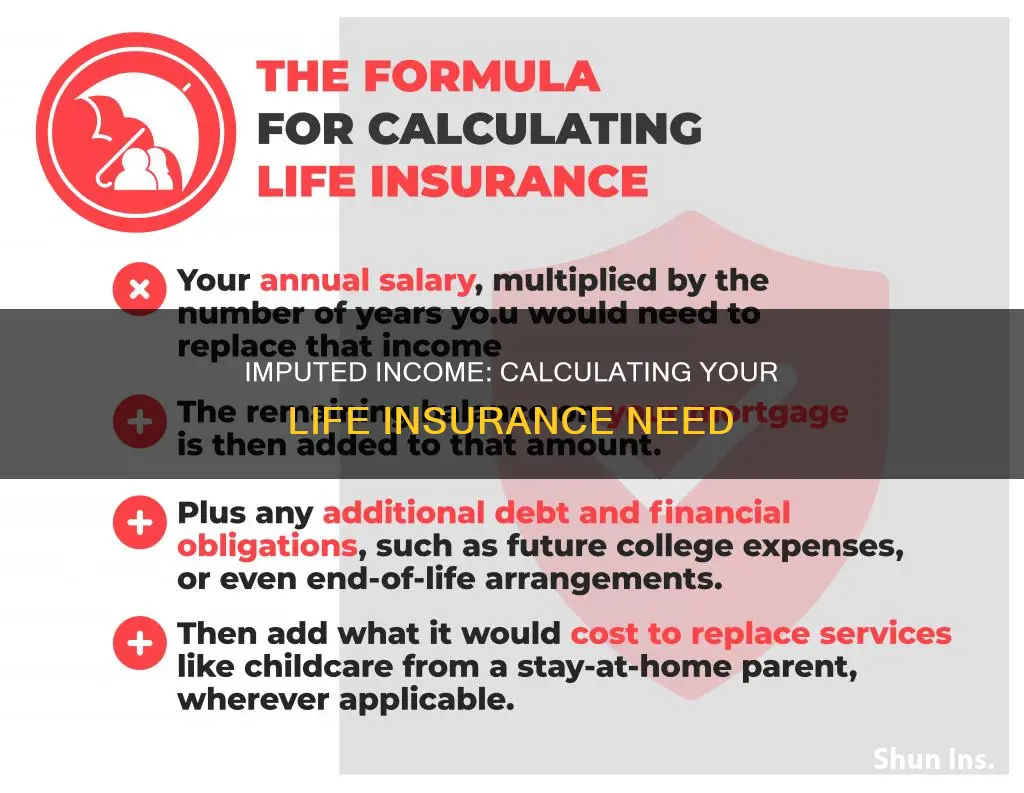
When an employer provides group term life insurance coverage exceeding $50,000, the Internal Revenue Service (IRS) requires that the cost of the "excess" coverage be reported as taxable income to the employee. This specific tax treatment is known as imputed income, and the standard table used to calculate this value is commonly referred to as the "PS50" table. Understanding these calculations is essential for accurate payroll management and personal tax planning, as this benefit is considered a form of compensation rather than a tax-free perk.
Understanding the Fundamentals of Group Term Life Insurance
Group term life insurance is a common employee benefit offered by employers to provide financial protection to employees' beneficiaries in the event of death. Unlike permanent or whole life insurance, term life insurance provides coverage for a specific period—usually as long as the employee remains employed. Because it is often provided as a group policy, it is generally inexpensive for the employer to maintain and convenient for the employee, as it typically does not require a medical underwriting process for standard coverage amounts.
The IRS maintains specific rules regarding the taxability of this benefit. Under Internal Revenue Code Section 79, the cost of the first $50,000 of employer-provided group term life insurance is excluded from an employee’s gross income. This means employees do not pay taxes on the premiums for the first $50,000 of coverage. However, once the coverage amount exceeds $50,000, the benefit enters the realm of taxable compensation. The value of this additional coverage is what is formally called "imputed income."
What is Imputed Income?
Imputed income refers to the value of a benefit that is treated as compensation for tax purposes, even though the employee does not receive a direct cash payment for it. In the context of life insurance, the IRS assumes that if an employer pays for life insurance coverage beyond the $50,000 tax-free threshold, the employee has essentially received a benefit that functions like cash income.
Because this benefit is considered income, it is subject to Social Security and Medicare taxes (FICA). Employers are responsible for calculating the value of this excess coverage each pay period, adding that value to the employee’s gross income, and withholding the appropriate taxes. Failing to properly calculate and report imputed income can lead to payroll errors, underpayment of taxes, and potential penalties during audits.
The Role of the PS50 Table
The "PS50" table—more formally known as the IRS Table 1—is the standardized tool used to calculate the value of the excess coverage. The name "PS50" originated from a historical IRS regulation (specifically the P.S. 58 and P.S. 50 rules regarding life insurance costs), and while the official IRS documentation now refers to it as "Table 1: Uniform Premiums for $1,000 of Group-Term Life Insurance Protection," the term PS50 remains widely used among HR and payroll professionals.
The table provides a monthly cost per $1,000 of coverage based on the employee's age bracket. As an employee gets older, the risk of mortality increases; consequently, the IRS-mandated cost assigned to that coverage also increases. These values are purely for tax calculation purposes and do not necessarily reflect the actual premiums the employer pays to the insurance carrier.
How to Calculate Imputed Income
Calculating imputed income requires a systematic approach. Employers must follow these steps for every pay period:
- Determine Total Coverage: Identify the total face value of the group term life insurance policy provided to the employee.
- Subtract the Exclusion: Subtract $50,000 from the total coverage amount. The remainder is the "excess coverage."
- Identify the Age Bracket: Determine the employee’s age as of the last day of the tax year. Locate the corresponding monthly cost in the Table 1 schedule.
- Perform the Calculation: Divide the excess coverage by 1,000, then multiply that result by the cost found in the Table 1 column for the employee's age.
- Subtract Employee Contributions: If the employee pays any portion of the premium for the life insurance with after-tax dollars, those contributions can be subtracted from the imputed income calculation, potentially reducing the taxable amount to zero.
Table 1: IRS Uniform Premiums for $1,000 of Coverage (Monthly)
| Age Bracket | Monthly Cost per $1,000 of Coverage |
|---|---|
| Under 25 | $0.05 |
| 25–29 | $0.06 |
| 30–34 | $0.08 |
| 35–39 | $0.09 |
| 40–44 | $0.10 |
| 45–49 | $0.15 |
| 50–54 | $0.23 |
| 55–59 | $0.43 |
| 60–64 | $0.66 |
| 65–69 | $1.27 |
| 70 and older | $2.06 |
Note: These rates represent the standard IRS values. Employers should verify current Table 1 figures annually, as the IRS may occasionally adjust the schedule based on mortality studies.
The Impact of Employee Contributions
A common point of confusion is whether employees pay taxes on their own contributions to group life insurance. If an employee pays for part of their group term life insurance coverage using after-tax dollars, the IRS allows them to offset the imputed income.
For example, if an employee has $150,000 in coverage, the excess is $100,000. If that employee pays $5 per month toward the premium of that policy out of their paycheck, they can subtract that $5 from the final imputed income calculation. If the calculated imputed income is less than or equal to the employee’s contribution, the imputed income becomes zero. This mechanism effectively prevents the employee from being "double-taxed" on the same benefit.
Common Compliance Pitfalls
Managing imputed income is a routine task, but it is prone to human error. Here are the most common mistakes payroll departments encounter:
- Failure to Update Ages: Payroll systems must automatically update age brackets as employees move into older categories. Using an outdated age bracket can lead to incorrect tax withholding.
- Forgetting FICA Taxes: Imputed income is subject to Social Security and Medicare taxes. Some employers mistakenly believe that because it is a non-cash benefit, it is exempt from FICA.
- Incorrect Year-End Reporting: Imputed income must be included in the employee’s W-2 form, specifically in boxes 1, 3, and 5. Failing to properly aggregate these amounts over the course of the year causes discrepancies between internal payroll records and tax filings.
- Ignoring Non-Discrimination Rules: If a group term life insurance plan is found to be "discriminatory"—meaning it provides significantly more favorable coverage to highly compensated employees than to the rest of the staff—the entire cost of the coverage may become taxable to the highly compensated employees, rather than just the amount over $50,000.
Navigating the Tax Year and Deadlines
In 2026, the procedural requirements for reporting remain consistent with previous years. Imputed income is typically calculated on a per-pay-period basis. However, because an employee’s age determines their tax rate, the calculation should technically be adjusted at the start of the pay period following an employee’s birthday if that birthday moves them into a new age bracket on the Table 1 schedule.
Employers should ensure that their payroll software is configured to handle these automated adjustments. If the software does not support automatic Table 1 calculations, human resources must manually review the coverage amounts and age brackets at least annually to ensure the W-2 figures are accurate.
Why This Matters for Employees
For the average employee, the tax impact of group term life insurance is relatively minor. Even for older employees, the cost per $1,000 of coverage is low. However, if an employee has a very high level of coverage (e.g., $1 million in company-paid term life), the imputed income can reach a level that results in a noticeable reduction in take-home pay.
Employees should:
- Review Pay Stubs: Check for "Group Life" or "Imputed Income" lines on the pay stub to see how much is being added to their gross income.
- Check Beneficiary Designations: Since the company is paying for a significant death benefit, employees should ensure their beneficiary information is up to date.
- Consult Tax Professionals: For those with complex compensation packages or significant additional benefits, a tax advisor can help determine if the group policy is the most efficient way to maintain coverage or if a supplemental private policy is more appropriate.
Frequently Asked Questions
Is imputed income considered "cash" pay?
No. Imputed income is a non-cash benefit. It is added to your gross pay to ensure that the value of the insurance provided by the employer is taxed appropriately, but no physical cash is added to your paycheck.
Does the $50,000 exemption apply to everyone?
Yes, under current IRS guidelines, the first $50,000 of employer-provided group term life insurance is non-taxable for all employees, regardless of salary or position.
What happens if I retire in the middle of the year?
Imputed income is calculated based on the months during which the coverage was active. If you retire and your coverage terminates, the imputed income calculations will cease for the remaining pay periods of that year.
Can I opt out of life insurance to avoid the tax?
Usually, yes. If the coverage is voluntary, you may be able to reduce your coverage to $50,000 or less to avoid imputed income. However, you should check your company's benefit policy, as some plans require a minimum level of coverage for all employees.
How do I check if my employer is calculating this correctly?
You can verify the calculation by finding your current age bracket on the IRS Table 1, calculating the monthly cost for your excess coverage, and comparing that figure to the imputed income amount shown on your pay stub or W-2.
Next Steps for Employers and Employees
For employers, the immediate next step is to conduct a payroll audit to ensure that current Table 1 values are being applied to all active employees. Ensure that the W-2 forms for 2026 are programmed to aggregate these values correctly.
For employees, take a moment to review your total life insurance coverage amount. If you have significant employer-provided coverage, check your pay stub to ensure the imputed income tax is being withheld consistently. If you have questions about your specific coverage amount or the implications for your tax situation, contact your Human Resources department for the summary plan description.