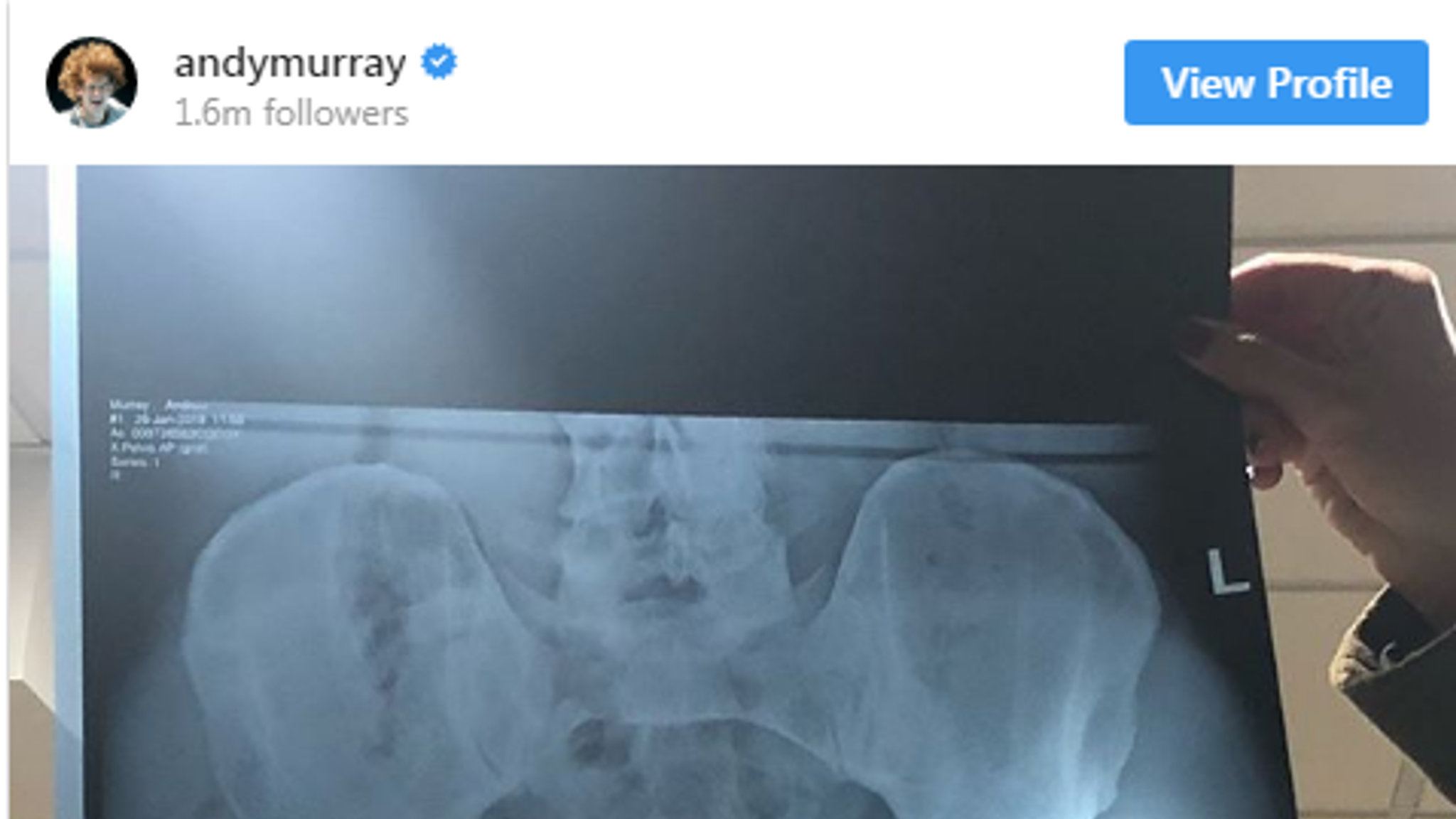
Andy Murray underwent two significant hip operations to combat chronic injury: a hip arthroscopy in January 2018 and a transformative Birmingham Hip Resurfacing (BHR) surgery in January 2019. These procedures allowed Murray to overcome debilitating pain and return to professional tennis, making him the first high-level singles player to compete successfully with a metal hip resurfacing implant until his eventual retirement in 2024.
The story of Andy Murray’s hip is not merely a sports biography; it is a landmark case in sports medicine. For years, a total hip replacement was considered a career-ending procedure for any professional athlete involved in high-impact sports like tennis. Murray’s decision to opt for hip resurfacing—a technically demanding alternative—redefined what was possible for aging athletes facing degenerative joint issues. By 2026, his journey remains the gold standard for understanding the intersection of advanced orthopedic surgery and elite athletic performance.
The Onset of Chronic Hip Pain (2017–2018)
The decline of Andy Murray’s physical dominance began visibly during the 2017 grass-court season. Despite entering Wimbledon as the defending champion and world number one, his movement was severely hampered. After a grueling five-set loss to Sam Querrey in the quarter-finals, it became clear that his right hip was no longer responding to conservative management.
The underlying issue was diagnosed as a chronic hip injury, characterized by labral tears and significant cartilage wear, likely exacerbated by years of high-intensity movement and the extreme lateral loading required at the elite level of tennis. Murray spent the latter half of 2017 attempting non-surgical rehabilitation, including rest, physical therapy, and targeted injections. However, after withdrawing from the US Open and failing to see improvement, surgical intervention became the only viable path forward.
The First Intervention: 2018 Hip Arthroscopy
In January 2018, Murray underwent his first surgery in Melbourne, Australia. This procedure was a hip arthroscopy, a minimally invasive surgery where a camera (arthroscope) and small tools are inserted through tiny incisions.
Goals of the Arthroscopic Procedure
The primary objective of the 2018 surgery was to "clean up" the joint. Surgeons typically perform the following during such a procedure:
- Debridement: Removing frayed edges of the labrum or loose fragments of cartilage.
- Bone Contouring: Shaving down bone spurs (osteophytes) that cause impingement (FAI - Femoroacetabular Impingement).
- Labral Repair: Attempting to stitch or reattach the labrum to the socket.
While the surgery was deemed successful, and Murray returned to the ATP Tour in June 2018, the relief was temporary. The fundamental issue—the lack of cartilage and the resulting bone-on-bone friction—remained unaddressed. By the end of 2018, the pain had returned with such intensity that basic daily activities, such as putting on socks or walking the dog, became agonizing.
The 2019 Turning Point: Birmingham Hip Resurfacing (BHR)
The most pivotal moment in Murray’s medical history occurred in January 2019. Following an emotional press conference at the Australian Open where he tearfully admitted he might have to retire, Murray sought a more permanent solution. He ultimately chose Birmingham Hip Resurfacing (BHR), performed in London by the renowned orthopedic surgeon Sarah Muirhead-Allwood.
What is Birmingham Hip Resurfacing?
Unlike a Total Hip Replacement (THR), which involves removing the entire head of the femur (thigh bone) and replacing it with a metal stem inserted into the femoral canal, BHR is a bone-preserving procedure.
In a BHR procedure:
- The surgeon trims and caps the head of the femur with a smooth metal covering.
- The acetabulum (hip socket) is fitted with a metal cup.
- This creates a "metal-on-metal" bearing surface.
The primary advantage for an athlete like Murray is that it preserves more of the patient's natural bone and keeps the femoral head size closer to the anatomical norm, which significantly reduces the risk of dislocation—a major concern in high-impact sports.
The Bob Bryan Influence
Murray’s decision was heavily influenced by American doubles specialist Bob Bryan. Bryan had undergone the same procedure in the summer of 2018 and had successfully returned to professional competition. While doubles tennis is less demanding on movement than singles, Bryan’s success provided the "proof of concept" Murray needed to attempt the surgery with the goal of returning to the singles circuit.
Technical Comparison: Arthroscopy vs. Resurfacing vs. Replacement
Understanding the differences between these procedures is essential to grasping why Murray's comeback was so medically significant.
| Feature | Hip Arthroscopy (2018) | Hip Resurfacing / BHR (2019) | Total Hip Replacement (THR) |
|---|---|---|---|
| Primary Goal | Joint preservation/cleanup | Pain relief with bone preservation | Complete joint replacement |
| Invasiveness | Minimally invasive | Highly invasive | Highly invasive |
| Bone Removal | Minimal (bone spurs only) | Moderate (capping the femoral head) | High (removal of femoral head/neck) |
| Bearing Surface | Natural cartilage (if remaining) | Metal-on-metal | Ceramic, Plastic, or Metal |
| Dislocation Risk | Extremely low | Low | Moderate |
| Athletic Impact | High-impact return common | Possible, but rare in singles | Generally discouraged for high-impact |
The Rehabilitation and Recovery Process
The recovery from BHR is grueling, particularly for a professional athlete aiming for the highest level of performance. Murray’s rehabilitation lasted several months and was divided into distinct phases.
Phase 1: Early Mobilization (Weeks 1–6)
The immediate focus was on protecting the implant while the bone grew into the porous coating of the metal components (a process called osteointegration). Murray began walking with crutches almost immediately but had to avoid high-impact movements to ensure the metal cap remained securely fixed to the femur.
Phase 2: Functional Strength (Months 2–4)
Once the implant was stable, the focus shifted to restoring the range of motion and rebuilding the atrophied muscles of the glutes, quads, and core. Because the hip joint had been restricted by pain for years, Murray had to "relearn" how to move efficiently without compensatory patterns that could lead to other injuries.
Phase 3: Tennis-Specific Loading (Months 5–6)
Murray returned to the court in a limited capacity about five months after surgery. He initially practiced doubles movements, which involve less lateral sprinting. His official return to competition occurred at the Queen's Club Championships in June 2019, where he won the doubles title alongside Feliciano Lopez—a result that stunned the sporting world.
The "Metal Hip" Era and Career Extension
Murray’s return to singles play in late 2019 was marked by the historic win at the European Open in Antwerp, where he defeated Stan Wawrinka in the final. This victory was the first ATP singles title won by a player with a resurfaced hip.
However, the "metal hip" era was not without challenges. While the hip itself remained stable, the biomechanical changes required to protect it often led to secondary issues:
- Groin Strain: Compensating for hip stiffness often placed extra load on the adductor muscles.
- Lower Back Pain: The lack of extreme internal rotation in a prosthetic joint can force the lumbar spine to take up the slack during rotational movements like the serve.
- Recovery Times: As he aged into his mid-30s, the time required to recover from five-set matches increased significantly.
Despite these hurdles, Murray remained a competitive force on the ATP Tour through 2024. He achieved remarkable feats, including multiple five-set comeback wins at the 2023 Australian Open, which served as a testament to the durability of the Birmingham Hip Resurfacing implant.
Risks and Long-Term Considerations of BHR
While successful for Murray, metal-on-metal hip resurfacing is not a universal solution and carries specific risks that surgeons and patients must weigh.
- Metal Ions: Over time, the friction between the metal components can release microscopic cobalt and chromium ions into the bloodstream. Patients must have their ion levels monitored periodically to ensure they do not reach toxic levels (metallosis).
- Femoral Neck Fracture: Because the femoral neck is preserved in BHR, there is a small risk of fracture, particularly in the months following surgery if the patient returns to high-impact activity too quickly.
- Surgeon Skill: BHR is technically more difficult to perform than a standard THR. The positioning of the components must be precise to avoid premature wear.
By 2026, medical consensus continues to favor BHR for young, active males with high bone density, while generally recommending traditional hip replacements for older patients or those with smaller bone structures.
FAQs About Andy Murray's Surgery
Did Andy Murray have a full hip replacement?
No, Andy Murray did not have a total hip replacement. He underwent a Birmingham Hip Resurfacing (BHR). While both procedures involve replacing the joint surfaces with prosthetic components, BHR preserves the femoral head and neck, whereas a total hip replacement removes them entirely.
Who was the surgeon who performed Andy Murray's hip resurfacing?
The surgery was performed by Dr. Sarah Muirhead-Allwood, a highly specialized orthopedic surgeon based in London. She is widely considered one of the world's leading experts in hip resurfacing and complex hip reconstructions.
How long did it take Andy Murray to return to tennis after surgery?
Murray returned to competitive doubles tennis approximately five months after his January 2019 surgery. He returned to competitive singles tennis in August 2019, roughly seven months after the procedure.
Is Andy Murray still playing tennis in 2026?
No, Andy Murray retired from professional tennis in the summer of 2024, following the Paris Olympics. His retirement was the result of a cumulative career of injuries, though his resurfaced hip allowed him to play five years longer than many medical experts initially predicted.
Can anyone get the same hip surgery as Andy Murray?
Hip resurfacing is generally reserved for younger, active patients (typically under 65) with good bone quality. It is more commonly performed on men because the femoral head size in women is often too small for the metal-on-metal components, which can lead to higher failure rates. A consultation with an orthopedic surgeon specializing in BHR is necessary to determine eligibility.
Summary of the Medical Legacy
Andy Murray’s hip surgery represents a watershed moment in sports medicine. It proved that a degenerative joint condition does not have to be a career-ending diagnosis for an elite athlete. His willingness to undergo an experimental path—becoming a "guinea pig" for high-impact sports with a resurfaced hip—has provided invaluable data to the orthopedic community.
For patients and athletes facing similar issues, the "Murray model" emphasizes the importance of:
- Exhausting conservative treatments before moving to surgery.
- Seeking specialized surgical expertise for bone-preserving procedures.
- Adhering to a meticulous, multi-phase rehabilitation program that prioritizes long-term stability over a quick return to sport.
As we look back from 2026, Andy Murray’s greatest achievement may not be his three Grand Slam titles or his two Olympic gold medals, but the fact that he pioneered a surgical comeback that continues to inspire thousands of people to remain active despite severe osteoarthritis.